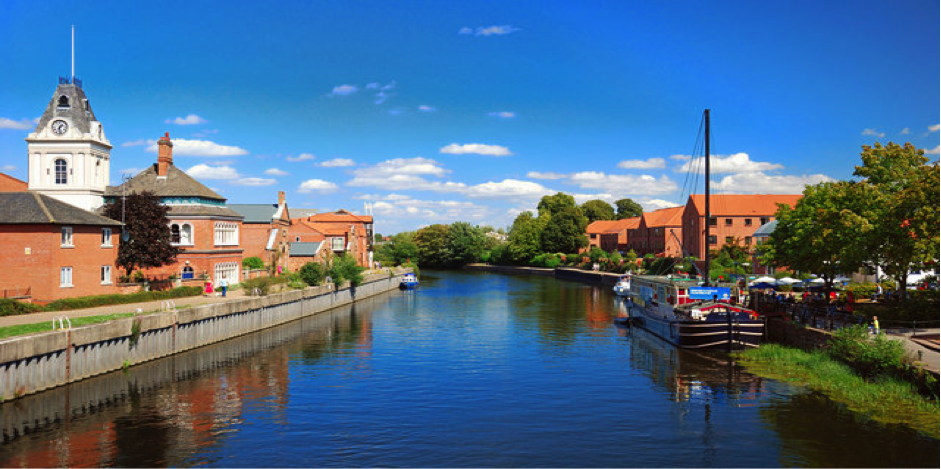
River Trent, Newark.
The Trust has had a busy few months’ field work, responding to consultations from the Environment Agency, and a number of committees of the Houses of Parliament. It has also continued its work in many of the fields that are ongoing. The Trust has responded to several private individuals and groups who have been needing better understanding on various issues regarding water pollution, protected species, planning issues and flooding.
Minewater
There have been several areas of research undertaken this year, the most notable for the season has been considering the added environmental value of treatment wetlands in urban or semi-industrial environments: two rural wetland treatment sites were considered as a control and also to compare the locations environmental similarities.
The five sites are located across the UK; one in South Wales, one in the Midlands, two in North East England and one in the North West. The sites all treat water from abandoned coal workings, there being no metal mining discharges that have reedbed treatment works in place in the UK at the present time. None of the sites have been in place for more than fifteen years with two having been established for only five years.
The main markers for the value of the wetlands beyond the satisfactory treatment of the polluted waters on the sites has been the use by some species of bird life; notably the Reed and Grasshopper warblers. The development of species of aquatic insects, these including damselflies and dragonflies: less popular orders of aquatic life were also studied, gnat and mosquito lava and hatch cadres were noted as to the development of local area food chain additions for species of avian visitors including swallows, martins and swifts.
The research started in early April and has continued through to the first week of August 2013. This timeframe allowed for the breeding of most bird species, particularly the summer migrants, and the need for an abundance of food sources such as gnat and mosquito hatchings.
The Sites.
1/ South Wales; the location is on floor of a small valley treating water pumped from an adit, the water being net alkaline pH 6-7. The site is made up of 2 settlement tanks and a series of 16 cells of wetland/reedbed. The makeup of planting being Phragmites and Typha, originally a 70:30 mix in 2000 when planted but the Typha has markedly increased its ratio. The site covers an area of 3 hectares.
The indicator birds were both present as were the gnats and mosquitoes which were being fed upon by swifts, swallows and martins. There were several damselflies seen but no dragonflies.
2/ Midlands. The site is a four cell wetland and aeration operation with not just water flow but pumping and aeration by irrigation between the first and second ponds. The site is on the edge of an industrial estate on two sides and farmland on the other two. A well-used public right of way runs on one side of the site’s boundary.
The Grasshopper warbler was encountered on several visits but no Reed warblers. There were a good number of swallows feeding above the site but there were no damsel or dragonflies present.
3/North East site 1 was established in 1999 and treats water pumped from an abandoned drift. The wetland comprises of three cells which treat 4.5 litres per second which has a retention within the 3 cells of 3.5 days. The inflow has a pH of 6.4 which increases to 7.1 at the outfall. The treatment removes Fe and Mn. The area of the treatment cells cover just over 3 hectares, set in a semi-rural landscape.
Both indicator birds were present, as were swallows and house martins feeding on mosquitoes and gnats that were abundant. Both damsel and dragonflies were abundant.
4/ North East site 2 established in 2003 treating 1.25 litres per second with a retention time within the treatment areas of 2.5 days. The water to be treated is pumped from an abandoned drift to 2 settlement lagoons which have a mixed marginal planting scheme from whence the water passes through to 2 reedbeds run in sequence. The planting of the reedbed/wetland cells is more diverse than is usual; Phragmites, Iris, Typha angustifolia and latifolia, Phalaris and Scirpus. The site is approximately 2 hectares. The site is located in a post-industrial urban area.
Reed warblers were identified, but no tell-tale call of the Grasshopper warbler was heard. Swallows, martins and swifts fed above the site. Both damsel and dragonflies were present.
5/ North West located treatment site is approximately 0.5 hectares in area, linked into the urban edge of a small town where the wetland treats drainage water from a spoil heap or ‘bing’, the wetland was established in 2009 and was planted with a basic 50-50 mix of Phragmites and Typha in two single species stands. It receives little management but has become popular with local people who find the wildlife of fascination being so close in to their urban habitation.
Neither warbler species were identified onsite. House martins and swifts were regular feeders above the reedbed, gnats and mosquitoes were abundant across the site. Dragonflies were seen in the first week of August.
Control Sites.
1/ Scotland. This site is an unusual site in that it has been managed to allowed the flora to develop naturally in conjunction with a planted reedbed/wetland system; there has been a need to manage and re-engineer water travel through the site, this was because water movement had developed ‘channel flow’ within the wetland which needed rectification back to an even flow of water throughout the system.
The site is large, 6.2 hectares of designated treatment area within a much larger area of natural wetland and carr. The whole area is isolated, those that are aware of its presence know it as a flagship of biodiversity and good practice; particularly with regard to not over designing or engineering such a scheme.
The indicator species were found with both warblers present; feeding swallows and sand martins were observed, as were good hatchings of mosquitoes and gnats. Damsel flies were found to be present from mid-July dragonflies were seen to be present in flight though it was only in the first week of August that an emergent dragonfly (Black-tailed Skimmer (Orthetrum cancellatum) was spotted resting developing its wings on a Typha stem before taking to the air for the first time proving the presence of lave present within the mud and water of the site.
2/ South East. The site is not a constructed reedbed/wetland but one that has developed naturally and which successfully treats mine spoil drainage, the initial water entering the wetland is slightly ferruginous, and net alkaline with a pH 6. The site was first identified in 1992 during research into environmental damage and the closure of the Kent Coalfield. Since then the site has been redeveloped and the surface water catchment for the site has been reprofiled and graded by the owners of the industrial development site. The most recent redevelopment of the landform being in 2003. The drainage catchment covers around 25 hectares and the spoil waste is now graded into a manageable and developed. The site landform is unmanaged and for the last seven years the flora has been undisturbed by any form of human intervention. A varied mix of reed, typha and other invasive plant species have colonised the drainage collecting ground that includes permanent and seasonal standing water. The site being at the rear of the developed industrial estate but is now isolated by that development and agricultural land on all sides with no human access easily practicable. The area of treatment wetland and area of study being approximately 0.50 hectares in size.
The indicators were looked for, the Willow warbler was identified visually and the song of the Grasshopper warbler was heard on two occasions. Damselflies were observed, though none were emergent specimens. There were large hatchings of gnat and mosquitoes observed on many occasions and house martins, swallows and other birds were encountered feeding on a regular basis.
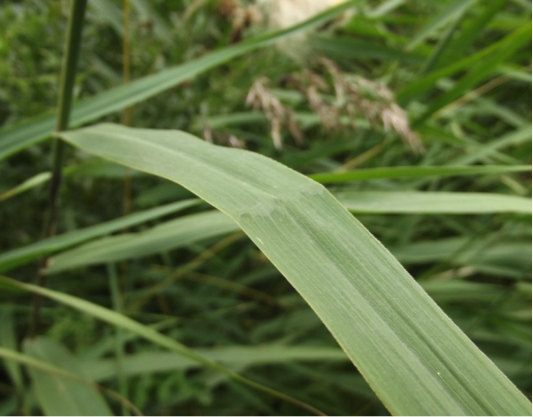
The Subject Species.
The Grasshopper Warbler (Locustella naevia).
This bird was widespread across Europe including the UK, it is a breeding migrant that has declined markedly in recent years. It is uncertain where it overwinters though it is believed to be sub-Saharan West Africa.
Seldom seen in flight, more usually spotted creeping about in tall grass or reeds in a mouse like manner or perched atop a tall stem venting its call from which it gets its name.
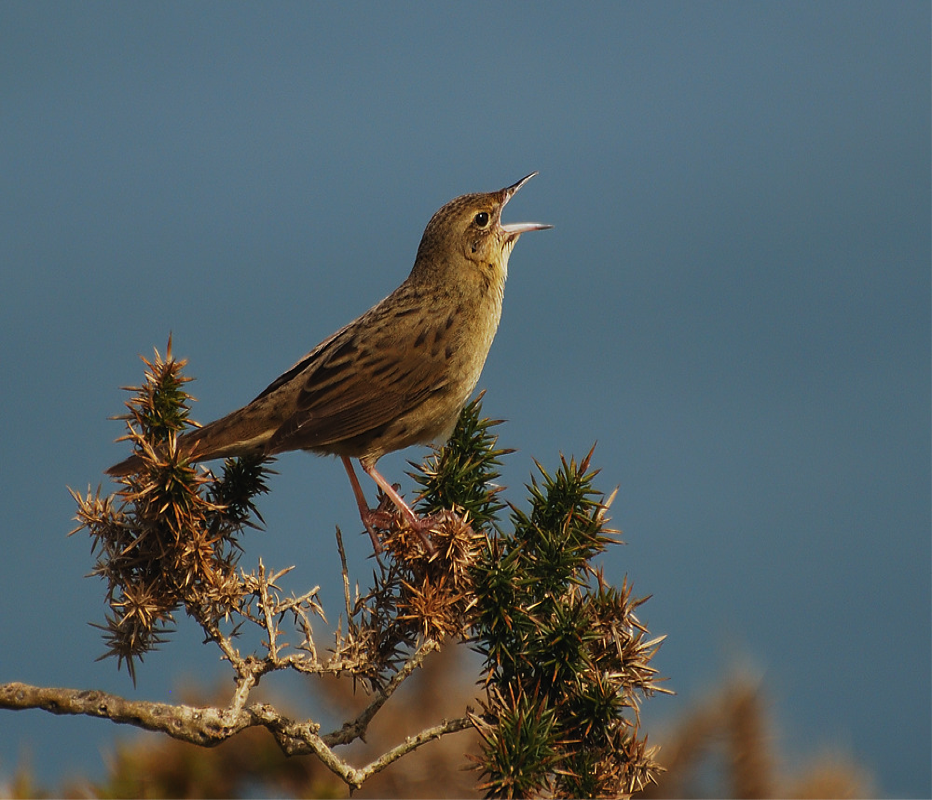
Grasshopper Warbler.
The Reed Warbler (Acrocephalus scirpaceus).
Common indigenous bird across Europe, it is 4 to 6 times more numerous than the Grasshopper warbler.
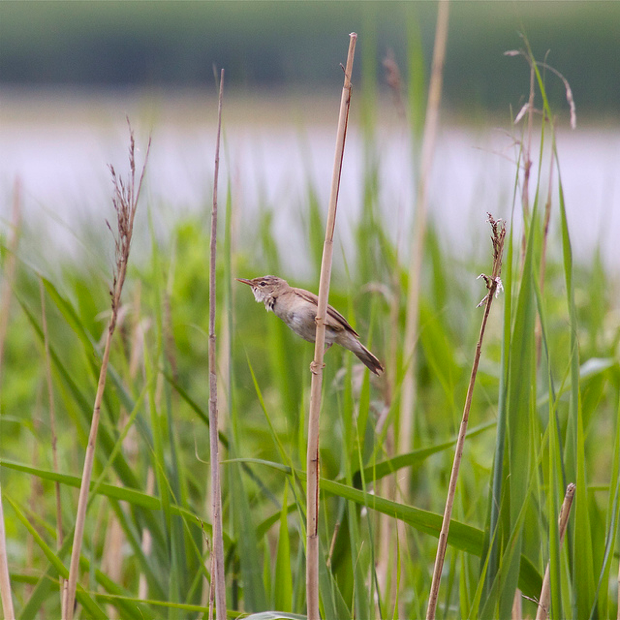
Reed Warbler.
Damselflies and Dragonflies.
Damsel and Dragonflies are major markers in the development of wetlands as parts of local ecology, reliant on reasonable water quality that should be found in the later wetland cells of treatment schemes. Dragonfly lave are at the top of the food chain within their habitat: work carried out at the Wheal Jane trial wetlands before their destruction from the Carnon Valley in Cornwall showed that they were quite resilient and capable of flourishing in acidic environments.
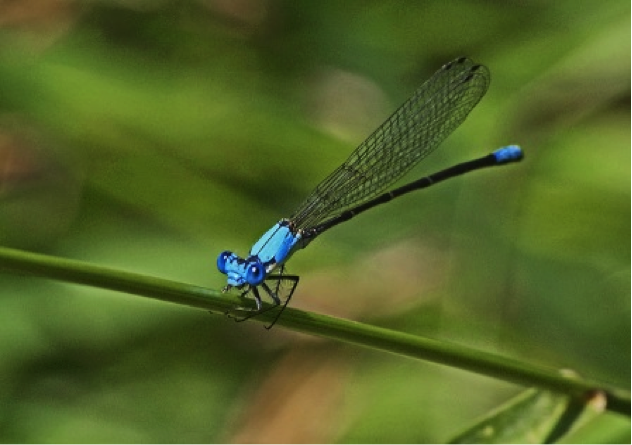
Damselfly
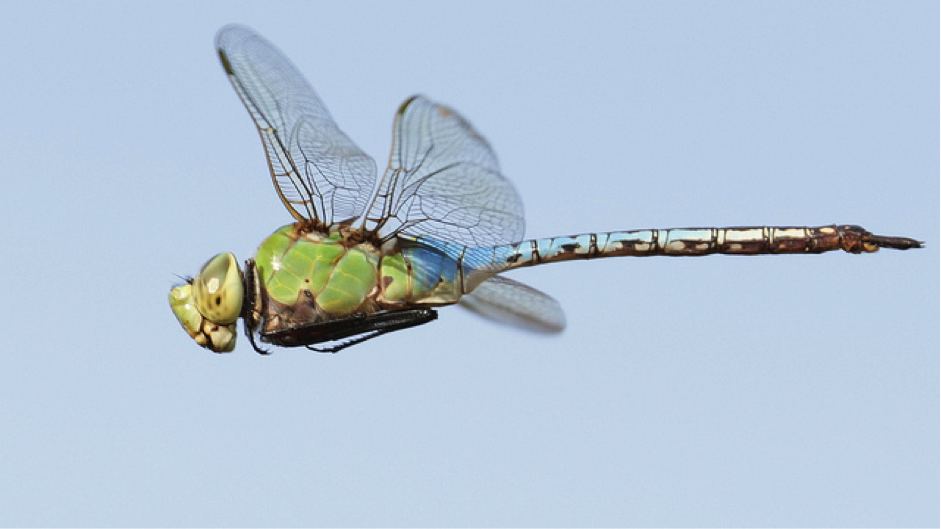
Dragonfly
Feed Species.
The insect population based within the water columns and shallow but slow flow areas of constructed reedbed/wetlands can be best demonstrated with some ease using the presence of gnats and mosquitos at the sites. Their appearance encourages the use of the wetlands for feeding birds and the presence of numbers of swallows, martins and swifts can demonstrate this as can the presence of the warblers including the two indicator species.
Gnats and mosquitos.
All the sites had good populations of these important but unpopular insects.
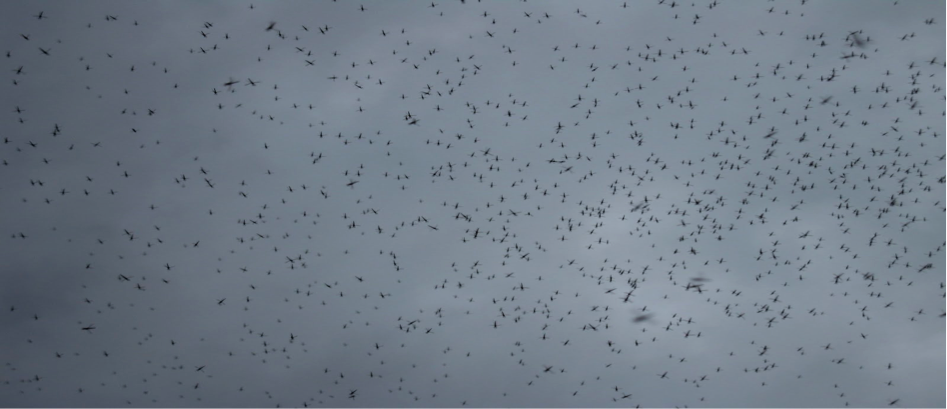
Food on the Wing.
Method Note.
The monitoring of the sites needed to be non-invasive so sampling of mud and water were not carried out. Observation was carried out on a regular; the minimum being once every 7 to 10 days throughout the season.
Other Research.
Shale and Tight Oil and Gas.
The research has considered media manipulation by the anti or pro lobbies; the consideration of government reaction to possible abundance and the poor public reassurances by their media relations department.
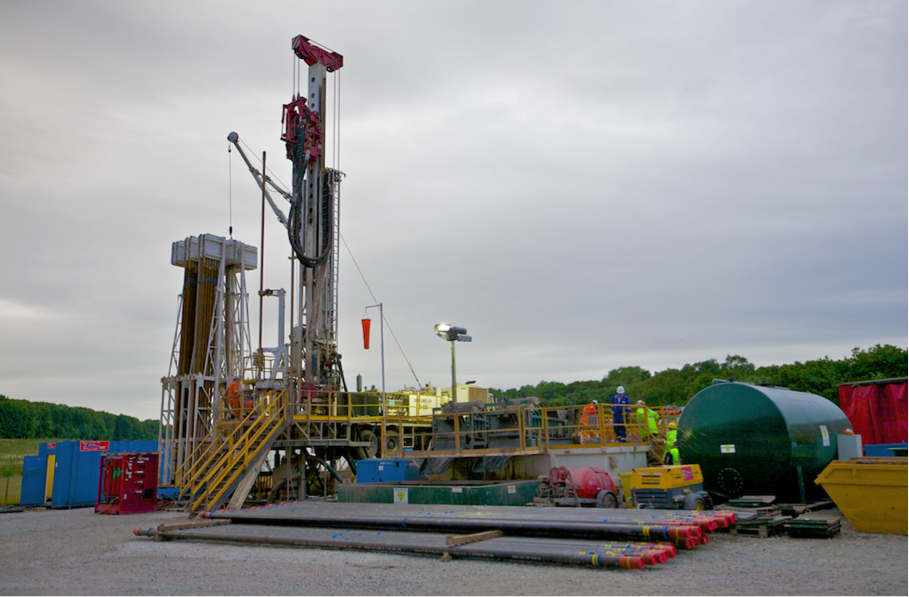
A Drilling Rig Not Disimilar to Those being used in Lancashire, Cheshire and Sussex.
The Trust has outlined to two groups of MPs the technologies that would be used plus the long history of fracture liberation of both gases and liquids over the last 150 years. The development of the shallow chalk aquifer beneath Harrow on the Hill to supply bespoke water supplies exclusively to the Eastman Kodak works located above the wells.
Explanation of ground stability issues tied up with coalmining in the last 200 years and the related issues of subsidence and methane movement such as at Arkwright in South Yorkshire. The issues of coalmine drainage water as a point source of pollution to the East Kent aquifer from the 1930s onwards.
Initial exploration into alternative methods of fracturing the shales and other geological matracise is beginning to show some headway, the historical methods used prior to directional drilling have shown some avenues that might gainfully be explored further.
Strata Stability and Pollution Liberation.
The Trusts Devon and Dorset land stability issues project has continued with an interesting conundrum with regard to contaminated land in the form of old fuel tanks appearing after a small landslide. The issue is likely to develop into a novel area of legal liability. The potential pollution of the land beneath the landslip was averted after the contents (hydrocarbon sludges) were removed before the tanks totally collapsed with the land adjacent to it.
Other land issues research regarding pollution liberation from within strata has also been carried out over the summer.
Oestrogens, Mimics and Fish Mutation
The problems of sexual mutation; particularly in male fish due to the rise in levels of Oestrogens and their mimics in treated sewage discharges from waste water plants is continuing to be a major concern and an issue that is at present not receiving the attention that it should. The Trust has been involved in the various aspects of the subject now for over twenty years and is finding it increasingly difficult to raise the profile beyond the tabloid press’ desire to blame the situation on the contraceptive pill.
The research continued to monitor the situation in the UK where the Environment Agency is finding it can do little to lessen the environmental consequences at present or put forward any strategy to come to terms with the situation. Their requirement is the promised guidance that is expected from the European Environment Agency and the European Commission in the next year or so. The costs in the Agency’s view are outside the scope of the water industry to tackle unless they are allowed to increase expenditure markedly in the future spending reviews.
The main research into this area of concern is being carried out in Canada and US; Brunel University in the UK is also actively engaged with the issue.
Septic Tank Integrity in Times of Flood.
A major area of concern at times of flooding in rural areas is the liberation of the contents of septic tanks and cess-pits. The manner of keeping these facilities’ contents confined is an ongoing research area which is not getting much serious engineering research time though much of what could be developed would be of value to the water industry and the integrity of their ‘public sewers’..
Consultations,
The River Exe Flood Plan Consultation Draft has been responded to as will the draft Deregulation Bill which its Parliamentary Select Committee has requested our views on.
Advice.
Uses of abandoned gravel workings on the River Loire in France has been raised by some angling and ecological groups; such issues the Trust worked on in the mid-1990s with the National Rivers Authority, British Waterways and the Anglers Co-operative Society. The development of spawning and flood refuge area allied to the current interest in increasing river corridor bio-diversity might lead to some useful developments on the other side of the Channel.
14th August 2013.