The Mount Polley breach.
The recent (4th August 2014) breach of the Mount Polley Mine tailings dam is about to become a major yawn, the public in general outside of British Columbia have not heard of the event. The size of the environmental disaster where 10 million tons of polluted water and 4 million tons of highly contaminated mud was loosed on the natural environment. The mining company showing true rit with the statement of its CEO that he could, possibly, drink the water now leaving the site, now fresh rain precipitation.
Imperial Metals Corporation are buoyant that no lasting damage has been done to the environment, the clean-up will cost, but not too much. A positive spin that the surrounding mining operations and their owners are relieved to hear as Canadian stock prices in the sector have; if not collapsed, taken a hit. The industry generally is relieved that no one died and the Canadian government are almost ecstatic that it was only a gold and copper operation and not one of the uranium mine tailings impoundments that might bring out the worst possible concerns of radioactive contamination in a major playground of the country’s urban population.

Mount Polley Mine location map.


Once the pollution enters the lakes system contamination started traveling towards the Pacific Ocean. It is unclear how the slick of major polltants is reacting to the natural world, or how far it has reached.
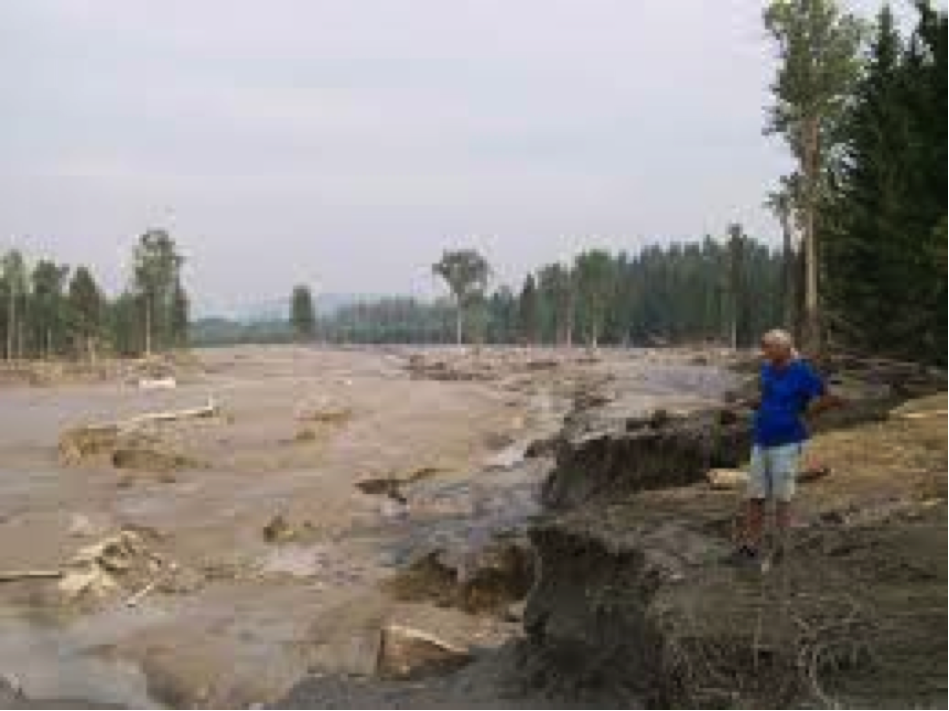
Haseltine Creek was only a narrow water course, 2-5 metres wide. The new look waterway will change the drainage system of the lakes above the mine discharge as well as below.
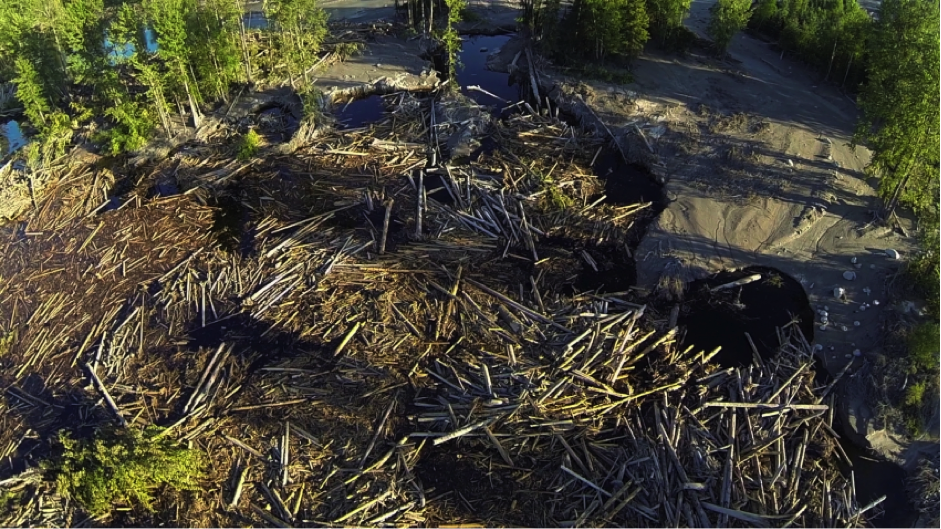
Hazeltine Creek
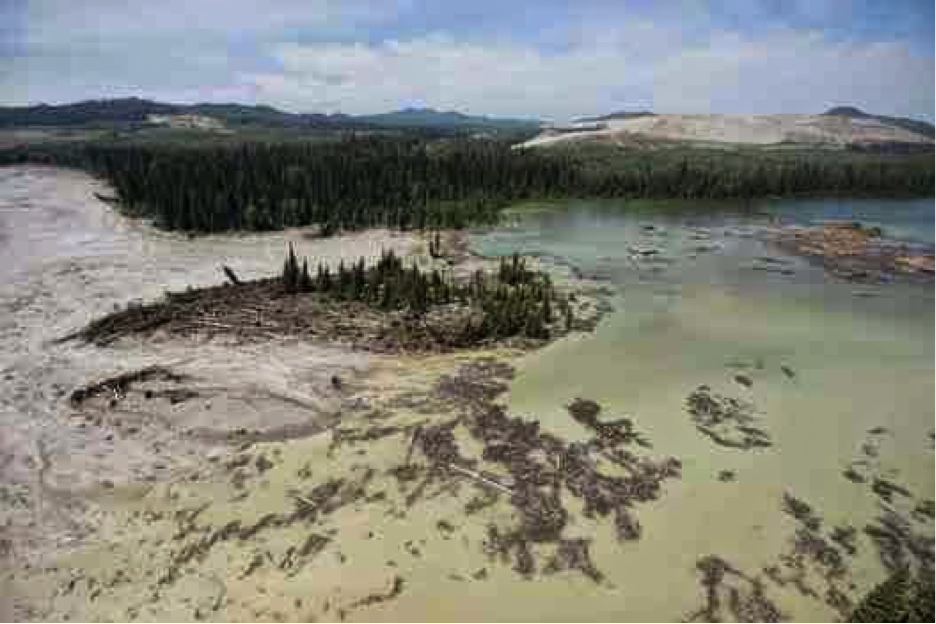
Quesnel Lake after the dam breach, a soup of heavy metals, a cloying mud and croutons of pine.
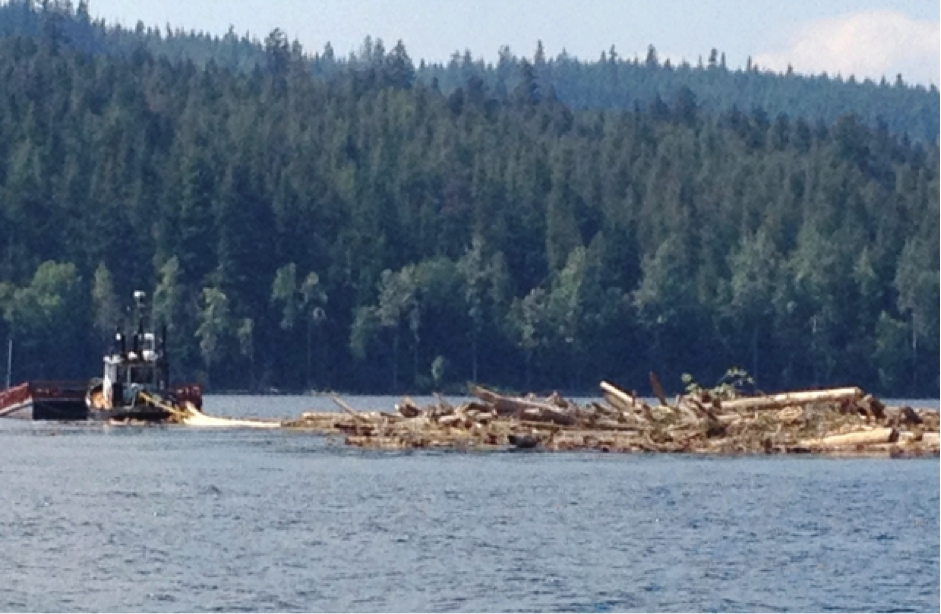
The visible pollution on Quesnel Lake in the form of trees being gathered from the surface, the sediment load is though now invisible from this horizontal angle though from above it is still opaque..
The next test of the waterways chemical and physical condition is the run of wild salmon that is just getting underway. Will the muds and metals affect their stamina or navigational ability or their potency of eggs and sperm which annually is the annual one-way journey of these Pacific fish? There are already photographs on the net of individual deaths but these occur anyway, but the dead are the food source of bears and a whole chain of fauna that this might impact upon.
Monitoring has started but it will take some years to understand the effects of this cataclysmic event on the ecology.