A Seminar at the Indian Institute of Forest Management, Bhopal (Notes)

I have been involved with the environmental movement for many years, first I was an ‘activist’ in the 1970s, though we were not known as such, campaigner or environmental nutter might be closer to the mark. It was risky being anti damage to the environment, anti-anything was felt to be anti-establishment. But slowly attitudes changed, by the 1980s there was a growing awareness through conservation groups, such as Greenpeace, saving the whale and FoE generally anti anything.
It is out of this background that I emerged, I had gained qualifications but the issues were then more fundamental, stopping rivers in the UK from dying contamination of land and in England the expanses of dead urban areas where no one wanted to do anything. Those from those early days are as old and many much older than I. There are a succession of generations following on with the new language and terminology developed for this hoped for new sustainable world.
Introductory Thoughts.
Sustainability simply = the ability to be maintained at a certain rate or level.
Wikipedia defines it in a more modern and focused way.
Sustainability is the ability to exist constantly. In the 21st century, it refers generally to the capacity for the biosphere and human civilization to co-exist. It is also defined as the process of people maintaining change in a homeostasis balanced environment, in which the exploitation of resources, the direction of investments, the orientation of technological development, and institutional change are all in harmony and enhance both current and future potential to meet human needs and aspirations. For many in the field, sustainability is defined through the following interconnected domains or pillars: environment, economic and social, which according to Fritjof Capra, is based on the principles of Systems Thinking Sub-domains of sustainable development have been considered also: cultural, technological and political. According to Our Common Future, sustainable development is defined as development that “meets the needs of the present without compromising the ability of future generations to meet their own needs. Sustainable development may be the organizing principle of sustainability, yet others may view the two terms as paradoxical (i.e., development is inherently unsustainable).
Sustainability can also be defined as a socio-ecological process characterized by the pursuit of a common ideal. An ideal is unattainable in a given time and space. However, by persistently and dynamically approaching it, the process results in a sustainable system. Many environmentalists and ecologists argue that sustainability is achieved through the balance of species and the resources within their environment. As is typically practiced in natural resource management, the goal is to maintain this equilibrium, available resources must not be depleted faster than resources are naturally generated.
Modern use of the term sustainability is broad and difficult to define precisely.[13] Originally, sustainability meant making only such use of natural, renewable resources that people can continue to rely on their yields in the long term. The concept of sustainability in German, can be traced back to Hans Carl von Carlowitz (1645–1714), and was applied to forestry.

Healthy ecosystems and environments are necessary for the survival of humans and other organisms. Ways of reducing negative human impact are environmentally-friendly chemical engineering, environmental resources management and, environmental protection. Information is gained from green computing, green chemistry, earth science, environmental science and, conservation biology. Ecological economics studies the fields of academic research that aim to address human economies and natural ecosystems.
Moving towards sustainability is also a social challenge that entails international and national law, urban planning and transport, supply chain management, local and individual lifestyles and ethical consumerism. Ways of living more sustainably can take many forms from reorganizing living conditions (e.g., ecovillages, eco-municipalities and sustainable cities), reappraising economic sectors (permaculture, green building, sustainable agriculture) or work practices (sustainable architecture), using science to develop new technologies (green technologies, renewable energy and sustainable fission and fusion power) or designing systems in a flexible and reversible manner, and adjusting individual lifestyles that conserve natural resources.
In sum, “the term ‘sustainability’ should be viewed as humanity’s target goal of human-ecosystem equilibrium (homeostasis), while ‘sustainable development’ refers to the holistic approach and temporal processes that lead us to the endpoint of sustainability. Despite the increased popularity of the use of the term “sustainability,” the possibility that human societies will achieve environmental sustainability has been, and continues to be, questioned—in light of environmental degradation, climate change, overconsumption, population growth and societies’ pursuit of unlimited economic growth in a closed system.
The need to question and tear apart the concept of sustainability is the purpose, I hope of this talk today, much is based on my experience over many years. Some of what I say may appear negative, some contradictory but I believe that the ‘saving of the planet’ is about connecting and eventually recodifying society.
1.
The need for water for life is vital as is the human belief that the survival of our species is vital. The later part of this sentence being subjective. If humans became extinct the planet and nature would do quite well without us though the loss of a major predator, us, would see a proliferation of other extinctions occur quite swiftly after our demise. Farm animals, animals in need of protection or reliant on breeding programs would disappear. The world would rewild. In the UK we saw signs of this in April and May this year when, during our first lockdown due to the Covid pandemic, animals took to the streets of several UK towns and cities. Wild goats roamed Welsh seaside resorts, deer, and other wild mammals roamed streets in London.
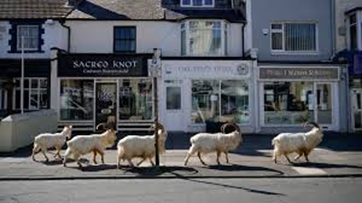
All roaming, spreading from the countryside was carried out close to water, the waterways themselves being the corridors or conduits by which these animals had the confidence to explore as into what they would have perceive as alien space. As soon as lockdown ceased the wild animals retreated and humans regained the streets, some might say, sadly.
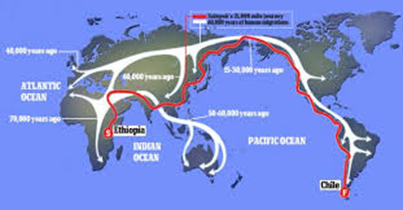
Humans when first leaving East Africa followed routes of streams and rivers, the River Nile northwards, avoiding the deserts and where possible the mountains and then they found great areas of virgin reed, papyrus lined rivers of the Tigris Euphrates creating the liquid spine of the fertile crescent from where all civilisation and science started spreading across Asia and across the planet.
2.
Water the staple of life, plants and animals require it, the earth requires it, only humans abuse it.
Why is it that this is so, why did the human species so wantonly abuse what it realised from its earliest development was vital? There are a myriad of answers to this and why human nature could not culturally live over the millennia with the care of water at its core, a value lacking for so long that we only now are realising that it is the one threat that endangers human kinds.
Global warming or climate chaos cannot be solved without balance in atmosphere and water is the key to much that needs to be understood.
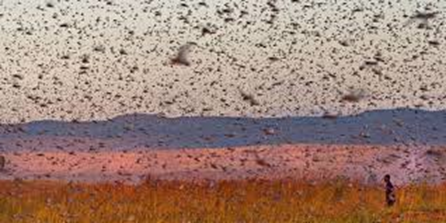
Climate has for tens of thousands of years been what took place to us and the planet, it was a phenomenon that allowed humans to develop, it allowed populations to grow by providing rain and sun for animals and plants to grow in unbridled abundance and which allowed farming of crops to develop, it further allowed draught and pestilence to spread, not just lack of water but the locust driven across much of the planet by trade winds and storms. Populations grew and declined and as each cycle took place humans migrated looking for better climates, better water supply. Humanity settled wherever there was plentiful water, to drink, to irrigate, to learn by and ultimately abuse the resource that gives us life.
It is fortunate that as a species we are resilient to much that can be found in our water supply going back in time. We as a species were resilient but at the same time life was short.
3.
What changed? Nothing or everything.
Pollution of water has always been a problem for humans though not always immediate the consequences of drinking water from a stream or river could live with you for years and as you had a short life anyway it did not shorten it. Various river flukes are known from cool to tropical zones, they destroy internal organs and still can. We just notice them because it is not normal to feel unwell. Historically feeling ill was the norm and feeling well was notable and worth remarking on.
The issue today is not even that the water, river, well/groundwater is polluted by gross human waste or sewage but by much of the materials that are subsidiary to it. The makeup of treated sewage is often the problem, pharmacological wastes from oestrogens to Prozac and other drugs that can cure ailments, provide birth control, or stop one being depressed. These drugs are being found in higher and higher doses in many rivers. The effects are also being more commonly noticed in the aquatic and bankside fauna. Trout are changing sex or rather at least males are, they are developing female characteristics and losing their inclination to breed. Their predators are many, but only small research projects have, yet investigated this area. Those projects though are noting a myriad of occurrences, heron chick morbidity, changes in mammal fecundity and even a drop in some high trout intake human populations a marked infertility due to a drop in sperm count.
4.
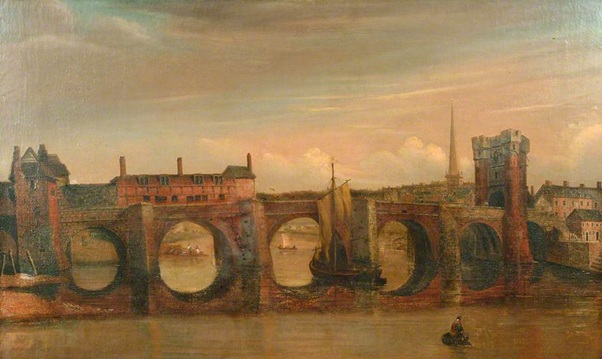
These findings mirror those of many towns in medieval Europe. One case of note came about in the 14th century at a town called Shrewsbury. The town is set on the River Severn between Wales and England. The town had two crossings over the River, one called the Welsh Bridge which was upstream of the other English Bridge. Traditionally the good people of the town took water from the river by the English Bridge and waste was spread about the fields, but as the town grew the waste, night soil or sewage was dumped into the river by the Welsh Bridge, the town began to lose large numbers of its population to illness, cholera and the like. A butch set up a slaughterhouse by the Welsh Bridge and the river ran red, the water for the town was visibly tainted and the mayor and corporation of the town realised that sewage was causing the illnesses. The town now took its water from the upstream bridge and the waste went into the river downstream at the English Bridge, good for the town but in those days people hardly new of the next town downstream and likely did not care too much either.
5.
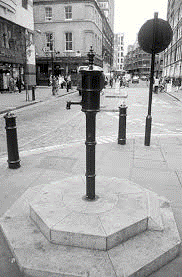
Cholera and typhoid were not understood to be from water until the late 19th century. A Dr Snow researched an outbreak of cholera in London in 1870 and realised that the source was located at a well in Broad Street. He chained the handle and locked it so it could not be used. The epidemic disappeared. Before this most physicians and doctors believed that such diseases were caused by air, a miasma or colourless fog of infection.
6.
What these last two examples have shown is that over a period of 600 years the gradual awareness of disease coming from or carried by water, it should also be understood that within an even shorter time frame we have as a species learnt to poison the planet’s waters. Today the media talk about plastics, gross and micro, it is everywhere, most of us have to believe it as we cannot see the nano particles that enter our bodies from bottles of spring water that we purchase daily. We see the empty spring water bottles though in the street and in rivers. I have a system of classifying rivers wherever I go timing and counting bottles passing before me. On some rivers I lose count.
7.
This all sounds dismal and the cry of a person in despair, but it is not, I need to put a picture before you, in fact a series of images that demonstrate the dire position we have inherited from the past, these pictures are described as in short sketches, you will see some light towards the end, it is that light that I need you to focus upon. You and thousands and may be millions of you going forward into the future who will bring about unimaginable alterations in the way we understand, use, clean and care for water, the environment, and the planet. Those who in the future will benefit and protect their inheritance better. They need to understand it. As we should fathom now why we have the situations that we have and how we reconcile the past so that we might progress in a manner that will allow the planet resilience and allow our development as a species to advance as it surly will but in a sustainable manner. There is no room for zealotry, the past has happened and now rather than reject the past we must learn from it. This is almost reversing a system’s actions or changing the polarity of an electrical charge.
8.
The industrial revolutions of past generations both freed and made slaves of many classes, races, nationality. From factory to laptop, from flint spear to nuclear bomb we have and are controlled by work and fear.
The introduction of cotton on the scale of the 19th century, the spinning jennies, the looms powered by first wood and then coal polluted many Asian rivers. Those millions of miles of it were sent to Britain, to be died in dye houses that stained and killed British rivers. Universal destruction on a scale that peaked in the mid-20th century across the planet, the end of empires, not just Britain’s but France, Germany, Holland, Belgium. These empires were quickly replaced by political ideological blocks of countries who were unable to communicate as the fundamental leaderships were too unsophisticated.
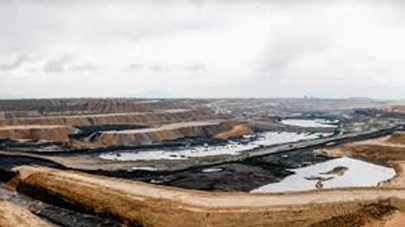
We now stand 30 years on with the world’s governments communicating as never before, there are bullies and there are those that cannot face realities but generally we are able to understand each other both globally and at a local level and catastrophic situations are known worldwide almost instantly. News travels fast.
We are aware that things are not right, we have no need to be told by a guru, but some do, some need the voice of innocence above experience to take notice.
Remember that climate change is all about water. The atmosphere is reliant on the waters of the planet to cleans itself. If it were not for water, we would have taken our last breaths by now. We would have desiccated.
9.
Each country likes to think it is the best in the world, natural pride of place, even economic migrants and political refugees hanker to return to the lands of their birth Even the KGB general who was Kim Philby wished to return to Britain though he died in his adopted Soviet Russia. Everyone has rose tinted spectacles.
We now are able and obliged; we need to remove our glasses and see the world for what it is and what it might become. Groups like Greenpeace and Friends of the Earth who I worked with thirty odd years ago have changed the planet, they raised issues which now are having to be bettered. The major rivers of the world, the Ganga, Thames, Seine all are habitable by fish, the Ganga River Dolphin is breeding, and the population is increasing. The Ganga as the Thames still stinks, they are rivers not fit for purpose, but politicians make all the right noises, talking of repairing rivers. Mr Modi and Boris Johnson amongst them. The ‘world’ talks of a Green Recovery after Covid, it will only come about if we all require it. Work for it and raise it in each region, ensuring that their agendas focus on the future. Not a return to the status quo but on what the planet and people need, which should be a sustainable future.
Industries, particularly those that have not invested the future have crippled rivers and now in their final acts destroy them before they themselves die. In the UK during the several economic recessions many industries died off completely that polluted the environment. In the 1980s 90s the rivers saw the demise of many polluters. Bankruptcy is often good for the environment with immediate benefits. The knock on from this though has required the decontamination of thousands of hectares of land to allow reuse.
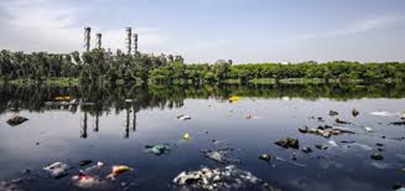
Sometimes it might be better to take a long-term view and allow natural remediation to take place over years rather that of swift, high cost methods. Urban forest and their use or utilisation of natural bacteria over years will allow growing trees to act as the lungs of the city and a carbon sink. The spread of tree planting in India as in the rest of the world needs to not just surround the urban centres but to penetrate them.
10.
I have run Clean Rivers Trust since its foundation 30 years ago. Then, UK rivers appeared to be in terminal decline. Sewage, raw and revolting flowed freely towards the oceans and sea. Minewater from abandoned mines discharged arsenic, cadmium, and iron amongst a whole periodic table of nasties. Many pharmacological and chemical works discharged straight into rivers and had done for years, deemed consents if not handed in were honoured by the agencies that then were protecting the environment. These rights were rights to pollute and slowly government brought acts of parliament into place that afforded the environment a chance to kick back. It allowed individuals and organisations to lobby for greater regulation. This, as already intermated was aided by the demise of many of the worst polluters.
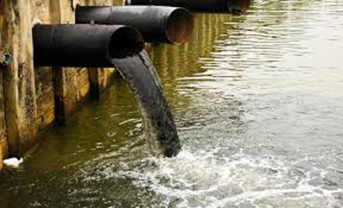
Things are still bad today across UK rivers, but the problems are more specific. We have removed much of the sewage that rendered rivers dead, power stations that burnt coal no longer acidify rivers nor heat them so that the oxygen was depleted, and no fish could survive. We no longer widen, straiten, or bury rivers underground. These are unacceptable actions today.
In many instances now we can name exactly the pollutant by its chemical signature. We recognise flee powders and other pet care products, surfactants from wrongly connected washing machines and dish washers that discharge to soakaways, groundwaters and not the sewer drains. We are finding the rivers are developing higher loadings of antipsychotic drugs now than prior to the covid pandemic.
What ever happens socially is mirrored in the water environment. Cocaine, so popular in many parts of Britain was seen in the sewers of the City of London, since lockdown it has all but disappeared, bankers abuse themselves as much as a homeless drug addict on the street, the opposites are really mirrors of each other and a society that needs relief from daily torment.
Such society is not sustainable.
Sustainability requires more of us but takes less.
11
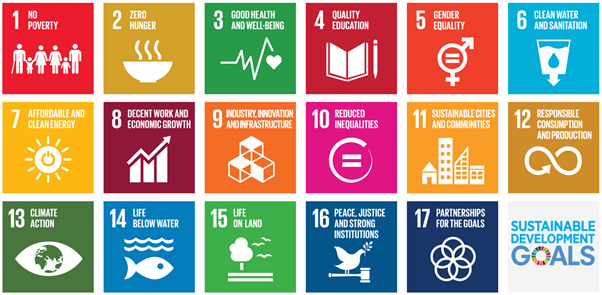
The United Nations 16 or 17 goals towards global sustainability give water two mentions, but without water all the others are impossible.
1 No Poverty.
Without water poverty thrives and the poorest in society suffer worst and live the shortest time.
2/ Zero Hunger
Without water crops will not grow and livestock dies.
3/Good Health
Without water, thirst is not for knowledge but survival.
4/ Quality Education
Impossible when suffering from thirst
5/ Gender equality
goes out the door as it is only those that who dominate, usually physically can control water resources when near exhaustion.
6/ Clean water and sanitation
This should not be the challenge it is. Why do governments spend so little on this the most basic human right?
7/ Affordable and clean energy
is the least obvious right that relies on water. How ever it is generated water is there in the manufacture or winning of materials.
8/ Decent work and economic growth.
This is impossible to bring about without water
9/ Industry, innovation, and infrastructure.
All fail for lack of its base material, water.
10/ Reduced inequalities.
This is immediately nullified without clean water.
11/ Sustainable cities,
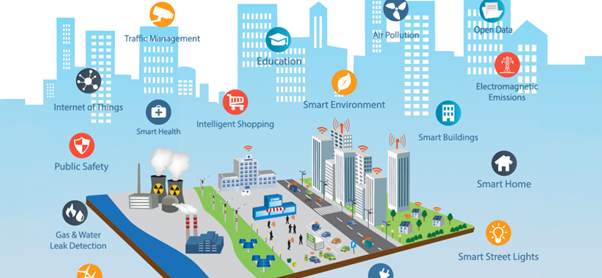
The digital smart city or community requires water
12/Responsible consumption and production.
From food product to plate all require water.
13/ Climate Action
While we promise to stop global emissions, we must tackle the issues of flood and drought.
14/ Life below water.
Obviously, we need fisheries and should not poison ourselves. The protection of aquatic environments is not just desirable but vital.
15/ Life on land
This runs with water as no life may be sustained without it.
16/ Peace, justice, and strong institutions
A wonderful set of ideals but nothing of the kind might be achieved without water. Throughout history civilisations perish due to the loss of water supply.
17 Partnerships for the goals for a sustainable world,
Partnerships can only be brokered if all can gain. Those who hold rights to water will always dictate the price others pay for it.
Sustainable World.
1
Fact is there is enough food in the world, there is enough water. To gain this goal nations need to analyse themselves truthfully, remove dogma, superstition, and prejudice. I do not say stop believing in your faith. Faith keeps you strong, gives you your inner resource to carry on when most other things are against you. A goal of sustainability will test even your inner strength.
Sustainable communities are talked of in wonderment. All are reliant on each other. How does it work? Badly, naturally as each social group prefers to distance itself from those that they feel are below them and they are awed by those they feel are above them. Human nature, the caste system, or imperialism. All are the same and are one major barrier to sustainability.
Charity, being either crumbs from a rich man’s table or a well in an arid place supplied by Water Aid are the same. The largess of the rich individual or a wealthy charity funded by wealthy developed nations and their citizens who feel good for giving.
Advice: take each for what you can get but do not be grateful, request more as a right. Water leads to the ability to develop, eventually tables will change and those that gave will require aid. Be prepared for this paradigm shifts in the next period of human existence. Nations such as India are on the cusp of becoming international arbiters of what is right and wrong in the world. The industrial base and the poor are, to some, what is felt to hold the country back from greatness. A burgeoning educated middle class; money as has not been seen before in more people’s pockets. There is the other population in the countryside who need to be engaged with, who need to feel valued, those who grow crops, work farms, they are now better educated as well, not the peasants of the past. The urban and rural societies have historically been separated but now is the time for the educated from both sectors of society to come together to reach equitable goals for all, where equanimity may be found. This will lead to the first stage of gaining sustainability.
Sustainability is not a state of mind, it is a reality but is going to be a hard path to reach it. I, as a foreigner say it from afar, I would though say it in person. Britain is the same, a set of countries bound together by history and breaking apart due to the political machinations of a few. Each part of the nation is divided, educationally, economically, socially. Each nation needs to realise their own failings as well as those of their neighbours, friends, and allies. It needs to be aware of its enemies’ problems also. A sustainable world, we talk of has no place for enmity, rather cooperation and understanding. Time and precious resources are better utilised in going, growing forward rather than destruction.
2
A sustainable society for some is the smart city, where connectivity to 4, 5 or even 6 g will allow the city to understand what each of its residents or units of residents requires to be comfortable, water use, electricity, and even what is supplied back in sewage and waste. It will calculate the costs and tell its citizens what they owe, hopefully all people will be happy that nearly every breath you make could be monitored. The city will regulate traffic and pedestrians, watch over and protect them to some degree from themselves and each other. The tedious elements of social interaction might be removed. The meaningful intellectual will be the norm or rather conversations on the recent soap opera or Bollywood excitement will be more real. The whole of life’s rich tapestry though can be monitored down to the contents of your refrigerator and the ordering of groceries which are then delivered.
Does this fit within our real remit for sustainability? It segregates citizens from one another, it further alienates the urban and rural worlds.
3
To me true sustainability is in its initial phases the need to look at and how to achieve the basics of human life.
Water, food, habitation, knowledge, and health. I feel that much else has been added to complicate our vision.
Once the five are managed and maintainable then the rest can follow. That is, we can make choices.
Water.
This is the essential life force as nothing else is possible without it.
With water all else is possible. Sustainability, management of climate chaos and global warming, biodiversity and rewilding, brown field regeneration and utilisation. Care for water: once that is achieved internationally all else will seem straight forward.