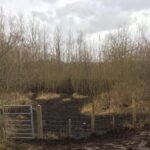
Chemnitz is a city of Germany, where there were four large lagoons or clay and sand pits where waste oils mixed with sulphuric acid were deposited over a period of 50 years (1940s to 1990s). The mixtures of wate from liquid to viscus sludges having a pH0-pH1.
The site was unlined, the clay pits capacity to hold the semi liquid wastes were not found to have been breached whilst the sand pit had seen a plume of contamination away from site develop.

Acid Tar Lagoon Mittelbach before remediation.
The remediation took 15 years (1997 to 2012) with the tars being separated from the sulphuric acid. The tars were used in the cofiring of the local lignite fuelled power station, whilst some of the acids were recycled whilst the rest was treated along with contaminated soils. This treatment required the materials, acid, soil, tar to be mixed with large volumes of specially developed lime powder and turned into a paste that could be encased in foil. These then being reinterred in the reengineered voids that were then reprofiled.
The site from 2013 to 15 was used as a treatment centre for acid tar residues from the Baltic states. The waste being buried in the same sites as that already interred. The tars again going to incineration, this time at a cement kiln facility.
The costs were unpublished but estimated to have been over 50 million Euros.

Excavation of the different parts of the acid tar lagoon in Mittelbach
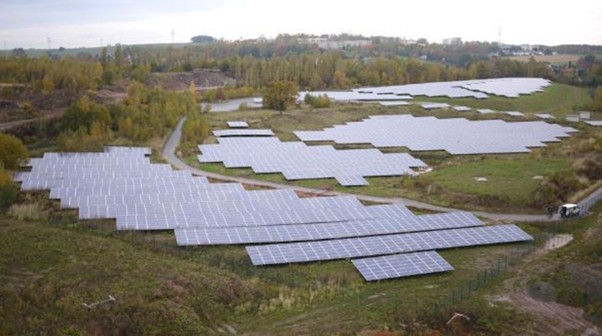
Reuse of the Neukirchen site as a location for PV plant