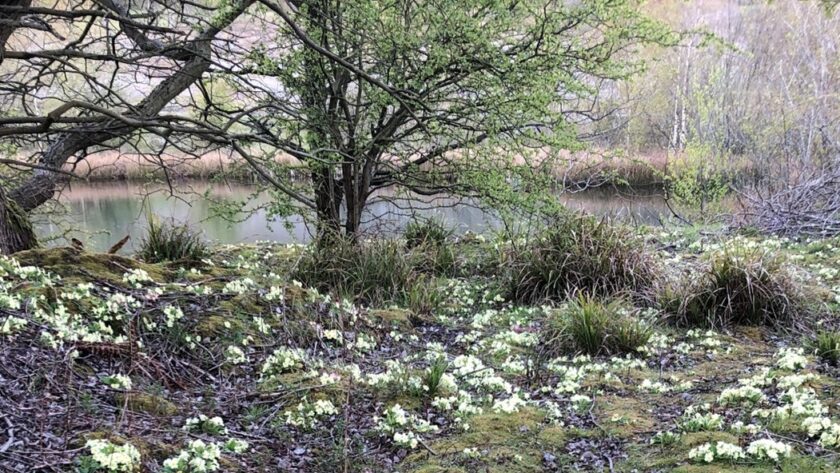
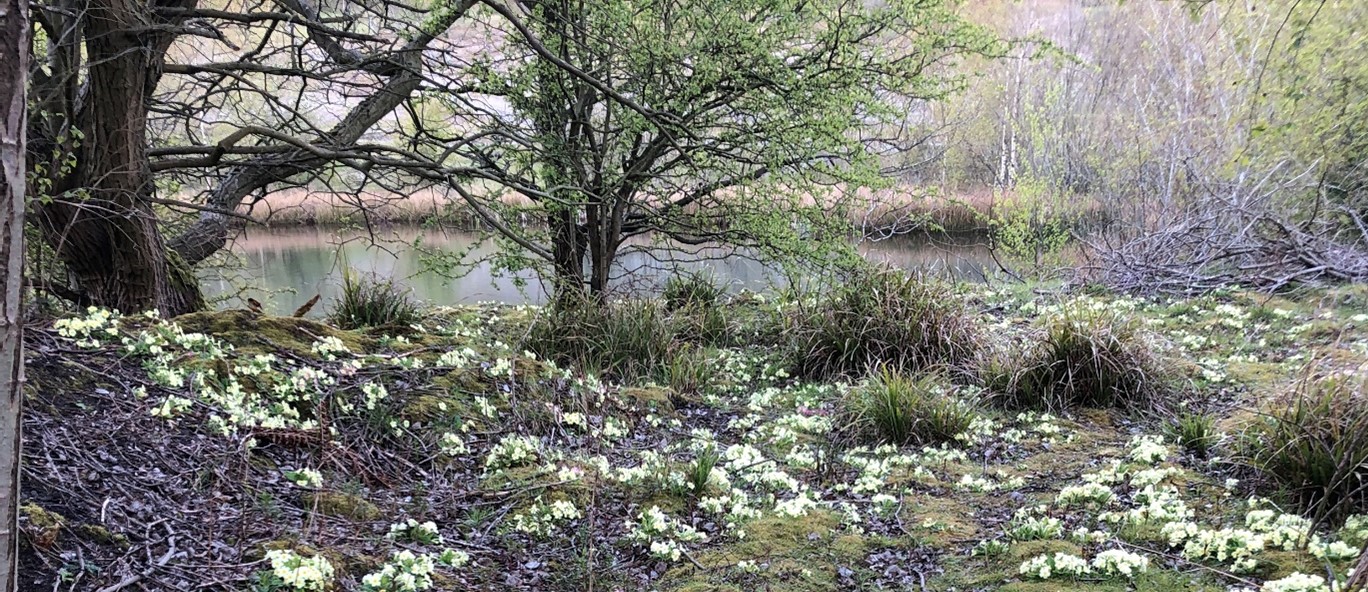
Cinderhill Middle Lagoon.
Report on the activities of the Trust. Spring 2021.
This quarter has been as busy as ever.
Cinderhill.
Trial Site.
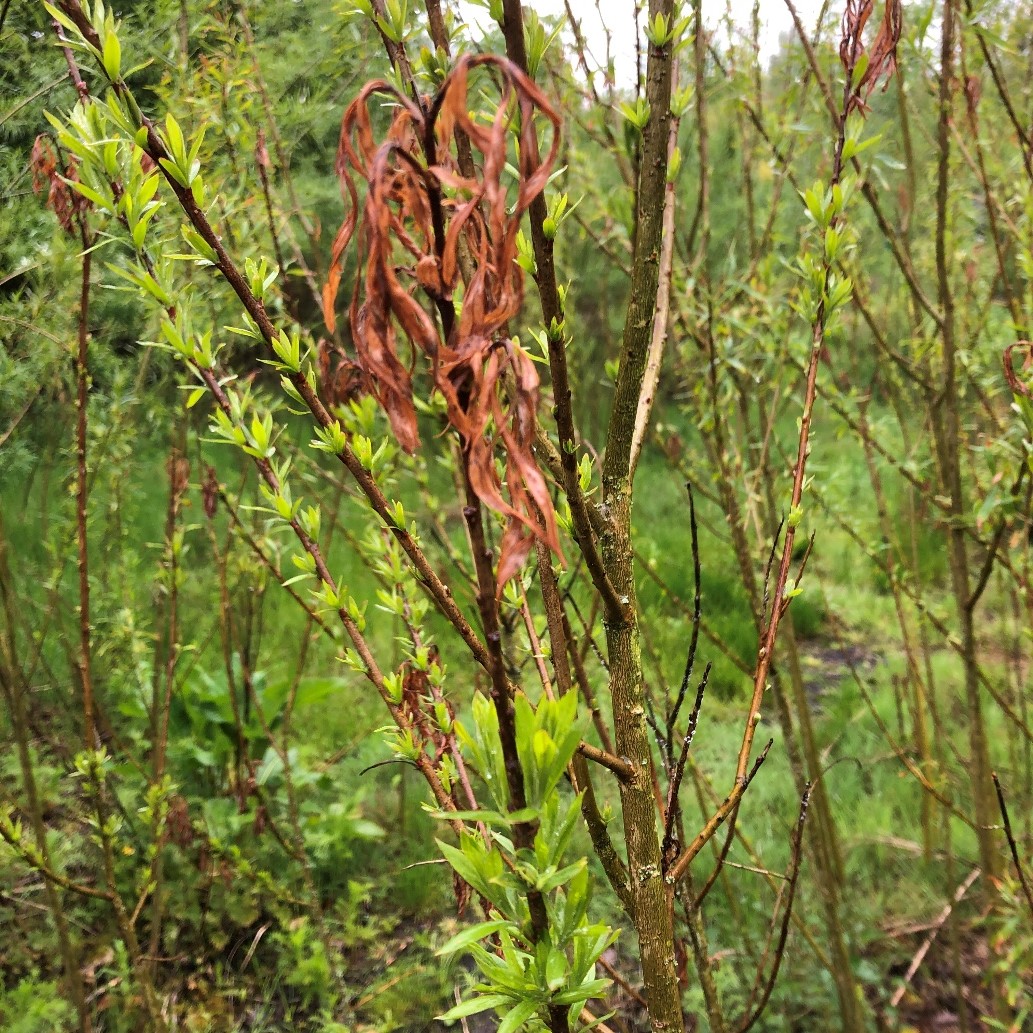
The site has greened up well, with the willows demonstrating their constant venting of gases from the tar. Many defoliated as soon as they produced leaves. They have releafed rapidly afterwards.
Other Tar Pits Onsite.
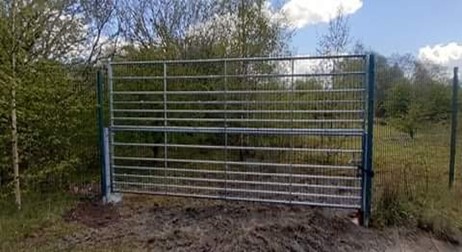
Nathan and Sophie have put in a very impressive gate to the bottom tar pits fenced off area. We talked with both the Environment Agency and Fuchs to gain their agreement. This access will allow us to both work on the lower tar pits and the tar spills into the middle lagoon.
Middle Lagoon.
Plans and a scheme were requested by the Environment Agency. They have accepted the outline and the risk assessment. This work will be carried out when funding allows and the availability of limestone.
MJ took some interesting samples of life beneath the surface of the lagoon recently. Looking forward to hearing about them soon.
Longcliffe Quarry and Vital Earth.
Met with the management of Longcliffe Quarry who are prepared to give us the amounts of limestone that are needed for future work. The same company runs Vital Earth who make compost from council green waste collections. They are willing to give us any amount of their out of specification product.
Media.
Sky News interviewed us for a news slot and their Climate Program on site at Cinderhill. They are comparing the acid tar pit site at Hoole Bank just outside Chester and putting forward the opinion that we should remediate that site which is remarkably similar to our present one. The only difference is a covering of water across it.
Will meet on line with West Cheshire and Chester Council with regard tio Hoole Bank Tar Pit on Tuesday afternoon, after our Trustees meeting.
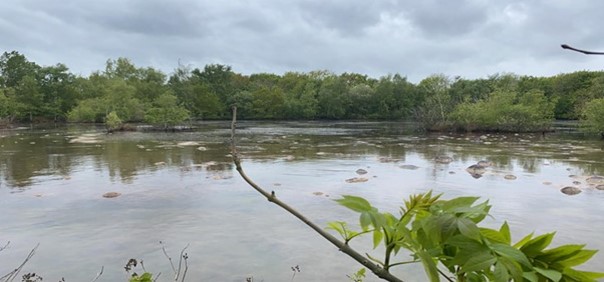
Hoole Bank Acid Tar Pit. Gas pushing up bacteria domes of gas.
University of Nottingham.
We are fortunate that Cinderhill has continued to fascinate research in various areas not as yet expertly covered. We now receive expert backing regarding specific bacteria on site alongside that provided by Will Meredith and Prof. Colin Snape with regard to progress on hydrocarbon breakdown.
Biochar.
We are talking with Prof. Colin Snape about the use of biochar on acid tar and possibly other sites. We will be testing its uses to grow willows over the next months.
Denby Pottery Glaze Pit; Plant Trials.
The plant trials carried out at our test site in Birmingham have demonstrated that the willows will grow well on their historic glaze lagoon, decontaminate and stabilise the site.
Minewater.
We are getting reports from various bodies that this year has seen several new discharges of minewater across the UK. Several of those contacting us have already talked with the Coal Authority who say the problem will go away when the rain stops.
Several streams and small watercourses have been polluted with ochre and the stream beds coated in iron hydroxide. Some very unhappy communities about the country. We continue to support and suggest clean up methods and ongoing management.
We have also been looking at the South Nottinghamshire and Derbyshire coal field area as we have found that BGS and the Coal Authority are aware of certain events regarding minewater rebound may be taking place soon and they have not as yet set up an action plan, let alone preparing for any rebound event.
Our work in the mid and late 1990s would appear to have pinpointed the areas of higher risk for the environment. These views at the time were treated with scepticism, but now they are being put forward as if it was a surprise.
National Resources Wales.
We have been contacted by Natural Resources Wales to give some support with regard to metalliferous mine discharges in the north and western regions of the Principality. We have been given some documentation that demonstrates the concerns and constraints they are under.
A great deal of knowledge appears to have been lost over the last 25 years as they are commissioning new research that was carried out in the early 1990s. We naturally passed on copies of the historic reports which are more detailed than what is now being provided.
The Yorkshire River Derwent.
We were contacted by residents of a village on the River Derwent in Yorkshire, concerned that the river was not as diverse in its uses and lack of navigation. River bankside quality was also raised as another issue.
A short piece of research has shown that no one agency had the care of the river in its purview apart from water quality which is high. There is a remarkable spat in progress between riparian owners and navigation rights. The Environment Agency, it would appear, has handed all research and planning over to the East Yorkshire Rivers Trust to sort out as it is a chalk stream river, and the Rivers Trusts know more than any about these rare beings. I beg to differ.
A strange state of affairs!
Web Site.
Pleased to say that the website has now clocked up over 200,000 visits from 139 countries in the last year. The visitors have come from both the predictable nations including UK, USA, all over Europe and South America, also Mongolia, New Caledonia, Afghanistan, China, and Nepal.
Noreen Shears work has demonstrated the value of upgrading the look of the site.
Funding.
Pleased to report that though funding is slow, work is able to carry on. It is hoped that we may regain corporate support for Cinderhill in the next year, though not holding my breath. Fundraising continues.