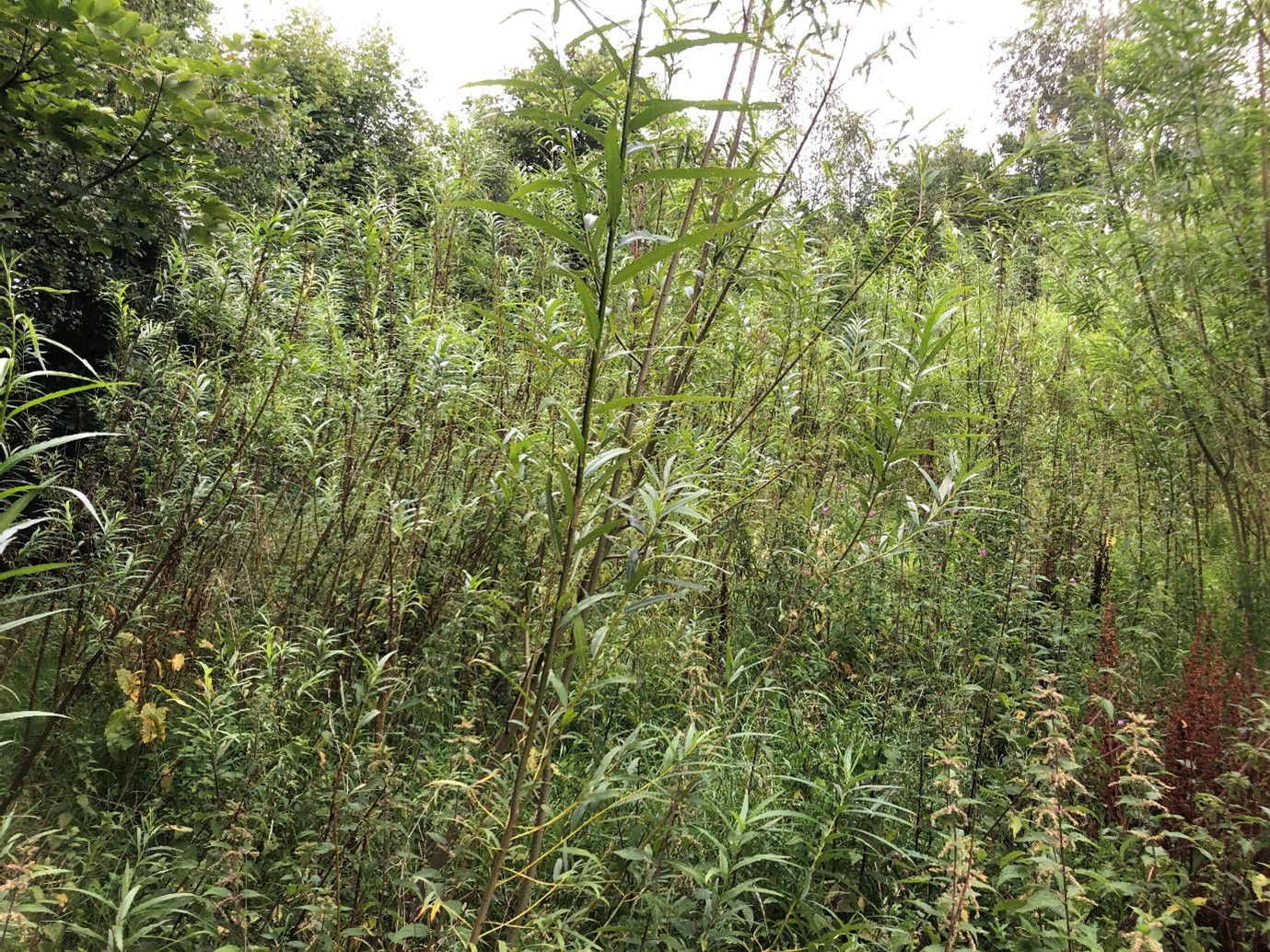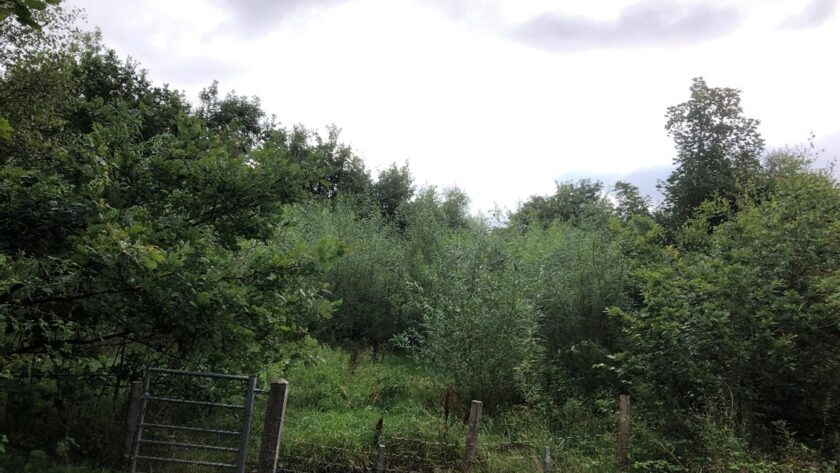
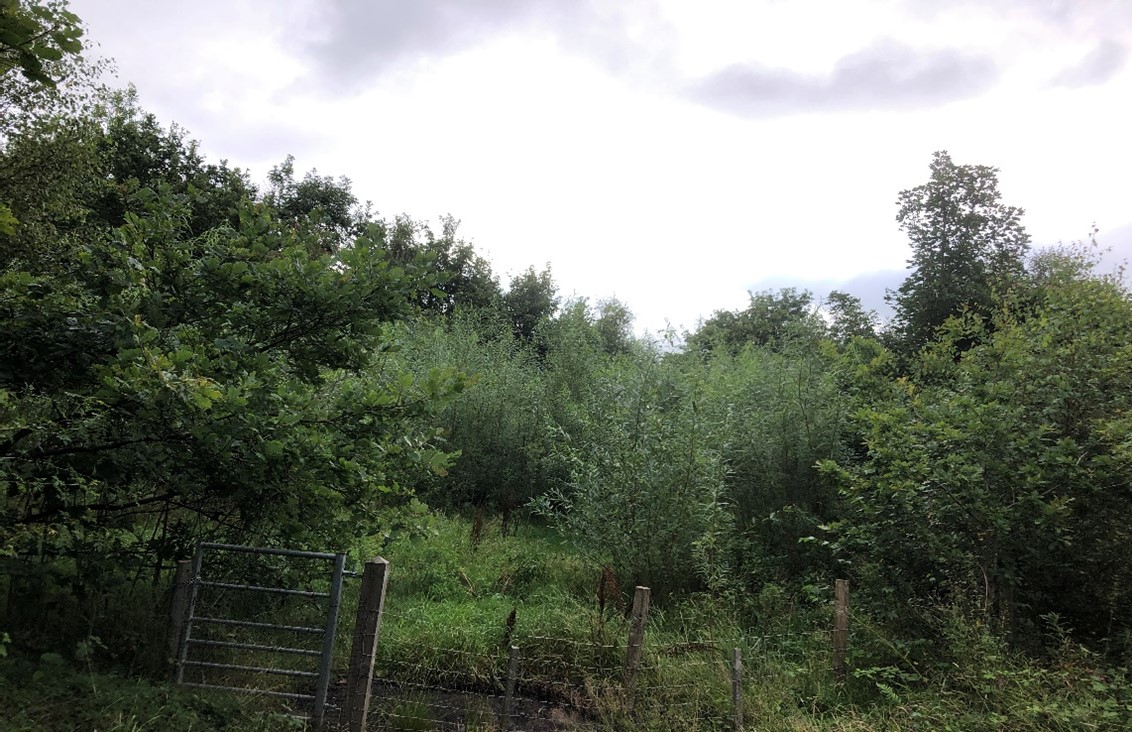
The Cinderhill project is continuing to demonstrate the ability the willows possess of growing in an extremely hostile environment. The site is looking well filled with young trees and in some parts a secondary growth of young willows is appearing. The whole site is vegetated except for the two-metre square of bare tar left for demonstration purposes. Grass is growing well between the willows, some nettles and thistles are establishing with, at the far end of the site, a carpet of clover which is allowing the willows planted directly into the tar to gain nutrients. In amongst the clover a young toad was observed.
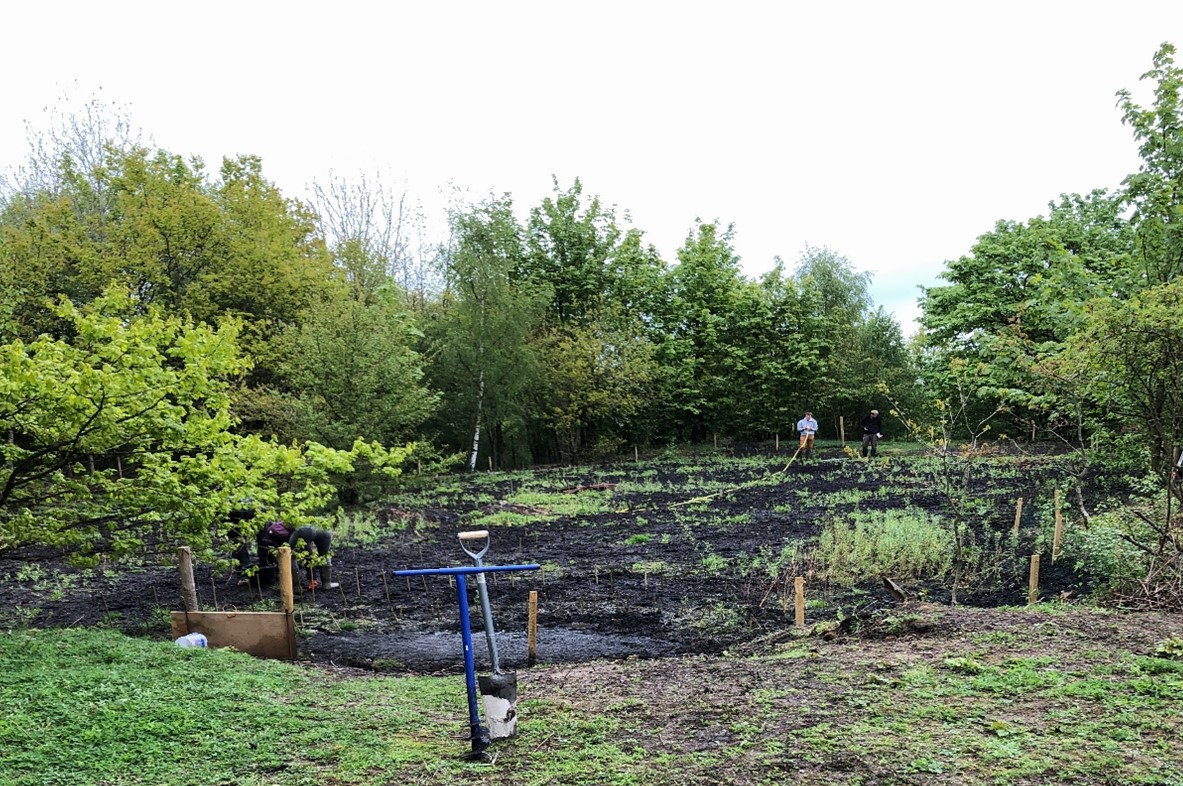
The site was considered to be not capable of in situ remediation by major consultancies who put forward estimates of cost for treating the site at tens of millions of pounds. The works would have returned the site to that of a wasteland with the area being clear felled and engineering and remedial infrastructure being located across the area for several years.
This remedial trial is now in its 4th year, and it has become part of the natural landscape. The needs that were the goals for the project have been met in that the surface carcinogens have been naturally destroyed, the site is stabilised, it deters the public from going onto the site, it is supporting a remarkably diverse wildlife, and developing a varied flora.
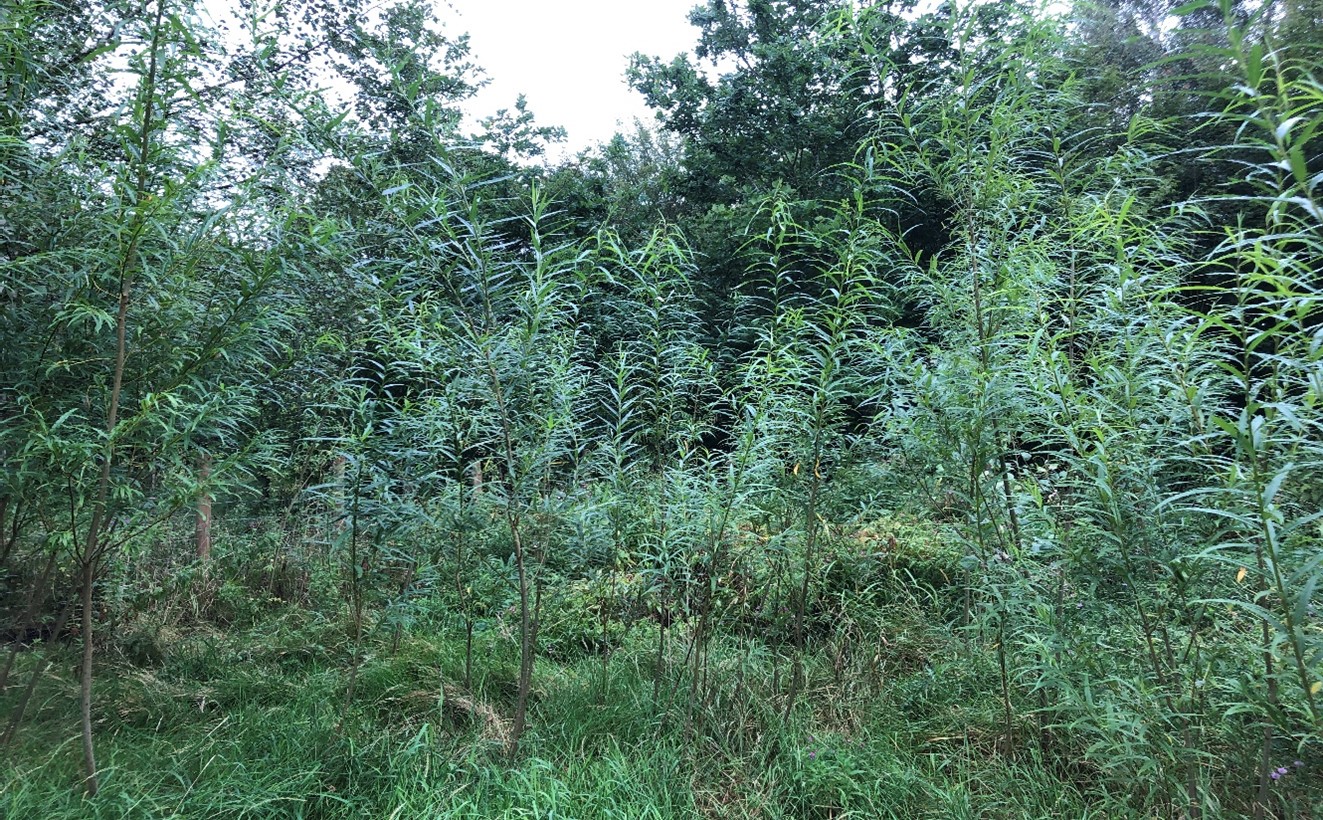
We planted many different sorts of willow on the site in this trial, the biotypes have now been sorted out to ascertain the most successful sorts. We have found one Japanese variety, though slow to take to the conditions, many not surviving but now demonstrating a remarkable energy and accelerated growth that may be more suited to a different type of acidic hydrocarbon growing medium whilst Scandinavian clones show vigour across the whole site. Crack willow, the initial willow used in our 1990s trials has not done well on site.
Poplars have been slow to develop but those that have are now demonstrating their potential as a biodiversity addition. Their abilities in acidic tars and the effects of gas venting are not as yet understood. Several died in the bore hole gas venting of 2019 but those that survived are now doing well. The patch of willow cuttings hammered into a tar bank at the eastern side of the trial site have been incredibly slow to develop, often appearing to die. They have though survived almost intact as a cadre and have developed root systems as good as many planted with compost. In the last two months there is a discernible top growth development that bodes well for the coming year. These willows have encouraged the development of a growth of field clover across their area. Initially mosses grew on the surface but now the mosses have been overtaken by clover. It might be worth considering at establishment of the willow cuttings to under sow clover to give an increase in nitrogen to the willow roots at an early stage in their development.
It is noticeable that several of the willows are suckering and developing a secondary understory on parts of the site. This demonstrates a vigorous lateral as well as downward root growth.
Thought.
In the Belper area, to the southwest of the town as well as at Cinderhill, there are at least 12 more acid tar pit sites that could benefit from our attention. There is a desire within the community for sites to be made safe and the use of phytoremediation gives the community an option to remove a blight on the area.