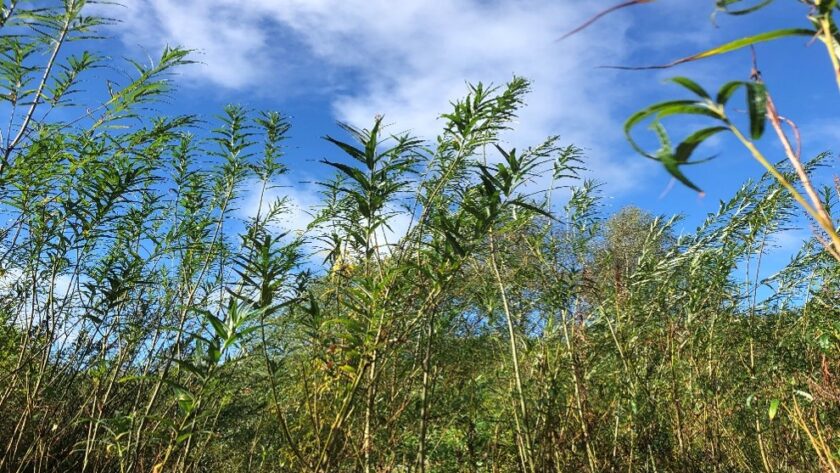
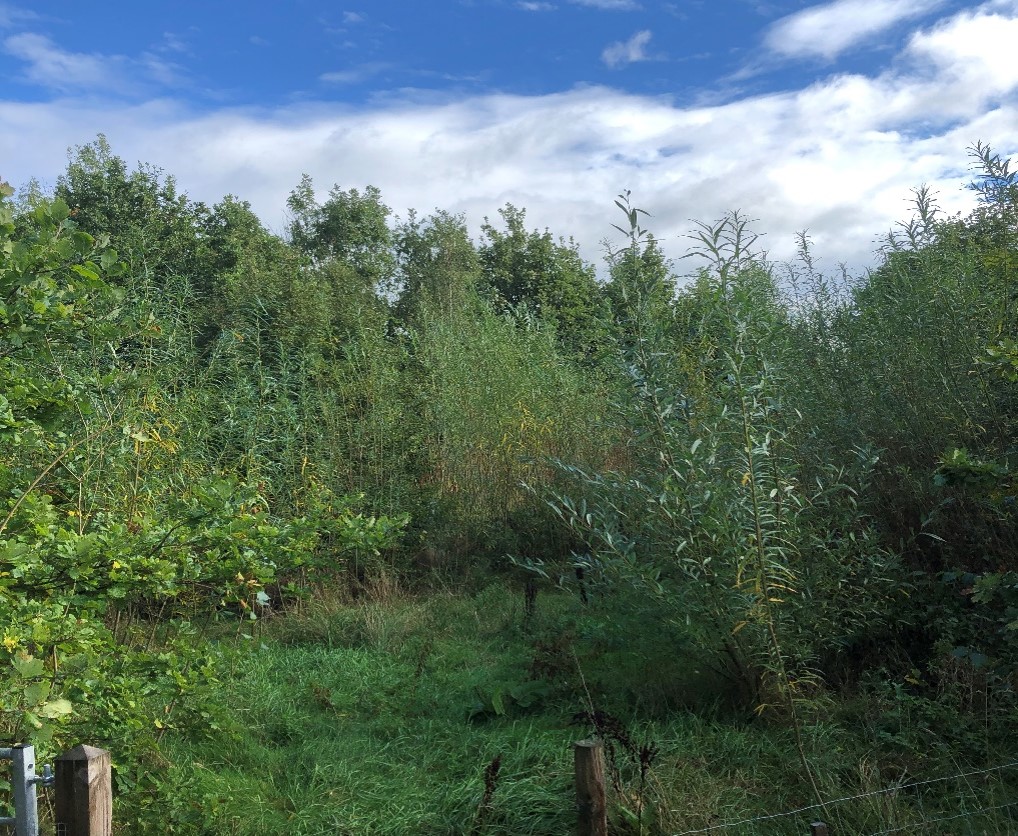
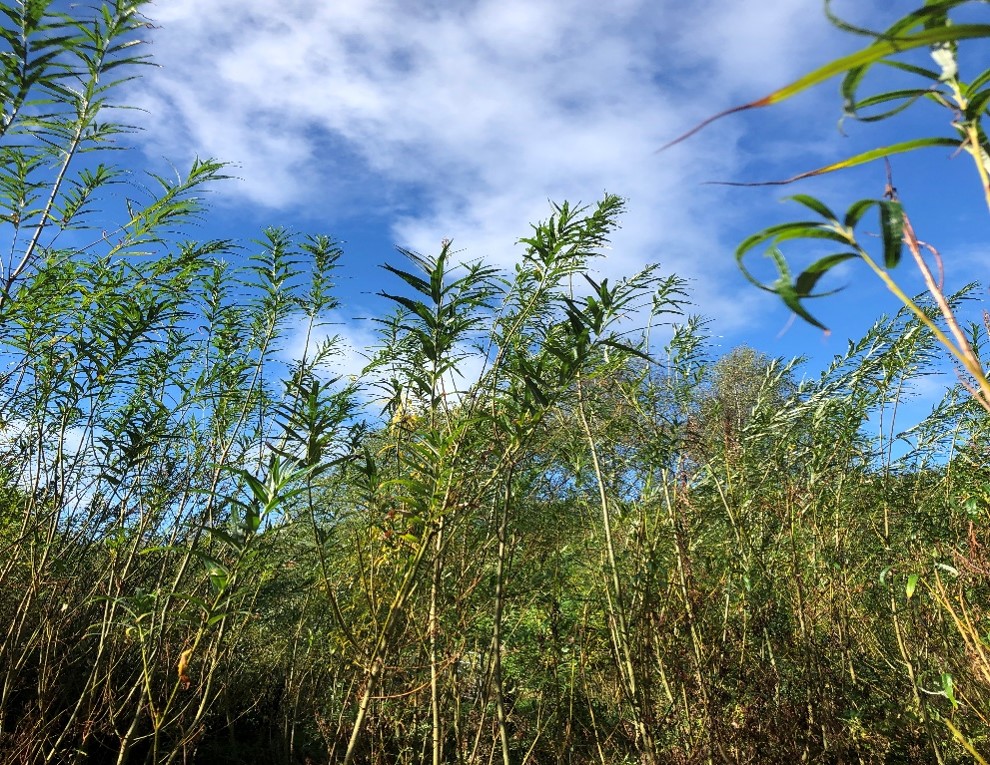
The willow and compost treatment trial at the Cinderhill Acid Tar Pit is continuing successfully. Planted in May 201 8just prior to the drought which lasted for more than 3 months. The site has not just been planted but ‘farmed’ since then. Throughout the near 4 years we have been growing the willows on site we have had several problems, willows being cooked in the initial months after planting, boreholes releasing noxious gases that killed some trees, interesting aphid infestations, deer, and badger visits. Even after these hiccups to contend with the trees have flourished.

The most recent hiccups have emanated from the willows doing their work: the roots have penetrated the tars, the surface level of the site has dropped by several centimetres and some gas, predominantly S2O has vented through a series of stress cracks that has developed east west across the site. The willows have now suffered two major defoliation events, fortunately the trees have started to regrow leaves even at this stage of the growing year. Other non-gas affected trees are naturally dropping leaves with the onset of autumn.
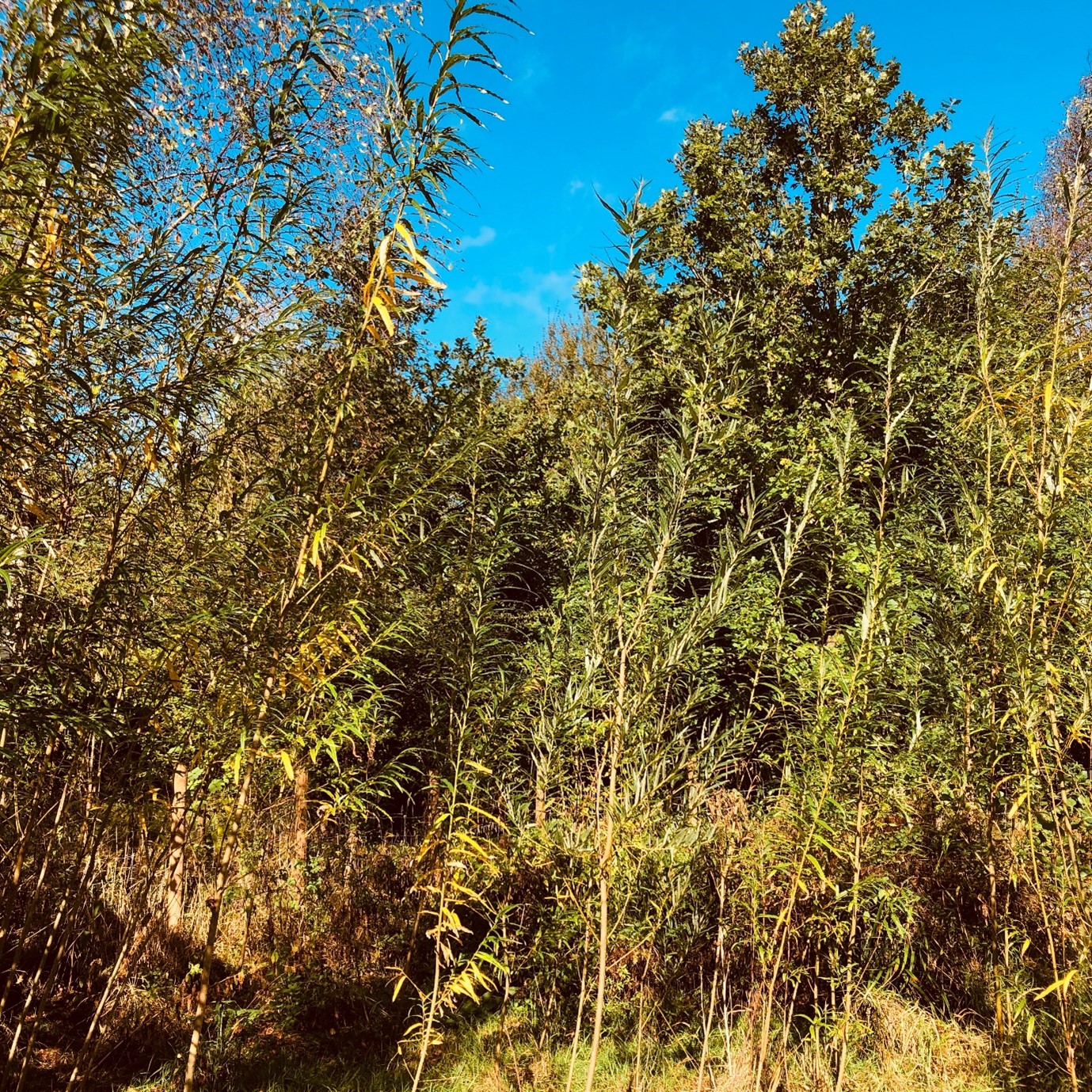
We observed defoliation of the willows on a slightly smaller scale in the same area of the trial site last autumn (2020) as well, but the source was not evident as individual trees defoliate on parts of the site. Willows will transport gases from their roots and expel them from the branch, twig, and leaf nodes: the reason why this species was chosen in the first place.
A small borehole was put down in the gas venting area, using a hand auger, it was sunk to a depth of 1.5 metres and a gas monitor was used to identify what gases was free flowing from the void created. S2O was identified as the major gas present.
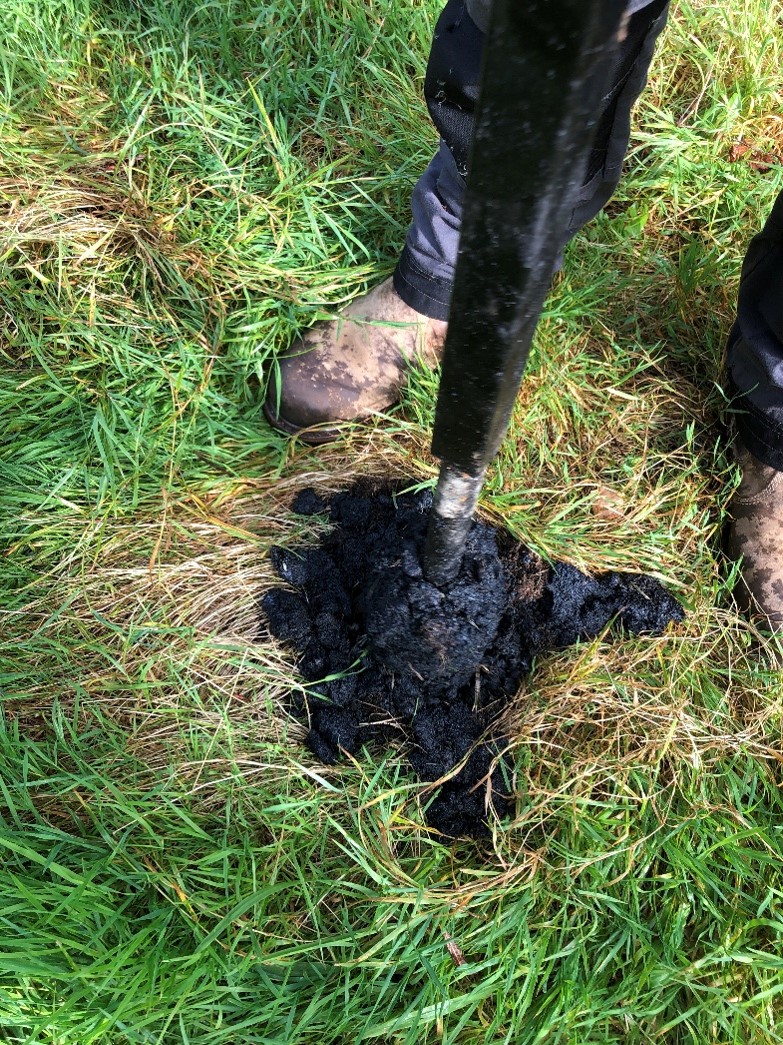
The putting down of a hand augered borehole has allowed us to inspect the breakdown of the tar and any mixing with the compost which has been placed onto the surface. The original depth of compost placed on the tar surface was between 6 and 8 inches. The borehole demonstrated that compost was integrating into the tar. Worm activity was noted throughout the borehole depth, but the maximum populations was within the first 18 inches.

Work supported by the Michael Marks Charitable Trust