Poisoned Rain.
Ever since Silent Spring was published by Rachel Carson (1962) many people have been concerned that agricultural chemicals will see the end of life on earth. They are aware that artificial and biologically tampered with materials that have been used as both herbicides and fungicides will change the world irreparably. Fears of genetically modified crops being the last well-known concern, crops immune to chemicals that could be showered onto them and the land they grew in to kill the weeds that might otherwise choke them.
This is a major issue that is growing today into a deadly reality as many of these chemicals are now known to be a constituent part of each shower of rain that falls. Eighty-six percent of rainfall assessed in US for signs of glyphosate proved positive (USGS 2020). Fifty-six percent in Argentina (Lupi L et al. Chemosphere Volume 225, June 2019, Pages 906-914)
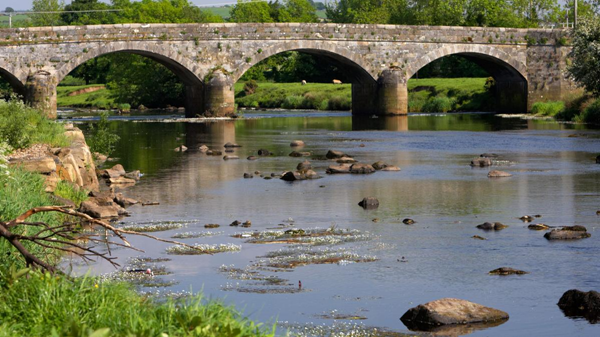
The River Derg in Ireland is one of 247 evaluated across the country, many of which are used as sources of drinking water supply and found to hold high but unspecified volumes of pesticide. European Union Environment Agency say that only 19% of rivers across the continent hold quantifiable amounts of agricultural chemicals. (Thursday December 30, 2021, The Times).
in land-based systems for many decades: only, some are becoming less effective.
.
Weeds and Fungi Resilience.
It is well known that many antibiotics prescribed to patients by their doctors are now not working as they should, the human body finding that viruses and other illnesses can gain immunities to such treatments. Similarly, it is now becoming more obvious that some plants and other flora are becoming immune to many weed killers and insecticides. Duncan Slater on LinkedIn recently illustrated this where he showed the two pictures (below) of fungal growth on tanalised timber fencing. These photographs illustrated his point ‘Many chemical treatments we currently rely upon for our food and health systems are unsustainable in the longer-term, as microbes increasingly become resistant to them. If we look to Nature, we find more sustainable methods of management and ‘control’ that have perpetuated for millennia – many more lessons need to be learnt in this Century about how Nature should be our teacher, and Nature should not be something we progressively squeeze out of this world.’

Many people who like their gardens weed free and paths pristine say that their use of weedkillers has increased, dandelions and other long taprooted plants are not killed by one or two applications of Round Up weed killer, a common product made up of glyphosate. The constant increase in weedkiller and aphid treatments lead to increased groundwater contamination and ill effects on bees and other pollinating insects.
Rail Track the major UK user of herbicides has found that it is using greater volumes of glyphosate annually. Research conducted by several organisations have shown raised levels of herbicide now entering drainage systems, ditches and streams close to railway lines.
Last Words.
The increased amounts of chemicals in rain and rivers are not all sourced from agricultural or amenity use. The build up of the cocktail of environmental debilitating materials comes from many sources, industrial, utilities and domestic. There needs more research put in place urgently to understand the true nature of the situation in the UK, and globally.
References.
https://www.sciencedirect.com/science/article/abs/pii/S0048969718326184