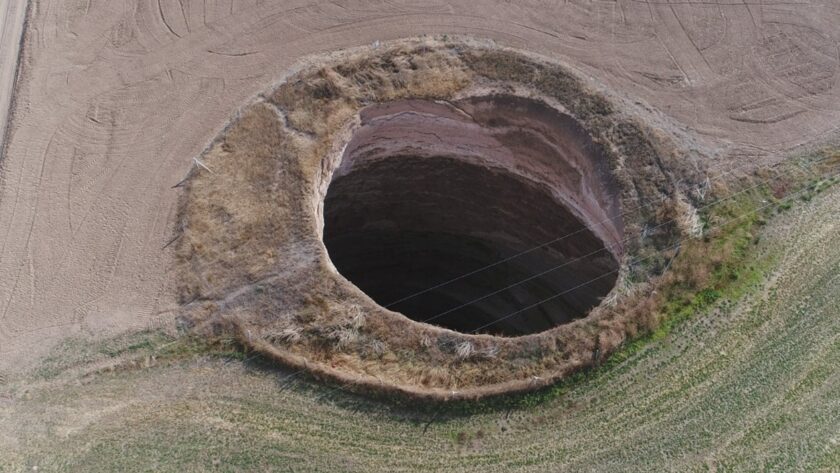
There were six hundred sinkholes in the Konya plain.
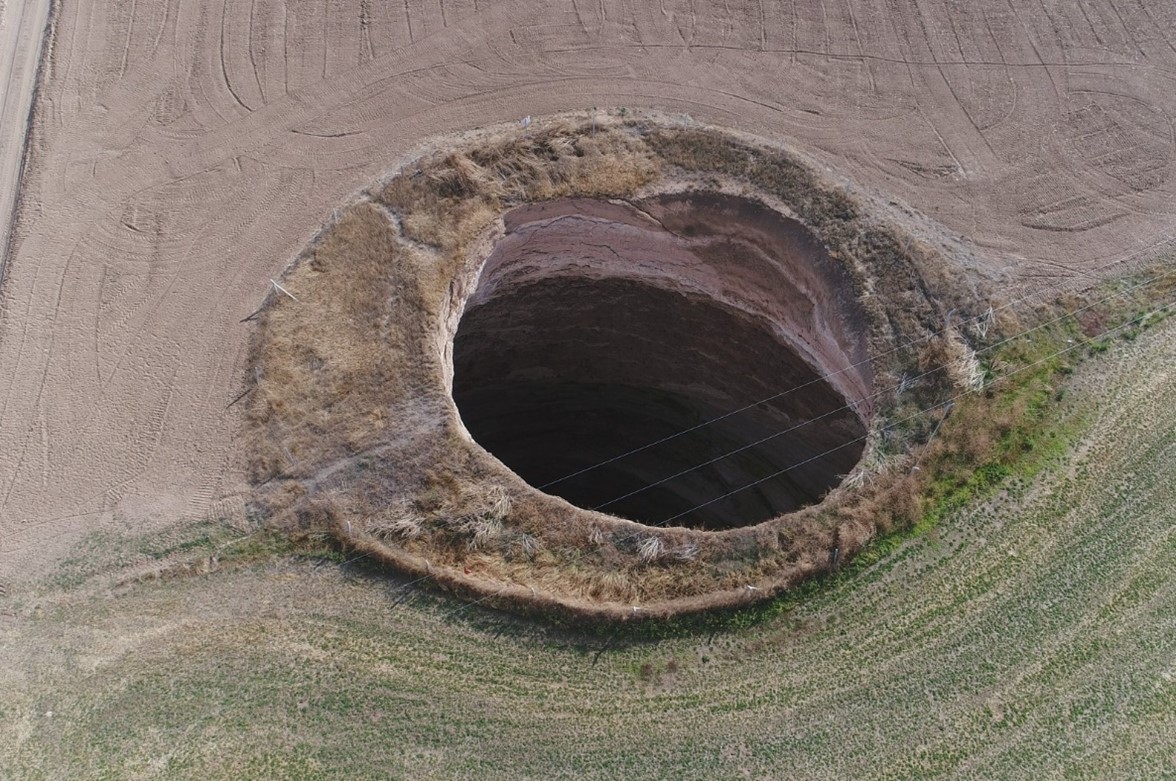
Konya Plain sink hole December 2021.
The Trust has an interest in sink holes, these are not uncommon in the UK, especially in the Ripon area of North Yorkshire. The area has large deposits of gypsum that dissolve over time and holes suddenly appear in surprising locations such as back gardens or car parks as well as fields.
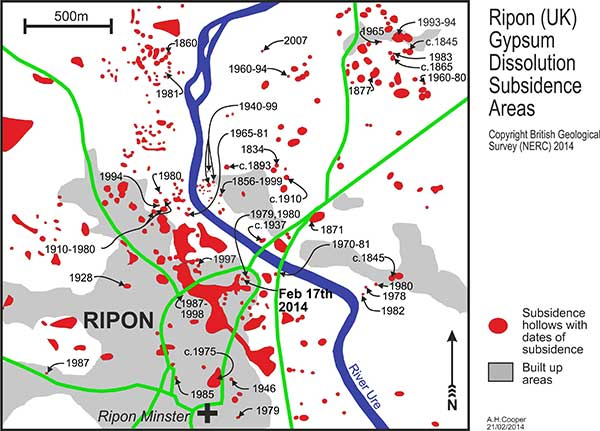
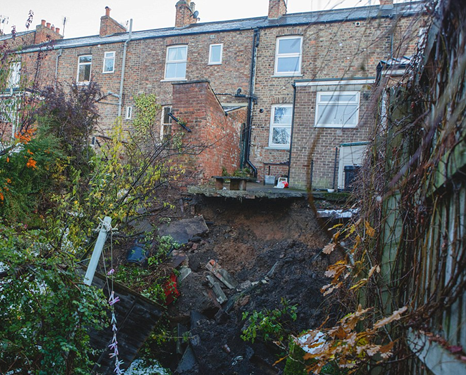
Ripon 2013.

They are not unusual phenomena, the fact though that most sink holes are near perfectly circular is found strange by many. The shape though is dependent on the method of its formation. Some caused by subterranean water flow in soft limestone areas or karstic conditions can be long and winding.

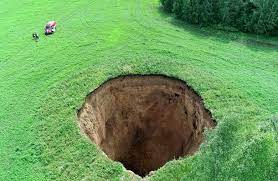
Sink holes appear as if by magic, with no warning and go down into the unknown, which is always an excitement. They are also a major concern for builders, planners, and insurance companies. Sink holes appear across the globe and reflect the nature of the environment and geology around them.
Konya Plain.

One remarkable area for large and numerous sink holes is the Konya Plain in Turkey, the area has of recent years been plagued by an increasing number of these holes, and the number is increasing at an alarming rate.
In January 2021, the number was recorded as being six hundred, by December 2021 that number has increased to over two thousand. The reasons for this rapid proliferation in occurrences are the regions climate emergency. The region has suffered a long-term drought alongside increasing use of both official and unofficial wells. These supply the population with drinking water, and increasingly waters the arable land of the region. The Konya Plain is amongst the most important grain, particularly wheat, growing areas of Turkey, vital for the nations bread production. Konya has always been an important grain growing region and is recognised as amongst the first grain producing areas beyond the Fertile Crescent of Mesopotamia.
The ground water levels of the region are dropping as more wells are sunk and increasing volumes are abstracted from the ground. Winter rains and snow fall are producing less precipitate water to recharge the aquifers.
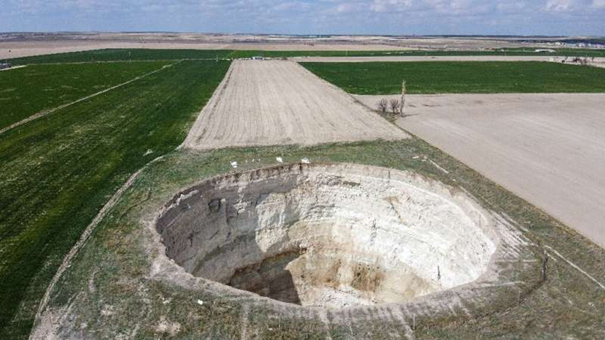
Historically sink holes were found in the hills surrounding the plain, caused by seasonal rains dissolving the bedrock in a very similar manner to that found in the UK, particularly around Ripon. This though has changed markedly over recent time with many being formed across the plain itself and even now being seen in the towns.
Many of the sink holes develop as water abstraction lowers the water table. As water levels drop caverns within the limestone rock below the thin soils lose their flood water which removes their strength, and the surface drops down into the subterranean voids.

Alongside the increase of sink holes, cracks or rifts are appearing in the landscape. Some have developed to a depth of several metres and over one thousand metres long.
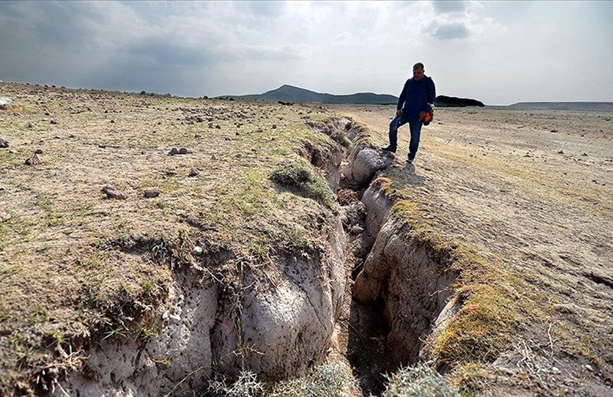
Research is underway to try to find ways of slowing land movement and subsidence in this area of Turkey. The lack of rain seems to be the main issue alongside that of a lowering water table due to over abstraction from the water table. Since December 2021 there has been some excessive rain events that have exacerbated the situation regarding land stability further but as yet the full extent of these is effects are not fully understood.