The Trust has been busy tackling several novel issues as well as the usual ongoing projects and research.
Cinderhill Tar Pits and Acid Lake.

The tar pit located by the side of our research site is being transformed at this time alongside the top dressing of the research site willows.
The willows on the tar pit have, in places, exhausted the compost initially laid down on the site, the material has been incorporated into the tars by the actions of worms and insects alongside plant root action. Whilst this laborious work is being conducted the neighbouring tar pit is being covered over with agricultural compost to a depth of one foot to eighteen inches. The surface of which will be planted with cuttings taken from trees planted at a nearby pond four years ago, for this purpose.
MJ will have the paper prepared shortly in preparation for publication.
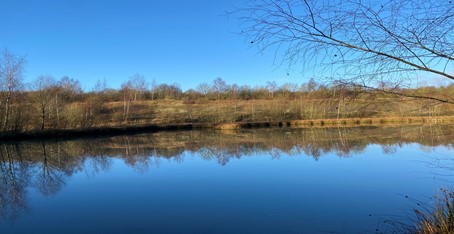
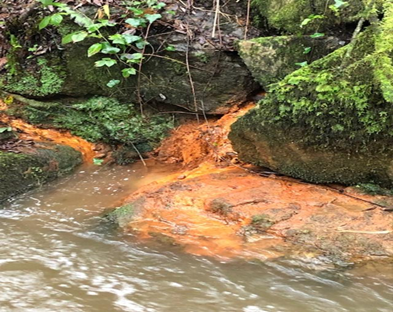
The acid lake is having the two acidic oil entry points plugged with limestone filled gabions. The excavated voids behind the gabion plugs will be filled with limestone. The work will be completed so as to not risk harm to amphibians that are known to inhabit the area.
Hoole Bank.
DEFRA Discovery Fund have started talking to us regarding a trial on the site. They are talking to the Environment Agency to get us official access to the site rather than squeezing through the fence as we did previously. DEFRA are in discussions with the local authority, but all are impeded by local EA staff.
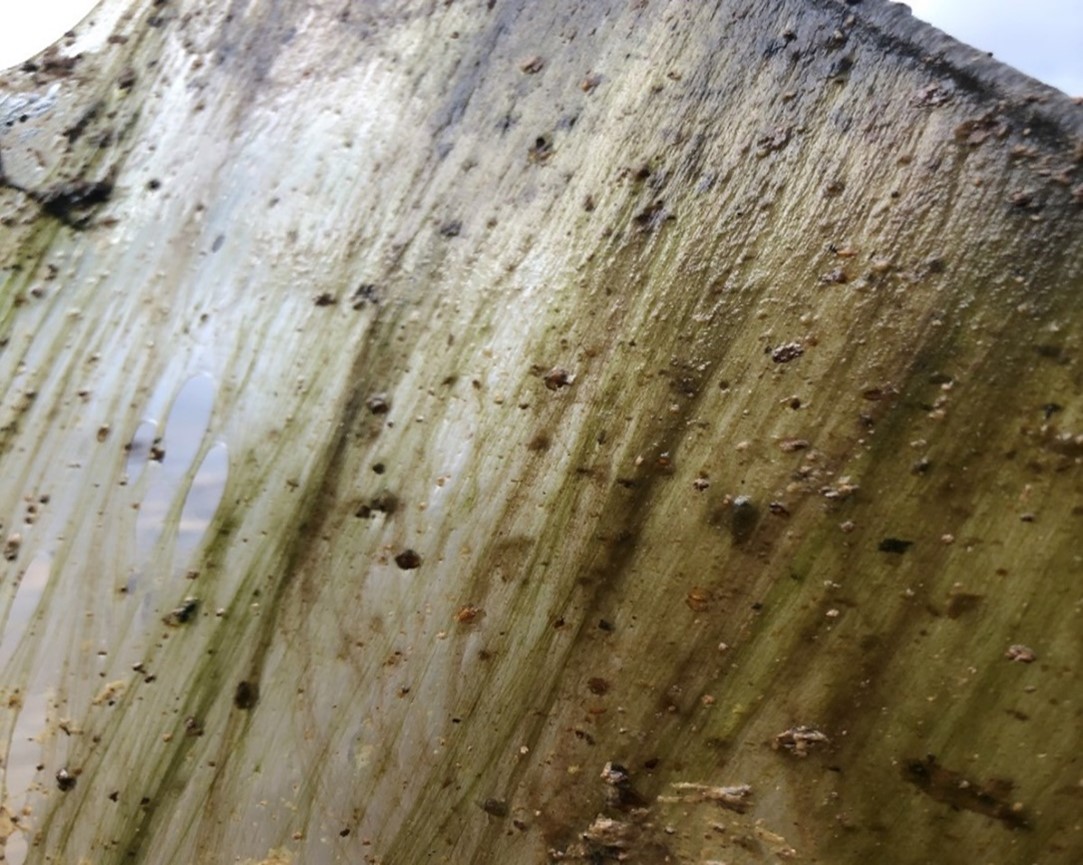
Hoole Bank Alga/Bacteria.
ENDS Report.
Rachel Salvidge, Deputy Editor of ENDs is in touch with us on a regular basis at present asking for an understanding from our perspective of issues as well as saying she is going to cover Hoole Bank and draft a report on our remedial work at Cinderhill.
Solvay.
We are back in touch with Solvay now that HS2 is no longer likely to use the Staveley Chemical Works site as a centre for their northern railway engineering centre.
Also, sites in France and Italy are of interest. The Cinderhill methodology is a way forward to clean up several of their sites as well as limit and remediate plumes of pollution emanating from some sites.
River Spey.
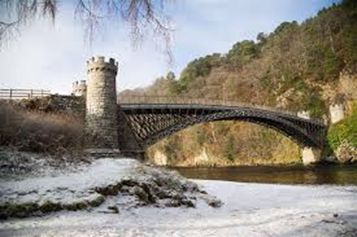
We have been in talks with the Highlands and Islands Environment Foundation who have asked us to support their developing interest in the problems of the River Spey. These are a great mix of concerns, including over abstraction, agriculture, distilleries, minewater from early iron and copper workings, and other issues as yet to be assessed.
Scottish Historic Mining.
The Trust has been taking an interest in minewater north of the border in the Midlothian and Fife coalfields. Discharges from new sites as the mines fill to overflowing in some areas along the River Esk in Midlothian. The CA blamed the lack of rain for the ochre not being diluted. The CA are going to announce their plans for the area shortly.

Newark Archaeology.
The archaeologists working on the landscape project we assist are hoping to publish a paper shortly with regard to their findings on the Island section of the last siege of Newark in 1646. The amount of work that has gone into this study has been phenomenal (11 years). It is good to be involved in the background.
Minewater Heat.
Durham County Council has been in contact with us to understand the Coal Authority and its stance. There appears to still be some ambiguity regarding the organisation’s true commitment despite a great deal of hype and publicity regarding a new village heated by minewater that is in the planning stage.
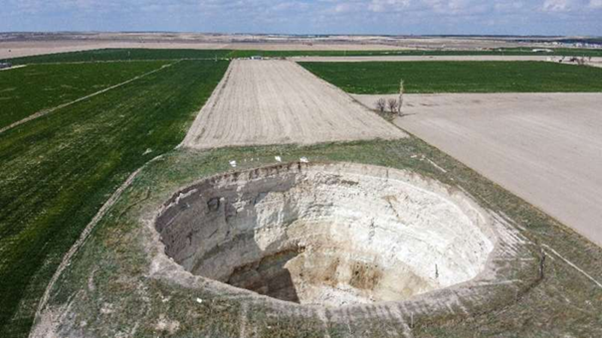
Sink Holes in the UK and Turkey.
Have been looking at increasing numbers of sink holes appearing in the UK and Turkey. Those in Turkey are the more remarkable due to their size and rapidly increasing numbers: over 1000 having appeared in the Konya region alone in the last 12 months.
PCBs in Wales and Possible Remedial Works.
We have been talking to the Rev. Paul Cawthorne regarding several sites of contamination in South Wales and Herefordshire. We need to tread an independent path as we wish to see the issues that are being brought to the fore remediated and not side-lined due to impasse or refusal to talk which seems to be the developing stance of the local authority and Natural Resources Wales. We need to be seen as an independent arbitrator with solutions. Always our preferred role.
Bauxite Waste.
The Trust has looked and worked on bauxite-based material twice, once with a UK/Australian operation fronted by ERM in the 1990s and Red Media in the 2010s. both projects were no goers!
The company NPL Group who are a major company in reclamation and development on brownfield sites has set up a joint company with Purgo Group, a company based in Dublin, called PurgoNPL. They are developing a product, apparently, using a similar methodology to that we developed between 1998 and 2015 to fire red mud, they then mill it to sizes suitable for aggregate. We are looking to meet up with the company shortly. I have been careful in my wording of this!
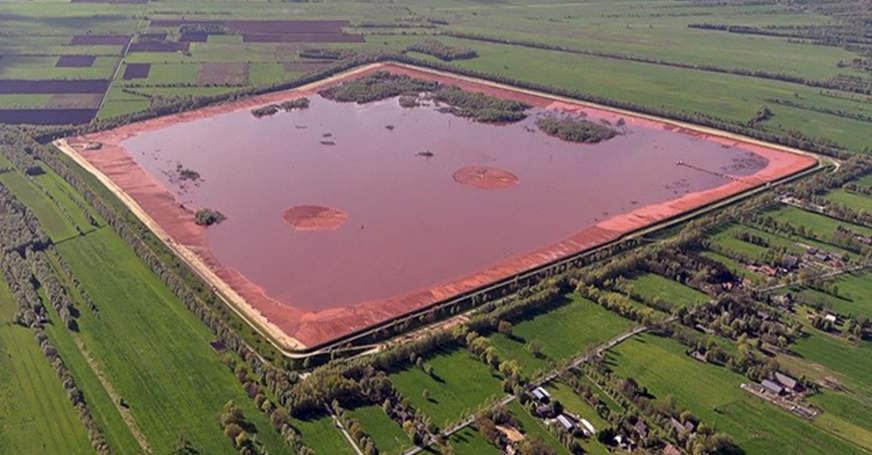
There are tens of millions of tons of waste red muds in lagoons across the world that are a major worry for rivers and water safety worldwide. The project is of huge interest to us as there have been many major pollution events caused by these ponds.
LvKB Fundraising.
Lawrence has been fundraising for us in West London in conjunction with a popular eatery. We have thanked the owners of the venue for their valuable support.
Avian Flu.
The Trust was contacted about a large number of waterfowl deaths in local parks in Birmingham. Saw some gruesome sights. Birmingham City Council found it difficult to deal with, but eventually set up a disposal route for the bodies. Just under 100 geese, several swans and innumerable ducks have died in the local area.
Acid Tars and PCBs, Nova Scotia.
We have been contacted by the Halifax Metropolitan Council, Canada regarding some problems the council has with a site in their area that cost many millions of dollars to remediate. The project finished 10 years ago but acidity is still present at certain parts of the site. It has been capped with concrete and now oozing out round the edges though much of the tar and waste was mixed with cement prior to the cap being put in place.
It has been suggested that lime, compost, and willows might be trialled at some of the breakout points.
Extraction of Metals and Locating the Only Uranium that May be Taken Easily in the UK.
Due to discussions with ex-employees of a company we have worked with a number of years ago research into rare earths and uranium has begun in an area of the UK. This is in conjunction with revisiting work carried out into bioremediation of metal rich minewaters from the metalliferous areas of the UK.
Web Site.
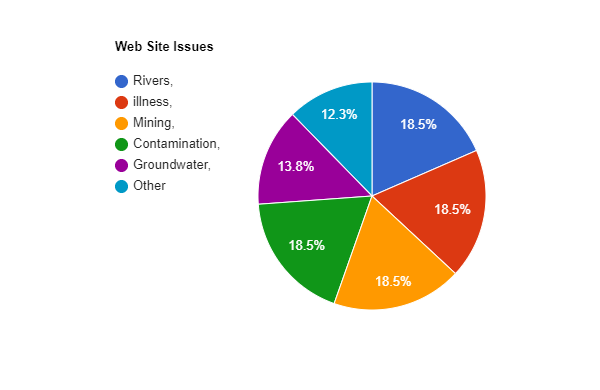
The Trust has been told that there is more need for specific information about the organisation. On the web site.
The first tranche of detail including information on users and consultee satisfaction are appended below.
Funding.
Funding continues at its usual speed with letter writing and conversations with anyone interested in CRT’s work. It is always a concern that I can convey the excitement and wonder of the work when it succeeds in producing the desired results and the resolve that is needed to take new steps into areas of research and trialling innovative ideas or variants of previous methodologies.
APENDIX
Clean Rivers Trust Policy Overview.
The Trust has developed a series of policies over the years by which we stand rigidly. They are reviewed on a regular basis and if there is considered a need strengthened.
Policies:
- The Trust will do as little damage to the environment both in the manner in which it works and in areas where projects are conducted, this includes looking to minimise its carbon footprint with regard to travel. It will recycle as much of its waste streams as possible and uses grey water where it can be used for such purposes as irrigation of experimental trial beds or similar uses. The Trust uses recycled materials for printing and other purposes. The use of public transport is encouraged where at all possible to limit direct carbon emissions.
- The Trust encourages anyone to report any wrongdoing by any member of the organisation, moral or ethical. The importance of ‘whistle blowing’ will not be overlooked and the Trust will act on any information received.
- The Trust is committed to the care and wellbeing of all people who collaborate with us as volunteers, paid staff or contractors. The duty of care with regard to moral, mental, ethnicity, religion, sexual orientation, gender, or any other issue that might be considered necessary are human rights.
- The Trust will not tolerate bullying in any of its forms.
- The Trust is against human trafficking and is aware of the issues and signifiers of modern slavery and will report to authority any such issue or suspicion of such issue.
- The Trust is a supporter of training and will encourage all who collaborate with us to develop as far as the individual may wish to develop their knowledge or capabilities. No educational coercion will be tolerated.
- The Trust is committed to equal right.
- The Trust will allow access to its archives and library to all researchers at any reasonable time by appointment.
- The Trust will respond to any request (from individuals, community groups, statutory or industry) for information or help as soon as that request is received. The response beyond that will be proportionate to the need.
- The Trust respects the confidentiality of all people who give us information, except if that information offers evidence of criminality. In such an instance the appropriate authorities will be notified.
- The Trust will always respond to anyone asking for education with thought out route maps at the least.
Clean Rivers Trust Equality Survey. 2021/22.
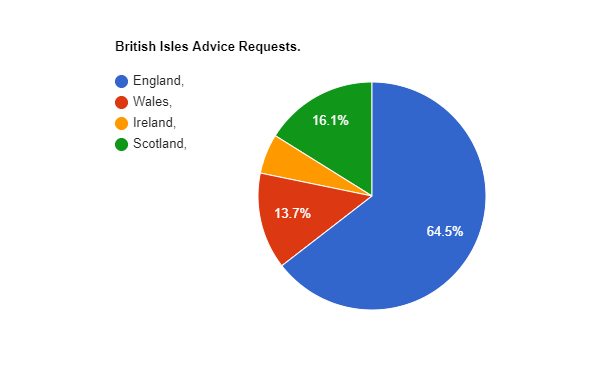
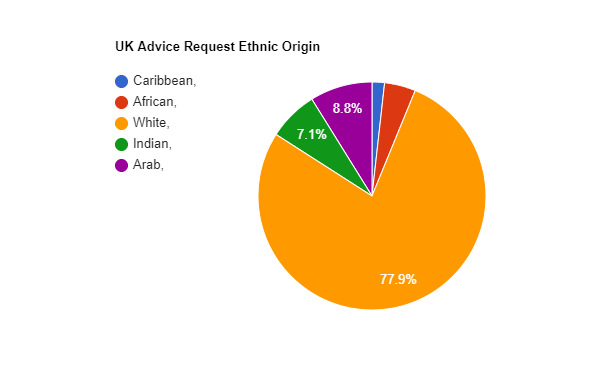
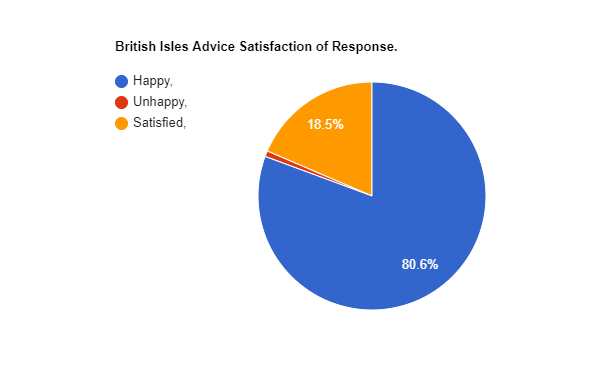
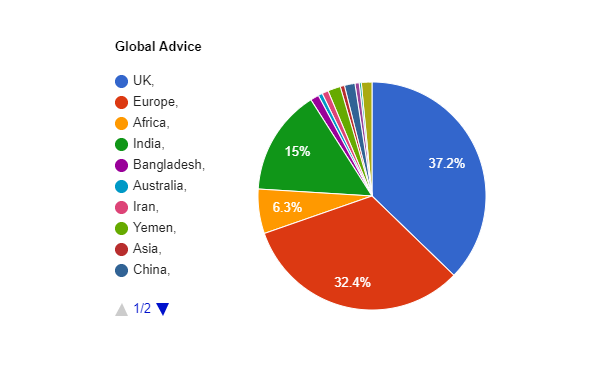
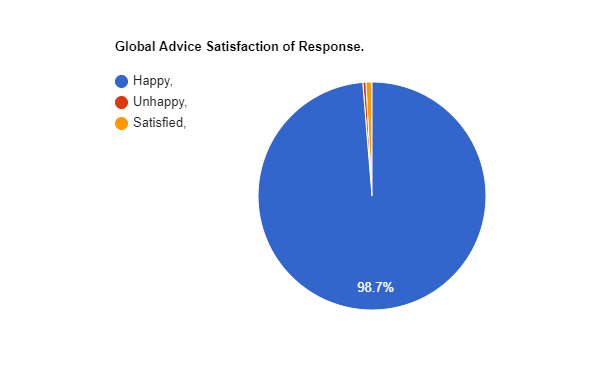
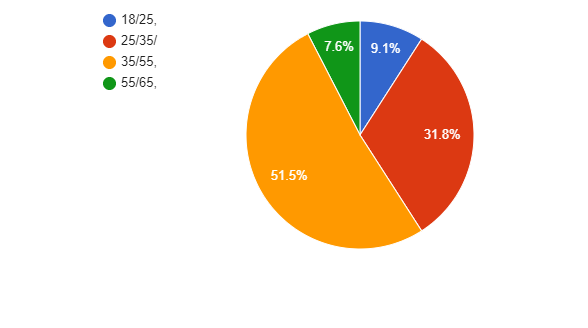
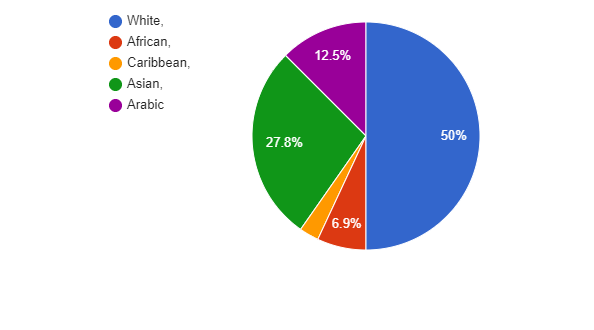
The Trust conducted a survey of users of Trusts services: advice, responses to requests for information, advice, and web site. The following graphics outline their responses.
Volunteers, Staff.
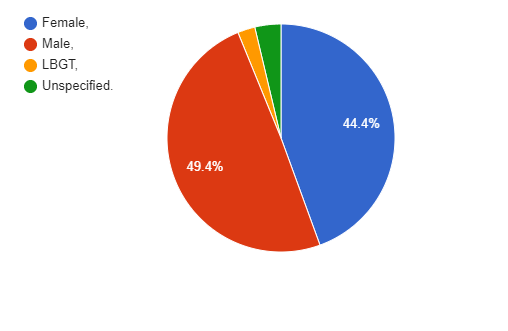
UK Volunteers Age
UK Volunteers Ethnicity
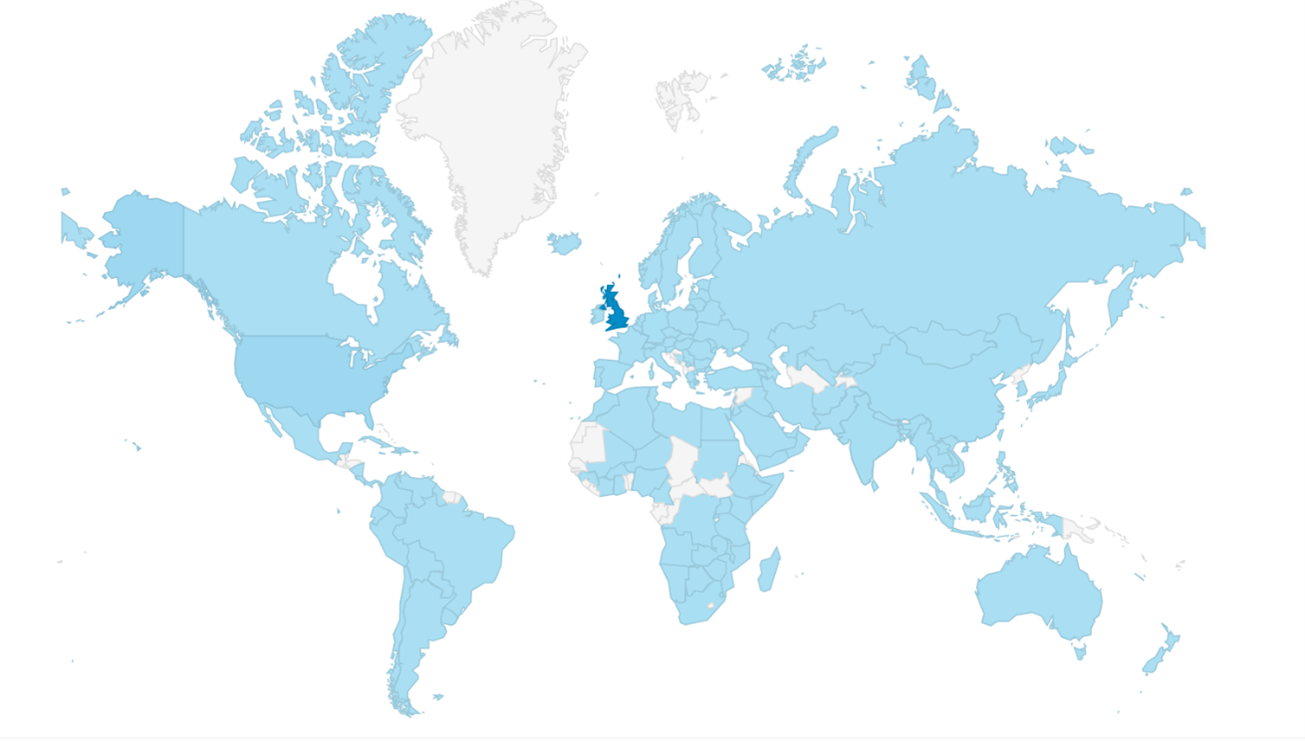
Web Site Range
18 months to 1st February 2022
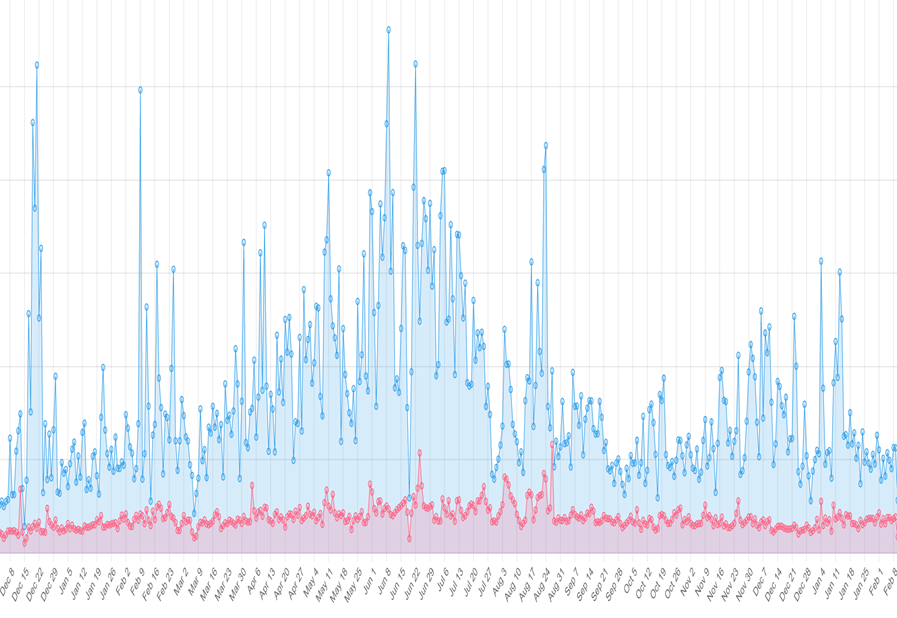
The web site has a world presence with people from 148 nations visiting the site in 18 months.
In the 7 days to 10th February 2022.
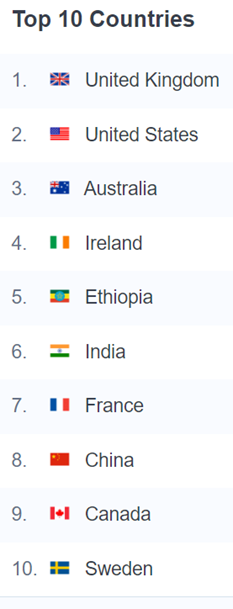
Global Reach of Web Site to 10th February 2022