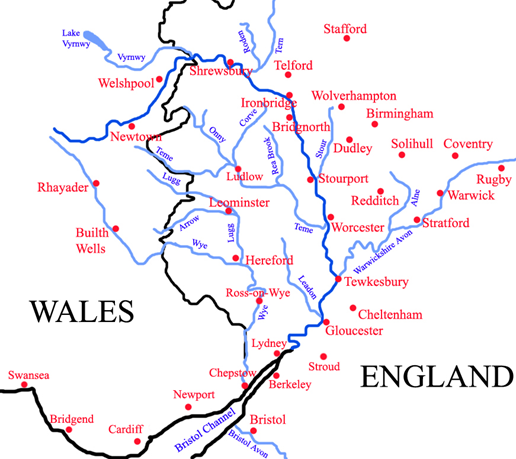
We had some good questions put to us by an Open University student this week about Britain’s longest river, the River Severn. The Severn system is a major supplier of drinking water, a river of parts from tidal,, to freshwater navigation, and upland stream.
The questions are to be found below:
‘I am a third-year student studying towards an Environmental Science degree with the Open University. I am currently carrying out a project on water quality along the River Severn. Part of this project includes gathering opinions from relevant stakeholders on river water quality. Please would you mind providing your views on the following questions:
- Do you think increasing temperatures due to global warming are likely to affect river water quality in the UK?
- How do you think river water quality impacts the processing costs of drinking water taken from rivers?
- How do you think river water quality impacts leisure activities along and on the river, such as wildlife watching and canoeing?
- What interventions do you think are needed, if any, to help mitigate the effect of increasing temperatures on river water quality?
Please could you email your reply back to me by Friday 3rd May.’
Instead of writing out a thesis of detail we talked though the issues during a Zoom chat, a better facility as we could cover ground that was not requested in the actual questions but had an important relevance to the answers and put them in context. Below are brief outlines of answers to the questions:
- The River Severn will not be affected for much of its length due to the management of the reservoirs at the centre of its headwaters in Wales. When water levels decline during the summer months due to evaporation, water usage in the conurbations of Liverpool, Birmingham and the West Midlands and other abstractions the reservoirs are used to increase flows by venting impounded water to raise water flow. This flow will also maintain a level temperature. In the past the river suffered from elevated water temperatures due to power generation power stations such as Ironbridge, Berkeley, and Oldbury.
- The quality of the river water will continue to be impacted by silt loadings along its length as was seen when water was abstracted to feed the needs of the Birmingham conurbation when the aqueduct supplying the area from the Elan Valley reservoirs was renovated. The high nitrate and ammonia levels of the river from the discharges of sewage works along the river’s length as well as the untreated discharges from combined sewer overflows alongside water runoff from agricultural chemicals are a concern at the present time but as such effects would increase the eutrophication of the water and oxygen sags along its length.
- The quality of river water does have a direct correlation with the wildlife to be found in on and by the river. The Severn is fortunate in that its summer flow is regulated more carefully that any other in the UK. Its major headwaters are constantly running, topped up as and when required. The salmon that have been a major economic resource for years on the river are now dwindling in number, though not just in the Severn but in all rivers across the UK and Europe. There are aspects of the salmons’ decline that are not truly due to the ecological value of any of the effected waters across the UK and many 10s of thousands of salmon parr and smolt are bred in hatcheries from wild stock and released annually. Most make their journey to the sea after a few years abut fail to return years later to breed. Other issues of recreational use of rivers are a different story. If wild swimming, paddling, or fishing one should never swallow river water, e coli and other nasties are always present due to sewage discharges and from wild defecation, human, bovine or wild creature. Ducks can be really dangerous.
- The interventions that need to take place are those that stop increases of ammonia and or phosphorous pollution, chicken farm waste management on the River Wye and on other tributaries of the Severn, run off from contaminated land including PCBs from sites such as at Sutton Walls that enter the River Lugg and Telford. Cutting the volumes of untreated sewage and seeing increased tertiary treatment of treated sewage from sewage treatment works. The cutting back on endocrine disrupter pharmaceutical waste from treated sewage would benefit wildlife particularly. Many groups see weirs and other structures that inhibit water flow as detrimental to fish movement in rivers, this is in reality to encourage salmon returning to rivers to find easy access to the breeding ground. Many structures though have benefits to other wildlife such as heron, otter, and dipper. The latter really a bird of upland streams can be found far further down stream due to weirs and other structures like locks.
The Severn is a fortunate river as it will manage better than many other major flows ain the UK. The river is in difficulties due to poor operational practices by all involved in the disposal of society’s waste. We as society can do much to lesson loadings in preparation for the problems that might develop caused by global warming and climate chaos.