Introduction
From the 1400s London had been short of water and from that period water sellers would peddle their supplies around the streets of the City after gathering supplies from Hampstead Heath, the head waters of the River Fleet and similar sources to the south of the Thames. During the 1500s the City Fathers and at times monarchs tried to find a way to afford a major new supply as the Thames at times froze over and at other times was too unpalatable to drink. The Fleet as it joined the River Thames could at times be seen as a flow of solid matter and fumes, blood and waste from the slaughterhouses, waste from tanneries and household and human waste from cesspits and other drains. Many of the capital’s wells were unfit to drink, tasting of sewage and other flavours. At this time people had not learnt that foul or polluted water was the cause of the regular outbreaks of cholera and typhoid the population suffered from. Most people drank small beer in preference to Adams ale. It was not until the first year of the 1600s that two men came forward with a vision and the money to bring water from Hertfordshire to the City and had the money to invest in the scheme. The eventual cost of the enterprise was £18,524 16s..
This was not an act of philanthropy but a commercial venture.
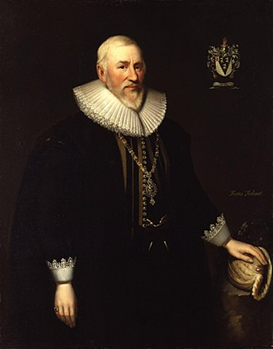
The two people behind the New River scheme were Edward Colthurst in its initial stages and Sir Hugh Myddelton. They constructed the artificial waterway between 1607 and its opening in 1613. Its major sources of water were springs in the area around Chadwell and Amwell near Ware in Hertfordshire. The New River today finishes at New Rivers Head in Stoke Newington, Prior to this it flowed on to Sadlers Wells Theatre. The water was taken into the City via elm pipes, many being replaced during the Victorian period by pipes of cast iron. The water today does not enter the local supply pipes immediately at New River Head but enters the London Ring Main. Water is also added to this supply from an abstracted from the ground beneath the site. This supply is part of the Rising Groundwater Scheme which helps to protect properties in the area from groundwater flooding. A series of boreholes across the City are being employed to stop similar risks of flooding across the whole of central London.
In, Out and Back Into Private Ownership.
When the course of the New River was planned its route caused animosity from many landowners. The remarkable diplomacy of Sir Hugh Myddelton whose ability allowed the project to follow the contours as desired to allow a gentle flow with a drop of around 5 centimetres a kilometre. One landowner on part of the route was King James I who owned an estate on the route of the new river and to encourage other landowners to allow the river through their lands. The King eventually paid half the costs of the scheme for an agreed share of the profits. By the end of construction there were 36 shares with Sir Hugh being the major shareholder. When the river was completed the scheme had 1000 customers awaiting supply. This number grew swiftly, and the company was profitable.
On the accession of Charles I, the new King was unhappy with his share of the profit and came to an agreement with the company that they bought the Crown out of being a shareholder. The company paid him £500 pounds immediately and the £500 in perpetuity. The Crown’s payments ceased when the £500 fee known as the Crown Clog was paid to Elizabeth II in 1956.
The company’s water supply business was nationalised by the Metropolitan Water Act of 1902. The shareholders receiving just over £6 million in compensation. The shareholders and the New River Property Company retained the company’s land holdings. The Metropolitan Water Authority became the Thames Water Authority in 1974 and in 1989 became Thames Water Limited, with the privatisation of the water industry in England and Wales.