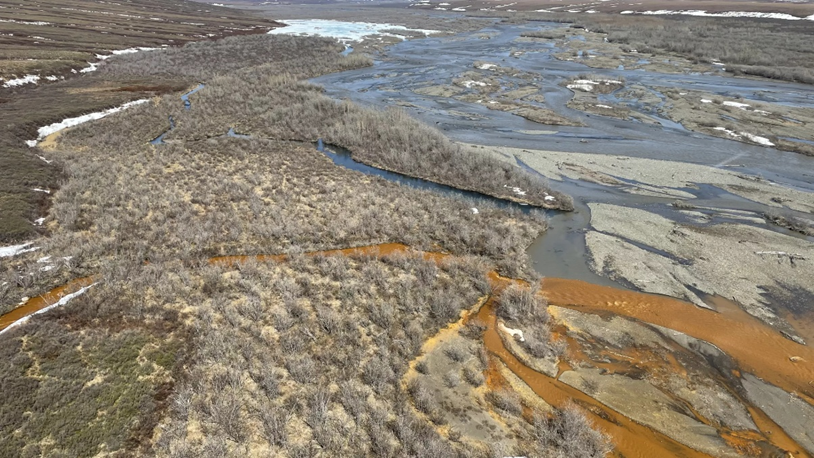
The Brook River, Alaska. (USGS)
The news media have recently brought the major issue of ice field and permafrost melting across parts of northern Canada, similar events are also occurring at many sites above the arctic circle and especially in norther Russia, though this is only hinted at in some unread research papers at present.
This is not a new story that is being reported now but it is a major increase in the problem’s visibility. Clean Rivers Trust first reported the pollution emanating from Canadian permafrost in the early 2000s but then it was little more that an interesting event. Today some of the planets most pristine water courses are poisoning the ecosystems they had protected for millennia.
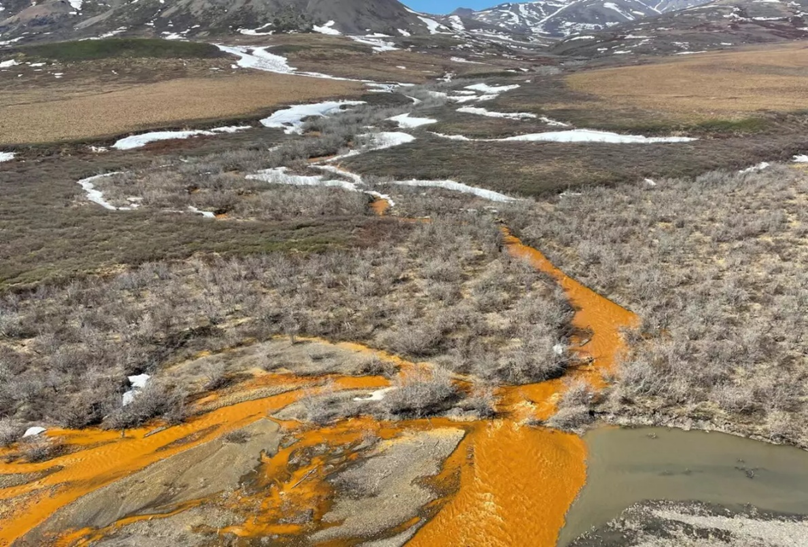
Orange tributary of the Kugororuk River in Alaska is an example of a “rusting river.” These rivers are increasingly common in the Brooks Range.
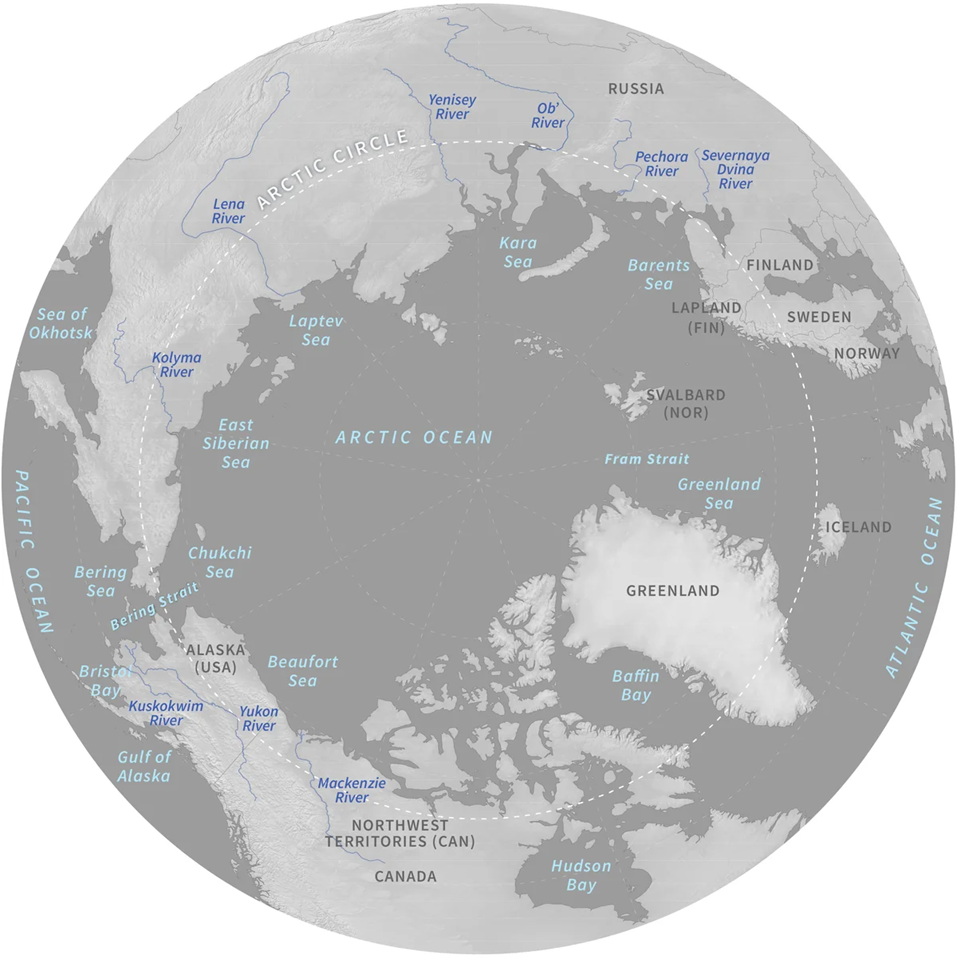
The latest Arctic Report Card from the National Oceanic and Atmospheric Administration finds that the Arctic continues to warm faster than the global average.
Sarah Battle/NOAA Pacific Marine Environmental Laboratory
In recent years, researchers have documented a dramatic “rusting” of Arctic rivers, where formerly crystal-clear blue waters turn a murky, vibrant orange. While most prominent in Alaska’s Brooks Range, the same phenomenon is being observed across the Canadian Arctic as climate change accelerates permafrost thaw.
Why the Rivers are Turning Orange
The transformation is a direct result of thawing permafrost, which acts as a “natural freezer” for minerals and heavy metals.
- Mineral Exposure: As the ground melts, it exposes rocks like pyrite (iron sulphide) to water and oxygen for the first time in millennia.
- Chemical Oxidation: When these minerals meet oxygen-rich river water, they undergo a chemical reaction called oxidation—essentially rusting—which releases iron and sulfuric acid.
- Metal Leaching: The resulting acidity (in some cases with a pH as low as 2.3, similar to vinegar) causes other heavy metals like zinc, copper, cadmium, and aluminium to leach out of the soil and into the water.
- Microbial Activity: In swampy, thawing wetlands, specialized microbes can also help mobilize iron from the sediment, further staining the watershed.
Environmental & Human Impacts
This shift is more than just a visual change; it represents a serious ecological threat.
- Ecosystem Collapse: The orange silt blankets riverbeds, “choking out” the insects and larvae that form the base of the food chain.
- Fish Declines: High acidity and toxic metal levels are lethal to fish or prevent them from migrating to spawning grounds, directly impacting species like Dolly Varden and Chinook salmon.
- Threats to Communities: Indigenous and rural communities in Northern Canada and Alaska rely on these rivers for subsistence fishing and drinking water.
- Feedback Loops: Permafrost thaw also releases greenhouse gases like methane, which further warms the planet and accelerates the melting process.
Where it is Happening
- Alaska: Over 200 watersheds have been identified as turning orange, including the Salmon River and Akillik River.
- Canada: Recent research has documented the same sulphide weathering and metal mobilization in the Yukon and Mackenzie River basins.
Scientists at the National Park Service and various universities are currently mapping these “rusting” sites to understand the long-term consequences for Arctic water security.
Map of orange stream observations across the Brooks Range in northern Alaska.
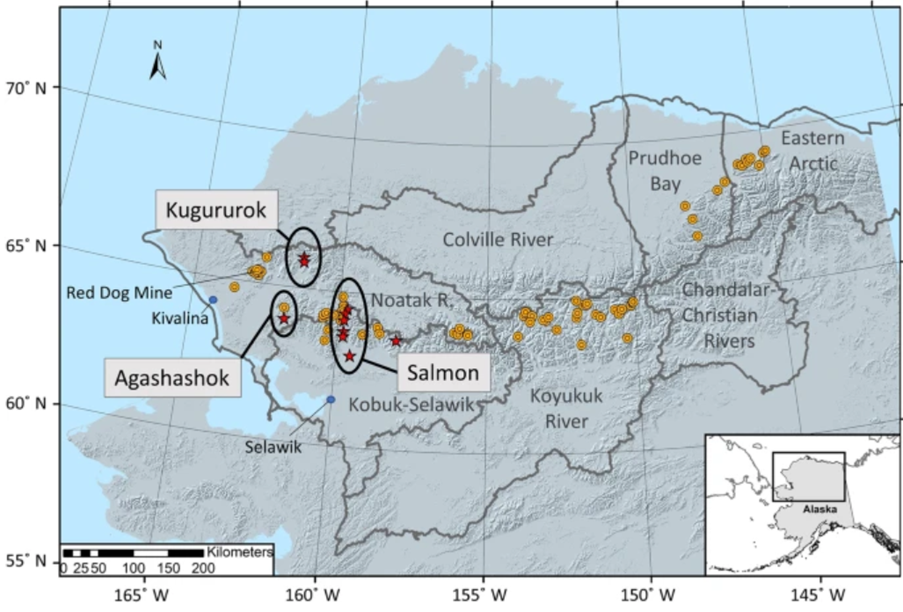
Orange circles indicate orange stream observations, red stars indicate sites where water samples were collected, and blue circles are nearby villages. Hydrologic Unit Code-6 (HUC) basins are shown as black outlines from the National Watershed Boundary dataset67. The hill-shade layer utilizes the USGS National Elevation Dataset68. Map generated in Esri ArcMap software. Kenneth Hill, NPS. The Trust is looking at natural methods that may lesson impacts of these huge iron staining pollutions