Cinderhill.
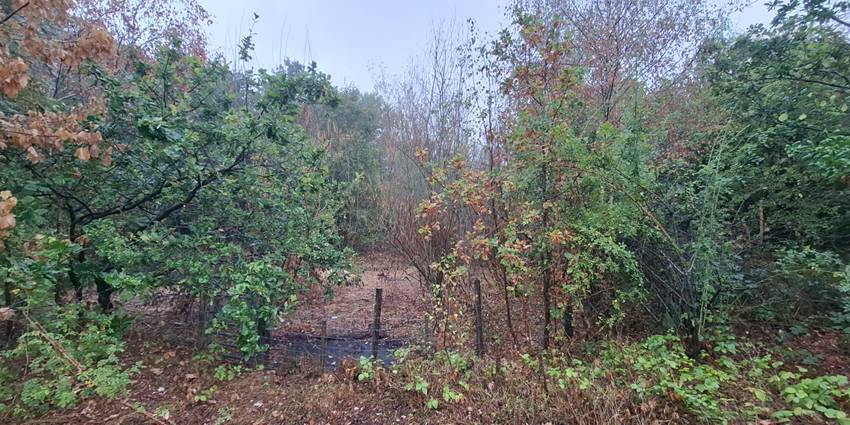
The willows have suffered in the extreme heat this summer,
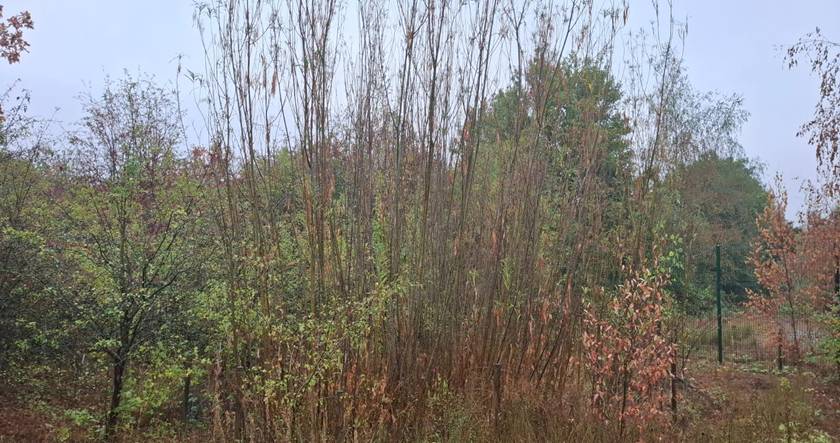
There are signs of regrowth from the base of many of the most draught damaged trees, whilst many others have selectively shed leaves. The understory of other flora has died back significantly but after the rain over the bank holiday weekend grasses are already greening up.
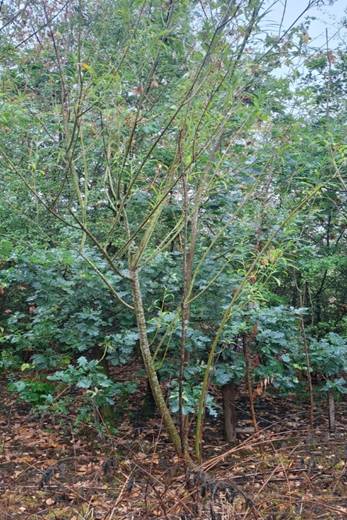
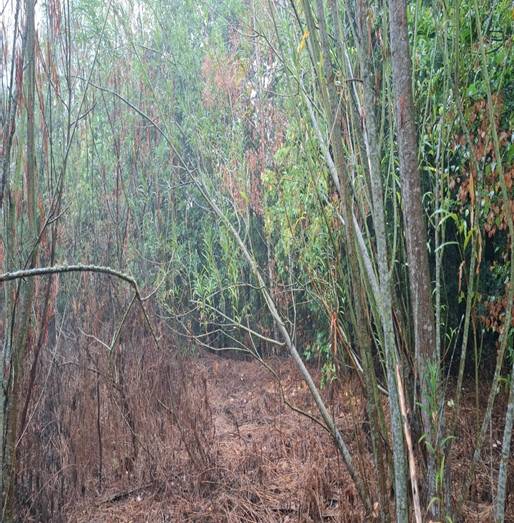
The Lake.
The lake continues to demonstrate that it is groundwater fed and not as consultants said in 2018 a sump for surface run off.
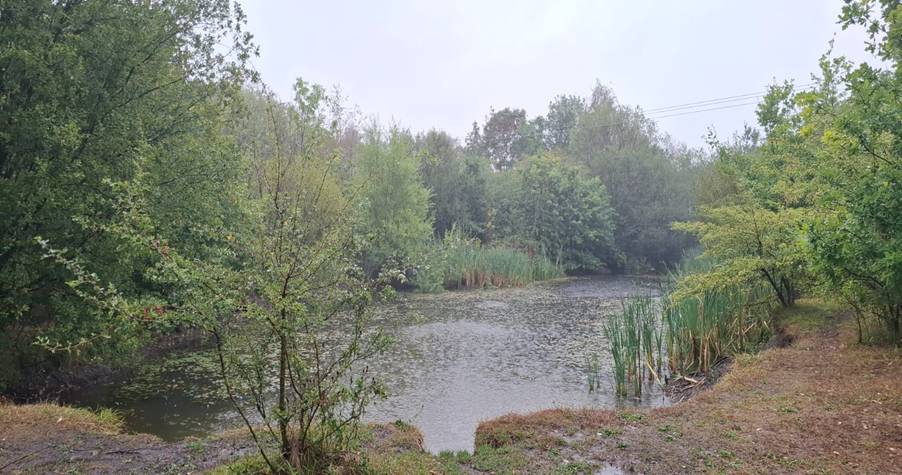
Wildfowl, mallard, and geese present on the water as were Great Crested grebe; a heron was disturbed on arrival at the bank, and a kingfisher was observed fishing.
The harbour is now suffering from a second and highly likely minewater pollution emanating from a different source
Whitehaven Harbour Pollution 1.
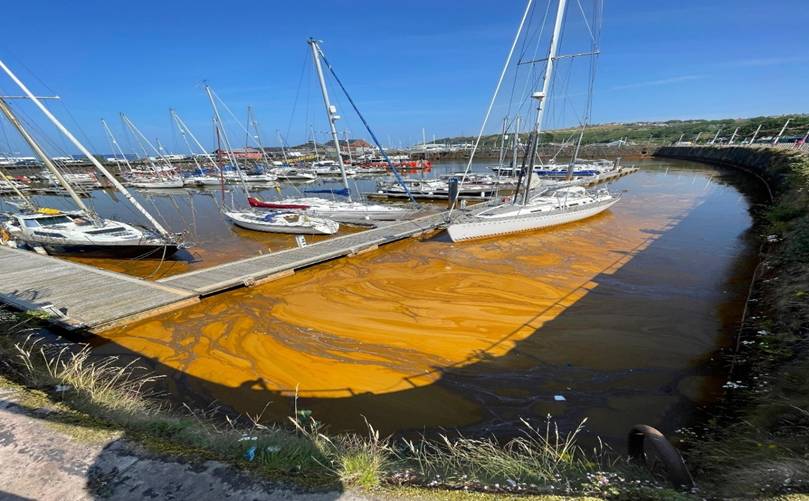
Queens Dock, Whitehaven polluted by the minewater from Whitehaven Railway Tunnel via the Bransty Beck since 2023.
Met with the Royal Yachting Association regarding their interest in the issue. We have agreed to help them in the same way as we are supporting the Whitehaven yachting enthusiasts, Harbour Authority and MP.
During June and early July, we have witnessed a cut back in pollution entering the harbour with the water entering the harbour loosing much of its ochre colour. This was a conundrum that led to several public information requests that took a long time to be replied to by members of the inner Task Force. Sadly, the initial response has only confirmed what we could see, that the minewater was no longer as polluted entering the harbour. We are awaiting news of what it looks like after recent rain has entered the mineworkings.
Whitehaven Harbour Pollution 2
On the 15th July, the contamination restarted and has not ceased since.
Much speculation as to the causes within the harbour community and others like ourselves isolated from the three government agencies.
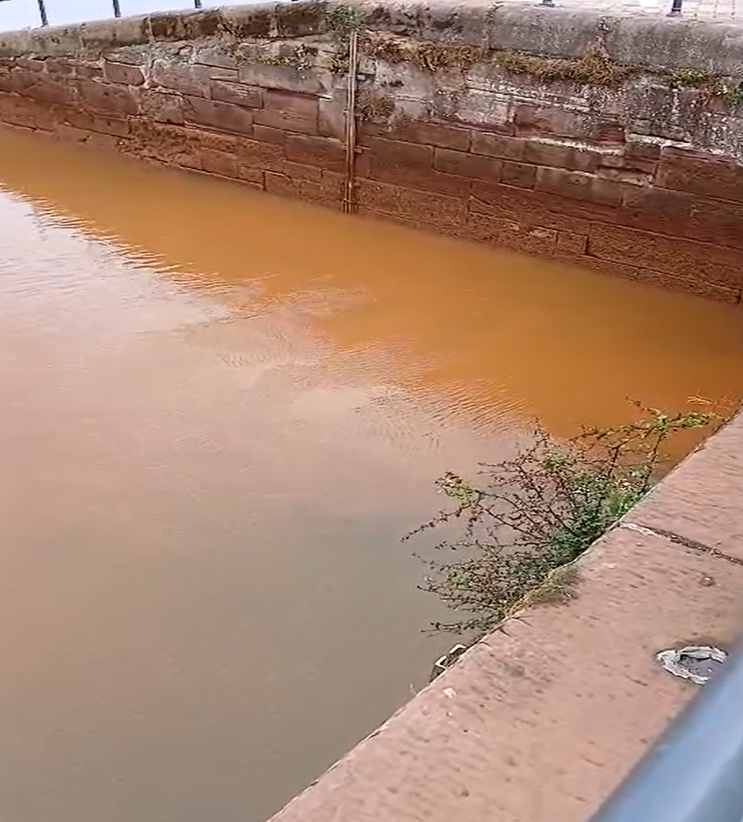
Custom House dock, Whitehaven in August has received an extra pollution that appears to be minewater but is yet to be confirmed from a different source, the Pow Beck draining from Mirehouse. the last mine in the St Bees Whitehaven area was at Mirehouse (Main Band Colliery) and was still just operational when CRT were conducting research in the area from 1998 to 2002.
The Pow Beck is an unusual stream that flows from the one point (rising at Mirehouse) in two distinct directions, Whitehaven harbour and St Bees beach. This rather unusual occurrence makes St Bees Head an island in that it is surrounded by water. Though not noticeable with much of the Whitehaven branch culverted.
Whitehaven Task Force Actions.
The Mining Remediation Authority though saying the removal of the pollution from the Queens Dock onto the strand north of the harbour will not work has applied for listed building planning permission to do exploratory and test bore holes into the Grade II harbour walls. Either their modelling was wrong, or the planning application is unnecessary. (Appendix IV)
AND More!
1.
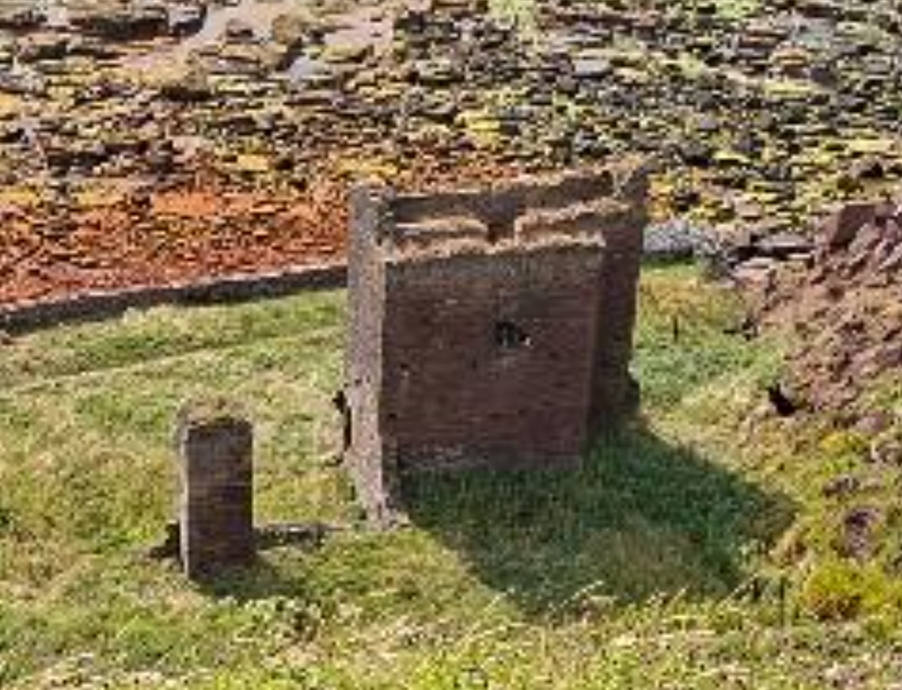
Just before this paper was due to be circulated it has been brought to our attention that the beach at Whitehaven around Saltom Pit (dates: 1729 to 1848), Located at the base of the cliff below Haig Colliery. This needs investigation as it might be ochre from mine spoil deposited over the cliff edge prior to Haig’s closure in 1986 though this ochre was not present when we worked on the Albright and Wilson project in 2000.
2
It has been said by local Sailers and others that the 18th and 19th Century alabaster mine (Bearmouth Mine) levels appear to be smoking. When seen from the water off the coast in Saltham Bay, this is not information from one yachtsman but several and on several occasions.
We looked at this mine out of curiosity in 1998/2000 when working with Albright and Wilson. The mine links to the major fault in the area (Byerstead Fault) and was mined in strata below the more recently operational Sandwith Anhydrite Mine which also is linked to the Byerstead Fault. Was this dust rather than smoke coming out of one of the Bearmouth levels which are still open. This may be possible as the Anhydrite mine drifts were opened and drained by West Cumbria Mining in their abortive development of a mine using these drifts to access the coal seams beyond St Bee’s Head.
Commonside.
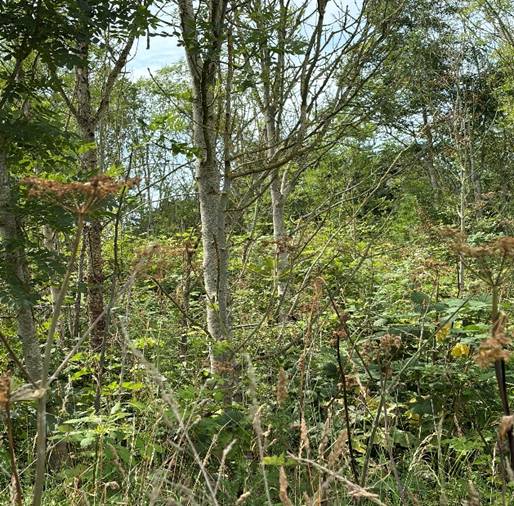
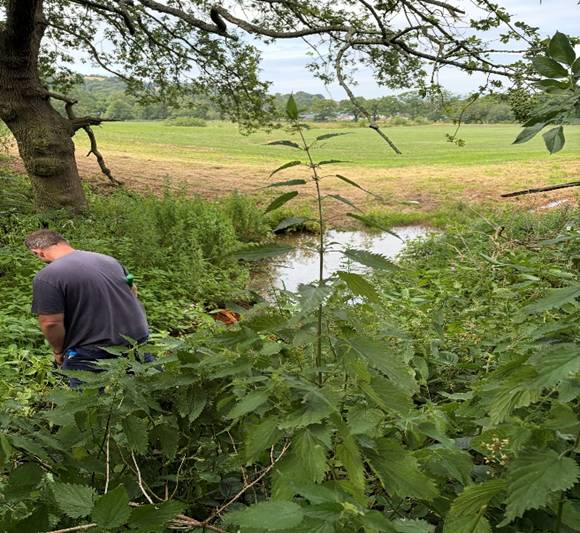
The site was visited by SB, MJ and HW + 2 energetic helpers. Due to the local farmer not allowing us access to the ponded pollution a 3-hour bramble bash preceded so as to allow access to the site.
The hard labour was rewarded by our being able to sample the contamination in the leachate pond and a much faster return to civilisation.
Thanks to the Environment Department of West Cheshire and Chester Council for a challenging day out.
PFAS, Plastics and Textiles.
SB has continued leading research into the Cinderhill community.
The Trust has been talking to OFWAT about the abilities of our microorganisms,
China has an interest in finding solutions to these issues and MJ is in touch with staff at the Chinese campus.
STW have responded to a recent letter and update on the bacteria and hopefully a meeting is imminent. There are several other strands of work that will also be discussed.
Research into ways of concentrating PFAS to make it an efficient process see us obtaining sheep fleece from Nathan and Sophie, our helpers at the Tar Pit Project. They have supplied enough to allow a considerable amount of research.
Denby Pottery.
Continued contact with the company that have put the site on the market.
We have also conducted research regarding the possible contamination of the wider site. This may be linked to major mine subsidence events several years ago that went unreported.
Water Shortages in Kent.
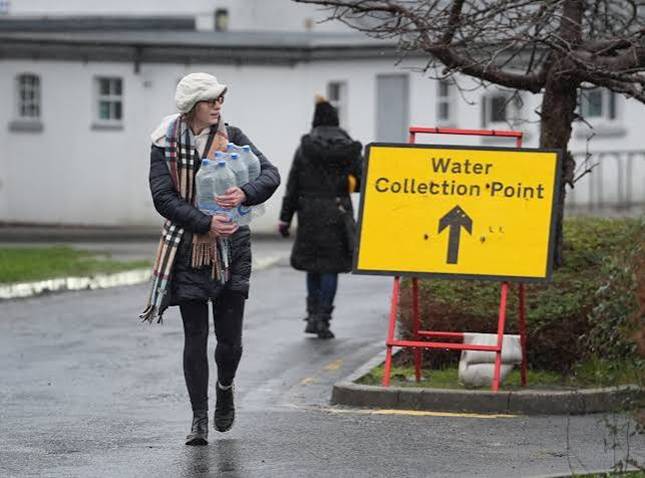
We have had discussions with Folkestone and Dover Water Company (Affinity Water) regarding possible untapped water resources. Discussed the history of the damaged aquifer and possible water from Chislet Colliery which had a history of local water supply in the 1920s and 30s.Other mines such as Snowdown, Tilmanstone, and Shakespear Cliff having had known feeds of sea water being less attractive possibilities.
The recent hot summers of 2025 and 2026 are seen as to be increasing subsidence events in the Stour catchment that; may or may not be linked to further mine collapse at extreme depths (>300M) (BGS/Kent County Council). Our research is continuing.
Cornwall County Council Concerns for Wheel Jane Tailings Dam.
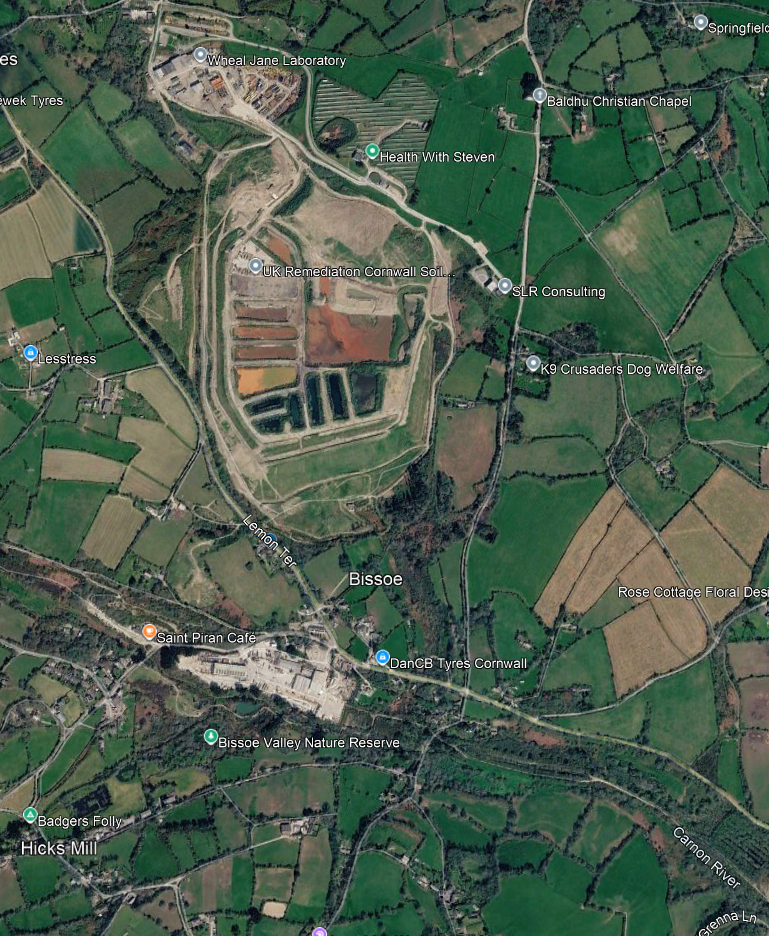
We have had several conversations with staff and councillors of the County Council regarding concerns regarding the longevity and safety of the Wheel Jane tailings dam. The structure has been raised over the last few years and the community living directly below the dam.
It has grown substantially since we visited the site. A dam inspector was recommended but such beings with recent experience in the UK are rare and expensive; there are though a few ‘old hands’ who are always happy to help.
Shropshire Metal Mines.
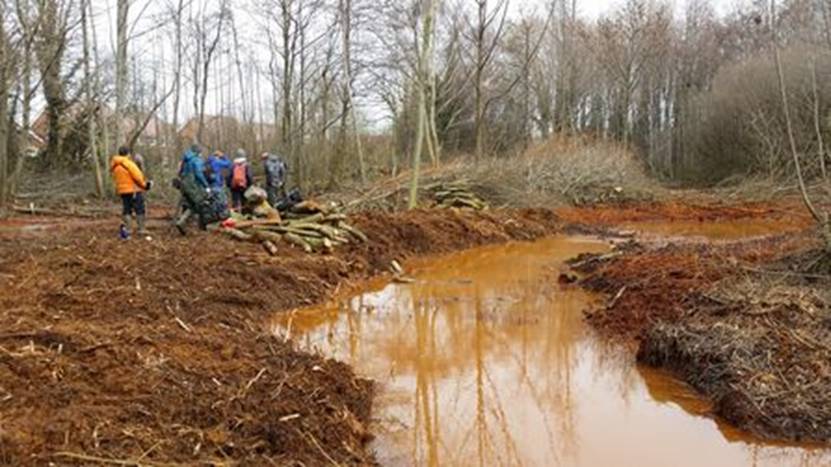
The Mining Remediation Authority is now to begin understanding the Misterley catchment to see the minewaters of the area are treated and stop the pollutions entering the River Severn.
This is something of a bonus for us as the mines were attractive to STW as a resource rather than abreacting extra water from the River Severn. The discussions we had with the EA and DEFRA led DEFRA to concede that action was needed as part of government plans to lessen metal mine pollution by 2037.
We have brought this to the attention of STW.
Farley Moor Planning.

The Planning Committee of Derbyshire Dales District Council met on the 30th June at Matlock Town Hall. The community action group had asked us to attend and give a short outline of the hydrogeology of the moor and the role it plays as a water gathering ground for the several homes set to the south and below the moor that rely on wells for their domestic water supplies.
The development was refused.
River Glaven

Cley and the Glaven Estuary with storm Brewing.
The Trust is collaborating with the local community to reduce the high phosphate and nitrate levels in the river below Holt Sewage Works (renamed water recycling centre. The Norfolk Rivers Trust and the Environment Agency with North Norfolk District Council designed a wetland for Anglian Water to remove the problem 3 years ago but Anglian Water and the others have moved on to other larger rivers instead. The Glaven is now developing an all-enveloping mat of Filamentous algae from the sewage works outfall through to and across the estuary from Cley to Blakeney.
Hoole Bank
The consultants and owners are still discussing terms of agreement with SB and University of Nottingham.
Wild Britain Forum.
The Linnean Society are engaging with the Wild Britain Forum to see a reasoned approach. HW has been approached to be part of the ongoing development.
Ethiopia.
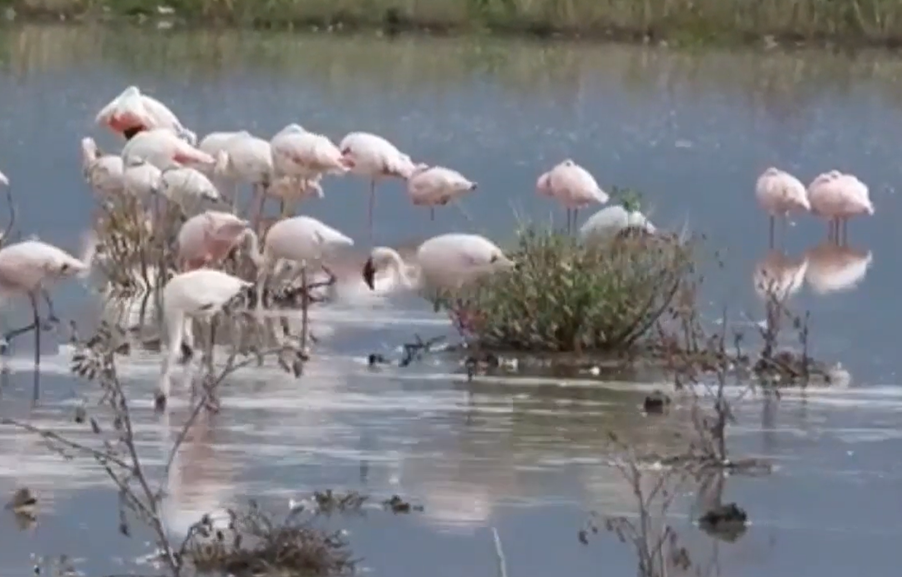
Aba Samual Flamingos.
We were invited and attended a meeting at the RSA to look at investment in agriculture and mining. The main concern was the lack of awareness of water care and shortage across the whole country. The Minister for Foreign Affairs was present as was the Mining Minister. We have been invited to meet with the Ambassador later this year.
The ministers were aware of our involvement with Aba Samual reservoir and hydro plant. They stated that the scheme is working well and our recommendations for management of the site has been overviewed by the Chinese who have agreed to it as they did with our redevelopment plan of the site some few years ago.
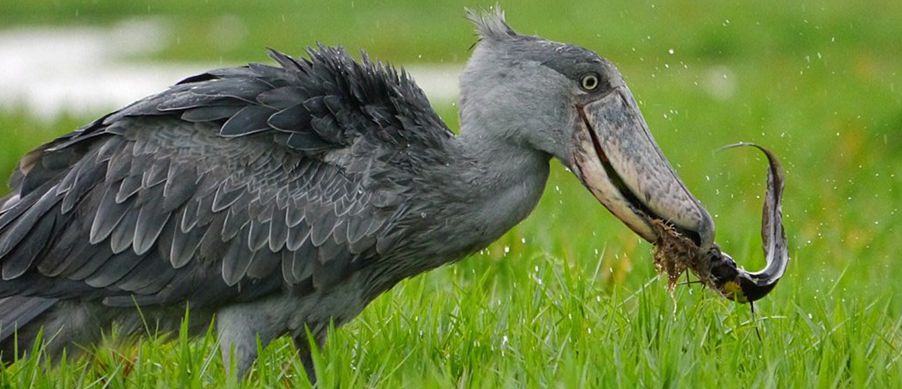
Shoe Bill (Ethiopian Ministry of Water and Environment)..
Water Efficiency Campaign.
We attended the last stakeholder group meeting of the start of the Water Efficiency Campaign which is Funded by OFWAT and DEFRA meeting on 23rd June in Birmingham. An initial £100 million has been made available for the project.
We have been asked to be part of their advisory stakeholder’s panel.
See Appendix 1
Mining in Ghana.
Pleased to report that we have heard again from Ghana regarding our interest in helping regional governments with their mining issues. The work we outlined that needed to be conducted has been completed and data collected and now much has been lost. We have re-briefed the indigenous company collaborating with the local authorities.
We have been invited to a conference in the country in September but will be unable to go due to other commitments and the likely cost of the visit..
East Midlands Water Network Conference
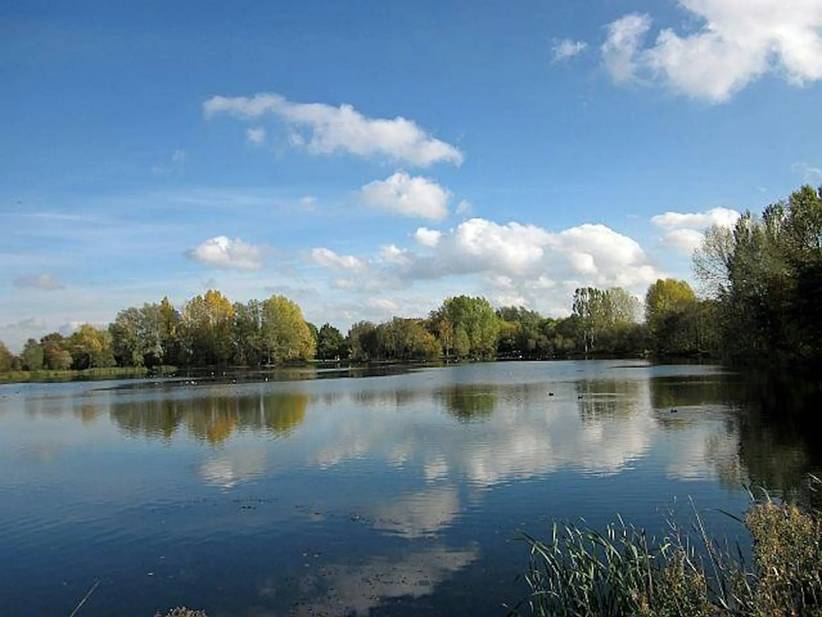
Attended this conference at Nottingham Trent University Clifton Campus on the 29th June. An enjoyable day meeting a number of past tar pit helpers and interesting others.
East Midlands Mayor/Green Growth.
The importance of community activism and local ‘hubs’ was underscored by a panel of people to back up the thesis. Local communities being able to control production and cost.
Those present discussed around tables and our conversations were recorded so as fo be used to develop future strategies.
Amazed at how few of the people present had heard of heat from abandoned mines and several including from NTU felt it would be of use to communities. Especially in controlling heat wave temperatures in home or business.
The purpose was ‘you get to say what good looks like.’
See Appendix III
Woodside.
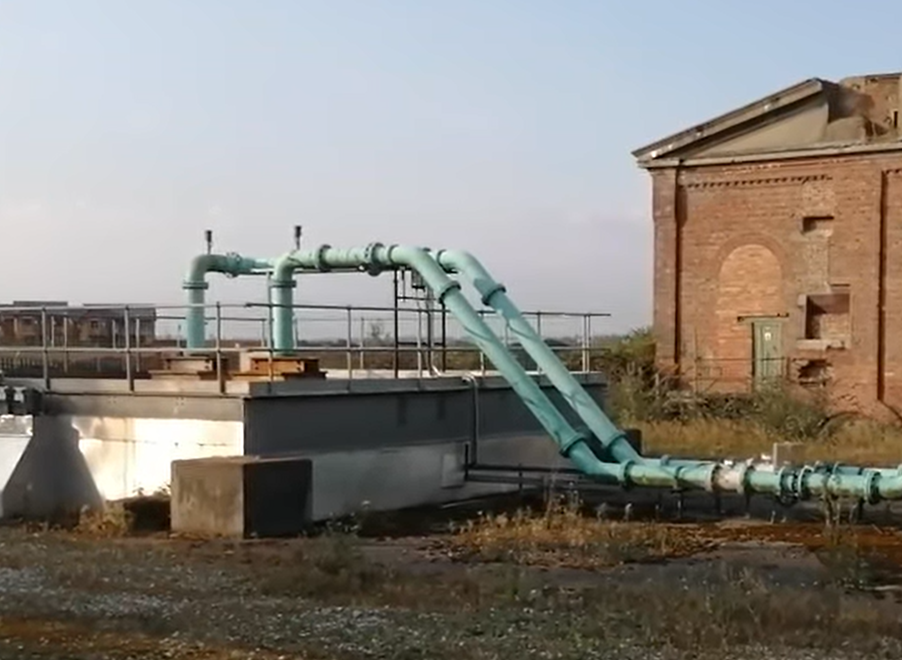
The EA and others have contacted us about the importance or not of keeping Woodside Minewater Pumping Station, the Mining Remediation Authority’s site, active in the future. A short reply………
The Mining Remediation Authority (New name for the Coal Authority) shut the pumps off about 3 years ago at Woodside to do some maintenance. We found a rebound took place at two sites. one at Cinderhill just below the tar pit we are involved with and two in the field next to Kilburn Timber which flowed down Brickyard Lane.
We reported this to the MRA at the time, and they sent someone to look. No great interest shown at the time.
I know Woodside is a site that some would like to shut as the land it takes up is valuable for development, but it is vital to keep it operational to stop flooding across the Shipley Basin and along the exposed coalfield. Even though many seams of coal were mined out of existence by opencast around Denby the deepest seems were not opencast and are still open and are directly linked to the Kilburn, Cinderhill and other historic workings. These are likely linked to land at Denby Pottery as well. There is a short report we wrote on the Amber Valley Council’s web site regarding this.
The MRA site to the north, at A Winning, is operating an increased pumping regime to lower water levels within the Nottinghamshire coalfield to the North of Nottingham but the water from discharge is high in chlorides and the Environment Agency insisted that the pumping be reduced to what it is presently due to pollution into the receiving stream. An increased pumping rate could reduce the flow into the Woodside Pumping Station catchment from the north but eventually a new management scheme would need to be developed in the area..
The work that was carried out in the second part of the 1990s by British Geological Survey regarding water ponding and movement across the Yorkshire, Derbyshire and Nottinghamshire Coalfield was found to be compromised with regard to water movement across from the exposed coalfield towards Calverton via Newstead which led to expectations that were never met in regard to needing to pump minewater from that Calverton shaft to the River Trent. At that time time pumping was expected to begin in 2020.
Public Access to the Trust.
The Trust continues to be asked for help on a regular basis by the public and no request is ignored.
Recording of requests are carefully handled due to the need to be within the law regarding private information storage.
Exeter Project.
Exeter’s Carnon Valley project is due to start either the beginning of December or January. We have not heard yet. We have carried out our preparatory work.
Constructed Wetland Association.
We were invited to join the CWA in July. This we have done.Alicja Biala/Maid Marian Sculpture.
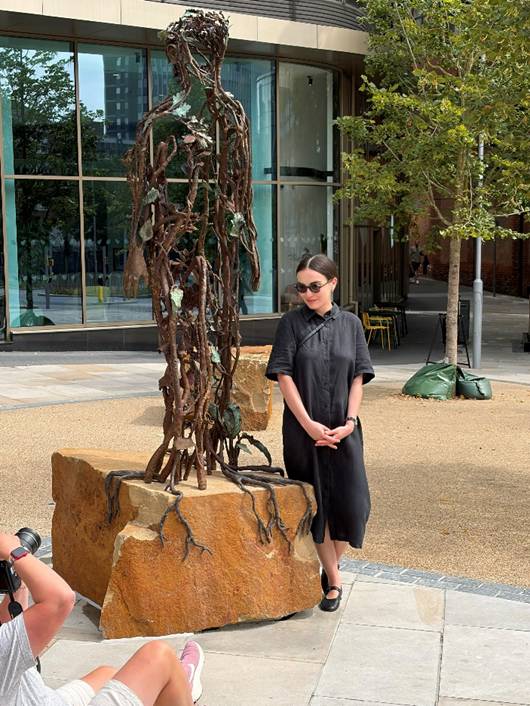
Alicja has completed her commission of ‘Our Marian’ for Maid Marian Way in Nottingham. HW was present at the unveiling and the exhibition relating to the project and included the community involved in its concept.
Castle Way Energy Derbyshire Project.
The Trust has been contacted by several community groups regarding this large solar development. The planning application will go to the planning committee in 2027. We have had meetings with several MPs including the MP for South Derbyshire, Samantha Niblett, who is supporting the communities in her constituency whilst being aware of the need for energy resources.
This current map, on the Castle Way Energy website, shows the Hilton solar farm being built on what is currently Hilton Cricket Club, while all remaining plots are agricultural fields (In all 900 acres).
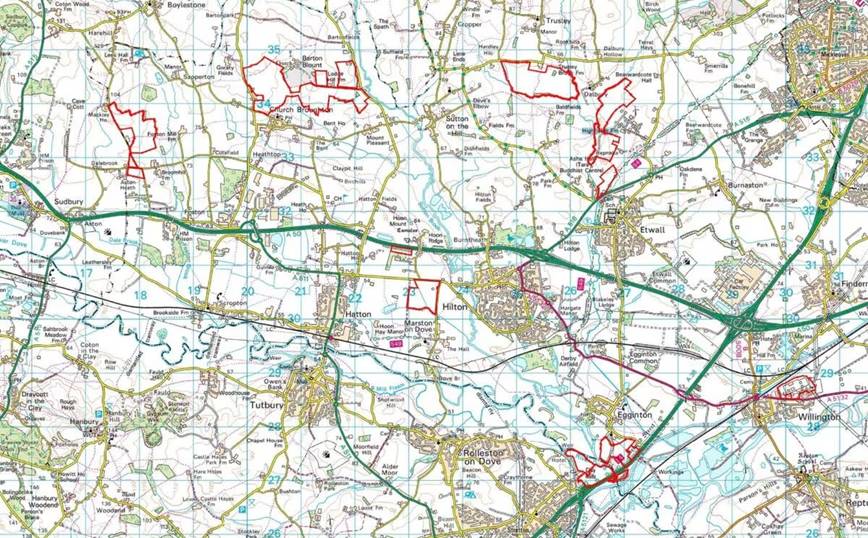
© Castle Way Energy 2026
The proposed Castle Way Energy solar farm across six sites: northeast of Sudbury, north of Church Broughton, south of Trusley, north of Etwall, west of Hilton, south of Egginton, all connecting to the National Grid at the former Willington Power Station.
Castle Way Energy says the combined 300-megawatt solar farm would provide enough electricity to power 81,000 homes per year – nearly double the number of households in South Derbyshire (45,240 as of the 2021 Census).
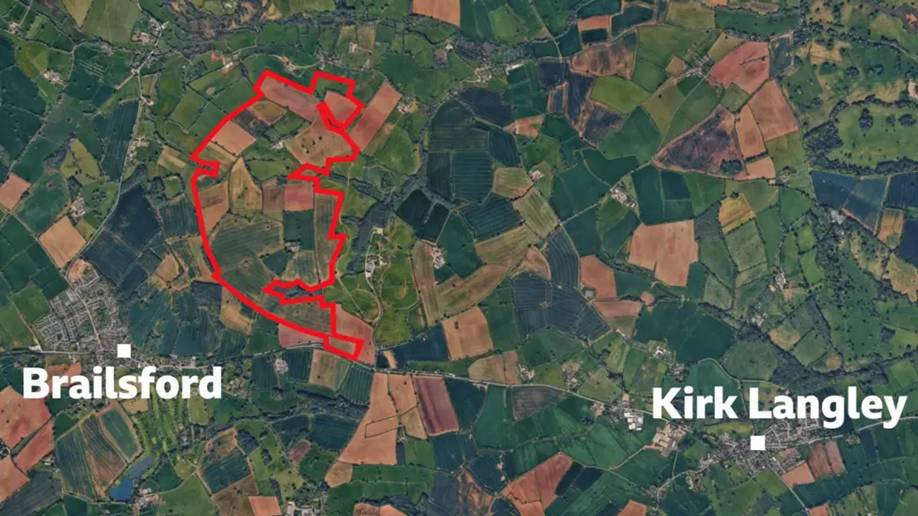
The above links to a present application by British Solar Renewables. Derbyshire Dales Council is set to decide on plans for a 300-acre solar farm dubbed “the lesser of two evils” by residents after a string of housing applications in the area.
British Solar Renewables has submitted plans to build a 300-acre solar farm between Brailsford and Kirk Langley, west of Derby.
It is a concern that there is a rash of applications for developments at this time. The changes in local government are due, and many councillors already know they will not be in office so ‘what the hell’ let all remember them even for the worst reasons. The government is putting forward plans to benefit and regrow numbers in areas such as these. In parts of the area reintroduction of storks, pine martins and beaver are taking place.
There needs to be some strategy developed that can allow generation of energy alongside the reintroduction of wildlife and the fostering of increase in species that are under already.
CRT Position.
We may need to be pragmatic with regard to this proposal and look towards gaining benefits for the local communities close by and further afield.
The development of solar farms on created wetlands may be considered a practical development with regard to increasing water security in dry times and protecting communities from flooding during times of rain. Such schemes could also develop an increase in biodiversity in the area.
Water Leakage England and Wales, enter the Chloramine Problem.
Greenpeace have published a report on the water industry and water loss. 2.87 billion litres are lost from poor water mains across England and Wales daily. This water is all chlorinated which is not wonderful for the environment, especially when it enters drainage systems, ditches streams and rivers, it is though far worse a problem as much of this water has had ammonia added as well to make chloramine which does not break down over time. It has severe effects on ecosystems in rivers and streams..
A hidden risk to waterways from fractured/leaking water mains.
Loughborough Student Support on Bottle Brook Project.
We were contacted by a 3rd year student about to embark on her dissertation on flooding along the Bottle Brook in Derbyshire. We will do our best to help.
Significant Water Issues Consultation EA Response.
Clean Rivers Trust responded to this major consultation. The EA’s response may be accessed via Appendix V.
University of Nottingham India, UK, Japan workshop.
An enjoyable and valuable few days with academics, thanks to MJ for the invitation to be involved.
Appendices.
Appendix 1
Water Efficiency Campaign
Water is precious. To protect it, we all need to use less. The Water Efficiency Campaign (WEC) is a bold, national movement to reset the way we think about water.
In England and Wales, demand for water is rising rapidly, and we are heading towards a significant supply gap. By 2055, England alone is predicted to need an additional five billion litres of water per day. We want to create a future where saving water is not an occasional act, but a natural part of everyday life.
This campaign, funded by water companies, aims to reshape the public’s relationship with water and embed water-saving behaviours into daily routines. Through compelling storytelling, practical tools, and accessible guidance, the campaign will foster a positive, year-round culture of water efficiency.
The campaign is a collaborative project involving all water companies in England and Wales, alongside DEFRA, the Environment Agency, the Welsh Government, Natural Resources Wales, consumer groups representing both households and businesses, and Ofwat.
23red, part of Capgemini, was appointed in January 2026 to deliver the WEC following a robust and competitive procurement process. To support delivery, 23red has formed the WEC Collective—a purpose-built partnership of organisations with complementary expertise, working in collaboration with key stakeholders.
Further information and updates are available on Ofwat’s website.
50 Litre Home and RHS among winners of £5 million Water Efficiency Lab to help homes and businesses save water
23 June 2026
- Seven pioneering water efficiency projects awarded a share of £5 million to develop innovations that provide customers with insights to help them save water.
- Innovations developed through the Water Efficiency Lab will help close a projected shortfall of 5 billion litres a day in England’s public water supply by 2055
- Winning projects see partners from across multiple sectors working together with water companies, including the Royal Horticultural Society (RHS), Aviva, Greene King pubs, John Lewis, IKEA, Morrisons and Sainsbury’s.
- This is the first round of a £25 million programme of prizes to be awarded over five years.
Seven innovative projects designed to provide homeowners and businesses with the insights they need to cut the amount of water they use have been awarded a share of £5.2 million as the winners of the first Water Efficiency Lab.
The successful projects include the 50 litre home to test the most water efficient, effortless appliances in people’s homes, a water saving primary school education programme, and a solution from the Royal Horticultural Society (RHS) which will enable water companies to advise customers of the best ways and times to water their garden.
In England, we are using water faster than nature can replace, and in Wales the changing climate is putting pressure on water supply. While both countries are known for their rainfall, climate change is bringing the risk of warmer, drier summers and wetter winters, which affects how much water is reliably available for homes, businesses, and the natural environment.
If nothing changes, England alone faces a shortfall of 5 billion litres a day by 2055, the equivalent to 25 million people leaving the tap running for 20 minutes every single day. Fixing leaks and upgrading infrastructure is well underway, but how we use water every day really matters. Simple changes made at home and work by everyone add up to make a big difference. That’s why Ofwat’s Water Efficiency Lab is awarding £25 million over four years to innovative solutions that help people and businesses take control of their water use, making
saving water effortless. In its first year (WEL 1), the Water Efficiency Lab is funding solutions that provide tailored, data-led and actionable insights to customers.
£1.5 million has been awarded to the 50L Home England Pilot, led by Northumbrian Water in partnership with Electrolux, Barratt Redrow, Kohler, IKEA, Groundwork UK, Waterwise, University of Surrey, World Economic Forum, Procter & Gamble Technical Centres Limited, World Business Council for Sustainable Development and others.
This pilot brings together innovative appliances, fixtures and everyday products, including dishwashers that remove the need to pre-rinse, washing machines that clean effectively in cold water, and high-pressure low-flow showers, and trials them in existing and new UK homes alongside behavioural science and data-driven insights. By engineering water efficiency into the products people already use, the project aims to show that household water demand can be reduced by 30 to 40 per cent while improving quality of life and cutting bills.
Water Warriors, led by the Water Research Centre, has been awarded £365,000 to bring water science into primary classrooms. Designed around the Key Stage 2 curriculum, the programme embeds water as a topic across science, maths, English and art, helping pupils explore how water moves through their homes, communities and environment, empowering children with the knowledge to make choices about their water use and sharing this with their families
Helping Homes Save Water Outdoors, led by the Royal Horticultural Society (RHS), in partnership with Affinity Water, Severn Trent, Thames Water and others, has been awarded £1.1 million to give water companies a much clearer picture of water usage in gardens and other outdoor spaces.
The project will use smart meter data at scale to identify the patterns that reveal when and how households are watering outdoors. These insights, combined with detailed in-home flow monitoring and behavioural research, will help water companies provide timely, relevant guidance; such as seasonal prompts on the best times to water, and practical advice on making the most of harvested rainwater. The final output will be a playbook that water companies across England and Wales can use to support customers with more useful, better-targeted information.
Emma Hardy, Water Minister, said:
“This government firmly supports innovative approaches to create a more secure, resilient, and sustainable water system.
“We face growing pressures on our water supplies, which are increasing every year because of climate change, and it is vital we help households and businesses monitor their usage whilst managing their water bills.
“The winners of the first Water Efficiency Lab are vital for this mission, creating exciting new ideas that will save water, reduce bills and protect our environment.”
Paul Hickey, Managing Director of RAPID at Ofwat, said:
“These seven projects are designed to make water-efficient use the easy default in homes and businesses across England and Wales, through smarter appliances, better data and tools that put useful information directly into customers’ hands. This £5 million prize is awarded through the Water Efficiency Lab over five competitions, supporting innovators whose work will help deliver more resilient water services for customers and the environment.”
Nicholas Cryer, Senior Scientist at the Royal Horticultural Society, said:
“Outdoor water use peaks in summer, but who uses it, where, and why remains unclear. Our project combines smart meter data and in-home monitoring with behavioural insights to quantify and untangle the many water uses, supporting water efficiency and resilience. This is crucial as climate change brings hotter, drier summers.”
Joe Cahill, Head of Water Efficiency at the Water Research Centre, said:
“This funding will empower a new generation of Water Warriors, inspiring children to champion water-saving values and habits in their communities. By embedding water efficiency across the curriculum (from Maths and English to Science and Art) and equipping teachers to bring these lessons to life, we aim to inspire lasting behaviour change across schools, homes and communities throughout England and Wales”
£1.2 million has also been awarded across two projects targeting commercial and workplace water use. led by Quensus, has been awarded £495,000 to install more than 1,000 sensors across 30 commercial buildings to tackle the 10 to 30 per cent of water lost in commercial settings to leaks and continuous flow. The project will also test whether linking water efficiency to insurance premiums could turn water saving from a voluntary commitment into a financially motivated one, with insurer Aviva exploring how a new Water Management Plan standard might unlock benefits for building owners.
Workplace Water Wins, led by Waterscan in partnership with Anglian Water, Greene King, John Lewis Partnership, Morrisons, Sainsbury’s, the University of Surrey, and others, has been awarded £677,000 to . Sub-metering involves using multiple meters across a premises to pinpoint exactly where water is being used across a site. This provides a much clearer understanding how much water is used in specific areas, such as kitchens, bathrooms, or outdoor spaces. This more granular insight makes it easier to take quick and targeted action, with the aim of helping businesses reduce waste, cut costs, and operate more sustainably, without disrupting day-to-day operation
Laundry Behaviours Lab has also been awarded £210,000 to identify the motivations that already lead people to wash less often, run fuller loads and choose gentler cycles, turning those insights into messages that help shift laundry habits in a water-efficient direction. It is led by Weir The Agency, in partnership with Anglian Water, Southern Water and others.
Tackling the challenge of making water data useful to customers, MyWaterGPT has been awarded £860,000 to build the first sector-specific large language model in the UK water industry. The conversational AI tool will let customers ask questions about their water use in plain language and get personalised, actionable answers in return. The model draws on smart meter data, where available, to spot leaks, explain unusual usage and surface practical, household-specific insights, all without requiring any personally identifiable information. It is led by Advizzo, part of Calisen Group, in partnership with South West Water, Spring Innovation, Waterwise and others.
The Water Efficiency Lab is delivered by innovation prize experts Challenge Works (part of Nesta), in partnership with Arup and Isle Utilities, and funded by Ofwat’s Water Efficiency Fund. The second Water Efficiency Lab (WEL2) – which will be focused on innovations to reduce customer-side leaks in homes and businesses – will open for entries on 3 August.
To find out more about all seven winners of the first Water Efficiency Lab or to find out more about future competitions, visit waterinnovation.challenges.org
–ENDS–
Appendix III
The roundtable discussion proformas have now been written up, below is summary of the key themes that emerged from the conversations. Overall Summary Across all three topics, participants called for a more joined-up approach to supporting rural communities, centred on long-term investment, local involvement and practical action. Key priorities included improving skills, business support and infrastructure, while creating opportunities for young people to remain and thrive in rural areas. Community-led approaches were seen as essential to delivering economic growth, energy projects and climate action that meet local needs. Participants also highlighted EMCCA’s role in coordinating partners, improving access to funding and expertise, and supporting regional collaboration. Better transport, digital connectivity and energy infrastructure were identified as critical enablers, alongside a clear expectation that community engagement should lead to visible outcomes and lasting change. Cross-Cutting Themes Long-term funding and investment. Community-led solutions and local ownership. Skills development and opportunities for young people. Support for SMEs, community groups and local businesses. Improved transport, digital connectivity and energy infrastructure. Stronger partnership working and knowledge sharing. A coordinating role for EMCCA. Clear action and accountability following engagement. Support for the Rural Economy “What do you think are the most important actions a Combined Authority could take to help rural communities and businesses thrive over the next 3 to 5 years?” Summary of Findings Delegates agreed that rural communities need better access to jobs, skills, funding and infrastructure to support long-term growth. Priorities included stronger support for SMEs and micro-businesses, developing digital, vocational and green skills, and creating opportunities to help retain young people in rural areas. Transport, digital connectivity and energy infrastructure were identified as key barriers, while investment in community-led projects, such as hubs and energy schemes, was seen as vital. There was also a strong call for long-term funding, greater collaboration and a stronger rural voice in decision-making. Key Themes Support for SMEs, micro-businesses and local jobs Digital, vocational and green skills development Retaining young people through local opportunities Improved transport, connectivity and energy infrastructure Investment in community-led projects Long-term funding and simpler support Stronger collaboration and rural representation in decision-making Support for Community Energy “How can local people, community groups, and the Combined Authority work together to develop community energy projects that bring benefits to local residents?” Summary of Findings Delegates emphasised the importance of community-led energy projects, with local involvement, ownership and benefits at their core. Improved access to funding, investment and long-term support was seen as essential to help projects move from planning to delivery. Delegates also highlighted the need for practical guidance, skills development and stronger collaboration between communities, businesses and public sector organisations. Infrastructure challenges, particularly grid capacity and connectivity, were identified as key barriers. There was strong support for EMCCA playing a coordinating role by connecting partners, sharing knowledge and helping communities access funding and expertise. Key Themes Community-led energy projects with local ownership and benefits Improved funding, investment and long-term support Practical guidance and support for community groups Skills development for low-carbon and renewable energy projects Addressing grid and infrastructure challenges Stronger collaboration and partnerships Greater community involvement in decision-making EMCCA as a coordinator and facilitator of support Outputs of a Citizens’ Climate Assembly “If a Citizens’ Climate Assembly recommends actions to tackle climate change, what should happen next to make sure those recommendations lead to real change?” Summary of Findings Participants stressed that the Citizens’ Climate Assembly must lead to clear action, with strong accountability and implementation of recommendations. There was a clear call for long-term funding, stronger partnerships and ongoing public engagement to ensure climate action delivers lasting impact. Delegates also highlighted the importance of community-led solutions, greater involvement of young people, and embedding climate action across wider priorities such as energy, food security, biodiversity and fuel poverty. Key Themes Clear action and accountability following the Assembly Embedding recommendations into future policies and decisions Long-term funding and resources Stronger collaboration across sectors and communities Greater involvement of young people and local communities Ongoing, localised climate engagement Community-led solutions Linking climate action with wider social and environmental priorities Thank you for attending and for sharing your perspectives during the session. We look forward to welcoming you to future engagement opportunities and continuing to work together on the issues that matter most to our communities. Kind regards, External Affairs Team at East Midlands Combined County Authority Appendix IV Appendix V Significant Water Management :21 Dear All, Today the Environment Agency published the response to the Significant Water Management Issues (SWMI) consultation. Link: SWMI consultation response link (GOV.UK) The consultation received 111 responses from organisations and individuals. Responses demonstrated strong support for a more ambitious, partnership- led approach to tackling England’s water environment challenges. Respondents highlighted the need for action on climate resilience, pollution prevention, nature recovery, better data and monitoring, stronger regulation and long-term investment, delivered through catchment-scale partnerships and integrated solutions. They also emphasised the importance of local priorities, evidence and catchment knowledge in shaping decisions about the water environment. Feedback from the consultation will help inform updated river basin management plans and water body Programmes of Measures. Consultations on draft plans and Programmes of Measures are planned for December 2026, with updated river basin management plans due to be published in December 2027. Please see briefing for more information. Thank you to everyone who contributed views during the consultation and for your valuable work towards making the environment a better and more climate resilient place. We look forward to continuing to work together. For more information, please contact the National Customer Contact Centre: enquiries@environment-agency.gov.uk. Best wishes, Stewart Mounsey Deputy Director | Operations Catchment Services | Environment and Business Environment Agency | Ghyll Mount | Penrith | CA11 9BP |
| End Notes Whitehaven issues The mine ventilation shaft we had drilled through in 2000 to supply water to Albright and Wilson, Whitehaven. The Google Earth picture shows the head gear has not changed. Whitehaven phosphate radioactive waste pile. West Cumbria Mining at the anhydrite drifts entrance top left of the Naturally Occurring Radioactive Material waste dome. The Trust wrote a short report on the drainage of the surface waters of this site 2001. Whitehaven South Beach landslide 2007. https://www.researchgate.net/publication/279469003_Report_of_a_walkover_survey_and_desk_study_of_the_South_Beach_landslide_Whitehaven_Cumbria United Utilities sewer collapse due to mine workings at shallow levels close by the Mirehouse area of the town. United Utilities have refrained from being involved weith anyaspect of the pollution in the harbour even when asked by MPs and others, including ourselves. At last, Unite Utilities are involved in something related to Whitehaven harbour, but I assume nothing to do with incoming pollution. Hugh A sewer has collapsed in Meadow Road, Whitehaven. Repair works due to start tomorrow and last for 18 months. Maybe this is related to mineworkings beneath the sewer as it is obviously a big repair job. Recent Wikipedia Update. Whitehaven Tunnel Article The Whitehaven Tunnel (also known as Bransty Tunnel), is a railway tunnel on the Cumbrian Coast Line linking Whitehaven with Corkickle in Cumbria, England. Work on the tunnel started in 1850, with it opening in September 1852, and between 1932 and 1958, it was shortened at the southern end after re-lining works. The tunnel was closed temporarily in 2025 due to water from defunct mines leaking into the tunnel and then draining away into the harbour at Whitehaven. It is expected to re-open in 2026. History Construction of the tunnel by the Whitehaven and Furness Junction Railway as a link line to the Whitehaven Junction Railway was started in 1850, and it opened to all traffic on 30 September 1852, but the local newspaper observed that freight was using the tunnel by 18 September 1852.[2] Permission was granted under the Whitehaven and Furness Junction Railway (Whitehaven Extension and Kirksanton Deviation) Act 1846 (9 & 10 Vict. c. cccxx), with a clause in the act that did not permit the substitution of a tunnel for a cutting without the consent of Lord Lonsdale.[3] The tunnel was built on a slight curve (going north-westwards) and several gradients, and was originally 16 feet 8 inches (5.08 m) high, and at its widest it was 13 feet 6 inches (4.11 m).[4] Progress in building the tunnel was slow due to the number of old mineshafts in the area, and it was lined with red sandstone and brick.[5][6] The narrowness of the tunnel prevented sleeper carriages from going through, so the overnight service from Euston to Workington detached these carriages at Corkickle, before proceeding north.[7] When the station at Corkickle was opened, it meant that the tunnel had a station at each end; Corkickle at the south, opened in December 1855, and Whitehaven (originally named Bransty) at the northern end.[8][9] David Joy marvelled at the irony of “..the longest railway tunnel in England’s most mountainous county was almost at sea level.”[10] When the Whitehaven, Cleator and Egremont Railway opened in 1857, trains ran through the tunnel to terminate at Bransty, but this working soon ceased as the Whitehaven and Furness Junction Railway demanded 2 shillings for every train that used the tunnel.[11] Passenger trains using the tunnel had to go further north than the original station at Bransty, and then reverse opposite William Pit into the platforms. This situation was changed when platforms were built at the northern tunnel portal in December 1874.[5] In May 1886, whilst a goods train was travelling north through the tunnel, the last few wagons and guard’s van became detached form the train and stopped within the tunnel. The stranded wagons were then involved in a collision with the next passenger train northwards (travelling in the same direction on the single line), and this resulted in a crash at around 14 miles per hour (23 km/h), injuring 30-40 passengers and badly scalding the driver of the train. The fireman was killed in the crash, with Quayle suggesting he was riding on the buffer beam of the locomotive, sanding the tracks.[12][13][14] Although an electric telegraph had been laid through the tunnel in 1852, it was not working, and the company relied on a pilotman to make sure that trains were safely guided through the tunnel.[12] The tunnel was closed for some months in 1874 due to a “90-foot (27 m) section bulging inwards”, although some freight was allowed through hauled by engines with cut-down cabs.[6] In 1882, the maximum dimensions of loads allowed through the tunnel were 8 feet (2.4 m) wide, and 12 feet (3.7 m) from the rail to the centre of the roof of the tunnel.[15] In 1890, new rail, baseplates and ties were used which were physically lower than the old track allowing a further 3 inches (76 mm) of headroom.[16] By the 1920, the tunnel bore was distorted in places, and it was continually having to be repaired.[5] In 1932, the London, Midland and Scottish Railway started a process of re-lining the tunnel, at a rate of 8 feet (2.4 m) every three weeks; they estimated that at that rate, it would take four years, but it actually was not completely re-lined until 1956, though work ceased for eight years at the outbreak of the Second World War.[17][18] The tunnel could only be closed for five hours overnight, and the works involved opening the southern portal into a cutting, curtailing the tunnel length from 1,333 yards (1,219 m) to 1,291 yards 2 feet (1,181 m).[19] Due to the tunnel being flooded with minewater, it was closed for repairs in July 2025.[20] Minewater has been flooding the tunnel since 2022, and then draining from the tunnel into the harbour, discolouring the water in the harbour.[21] The water from the harbour has been tested and it revealed elevated levels of iron and manganese.[22] Network Rail found that a prolonged closure was necessary as the ground in the tunnel could not take the weight of the machinery it needed to work on the tunnel, so groundworks stabilisation needed to take place first.[23][24] The contaminated water has also caused additional wear on the rails inside the tunnel.[25] The movement of nuclear waste through the tunnel was also questioned as the trains had to proceed at 10 miles per hour (16 km/h) to avoid acidic minewater being splashed onto the freight wagons.[26] The posted speed limit within the tunnel is 40 miles per hour (64 km/h), but this was restricted to 20 miles per hour (32 km/h) between 2022 and 2025 due to the floodwater within the tunnel.[27] Whilst the tunnel itself is not a listed structure, the five air shafts are. Warning to stay away from cliff after landslip 16 December 2025 People have been told to stay away from a beach cliff after a landslide. The cliff collapse near the old swimming pool at St Bees in Whitehaven, Cumbria, in the early hours, was “significant”, the coastguard said. Whitehaven Coastguard Rescue Team said no people or dogs were unaccounted for and that it had taped off the area. “With the possibility of further collapse, we would urge the public to avoid the cliff top as well as the base of the cliffs for your own safety,” it said. Areas of the public pathway had narrowed as a result, the coastguard said. It added that it had placed temporary signage and tape around the landslip, and informed the local authorities. The Pow Beck follows the railway line. Jim Sorbie. We had a long discussion (1st September) with Jim Sorbey, ex MD of Midlands Mining regarding Whitehaven and the apparent ground instability. The outline of which we can discuss at the Trustees meeting on the 8th September 2026. |