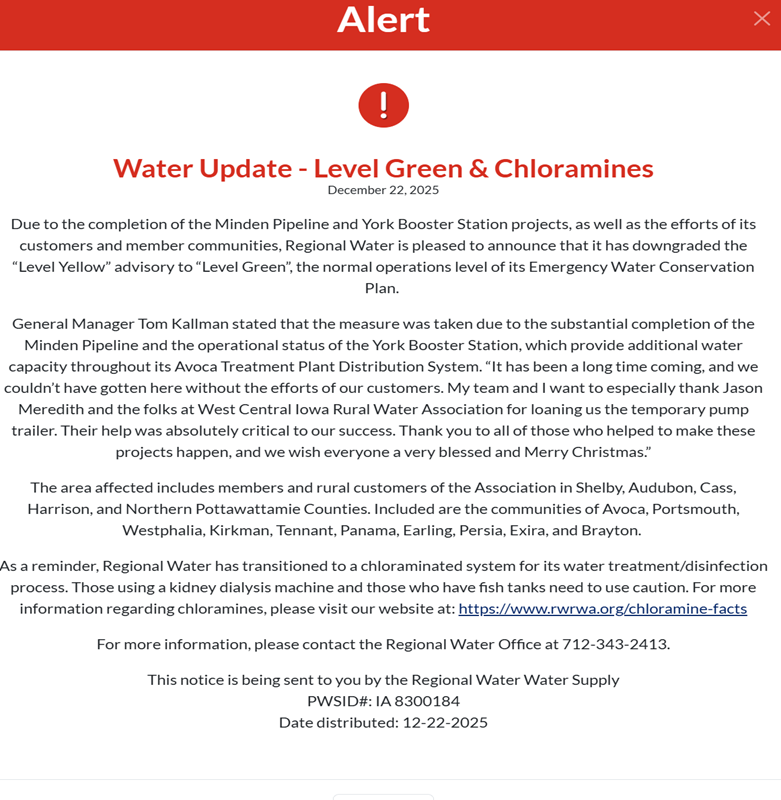
Above is a US Water Company Notice
The use of chloramine (a combination of chlorine and ammonia) as a secondary disinfectant has several specific chemical and physical effects on water mains and the broader water distribution infrastructure. It also has highly toxic effects on the wider water environment.
What Chloramine Does.
Biofilm and Corrosion Control (Positive Effects):
- Longer Lasting Residual: Compared to free chlorine, chloramine is more stable and less reactive. It penetrates deep into extensive distribution networks and dead-end water mains without dissipating quickly.
- Biofilm Mitigation: It is highly effective at controlling biofilm (the bacterial slime layer on pipe walls). By eliminating biofilms, chloramine indirectly reduces microbially influenced corrosion (MIC), which typically eats away at iron water mains.
- Stable Iron Scales: On cast iron or steel water mains, chloramine tends to form much denser crystallized iron oxide particles than free chlorine. This dense “scale” can form a protective barrier that reduces further downstream internal corrosion.
Destructive Infrastructure Risks (Negative Effects):
- Nitrification: Because chloramine contains ammonia, improper monitoring can allow ammonia-oxidizing bacteria to proliferate. This biological process—known as nitrification—drops the water’s pH and alkalinity, creating a highly corrosive environment that rapidly degrades metallic water mains and accelerates pipe failures.
- Lead Leaching and Scale Destabilization: When water utilities switch from free chlorine to chloramine, the chemical alteration can disrupt existing protective mineral scales inside old pipes. Free chlorine naturally oxidizes lead into an insoluble solid layer. Chloramine cannot maintain this layer, which historically has caused severe lead leaching from older service lines, joints, and brass fixtures into the water stream.
- Elastomer and Gasket Degradation: Chloramine is notoriously aggressive toward rubber, nitrile, and Buna-N elastomeric components. It penetrates the rubber matrix, causing swelling, loss of elasticity, and premature failure. This breaks down pipe gaskets, valve washers, and main seals up to 60% faster than free chlorine, increasing the risk of main leaks.
- Premises Plumbing Impacts: While main transmission lines suffer less direct pitting from chloramine compared to stronger oxidants, chloramine accelerates the corrosion of smaller-diameter copper pipes and lead solder closer to consumer endpoints.
Dangers to Aquatic Life.
- Chloramine is toxic to all fish and does not break down readily when in contact with air.
- Not to be used in either indoor or outdoor aquaria nor should it be present in water used to ‘top up’ garden ponds.
One of the Water Companies.
The British water industry is become reliant on chloramine across may parts of the nation due to fears that chlorine alone can not deliver clean water to customers taps any longer due to the substantial number of leaking water mains. The industry fears that cross contamination from these leaks will damage water quality which is already suffering due to pfas (for ever chemicals) nano plastics and other contaminants.
Research based in the South Staffordshire Water Company area has found a remarkable unwillingness to tell customers that it is in use in any particular part of their supply region. They, if pressed will say do not use the water from the tap for aquarium use but they will not say why.
South Staffordshire Water Company are losing around 64 million litres of water a day across their region which is about 20% of the total water supplied across its region. Many other companies have a worse record.
Across the Country.
Across the UK around 21% of all mains supply water is lost due to leaks and equates to 2.87 billion litres a day. Between 33% and 70% of this water is treated with chloramine at any one time. This loss of treated water would not concern anybody if the water were only treated with chlorine as it would break down in the environment not causing many problems, but chloramine does not break down and by its nature is highly toxic in the aquatic environment.
Many millions of litres of water daily are finding their way daily into streams and other water courses and quietly destroying aquatic life. As the pollutions are unrecorded and likely unrecognised it is only the cumulative trends of drops in biota counts and less diversity in river populations that might be used to demonstrate insidious environmental poisoning.
Why Use Poison in the First Place?
The mains pipes across the country are suffering from the use of chloramine as seals and joints are destroyed faster than they were in the past. OFWAT are pushing for replacement of water mains and set targets for 2050 to be met. The water companies then fill the new pipes with fresh water and a chemical that will destroy them faster than ever before.
Lead pipes were banned in 1969 but many houses in cities and villages still have lead pipes beneath floors or chased in walls, the advent of chloramine in water supply has not been studied as yet by the medical profession in the UK as no one has pointed out that this chemical increases leaching of lead into drinking water. Similarly, the effects of copper cocktails on the population whose predominant pipework is made of copper.
The water industry is wanting an easy ride with any negative defendable, lead is a banned problem, copper is not like lead, aquariums are not important, and you cannot blame us for poisoning a river with drinking water. You can insure your household pipes against leaks through your water company who will of course ensure your drinking water will make your pipework leak. It is the nature of chloramine; it is the nature of the water industry today.
Summary of Material Impacts
| Material | Effect of Chloramine |
| Cast Iron / Steel Mains | Generally positive; forms a dense protective scale, but vulnerable if nitrification occurs. |
| Rubber Gaskets & Seals | Highly destructive; causes rapid swelling, brittleness, and joint failures. |
| Lead Components & Solder | Dissolves protective lead-dioxide scales, causing heavy metal leaching. |
| Copper Pipes | Causes chemical structure shifts, leading to pinhole leaks and copper leaching. |
Aquatic Environment Toxic/fatal to all aquatic life.
Increases nitrification of water and eutrophication.
.
References:
https://19january2017snapshot.epa.gov/www3/region9/water/chloramine.html
https://www.mawc.org/sites/default/files/chloramine_general_facts.pdf
https://iwaponline.com/ws/article/21/3/1263/79071/Role-of-typical-pipes-in-disinfection-chemistry
https://nuvoh2o.com/blog/how-chlorine-chloramine-impact-lead-and-copper
https://heatingandplumbingworld.co.uk/blog/chlorine-and-chloramine-in-uk-water-supplies
https://rwrwa.org/chloramine-facts
https://amwater.com/njaw/water-quality/chloramine/fact-vs-fiction