M’hamid is the last place on the old camel trail from Morocco to Timbuktu before the Sahara and its sands. This is the end of metalled road surface and permanent habitations. A hectic concentration of rather desperate traders and drinks vendors clamour for the trade of the tourist who come here in growing numbers to experience the desert. In the past good quality dates were grown around this oasis; a little into the desert one can visit wells that have been dry now for years and the town is fighting desertification to its north. The whole area is under high water stress and its foul drainage also has an unavoidable detrimental effect on water quality in area.
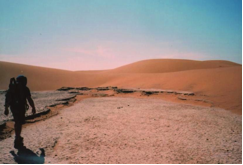
In the desert signs of past cultivation are evident, the remains of small water retention bunds are common, crisscrossing large areas. Now these enclosures, where not being covered by sand and juvenile dunes the surface of the ground is encrusted with the salts that have leached to the surface over years. This crust which is almost asphalt hard is also poisonous when the rains come the salts make the rainwater nearly unusable for the growing of food crops even if there was enough moisture to sustain some of the local flora, much of which is only edible to camels if at all.
Salt Crystal Lakebed Surrounded by Dunes. February 2012.
Wells and habitations litter the area south of M’hamid, but all like the one pictured below are dry, spillway troughs for livestock are the last resting places of tourist litter. The habitations built out of mud bricks are returning to the sand. There is no hope of any population in the future. The desert is gaining size and demonstrating its destructiveness.
This is happening in the town and those villages to the north of the town, NGOs are actively putting in static defences around the area to check further erosion and vegetation denudation. Many hundreds of hectares are being used in these efforts. Twenty miles further up the road desert dunes are developing despite these efforts. All population centres of the area are slowly dying as the self supporting communities they once were.
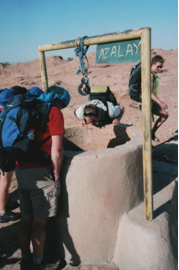
Well 3Km South of M’hamid.
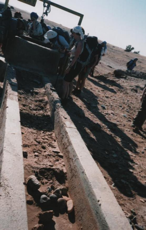
The Spillway of the Well that is Dry. February 2012.
Such lack of water emphasizes the concerns that are slowly taking the sustainability of communities at the edge of the great desert. The population is reliant on tourism and ancillary services. The production of staple crops that could generate income from excess is no longer an option. Food and drinking water are trucked in from elsewhere in the country.
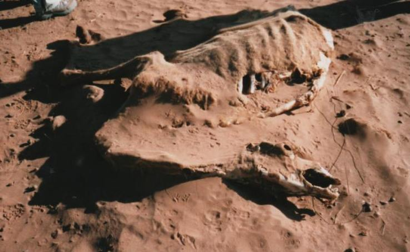
Dead Camel outside M’hamid. February 2012.
To halt or possibly reverse this state of affairs is a desire of the national and state governments, but the costs for what amounts to a third world country preclude any action. The state has turned its sights towards European and has enrolled as a candidate nation to join the economic union in the hope that aid may be forthcoming to change the fortunes of what is a very poor country.
Harvey Wood. February 2012.