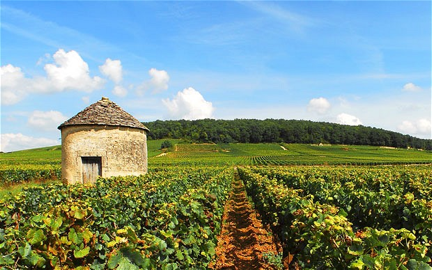
Developing an understanding of the term terroir is complex, it is most often used with regard to wine; initially that which was produced in Burgoyne and its cousins to the south in the valley of the Rhone. It then became an accepted aspect of all French regions of viniculture and has now spread around the world with every vine growing area talking of their own unique terroir. This is somewhat incomprehensible as it is an unspecific term that means both nothing and everything. The original Burgundian terroir is a fusion of all aspect of the culture of wine; the climate, soil/geology, vines, 2000 years’ experience; plus good fortune.
Some new world wine growers can boast of a hundred years or even two centuries of production, but the ‘good fortune’ and the longevity of nurture are yet in the future. Many excellent wines and vintages are grown in vineyards around the new world, but they are wineries, farming product, rather than the culture of the land from which the grape is the heart. The new world patrons of vineyards and wineries can rightly show pride in the soils that produce their wines, but over time this will alter, develop, benefitting from the care which it will receive in the coming millennia.
The new world wines have allowed the term terroir a broader geographic use, which naturally the nation who coined the expression originally; the French have appreciated better that most. They value the land, its quality for the foods that come from on and in it. One notable element of this larder of delights being the champignon and truffe, fungi that are considered the right of every Frenchman, if able, to gather, or if not at least to be an expert on their appearance and scent followed by their culinary destiny.
These fungi are not the mass produced mushrooms that are found in supermarkets across Europe, grown in sheds from a spore enriched compost that once spent is bagged up and sold on at garden centres, often busting out of its packaging with growths of mushrooms. The growths that are champignon and truffe are the ‘tresor sauvage’ of the forest and field that are valued above any other wild plant found across the nation.
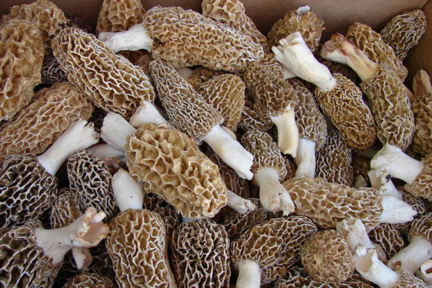
Morels.
The other fruits of the land; particularly those that are free but also the produce of the agricultural traditions of the land have inherited this right of terroir; by which I mean the farmers of the true French tradition, the beneficiaries of the revolution and its land reforms of over two centuries ago; not the produce of agri-businesses that has spread to many areas of the nation.
The French nation is now making clear through the regional assemblies of France their embracement of local diversity and their unique terroirs across. The wine growers led the way in classification of wines, vineyards and regions of appellation in the 1930s. The trend followed on in the 1970s and 80s with the protection of regional specialities of certain foods; Camembert, Dijon mustard and the many others. The governance at regional and central levels has allowed the European Union’s legal requirement for each nation to be aware of its biodiversity by protecting and celebrating it on the plate and in the glass of every citizen.
This development ensures that the considerable marketability of French produce is maximised to allow the small farmers to benefit from this strategy; they are a considerable force politically within the country and are considered to be worthy of protection. The oft derided Common Agricultural Policy of the European Community has in the hands of the French Ministries of Agriculture and Environment been used creatively to promote the produce of small farms and at the same time protect and enhance the environment on a scale not seen in any other country. The art of this has been to justify the unique aspects of each of the departments of the nation; which has led to a monumental undertaking of recording, collating and photographing every wild flower, landscape, mammal, fish so as to create a baseline of knowledge and a guide to the future. The exercise has involved many thousands of individuals, professional and amateur; by so doing it has encouraged awareness of the nation’s natural wealth of diversity and knowledge of its benefits.
This development has made tens of thousands of French population aware of the land and its soils. It has re-educated the population of the term terroir and its fundamental place with regard to produce from the soils, acknowledging its role in the viticultural heritage of the country. Geology, climate, soil chemistry; the skill and care that the land has received make up most of the pieces in the jigsaw that is terroir. The abstract element is always nascent and can not be quantified.
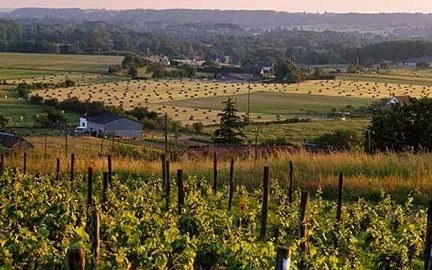
The Loir a tributary of the Loire; a landscape at peace with its terroir.