Image © maison du fleuve Rhone & Francoise Petrovitch.
The prevalence of hormone disrupting chemicals in the waters of rivers and streams across the UK; particularly downstream of sewage treatment works is a huge concern for those who have an interest in river environments. Anglers, ornithologists, walkers, water sport enthusiasts, and idlers alike. The ongoing damage to the whole ecosystem has been ongoing now since the 1960s when the first signs of sexualisation stress were observed in fish on rivers across England. The cause then was difficult to identify, rivers were on the whole of poor quality and such substances and their presence were overshadowed by far more noticeable forms of pollution, foam, colour, temperature, raw and partially treated effluents from industry and sewage treatment works. Add to the list agricultural pesticides, herbicides, animal wastes, road runoff and much else; it is surprising that the rivers and streams are now of such quality as it is possible today to identify the sources, both from where it is discharged to the environment and also able to say with surety the sources that when brought together are concentrated at the sewage treatment works.
This concentration of endocrine disrupters is now identified across much of the developed world as a concern to fish stocks in the main fluvial catchments not just in the UK but across Europe and North America. Other regions of the world are likely to be likewise being affected but rivers are still polluted more grossly by more obvious pollutants that need to be addressed as well.
The major issues that have emerged are the findings of research across the US and Canada, the UK and Germany that this is threatening marine as well as river fish stocks and is a growing concern. The sources are diverse and allied to modern chemicals used in a broad spectrum of areas; agro chemicals, food wrap, medicines both human and veterinary. The environment protection agencies across the first world are calling on industry to remove or lower concentrations of known constituent courses.
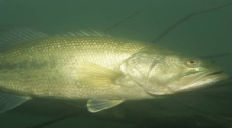
Bass, a much researched fish in the United States.
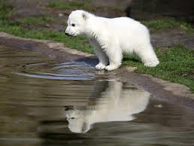
This effect is also being noted in some marine mammals such as the Beluga whales found in the St Lawrence estuary, also seals have been found to have similar deformity: further up the food chain some young polar bears have also demonstrated transgender modification.
Polar bear cubs are being found to be deformed by hormone disrupting chemicals as are some seals in the Baltic.
Not all sexual changes in fish are brought about by pollution; some fish do change due to social makeup of their shoal. A shoal of fish such as blue banded gobies, clown and parrot fish if of the same sex will bring about one to become a functioning male if the shoal was all female whilst conversely all but one male fish will become female in an all male group. This is normally the most dominant that becomes masculinised or remains male. It has been shown in such fish that increasing male or female genetic material within the metabolism of the fish does not bring about sex realignment only coursing cosmetic alteration of appearance but not behaviour.
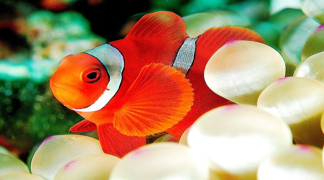
A clown fish capable of sexual alteration to suit the needs of the fish population.
The problem with the developing prevalence of hormone disruption is that the full extent of the problem is still unknown; the effects on food chains and its long-term effects are to be discovered only with time if action is not brought about rapidly.