A new year has begun with usual salutations and fears for the future; both individual and shared. The planet, the local stream, water supplies, flooding and crop survival. Water is a central core of life and one of the staples by which humanity dangles as if by a thread. The human species is fortunate in that that thread is strong but we are constantly wittingly or unwittingly sawing away at the fibres that makeup that thread. Most first world people do not consider that the water they drink from the tap is anything else but safe and at the same time they use lavatories and what happens to the waste passing beyond the u-bend in the foul pipe is of little if any interest to them. Such is the reality of modern life in much of Europe or the US. Water is on tap and waste disposal is at the flush of a draught of water.
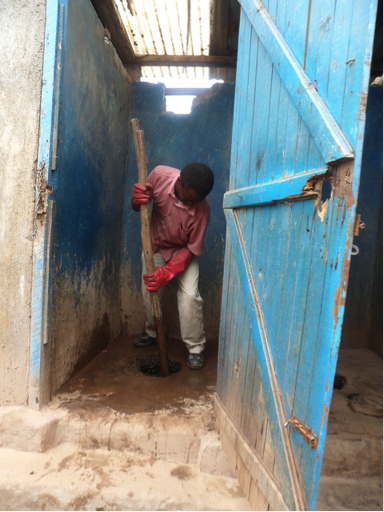
This is not the experience of the majority of the human race where if water is available it is possibly poisoned, it is in short supply, and it is not piped to your home and may even be several miles away. Sanitation may be a scrape in the ground, a latrine or pit that might need to be emptied by physical labour, excavating the fetid sludges up in buckets that can then be used on the land or dried in the sun to use as fuel for cooking. We in the developed world need to be grateful for our civilisation, or at any rate be capable of caring for it. This is not that each of us needs to be an engineer but each of us as individuals should be more aware of the fragility of our supplies and our wastes disposal. It is not anyone else who is responsible: yes the water company supplies the water and treats our waste and the water industry provides these fundamental services to the community across the regions on our behalf for a price. The functionality of this arrangement is only possibility with the implicit agreement of and each household paying their bills. If this stopped the consequential disintegration of societal structures would be swift.
Emptying a pit latrine.
It has been a remarkable social experiment that England and Wales have been party to; the privatisation of the staff of life was not an option envisaged to work by any other nation as its electorate would not stand for it. As it did in England and Wales the process worked for a number of reasons, the public were at the start of a frenzy of utility privatisation, council house sales were booming and private investment in gas and electricity were coming forward as a scheme that would allow huge numbers of the population to hold stock in what had been government owned. The other reason was that the water industry was put in to harness to rectify the problem that the government nationalised water authorities were unable to deal with and had tarnished the government’s reputation within the European Union; Britain was the Dirty Man of Europe and particularly this was the parlous condition of the rivers of England and Wales.
Scotland and Northern Ireland were different and their rivers were not so damaged, salmon and the vastly important fisheries both for rod and farmed fish had ensured that many rivers were already protected: the country’s population and industrial base were also far smaller and largely confined, in Scotland, to the central belt set upon the two great estuaries; Clyde and Forth. In Wales and England the state of many rivers was little better than open drains, large old industries, admittedly many of the dirtiest declining or shutting down, a population spread across the majority of the whole area and using large volumes of fresh water that was passing on to the rivers and watercourses as only filtered sewage at best.
I swam off the Gower peninsular in 1984 and found non filtered sewage; I had to pass through flotillas of human waste as if sailing towards the ocean to get back to the beach.
The water Authorities were both poacher and gamekeeper and were suffering terminal fiscal strangulation with reducing government grants in aid and political pressure to limit increases in water rates. The politicians would not allow the water authorities to borrow money for investment; the sums then were considered astronomic and in terms of trading off increased public expenditure, the need for political popularity were not considered pertinent: Dennis Healy stating famously that ‘there are no votes in shit’.
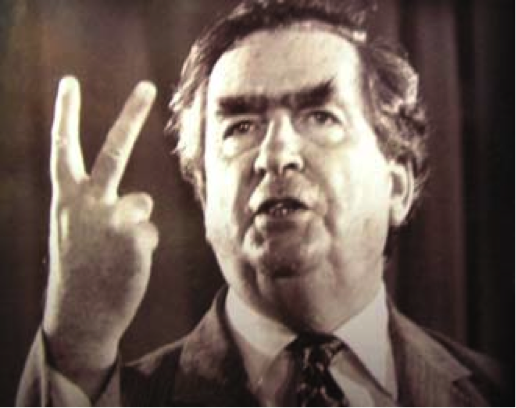
Denis Healy. One time Chancellor of the Exchequer
In 1974 the local government reorganisation that took place; creating the water authorities to administer the water supply and waste water treatment across England and Wales had discovered on their creation an even more parlous situation. The local authorities both rural and urban councils had operated sewage treatment, some well and others poorly and in some cases reported by water authority staff at the time of establishing water authorities the location of some treatment works were lost. Some when their locations were discovered were not functioning and even had trees growing in the filter beds. The water authorities had much to rectify but by midway through the 1980s the need for capital investment made privatisation the only option for the government of the day.
The new water companies were formed as were the regulatory frameworks of the National Rivers Authority and the Office of Water Services Regulation (OFWAT) on the 1st April 1989. It was as if nothing notable had taken place except that the water companies found that the expenditure envisaged at the time prior to that day was inadequate and the public and industry began to pay increased tariffs for water and waste water services. The environment was still under threat from poor treatment works and the initial fiscal agreements had to be brought into line with reality by those most involved; surprisingly by the water companies in collaboration with the environment lobby.
Today the water companies have changed to be run by accountants and the regulators are more and more deskbound; is there hope for further improvement? In short; yes, the realisation that many pollutions are now to be dealt with by economic leverage, is coming to the fore. Such issues as estrogenic compounds and their mimics are only likely to be remedied by financial sanction on the manufacturers and users to finance the infrastructure needed for the removal of insidious poisoning of watercourses.