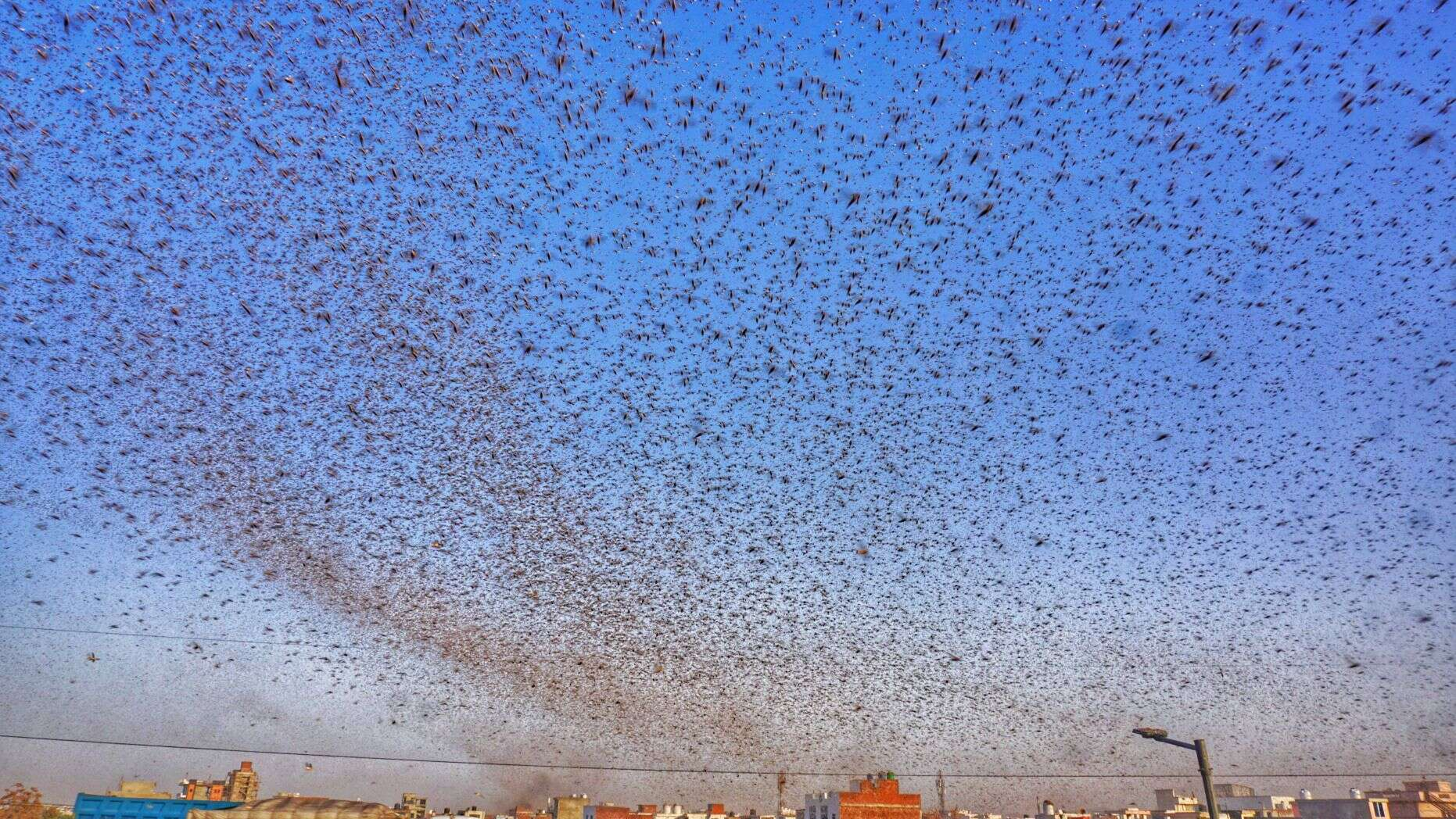
For millennia plagues of locust have been the scourge of the African and Asian continents, and it was only in the 20th Century that controls were developed, pesticides sprayed by low flying aircraft that sprayed or dusted the swarms, killing these creatures in their billions. The problem with such action was the long-term effects, contamination of crops, water bodies and groundwater. Humans suffered along with livestock from modest to severe poisonings.
The United Nations Food and Agriculture Organisation ha been unable to solve this, they have trialled some air spraying of insecticides but none have proved as effective as DDT was in the past, but we cannot and will not go down that path. The use of drones to net have yet not been tried on a scale that can demonstrate its value on a large scale. Large numbers/volumes of locusts can bring down even the largest unmanned aircraft.
It is worth considering the roots of the problem, global warming, and human actions to achieve this. The swarms of insects travel vast distances, they can travel over miles of desert but not for long as they need to feed, in many parts of their current routes they are passing over greened areas, areas either newly cultivated for food or greened to limit desertification. Many of their barriers are going due to ‘greening’ activity. There is a need for greening their control.
The deaths of billions of locusts will also become a waste hazard with possible repercussions for human and livestock health, the long-term effect on soil and water are as yet clearly understood. The putrefaction of a billion or many billions is an unknown conundrum.
Clean Rivers Trust is working on research in the Middle East and elsewhere on these issues.