Minewater: Coal Authority Annual Report 2020-2021.
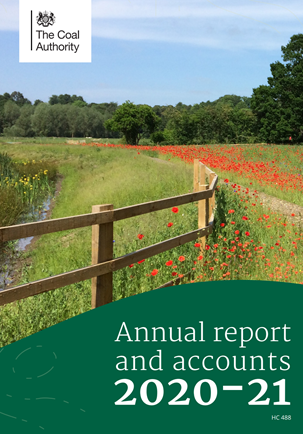
The Coal Authority has recently published its Annual Report, the section covering their work on minewater makes interesting reading, it also demonstrates the size of the problems that these sources of pollution are presenting the Authority. The size of the problem is still developing plus the financial burdens that the running of a growing number of sites present.
Background.
Over the time that the Coal Authority (founded 1994) has existed the Trust has engaged with them on many projects, ideas and issues regarding minewater treatment, energy and low-grade heat availability, leachate from spoil heaps, spoil heap stability and other environmental issues regarding the mined environment. We have been involved in treatment methods and have been able to overview the early minewater treatment schemes, published in our book: Minewater Pollution, Technology, Application and Policy (2002). We were fortunate that the Authority contributed to our research cost for the project.
Our relationship, though on excellent terms has never been close. This is due to the relationship the Trust developed with British Coal and after renationalisation with the Mining Companies, Coal Investment, Scottish Coal, Midland Mining, RJB Mining later UK Coal. The opportunities that were made available to the us were remarkable, research into minewater movement, wetland and reedbed installation, surface water drainage and much more. This gave the Trust a flexibility that few organisations could emulate and fewer still got the opportunity. The mining companies took our ideas to the Authority to find them shot down whilst their (the mining companies) bankers saw fiscal opportunities, this was often frustrating. The Coal Authority still frustrate us at times.
This close relationship with the coal mining industry during its last phase of operation in the UK has given Clean Rivers Trust a unique perspective into the long-term issues and liabilities that hang over the legacy that the Coal Authority has inherited. The same is true with the issues that are now being passed on to the Authority by the UK government, that is the development of methodologies for the treatment of metalliferous minewater treatment.
Clean Rivers Trust was fortunate to have been involved at Wheal Jane Tin Mine in Cornwall in 1990 prior to the pollution incident: persons involved with the Trust prior to its foundation had been on site from 1987 and had warned that the Nangiles Adit would vent minewater once the mine closed and pumping ceased. This prophesy held good with the concrete adit plug being forced out of the adit mouth and shot across the valley. The Trust worked for more than 10 years with Camborne School of mines on many research projects during that time.

Coal Authority Minewater Treatment.
The Coal Authority have put in place and or are responsible for the maintenance of over 70 sites across Great Britain. Their main stakeholders being DEFRA, EA, NRW and SEPA. Many local authorities are also involved in issues alongside the Authority’s regulators.
The legislation that the Authority is governed by are most noticeably environment based including the Water Environment Act (Water Framework Directive) 2003 and its sibling in Scottish Law to the Mines and Quarries Act 1954.
The expenditure needed for some schemes are judged uneconomic until technologies advance or a scheme can be put in place that alters the fiscal situation. Currently there are 54 deferred schemes in Britain. There are though memorandums of understanding made between the regulators that ensure several new treatment pollution remediation schemes are put in place annually alongside several preventative schemes to avoid damage to groundwater resources or preventing new surface water pollution. The memoranda prioritise many sites that are technically feasible. The costs of each new project to be brought to conclusion is just over £2 million. The maintenance of the already operating schemes is estimated at £100,000 each plus upgrading and other add-ons such as solar power developments at many sites to both reduce operational cost and reduce the Authority’s carbon footprint.
The Authority and regulators have a rolling 10-year plan which is not too rigid and allows pressing responses to be put in place when needed.
For the past year the Authority had a provision of £2,010 million for new schemes annually with a further £1,220.7 million for operational costs. The government recognise that the Coal Authority will have similar expenditures plus inflation for at least 100 years and, for ever.
Opinion.
This Annual Report is a winner as documents such as this goes. Its not the usual sleep-inducing document so many are. I recommend it as a piece of report writing that outlines huge expenditure with low income. The Coal Authority Directors at this point should be proud of themselves. Not many quasi-independent government bodies can put together figures so plainly and find it so easy to justify the eye watering costs in these hard economic and social times. The honesty is wonderful and to carry out this role as well as they do is remarkable.
Future.
The Trust works with many organisations and individuals, we work on a remarkable number of projects and research answers that help other. We meet ideas almost daily and we, if we find something to aid the costs of minewater pollution remediation we will bring it to the Authority’s attention. Hopefully someone will show enthusiasm at some point as with our other proposals we were ahead of our time technically. Today many consultants hang round the heals of the Coal Authority saying the same as we did 20 odd years ago.