 Introduction.
The Environment Agency published data of pollution emanating from storm water discharge points across the country. These outlets discharge raw sewage and their attendant delights of everything we all put down the toilet bowl, bath, sink and shower plughole. A mixture that still demonstrates how litter lazy we all are. Sanitary towels, tampons, condoms, panty liners, cotton buds, and much else which should not be going down the drain. Our report on the subject was published 26 years ago. ‘Bag It or Bin It’ was then the slogan, now there is no trite refrain, people overall just think they should not but what the hell, down the pan and round the hidden bend. The same is true of kitchen sinks, fats and oils are not meant to go to the sewer, fat bergs, build, block pipes, threaten sewer floods but again, what the hell and down the drain. All it will make is low grade humour on the TV news. The real sewage: urine, faeces, a modest amount of paper, that is it, oh soaps and most importantly the flushing medium, water. The list is short if not sweet.
The sewer systems across the country are under pressure, new homes are being built, industry is expanding out to new sites, fast food outlets are all adding to the flow that hopefully stays below ground between source and treatment works. There are problems though. Many towns and villages have systems to handle wastewater that are out of date, they have been out of date for many years. The sewers are not too old it is that their volume capacity is too low. Alongside this many sewers are systems that take both sewage and drainage for roads and paved areas. Much of London suffers from this problem and as much more of the capital is going under impermeable surfaces so denying rainfall to permeate into the aquifer below, it flows to drains that allow co-disposal routes to the wastewater treatment works. In the case of London this is well understood and as brief shower precipitates upon the capital the storm water overflows spew their unedifying cargoes of mixed waste into the Thames or one of its tributaries. For London this will soon be sorted due to the Thames Tideway Tunnel that will intercept the storm water overflows along both sides of the Thames and its tributaries below Teddington Lock. The cost of which has been borne by the company, Thames Water, rather than the consumer, and leaves the company looking for a new owner as their present one sees no future for it.

The knowledge that stormwater overflows are vomiting, expelling pestilential deposits into rivers and streams across the country is not good news for the environment, the water companies or for us. It is also not good news for the politicians either. The environment suffers a deposit of well-watered discharge, a disgusting cocktail of multifaceted pollutants, it is certain that some wildlife will suffer, and water quality will worsen. People complain to the Environment Agency and the water companies, some such complaints are not well put and those that receive irate and abusive complaints suffer. The regulator will check, and the water company will check their telemetry to see what is known, visits to sites are undertaken to seek out evidence of such events but often too late as the discharge has ceased and evidence has gone with the flow or otherwise been removed or disappeared. The public are affected both by the visual intrusion of the discharge, the wild water swimmer might be infected with bacteria. The water company knows the score, how many thousand stormwater discharge points the have and how many discharges and the pressure from all sides is intensifying on them to bring these pollutions to a halt. I will cover the hidden cost of such actions later.
The politician is used to muck being verbally slung at them, but there is no value in sorting it out. The government will be said to have acted too slowly, their actions too week or not rigorous enough. Dennis Healy the Labour Chancellor of the Exchequer new the score in the 1970s when he lamented that there were ‘no votes in shit’ to a fellow cabinet minister.
A Very Brief History of the Water Industry since 1974.
In 1974 the Local Government Act divested the local authorities, both Rural and Urban councils of their liabilities to supply potable supply and treat wastewater or sewage. This task was handed to newly formed water authorities, made up from the councils, the river boards and others swiftly recruited. They were North West Water, Severn Trent, Thames, Welsh, South West, Wessex, Yorkshire, Northumberland, Anglian and Southern. A few other water provider companies were left as they were, Dover and Folkestone, Bournemouth, Staffordshire, Cambridge, Worcester being the main entities of little consequence in this paper. These authorities as the set themselves up found that the countries water supply and sewage treatment in most area was in a parlous state. Water quality to villages from village wells were still to be found, sewage works did not work, trees growing in cinder beds of bacteria tanks raw sewage going through screens that were rusted and unraked, sewage emptying into the rivers and streams. No one had cared in the councils across the land, the brave new world of post war Britain was at its end and economic depression after depression was the norm.
The government then took the country into Europe, the water authorities were asked to bring Britain in line with European Directives regarding sewage treatment, water quality, environmental standards. They tried hard, but funding was not available from government and the water rate payers were loath to pay more, especially for the treatment of water one they had used it. Water quality had started to get even worse in many areas though there were individual heroes across the country, sewage experts who hoped for and strived to get the best from engineering that could be afforded or old plant rejuvenation. Fred Leicester was one such person working from a wooden shack on Colwick Racecourse in Nottinghamshire who foresaw the future when water from the River Trent would be used as potable supply for Nottingham and Derby. These were though rare individuals.
The Privatisation of the water companies in England and Wales (1989) was a popular privatisation by the British Government, following on swiftly from gas and telecommunications, also the selling off many council homes to their tenants. Privatisation of a human right though will always be fraught with difficulties. Many who worked within the water industry felt the consumer was to lose out to profit and government dictate. Especially the government’s wish for mass fluoridisation of the public water supply. Much to many peoples surprise the water companies refused to do so. They were as companies governed by risk as well as legislation, regulation but they had to be aware of public perception as too boot. The water industry as it was now called had to gain permission from its regulator for its spending (investment) in infrastructure. And each company, their names based on the old water authorities put in bids that then they had to fight to increase as their knowledge of need for investment in environmental improvements became clearer.
Privatisation of water utilities is not an ideal solution, but it allowed for greater investment than would have been possible with political drivers ruling expenditure.
What Happens Next.
There is a hardy group of citizens who consider river swimming an experience not to be missed. They swim in winter, and all year round, other prefer to cool off in rivers during the warmer summer days. They have concerns that rivers are not fit for purpose, sewage detritus from storm water outfalls being the most contentious. We agree with these groups but also wish to see the unseen sewage constituent loadings of sewage works’ discharges addressed. These discharges are often unregulated as their constituent parts are at present still accepted, pharma products, skin care products, medicines that pass through the body, plastics’ residues are all present. These include phthalates and other materials that make up osteogenic materials and others that mimic them. Alongside these the are other pharmaceutical products that effect the state of wildlife chains of predation thus inflicting as yet unverifiablely diverse damage to the ecology of fresh and estuarian water that are increasingly common pollutants.
The answers are there in the knowledge bank for stormwater flows, they are costly but costly in the quantities of installations. Which to be rectified is a lottery, often won by those with the most clout. The chalk stream fisheries that are worth £40,000 per metre on the Itchen being a prime example. These rivers are private. No one who has no fishing right may sit by the bank. The Ilkley swimming site is less valuable but has the media onside and so the water company and the Environment Agency quake.
The voices of celebrity complain today about the state of their river environments but is it more factual to think they may have a financial rather than moral stake directly or indirectly in the waters of the UK, especially English rivers. I see ex pop stars and faded sportsmen talking and writing about government doing something to put their environmental house in order. It might be better to warn the public that their water charges will have to rise. The cost of sewage treatment is about to rise, each household will need to be prepared. To swim in the river in Ilkley may cost each Kelda (Yorkshire) Water customer a few pounds a year on their bills. Many NGOs are as bad, they shout loudly but they can be placated with funds.
What We are Doing.
We have been in existence for more than 30 years, we have been a thorn in the side of many polluters and good friends with many more, we have researched methodologies across the UK that are now in mainstream use in removing pollution from entering rivers.
We have done much more than helped develop minewater treatments used across more than 80 sites in the UK, removed acid run off from contaminated sites, removed road run off from motorways and other roads. We have removed metals from ponds and lakes, worked with the agricultural industry to lessen impacts or remove completely many pollution sources. We have talked with thousands of people and groups, have worked with academics, politicians, and industry. We have developed sewage treatment for specialist discharges.
We have evolved and are able to help local people and communities, at the same time quietly seeing pollution sources removed. We are a small organisation that is handed from one problem to the next. We do not advertise loudly; we just ensure that people are aware that we exist.
Storm water overflows are amongst our solutions, each one needs to fit its location, so each is unique though using simple and often natural processes. We are doing research on pharmacological wastes, we have over 25 years developed simpler methodologies that are available.
What we are Not Doing.
We are not apologists for the water industry, but we understand that the way the world is, the parlous financial constrains that many of the water companies are finding themselves in.
We will not show pipes discharging to streams and rivers as instances of stormwater pollution unless we are certain they are, I have been shown many that are not what they seem. They likely should not be flowing but they are drains from other sources.
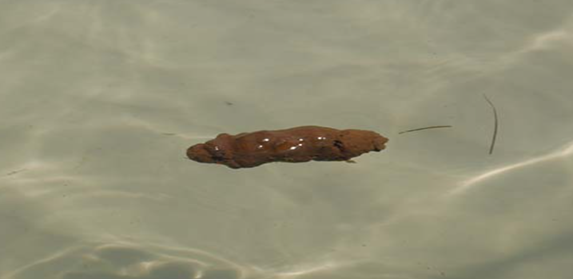
The Trust desires a continual increase in the water quality of all rivers but are not going to foolishly point at any one organisation or group. When we look at what floats in our rivers, we need to remember what we put down our toilet bowl.