A short review of activities since the last Trustees meeting in December last year.
Rains and flooding.
The well-publicised aspect of some of the wettest winter weather for years has led to much discussion on land management and farming practices in the lands surrounding and on the Somerset Levels. Issues of dredging, rain runoff from higher ground, water retention, pumping and the most negative; abandoning the Levels to nature in the winter months. Our contact on site reported that the local population was surprised by events being so bad and needed people to blame, not just the Environment Agency but farmers, Internal Drainage Boards, Sedgemoor District Council and anyone else who had a hat to wear. The environment lobby certainly were not out of the frame either with the development of wetland at the seaward fringe that was believed to hold the floodwater back.
The surprising aspect of the flood was that the number of properties that were flooded out were not as large as was first reported by the media; it was the land that suffered and the farms that were affected. The population objected to being cut off from their normal world of work and social activity, shopping, school runs and generally being denied their freedom. The latter being the majority’s greatest bugbear.
The farmers of the levels have though taken a hit that is reminiscent to that taken by the Cumbrian farmers during the last foot and mouth outbreak in 2001. Though the waters are now abating and the population are free to go where ever, the farms are still unable to function, if not still underwater are sodden and the land inaccessible to any of the normal activities of spring.
The Trust has been asked to give a view of ways forward, which it will do in due time and not add a knee jerk reaction. There is to be dredging, there are to be more pumping stations; these are the symbolic sticking plasters; the long-term strategy needs consideration.
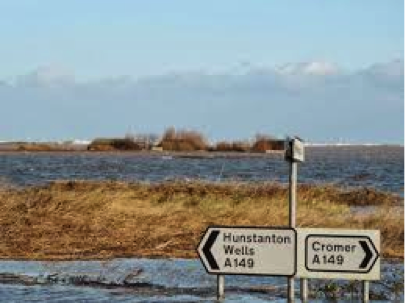
Flooding on the coast of North Wales, Norfolk, Sussex and elsewhere are another set of issues altogether. Most of these events were storm surges and gales whipping the waters beyond their normal confines, but it did raise many questions.
Managed retreat, new groins and coastal defences, barrages or other engineered structure. The coastal margins are a constantly changing environment, as with rivers their fluid changes always ensure constant refining of the whole island’s profile.
The major rivers, Thames and Severn broke their banks again but threatened new areas so confusion and bewilderment for residents. The Severn is a trespasser by nature, the Thames though was a rather horrid mixture of river inundation and storm water backing up and flooding out of drains in roads and out of lavatories in people’s homes. These are both brought about by the creation of flood defences elsewhere so moving the issue to the next most vulnerable area.
These floods will be accessed quite swiftly, but there are many issues to be wrestled with, higher flood banks, storm water storage, acceptable risk; the list goes on.
Androgynous Fish.
The issue of endocrine disrupters and damage to the fish in the UK has led to contact with US universities who are researching this area but are coming to the conclusion that there are accepted formulas now that demonstrate the problems but realise that much that is needed to be done to start coming to terms with this problem are political and economic; consumer products, industry, retail, health, public purchasing; the remarkable crossover of sectors is the obvious problem.
There are now moves in the States to find a methodology of bringing together a group of stakeholders to initiate some ‘out of the box’ thinking to galvanise Federal cerebral activity. This mirrors the Environment Agency’s stance awaiting a European lead.
Fracking.
The writing of the every person guide to shale gas and its exploration is slowly coming together; the compilation is not aided by the various environment groups muddying the water and the government getting enmeshed in having to make itself over supportive of the industry. This is particularly true with regard to ministers saying that the UK would export the gas to aid countries that were not so blessed and may be threatened by a possible Russian embargo of natural gas.

This stance is either foolish when volumes available are unknown or the truth that the country’s strata is ‘stuffed with it’ which might be a little too optimistic. It would be a trifle sad if the UK carried on importing gas for home consumption whilst making an Emmental cheese of the country’s bedrock whilst selling home produced gas at state aided prices. Such an act would garner a resentful home audience.
Other Issues.
The Trust has been asked to take an interest in a closed landfill site in Yorkshire that closed long before regulation and legislation became what they are today. It is interesting in that it was unlined and accepted anything into its void. The hydrological and geographical setting is making it an interesting piece of research.
The Trust was invited to outline its methods and reasoning regarding issues of contamination in a report for a planning application to Doncaster Metropolitan Borough Council, the outcome was satisfactory for all concerned. A good outcome!
The Trust’s web site demonstrates the several other areas of inquiry that have been undertaken over the last months.
Water Harverting
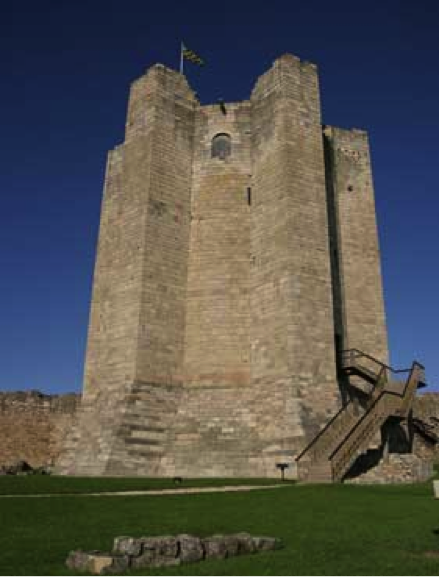
Conisbrough Castle Keep.
One of the large buttresses was used originally used as a water reservoir
And took all the water from the castle roof. Nothings new!