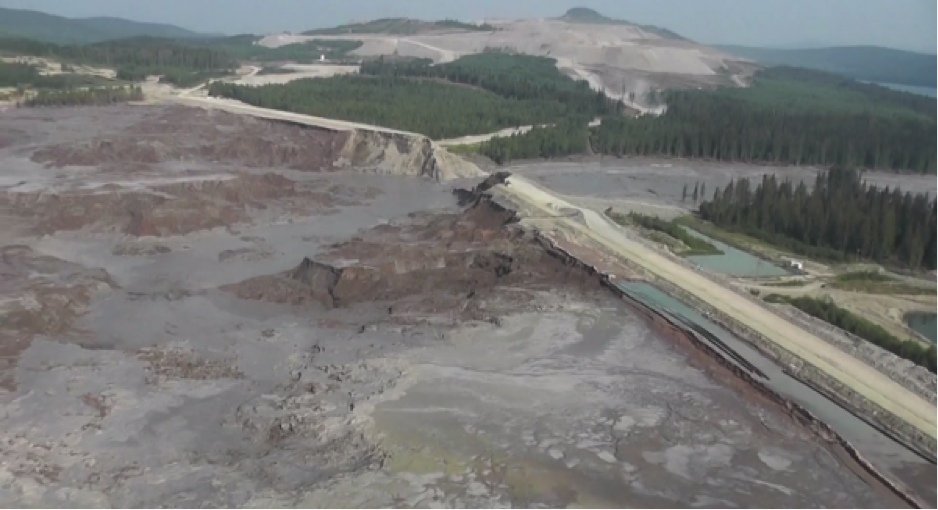
The Mount Polley Mine has had a tailings ‘event’, the tailings lake breached on the 4th August letting a flood of 10 million cubic metres of polluted water and over 4.5 metres of slimes loose on the British Columbia environment. Mount Polly Tailings Dam covers 4 square kilometres was noted to be virtually dry after four days of unrestricted flow. The regional and national governments have stated this is the largest environmental disaster to befall Canada in modern times.
The volume and power of the flow of pollution has cut a swathe of devastation through virgin pine forest and polluted the local rivers creeks and lakes. The water was by no means pure H2O but sulphuric acid; the liquid discharge of metal mines of this sort. The slimes, the heavy metal and other rock muds were also certainly not benign and holding elevated levels of many metals including arsenic and cadmium.
Mount Polly Mine produces copper and gold in an historic British Columbia mining district that has extensively been in production for over 100 years. The mine has been working with organisations both community groups and national environmental entities to develop sustainable management techniques across the mine site.
The course of the tailings dam failure isat present unclear, but it is sujested that the dam hight had been re-engineered and had failed with the increased load. This has been a common point of failure across the globe.
Thankfully no people were killed by the ‘out-rush’ of water and muds, but flora and fauna have been severely affected with several creeks and lakes damaged with local surface water potable supplies suspended. Huge fish kills have been reported with commercial fisheries devastated.
The operators of the mine, Imperial Metals and Power Ltd., have announced that there are no problems that money won’t solve and say the clean-up will start in due course. There has been no regret expressed or hast shown. This cavalier manner of addressing the issues that that have not fully been assessed as yet is the norm for the reassurance of shareholders and the stock market.
The operator’s language is poor; the event took place in a remote area of little world interest. The media had no deaths or habitation damage to hang a disaster story onto. This was a cataclysmic event that has been overlooked by all but the mining industry which likes to play such events close to its corporates chests.
The ongoing outcomes of the post-mortem will be reported by the Trust as and when they become available.