The Hamam is a bath house where the person entering is cleaned, not just a ‘Turkish Bath’ but a genuine deep clean. This piece is not about these joys or tortures, whichever way one might be disposed to consider it, but is a short introduction to the hydrogeological nature of hot springs that are to be found across the country. That is not to gainsay that in several instances the waters are not or at one time were used to supply hamams from antiquity to the present.
The purpose though of this short piece is to put forward a hypothesis that would benefit Turkey both in the medium and longterm.
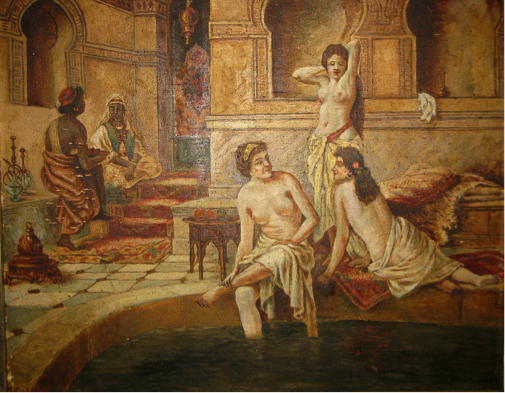
Hamam by Andonis Kantanos.
The truth of the bath house the two sexes are vigorously separated as required by the Muslim tradition and laws.
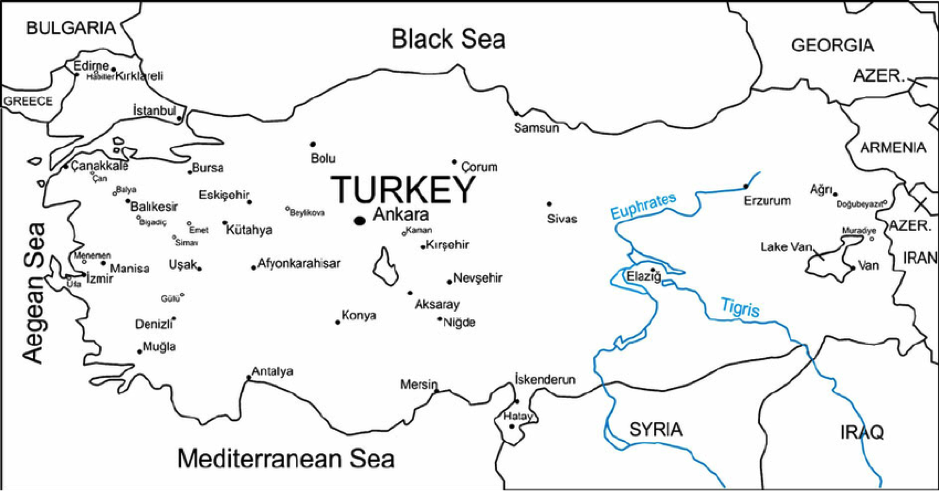
These naturally occurring hot springs are not a unique feature of Turkey, they are though numerous and a useful touchstone as to the condition of this region of the planet. Across the geographic region the phenomena are roughly spread equally across the entirety of the country.
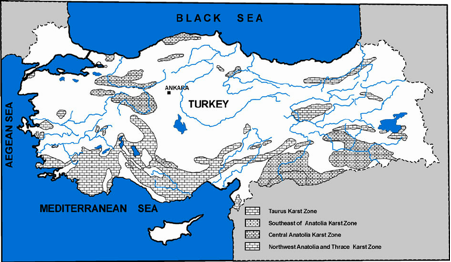
The limestone geology overlies large areas of the country’s metamorphic ‘hot rocks’,

The geology of Turkey.
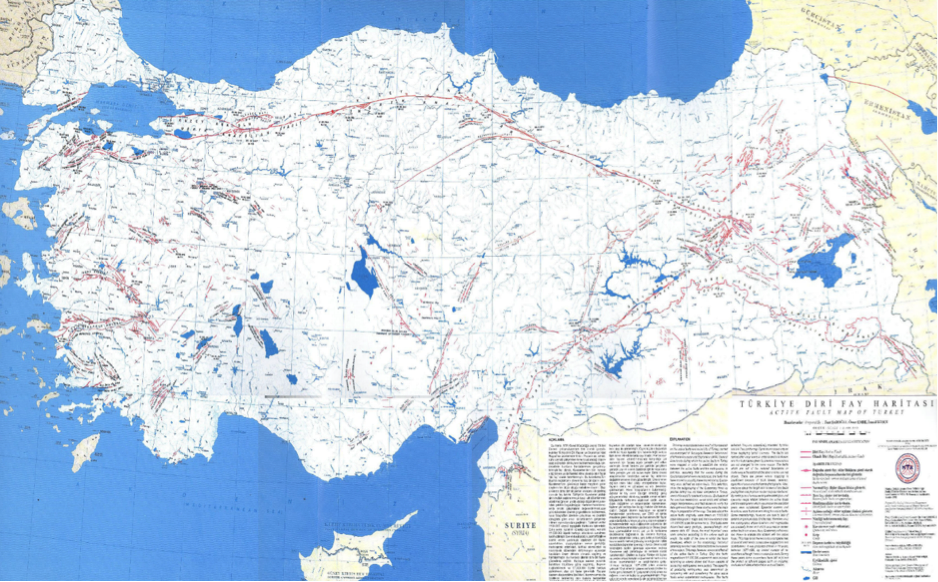
The major land movement belts or lines are illustrated above and demonstrate the corolation of movement, seismic activity and hot springs.
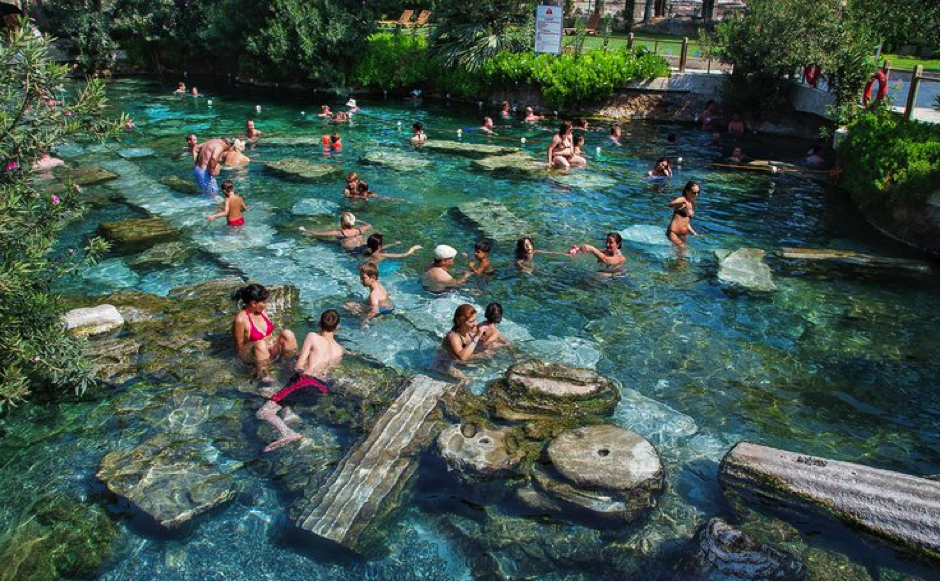
Pamukkali: ancient baths still popular with tourists though now open to the elements and to mixed gender use.
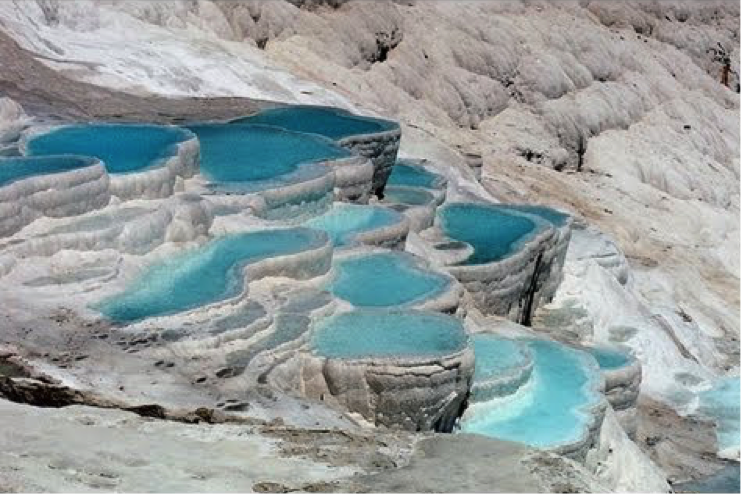
Pamukkali; the natural flow of calcium rich groundwater welling up from the karstic limestone creating a somewhat surreal pooled land and waterscape.
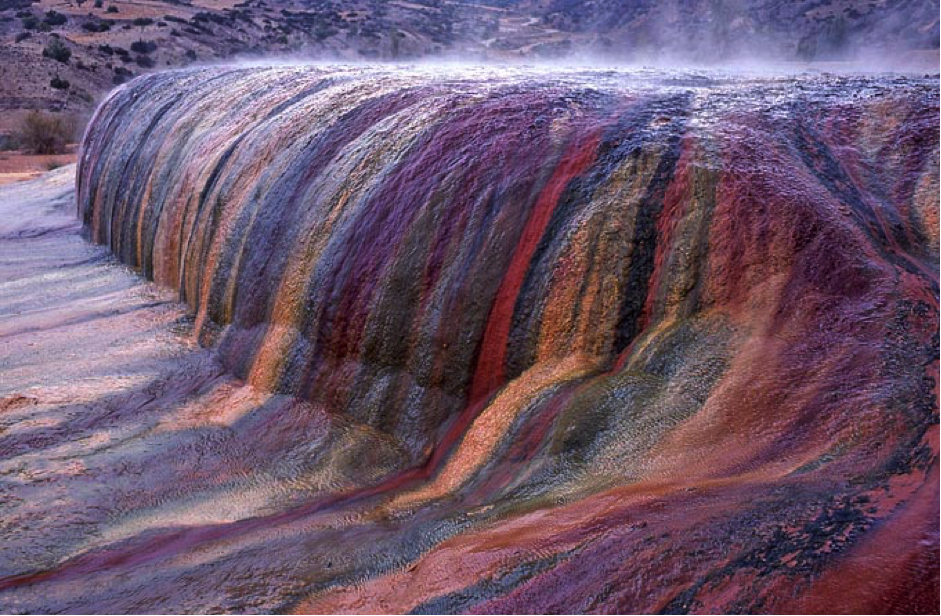
Pamukkali: algal growth in the warm waters, clours demonstrating the elevated metal content of the waters.
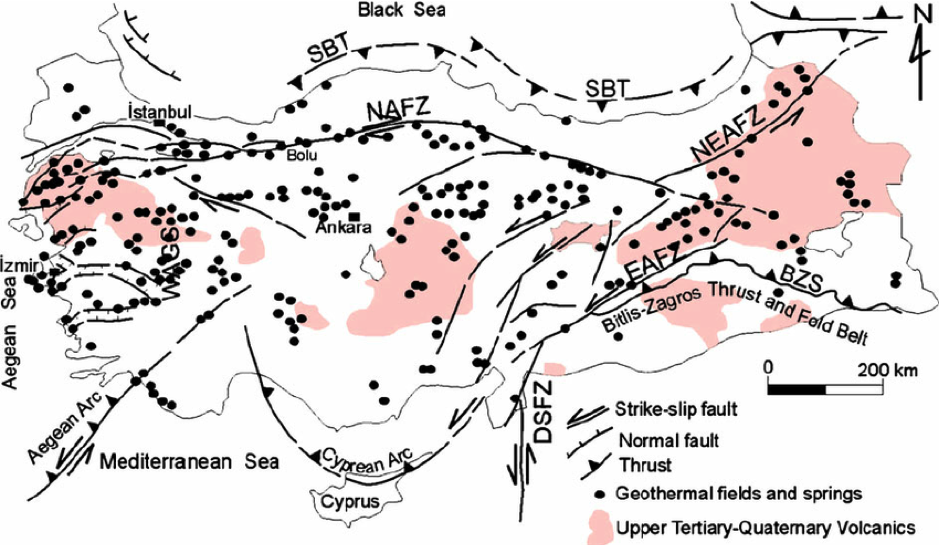
A detailed location spread of springs to fault plains and segmented geological movement.
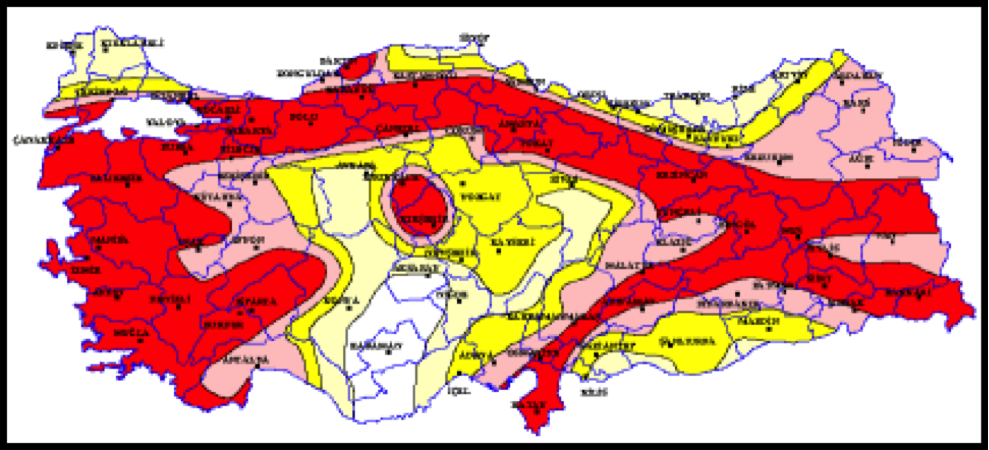
A dramatic evocation of the main areas of high temperature groundwater resource that demonstrates both the remarkable stresses that the landmass is under and illustrates graphically the potential for sustainable energy potential from the ground.
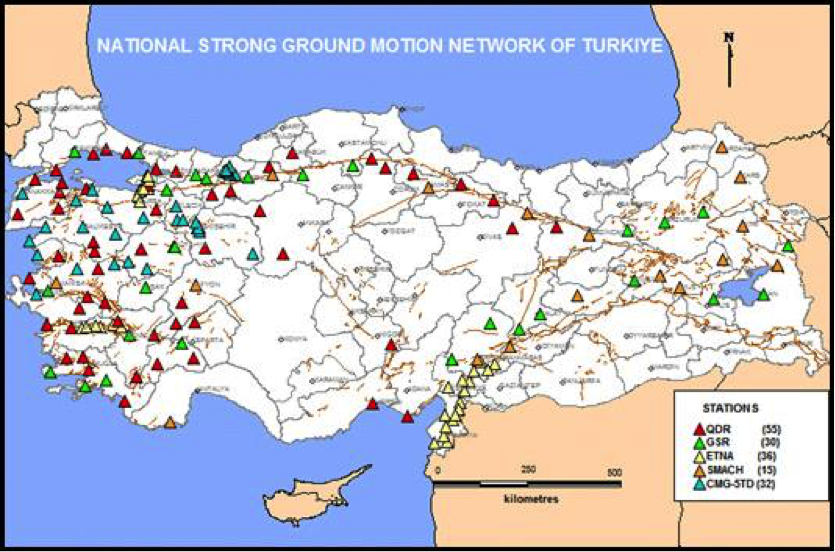
Seismic monitoring stations are located across Turkey and correspond to the pattern of hot springs.
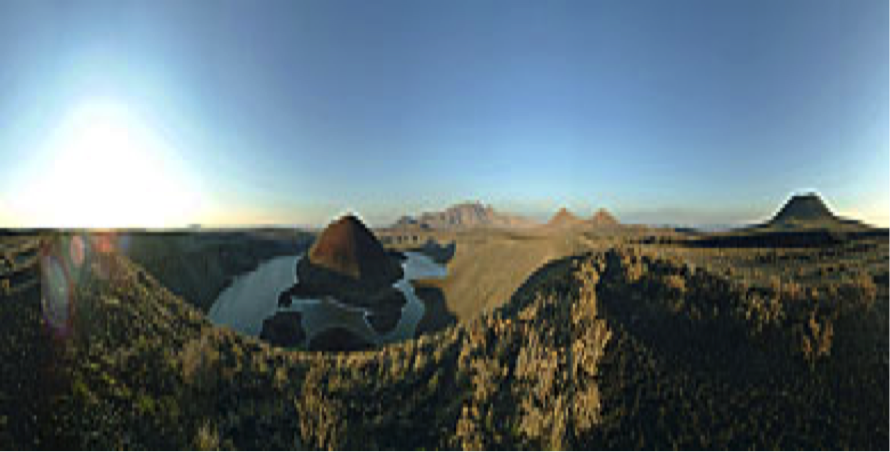
Volcanic lake; Meke Golu (“Smelling Lake”) this is due to a strong sulphur smell from submerged fumaroles in the Karapinar volcanic field. About 5km away, just on the right of the cinder cone, one can glimpse a maar or volcanic crater filled by deep-blue water; Lake Aci Gol. Both these sites are fed by warm water from beneath the petrified lava fields of this region of volcanic activity.
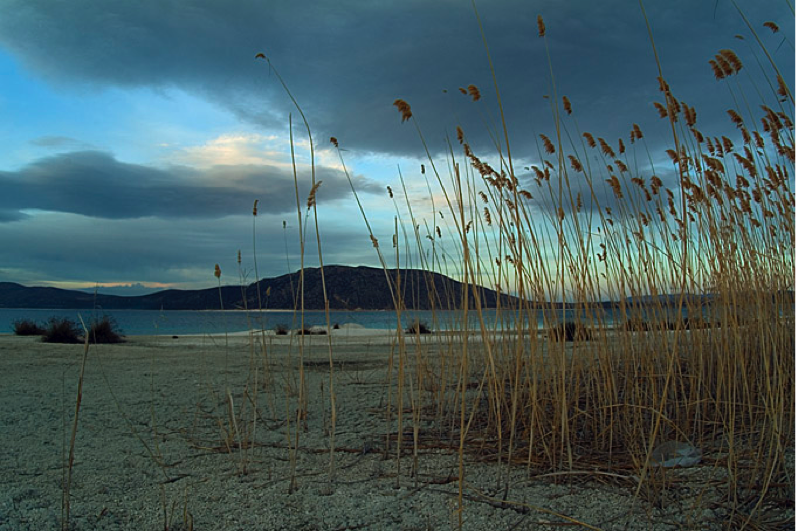
Solda Golu is a volcanic crater lake in Yeşilova Province 80 km south east of Pamukkali, salt tolerant Phragmites and Carex. The lake is fed by streams and warm springs and in summer evaporates to a soda crust. The flora is that of a decayed wetland that demonstrates that this areas groundwater was once more plentiful and the subterranean temperatures are rising. The reed growth shows the ability if Phragmites australis to endure these harsh conditions.
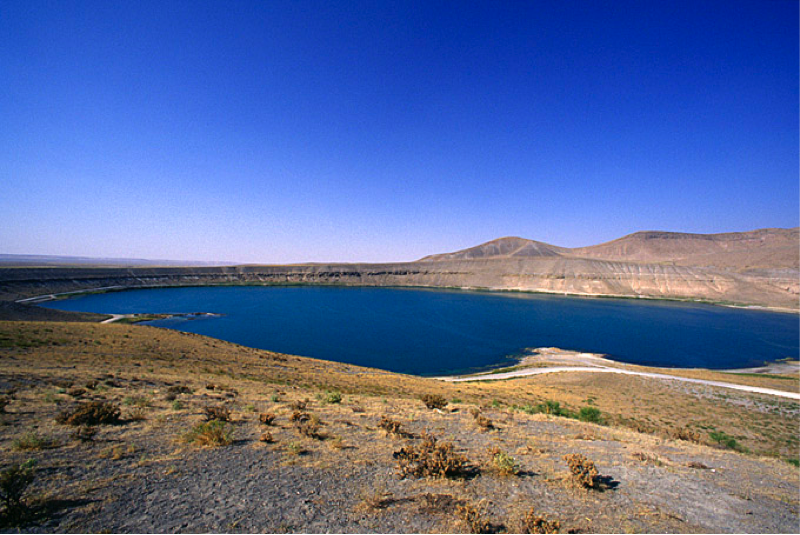
Another hot water lake in the same area that is untroubled by smells but the water is caustic; its life forms within the lake water are small Crustacea.
The most striking element of these vast areas of hot springs is the huge potential that is as yet untapped for the supply of energy from such sustainable resources. It is though not a field to tread blithely into without the awareness that alongside the considerable resource the issues of land stability and seismic activity need to be satisfactorily understood.
The possibilities of using the springs and even the heat from boreholes set within the lower levels of the geological progression, especially closer to areas of population might afford the Turkish nation not just heat and cooling facilities as with most forms of European heat harvesting but the option is there to generate a large amount of electricity which is at present supplied by the burning of coal and lignite. The need for the nation to cut its carbon emissions after the Paris Accord of last December (2015) has shown that Turkey is unsure of a fiscally sound way forward. The use of many low carbon options being expensive in the initial stages and in the supply stage reliant on central government subsidy.
Such power generation from geothermal sources would not be the first in Europe, the first being the Italian power generation facility at Larderello producing 770 megawatts. It was originally built in 1911. There are now over 30 other power plants operating in Italy within a small area suitable for such operations to work economically. The share of such generation is 12% of the power generation whilst hydroelectric supplies 14%. Economically the hydrogeological power potential in Turkey is in the region of 55%-65% +. Allied to the hydroelectric generation potential, coal and lignite could be seen as historic curiosities in 15 years. Such a scheme would also demonstrate Turkey’s credentials in leading the Middle East and Asia towards a sustainable future.
There is much research needing to be done before the possibilities might be proven categorically but a sustainable power sources that does not need the labour, risk and environmental degradation that is part and parcel of extracting coal can be a worthwhile and ground-breaking move for the nation.