Clean Rivers Trust has had a disjointed Autumn, this mainly being due to meetings being carried out remotely or as in a few cases meetings in the field being somewhat hampered by having to be carried out with due regard to social distancing. This though has not held us back from research and preparing the next stages of ongoing projects.
This is the end of the 29th year of Clean Rivers Trust, which was founded in mid-December 1990. Its initial purpose was to see the River Trent come back from the brink of becoming a near dead river. The Trent is still at the heart of much of our research, though now our remit is nationwide and at times we may be cursorily involved in projects anywhere in the world.
I am proud of the Trust and what it has achieved, I am even prouder of what it is capable of achieving going forward into the future.
Cinderhill Acid Tar Pits.
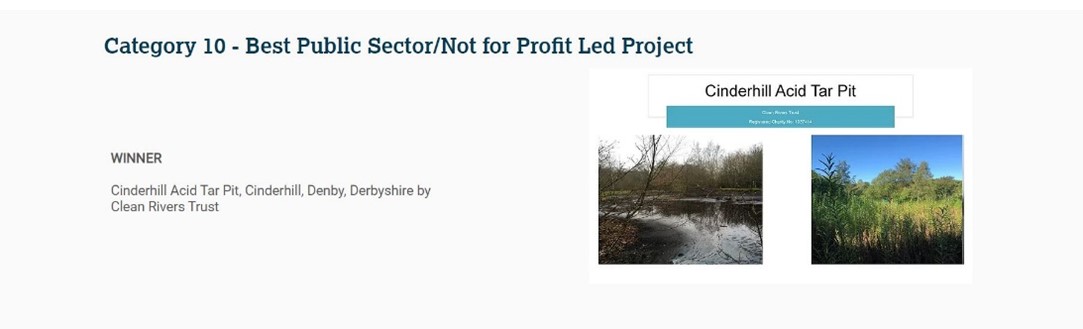
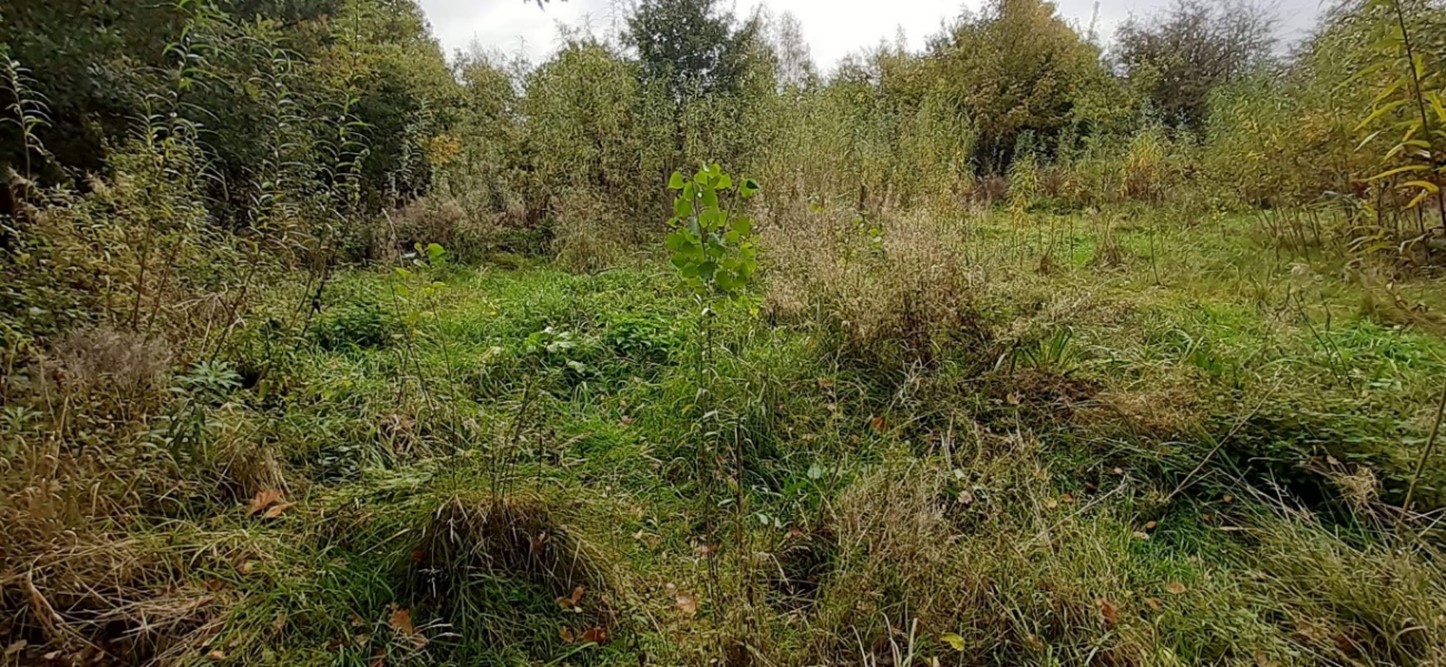
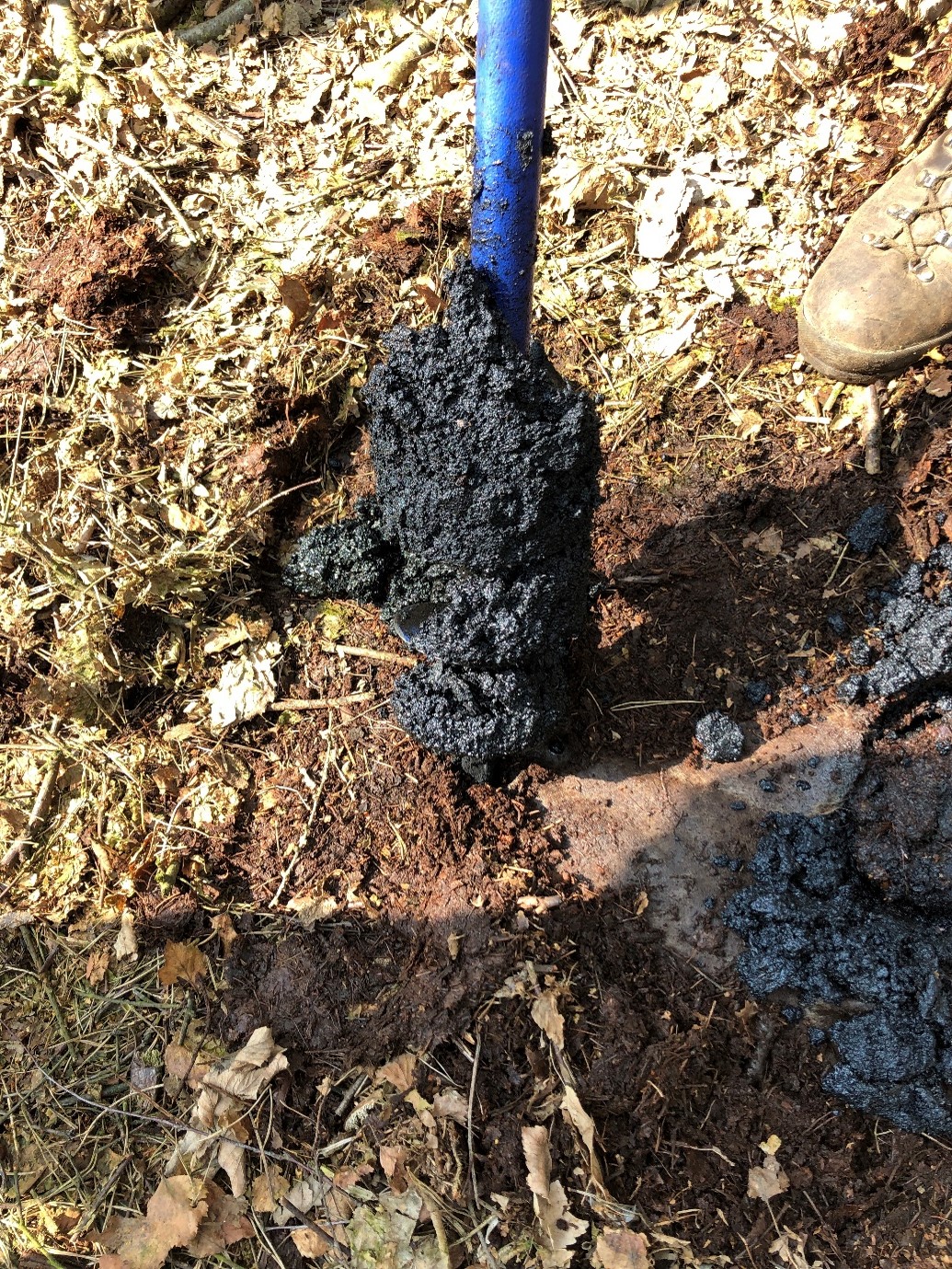
The trial has been visited several times since our last meeting and the willows are proving themselves as they root down into the tar. They are breaking it down as they penetrate deeper. The gases that are produced in the process as bacteria follow the roots is being vented via the willows from their branch, twig and leaf nodes, this being demonstrated by sudden leaf drop and regrowth. The largest willows have been pruned and their prunings, replanted in patches that are sparsely vegetated. These areas being the result of gas venting whilst putting down a borehole last winter/spring.
There have been visits by the Environment Agency and Harworth Group over the last quarter.
Crich Arsenic Pollution.
The Trust has been briefed by the Environment Agency as to their growing disquiet regarding the groundwater and minewater emanating from around the village of Crich. Rolls Roice have been carrying out monitoring of their historic waste depository in the area and have noted not just arsenic but other material that are not their liability being present through much of the village. The Environment Agency now accept our judgement as to the source of arsenic and they believe that other County Council historic landfill sites are placing further pollution loadings into feeds to both the Rivers Amber and Derwent.
The Environment Agency has no money to carry out research but may be able to pay for some analysis of samples taken. They note our ability to bore to 7 metres as a way forward. Prior to any invasive actions the sites are to be shown to us by the Agency.
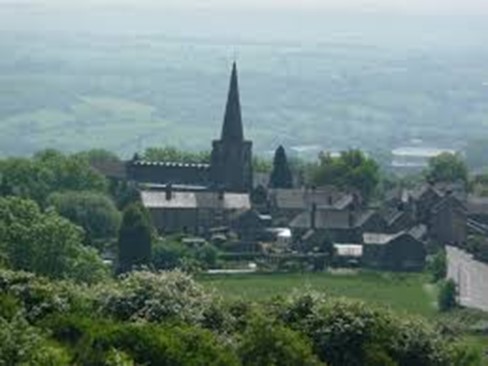
Crich Church and the questionable restored landfill site in front.
South Wingfield Flooding.
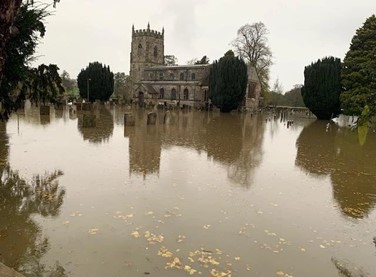
The solution for South Wingfield Church and the flooding that occurs each winter is all but agreed. It will involve the recreation of the original river chanel which is around 1.5kilomtres in length and the reuse of the sound but at present redundant double arch bridge. It will require a great deal of diplomacy and some added support from the Environment Agency. The River bed in one section just downstream from the double arch bridge was filled in completely at some time around 1960/70. The fill is unknown but bore holes will give an understanding. Costs if the fill is uncontaminated are estimated at around £400,000. This is remarkably inexpensive for what is the largest river length restoration project ever undertaken in the UK.
At present part of the Environment Agency is against it as it will lessen flow in the relef channel. This though will, hopefully be resolved. Funding of such a nature is a worry for the parish and church councils, but such cost is not as great as replacing the church, church hall and graveyard. The village is undertaking much more costly projects such as the restoration of the village railway station, reportedly costing over £1 million.
Denby Pottery Glaze Pit.
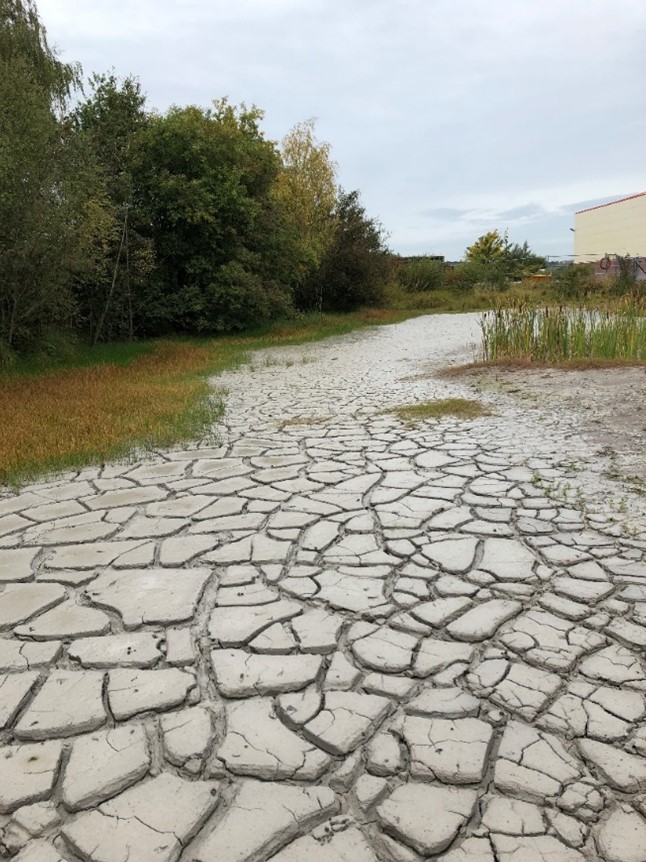
Denby Pottery have commissioned the Trust to stabilise their historic glaze pit and bind the metals present in place. It is planned to begin work in March next year to maximise the growing season and allow us a full year monitoring to demonstrate the scheme is functioning satisfactorily.
Fuchs.
The othe numerous acid tar pits have again been brought up by the responsible company. Their surveillance of our trial a Cinderhill gives hope that their sites on Firestone Hill outside Belper and beyond will figure in our future actions.
Indian Institute of Forest Management, Bhopal
Have carried out a lecture and seminar to the Institute on sustainability and water. Since this contact have been invited to the Institute after Covid.
Warwickshire Wildlife Trust.
We are working with the Trust to establish 3 SUDs wetlands between Solihull and Birmingham in the River Cole Catchment. Support being in line with our Blue Carbon work we discussed five years ago. We seem to be ahead of our time again. Have supplied a concept plan for a site at Babbs Mill Park.
Trent Rivers Trust.
We are advising the Trust on several projects in the Derwent and Erewash Catchments. Pond management, wetlands algal growth as well as water hyacinth issues.
The Trustees will meet on Zoom at 10.00 8th December 2020.
The Annual Report and Accounts will be forwarded separately. Both documents will be discussed at the meeting.
Harvey Wood.
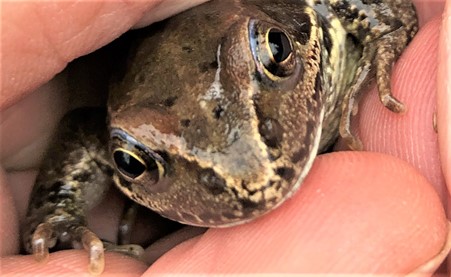
Resident at Cinderhill Tar Pit.