Bangladesh and Britain.
River Flow Interruptions. Flood Management.
Introduction.
This short outline of one manner of fluvial flood control is considered for two different locations, one in the UK and the other Bangladesh. The two countries are subject to serious inundations by rivers though by actual flow volumes and human disruption those taking place in Bangladesh are empirically greater.
Historically flood defences have been the sole preserve of the engineer. Solutions have been considered that have always required water to be moved by the fastest route away from the land and out to the sea. As each season passes, in the UK winter, in Bangladesh the monsoon and snow melt from the Himalayas, the engineers have surveyed the scenes of damage and designed larger structures to keep water in its place. This has required in many locations in both countries to clear trees and wetlands, walling in the water.
There is a problem with water, it is hard to fence in. It will always find a way round, if not directly through surface flow it will pass under using soils as channels for what will always be its destructive path.
Once inside, it will flow and do its worst, but it will no longer act naturally, as the fluvial floods recede, and the rivers return to normal the inundated land beyond the breached barriers no longer drain as they should. Water stands still, for days or weeks killing, drowning the soils of their life as well as making habitations rot or uninhabitable for much longer than they should be.

The River Allan, Scotland, in flood. The flood defences along the meandering river are plain to see as is the water that will be the wrong side of the flood banks when the river level drops.
In Britain from the 1940s and Bangladesh from the 1950s engineers have striven to keep rivers behind banks. Rivers are random entities that by their nature are unconfined, riverbanks are human constructs that allow ideal rivers to conform. This now is starting to be understood better. Global warming, climate chaos, both terms that are only now just starting to be understood regarding their true meaning and some of their consequences.

Flooding in Bangladesh, the flood bank is clearly visible.
Answers, UK.
At the beginning of 2021 we are witnessing floods in the UK, not huge or regionally life changing but some rivers are breaking their boundaries, some houses have been flooded and roads inundated and impassable. People are being rescued by the emergency services because they are cut off from shops and their electricity supply has been cut. Few flood banks or defences were breached though now water, surface water from rain and melting snow stands on the land unable to flow or drain to the rivers and the sea. The flooding of land and communities is rare, that is why the UK builds relentlessly on its floodplains.
In the UK, the rains come all year round with most major wet weather events take place during the winter months. Depending on the volume of rain, the state of the land, if it is too dry to accept rainwater infiltration or too wet and is unable to hold any more moisture, in either of the cases mentioned much of the rainwater will run off the land to ditches, streams and rivers in rural areas or if in the urban areas to drains and the rivers or to sewer.
In some areas of river catchment there are areas that are not needed for planted crops but are meadow grassland or scrub which might be engaged in protection schemes for more urban areas at risk from inundation. These may be adapted to hold water for the periods that the down stream areas are most at risk. In the UK we no longer like wears as they stop fish movements, but leaky dams, informal barriers of trees (many people advocate beavers should be used, but in all earnestness, beavers are not the answer, they are a useful luxury at present) laid across the mainstream can raise the water level enough to redirect the potential flood waters from the main river to that area prepared to accept the flow. Such is the theory and in practise it works. A more engineered structure might be considered if larger volumes are to be held back and stored along with a purpose designed reservoir. Siting is crucial as is the cooperation of local farmers and communities to ensure such schemes function as they should. The water will naturally flow back into the river as the river levels drop. Such schemes are simple, efficient and might be called cheap to put together. They are, but they take time, site selection requires study of water flows, knowledge of past flood events, understanding and knowledge of what new building, such as roads or housing may have on the flood attenuation that you wish to put in place.
Answers, Bangladesh.
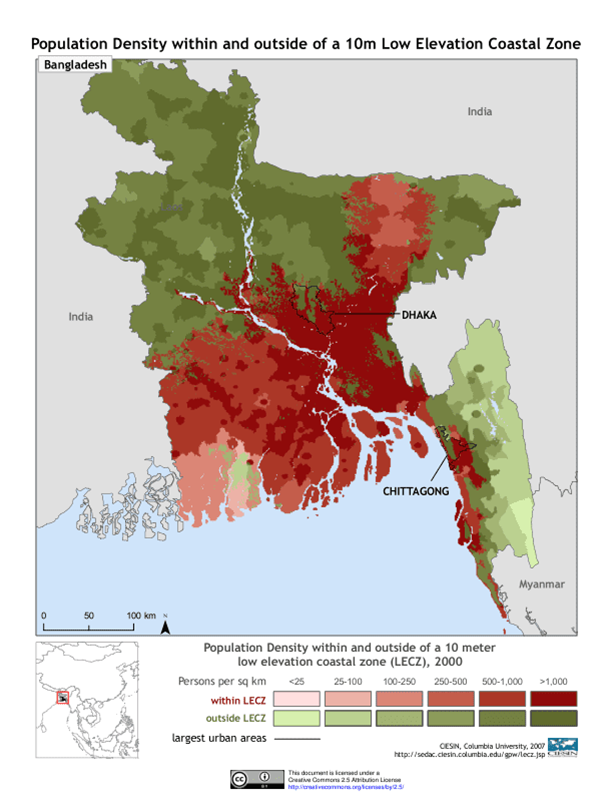
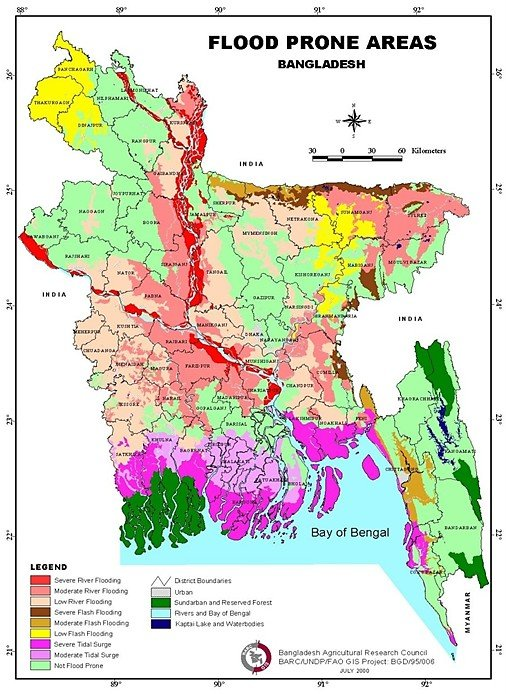
The last monsoon was modest so only a few hundreds of thousand people lost their homes, swept away or just disintegrated. Land was flooded and because of the flood control banks water stood and drowned the land. The ecological importance of what lives within soil structures and makes for fertility is destroyed by year-on-year inundation and water retention. Much of the population of Bangladesh live within the flood plain and the Ganga Brahmaputra Meghna River delta system.
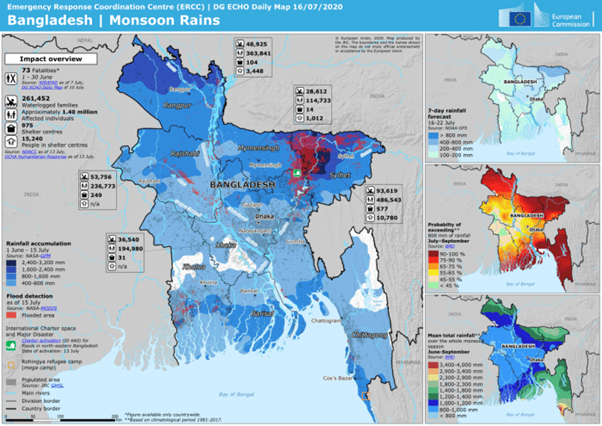
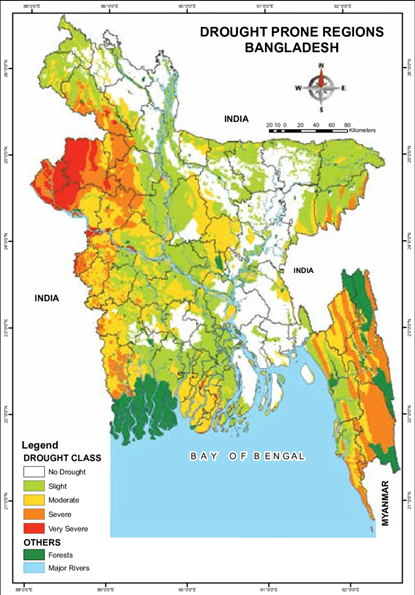
In Bangladesh rain comes at monsoon, a specific time. This deluge is getting shorter in duration, it is also reported to be more severe; with increases in volumes of rain falling in a shorter period. These changing events need fundamental changes in the way such inundations are handled, and as far away from major urbanised areas as possible. Such schemes must also consider the rural areas, their people, and needs. One particular and fundamental question is that of need for water. Where droughts occur, which areas are the most arid. Which communities need increases to their irrigation water storage, greater potable water supply. These areas need to be targeted where possible for storage.
The greatest rainfall volumes during the monsoons occur in the north of the country, and even greater volumes fall beyond the nations borders, in India. The highest water volumes that come out of India and that falling on the northern hills of Bangladesh need to be held back, where possible redirected to holding areas such as agricultural reservoirs or even allowed to flow greater distance to areas of greatest need (This is not an option discussed here).
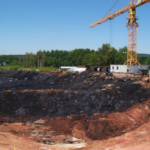
The rivers that make up the country’s fluvial systems are major water courses on a world scale with flows to match. The redirection of such flow patterns is not on the UK scale as described earlier in this piece but might be still managed on an elevated scale using more engineered and more adaptive methods. The nation has the facility to disrupt river flows at locations where there is facility to hold water back from the major flood areas. This may involve the removal of waters on a large scale from the main Ganges Brahmaputra river systems and lesser volumes held back on tributaries at various locations along their length. Such waters as might be retained would utilise all holding facilities as might be available, opencast coal mines, gravel, and sand workings. Open land may be encouraged to hold water for periods longer than would normally be envisaged.
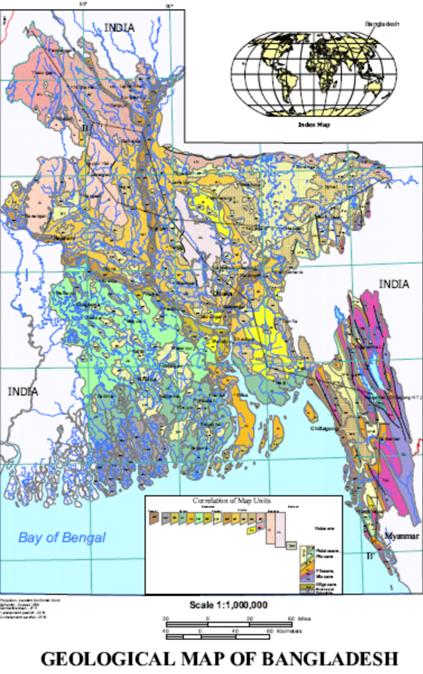
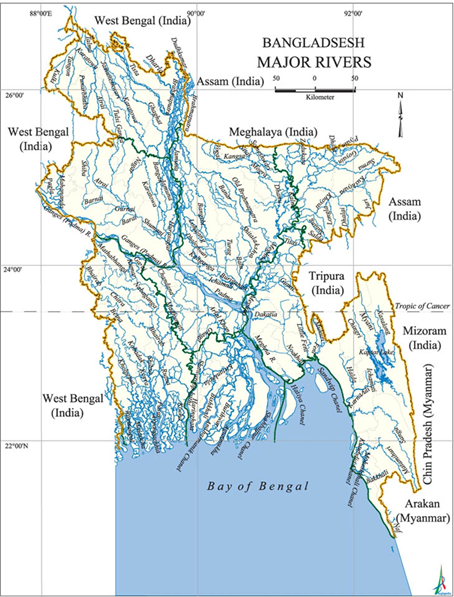
River flows could be slowed by wetland creation at suitable locations along with the establishment of trees on bank sides in dense planting arrangements so spreading the volume out into open landscape and slowing the waters flow velocity.
Studies of land use along major rivers demonstrates the flow reduction could be as much as a quarter in 5 years and in ten half the volume of the major rivers could be dissipated within the landscape.

Conclusion.
This issue is only one of many related to water management along side tidal surge, cyclone, global warming, and rising sea levels. These alongside a populous landscape and a developing nation, the need for food and raw material raises many issues. The funding of any large-scale water retention schemes will require compromises, development of new farming methods, community compensation and much else. It is tough a worthwhile exercise to start the conversation that might leas to a lessoning of one of the major humanitarian and fiscal problems of the country. Some of the answers that will be developed will also have positive repercussions for other issues that have been raised above.