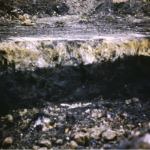


Whitehaven Minewater Pollution February 2024.
The pollution of the harbour by minewater continues to blight the town.
A visit to Whitehaven this month proved productive with meetings with the Harbour Commission, Marina management, mine historians and others. Meetings by Zoom and Teams allowed us to be part of several other initiatives including the Whitehaven Harbour Sprint conducted by Co-Lab Engineering in collaboration with Sellafield Ltd.
We have also been in communication with Network Rail and the Coal Authority, plus several groups of consulting engineers and local authorities. The local MP Trudy Harrison has taken an interest in the plight of the harbour and has also become the Chair of the All-Party Parliamentary Environment Group. One hopes that the next General Election holds off for as long as possible so her influence can be brought to bear on the issue central to her constituency prior to her leaving Westminster politics when the election is called.
We have been awaiting news now for nearly 6 months of the Network Rail’s consultant’s report being published. A draft has arrived with the Coal Authority but as a ‘draft’ it will not enter the public domain.
We have been delighted to have been involved with the Whitehaven Harbour Sprint which set a group of engineers with no knowledge of minewater or its treatment the task of familiarisation and finding a solution to the problem of ochre pollution in the harbour. Their response was laudable with a set of solutions and an ongoing plan to drive forward as a group to see answers put in place. It is excellent news that they are not ending their involvement with the end of the project.
The mine historians, based in Whitehaven have been helping Network Rail with some information but have sadly not been engaged with fully. They asked permission to enter the railway tunnel with other engineers but were refused permission though their expertise would have secured some sound information as to the more exact source of the increased minewater inflow and developing pollution.
The meeting with the Marina was a valuable and interesting one. The company have put together a report on the basic source of minewater and its linkage to the railway tunnel. They have published a geological section of it along with historical maps and plans of adits and the route of the Bransty Beck culvert.
Following these discussions, we have been investigating the most cost-effective way for the treatment of the polluted water: either as is it at the moment, mixed with a major flow of clean water that is the Bransty Beck or taken from the railway tunnel in its natural, acidic state. The most sustainable method would be that what flows into the tunnel could be piped, using a small pump to the Whitehaven Station portal of the tunnel where it could be treated in a treatment system within an already secured compound owned by Network Rail.
The treatment of the flow from the Bransty Beck, clean water’ which makes up more than 950/0 of the flow at present flow rate estimates of around 70 l/s would be both unsustainable and costly, whilst the treatment of the minewater alone which makes up less than 50/0 could be treated at an easily affordable cost and allow for the small volume of the dewatered iron pollutant to be either landfilled or found a use for at the end of the treatment process.
Whitehaven Minewater Opportunities.
Clean Rivers Trust introduced the concept of minewater heat (first developed in the US and shortly after at Springhill, Nova Scotia) and its potential to the UK in 1992 and introduced the Coal Authority to the concept in 1994. At the time, the cost of gas was low and any benefit of using minewater was outweighed by the costs. Today the concept is being developed in Europe, Heerlen in the Netherlands, Spain, and Germany
The use of minewater heat is gaining traction in the North of England and Scotland and the Coal Authority is working with British Geological Survey to demonstrate some the viability of such technology. The Coal Authority is also collaborating with Ordnance Survey to map areas of possible heat availability and user potential.
A major minewater heat project is now operational at Gateshead that was initiated by the local authority. In the six months since it came online it has proved to be both popular and economically viable.
Whitehaven and the surrounding area have potential as customers for minewater heat with several certain base load heat users, municipal swimming pool, hospital, expanding greenhouse plant nursery amongst them. The population has a sizeable percentage of families suffering from fuel poverty. Within the West Cumberland Coal Field there are at present two minewater treatment sites, at Great Clifton to the east of Workington and Ewanrigg south of Maryport. Both of these sites have the potential for heat development.
One problem with developing minewater heat potential is the ease of access to the flooded coal measures or in metalliferous mining area worked veins or loads. In many parts of the UK mine shafts were filled in rather than capped. Work conducted in the Whitehaven area in the late 1990s by the Trust and Albright and Wilson demonstrated that many mineshafts in Whitehaven were capped over rather than filled in. Borehole access to the flooded mineworkings can be an expensive option to access flooded workings due to ground conditions. The Coal Authority do prefer not to welcome such development in several mining areas.
Whitehaven has some peculiarities regarding mine access due to the nature of the geology and the initial period of mining development on an industrial scale. Adits, drifts, and levels as well as shafts accessed the coal seams and also drained water from the working faces of the pits before the advent of the steam driven pump.
Hoole Bank, Cheshire. February 2024.

This week (15th February) we were informed by Chester and West Cheshire Borough Council that British Petroleum have announced that they take responsibility for the acid tar pit at Hoole Bank in Cheshire. This is great news as finally the site is no longer orphaned. The local authority asked Clean Rivers Trust to put forward a scheme for decontaminating the site.
This large clay pit was filled in the 1960s with acid tars and abandoned. The local authorities over time since the late 1970s have been trying to get the site remediated. The Environment Agency has objected to any research into methods of remediation as they have been concerned for safety of visitors and the security of the site.
Clean Rivers Trust has visited the site unofficially and have drawn up remediation plans. We had offered to conduct a trial on part of the site to demonstrate the proposal. This was turned down by the Environment Agency. Maybe BP might be interested?
Some bacteria are hopefully being collected from the site by the local authority and passed on to us.
Iron Staining of the New Bank Drain, Hesketh Marsh, Lancashire
The Trust was contacted this week (15th February 2024) by a local resident of Hesketh Bank enquiring if we might know the reason this drain had turned ochreous since a third of the marsh had been rewilded by the Environment Agency and the RSPB (2018). Looking at the geology and history of the area including several archaeological reports there is no obvious answer. We have asked for the Environment Agency’s view on the subject as it could be that the new drain bank, built in 2018 might be eroding laying the land and property at risk of tidal flooding or permanent inundation.
Further investigations are underway.
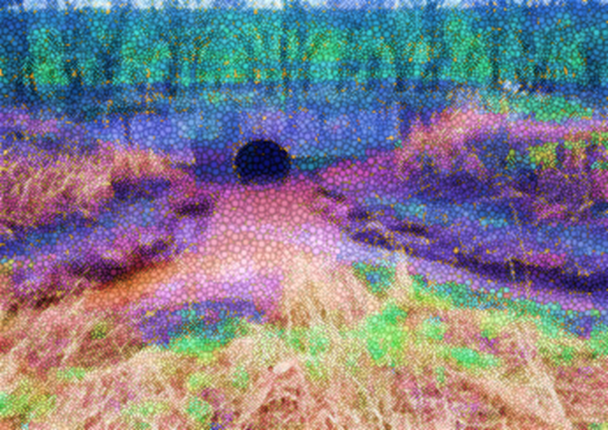
Solway Estuary Pollution. Saturday 10th February 2024.

News has arrived of a major pollution on the Solway coast of Cumberland. Around 300 tons of molasses have been shed by a tanker on its approaching Silloth Harbour where it was due to deliver its load. The tanker carrying the molasses from Bremen to Silloth ran aground on its approach and has fortunately been refloated and has now entered the harbour.
The Solway Estuary is a designated ‘Highly Protected Marine Area’ which aims to allow the estuary to increase its biodiversity and water quality. This though is the second major incident along the English side of the Solway Firth that has happened since its special designation. The other being the ongoing minewater pollution of Whitehaven Harbour and the estuary beyond the harbour mouth.
The same ship ran aground and lost similar cargo in September 2016 (picture above).
The pollutant, molasses is a waste product from sugar refining is used in animal, and human foods. The effects of it coating the floor of part of the estuary has been flagged up by the Northwest Wildlife Trust as a major concern for crustaceans such as crabs and lobsters along with several native species of tube worm and shellfish. Fortunately, the volume is not huge. The same approximate volume of molasses was lost in the same approximate area in 2016. The resultant pollution was not monitored by the Environment Agency at the time.
Newark Fire Runoff.

The fire that occurred in Newark at a scrap and recycling yard in Newark upon Trent in November last year was visited at the year end due to concern of runoff from the heavy rain and debris entering the river due to high wind. A drain was found to be draining direct to the river and large pieces od melted plastics had entered the river. Work was conducted with the site owners and the plastics removed from the water. Help was given to stop further waste escaping the site. Two other monitoring visits have been made and further melted plastics have been removed from the Trent bank.
Floating Water Meadows.

The Trusts is delighted that we now have a master’s student from the University of Nottingham starting to research the history, engineering, and carbon sequestration potential of these remarkable systems.
These land management methods have to a great extent been lost due to the needs of a population needing bread during two world wars when many of the water meadows were ploughed and major agricultural mechanisation during the 20th Century.
An interesting short film that in part shows old water meadow flooding methods can be seen on.
also see: https://www.salisburywatermeadows.org.uk/history/ and: https://historicengland.org.uk/images-books/publications/conserving-historic-water-meadows/heag176-conserving-water-meadows/
Duke of Edinburgh Award.

Onno v K-B has started his labours helping the Trust. He is looking at all the Trust’s policies and rewriting them. He will being look at pollutions that come to our notice, researching their sources and any outcomes if possible. Onno may also be looking at the River Lee or Lea, its water quality, history, uses and future.
co-lab Engineering

The Trust met with Clyne Albertelli, Managing Director of co-lab Engineering and a group of engineers conducting ‘Whitehaven Harbour Sprint’ already mentioned. This organisation based in Whitehaven has many elements to its make up. It works on projects as diverse as calf rearing to defouling submarines for the MoD.
Norfolk Reed.
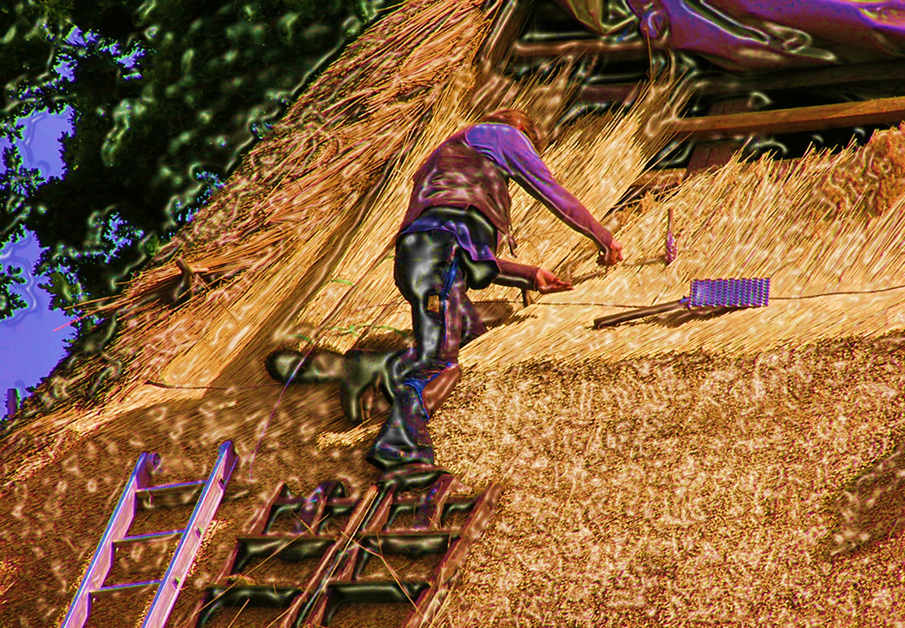
The life expectancy of thatching reed is a cyclical concern. Issues such as natural reed beds produce better quality reed than those that have been created in recent years. Do reed from water treatment sites determinate sooner. The higher the loading of phosphate in reed growing sites waters, the shorter the reeds’ life on a roof. We are reviewing the literature and talking to informed individuals and groups.
The fact that much of the reed used in the UK comes from Indonesia via the Netherlands Reed Market always surprises the public.
Bacteria and Fungi.
The work with the University of Nottingham continues on our plastics consuming community. The constituent members of the colony are well.
We have recently had a meeting with a specialist mine exploration trainer who is taking some interested members of the team involved down some mines over the next few months to collect bacterial and fungal growths.

River Blackwater, Essex.

We have, this Winter been asked by two local authorities to look independently at the water quality of the River Pant, Pods Brook and River Brain flowing out from the north of the county flowing into mid Essex and the Blackwater. These streams and rivers make up a major part of the headwaters and make up a major tributary of the River Blackwater. The Blackwater and River Colne meet in the Blackwater Estuary, the centre of oyster fishing and farming on the East Coast. We are also conducting similar projects on parts of the Rivers Chelmer and Colne. We are planning to look at the chemical and ecological state of the river system over the next two years to gain a true understanding of water quality. We are starting this project later this year.
University of Nottingham: Environmental Science.
We have given an interview to a group of 3rd year undergraduates studying plant responses to metals. We were asked to concentrate on willows and cadmium. The interview was recorded, and the highlights will be available on You Tube at some point.
The work we conducted with Camborne School of Mines and Severn Trent in Cornwall. The finding of metal take up in Goat willow and its ability to self-coppice themselves and the development of framboids as the wood broke down into marsh.

Cinderhill.

The site has been visited regularly over the winter, Sophie and Nathan have checked for any vandalism. Sophie has been monitoring wildlife but has mainly achieved a series of films of grey squirrels. We await the spring regrowth of willow where quad bikes ran the down and decimated parts of the site.
The lake is demonstrating astable pH of 6.8 to 7. Wildfowl have been seen on the water for the first time.
River Spey.
The project will develop in the spring with a visit to the catchment. Prior to this visit a good understanding of the upper catchment is essential as is a knowledge of the water transfer mechanisms taking the Spey’s water to Fort William. The use of the water abstracted though at present protected by acts of Parliament could well prescribe other uses apart for powering the aluminium works. The company responsible appears to have not followed legal routs at some stages of their take-over of the system.

River Lavant, East Sussex Sewage Flooding.
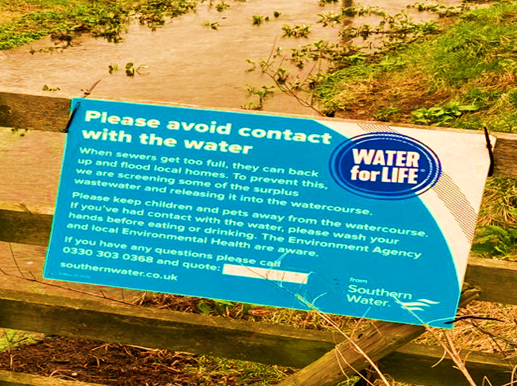
Southern Water has a major problem in the area of the River Lavant catchment. As the river is a chalk stream it is getting more attention that other rivers. The discharging of sieved sewage into a village pond by a duck house is though madness on the part of any water company and makes one wonder if Southern Water have given up? We talked briefly on Radio Sussex Morning Show (Monday 26th February) on some of the issues. Extended version Radio 4 recorded. High groundwater is causing artesian rebound to the surface and entering the public sewers.

Flooding.
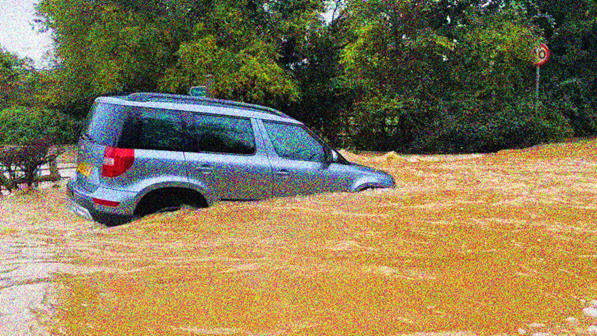
It has been illuminating that the Somerset Levels have suffered from serious flooding this winter without the media coverage before but unlike a few years ago so has the rest of the country. The Trust has found flooding on so many train journeys and have been had to travel by longer routes to Derby, Nottingham, Edinburgh, and Cumbria. Our journeys to the Southwest have been cancelled. We have appeared on several local radio stations talking about flood dangers regarding illnesses and other dangers of flood water. We have also talked about the etiquette of driving through floodwater as well as the dangers.
An email we received on 27th February. It was responded to rapidly.
‘Hi
Walking alongside the Derwent SSSI between The Ferry Inn and Bubwith with our dog we noticed brown bubbles on the edge of the flooded area. On closer inspection we noticed and smelt there were faeces floating around too. This is the first time we have noticed this – are you able to advise what we should do to minimise risk to human and animal users and who this needs to be reported to as a matter of urgency?’
Such emails are a regular feature of our inbox! We try to respond swiftly to all such enquiries.