Introduction.
The ground and surface waters of Western Asia are areas of tension, both politically and resource wise. They are for these reasons also ecological trigger points that might bring forward disasters on greater scales than anyone may realise. The reasons for wars and intertribal conflict are getting greater and greater. This increase is in most cases based around water, or rather the lack of it. Every country knows its people need water to drink and to produce food, not just for local consumption but across the nations.
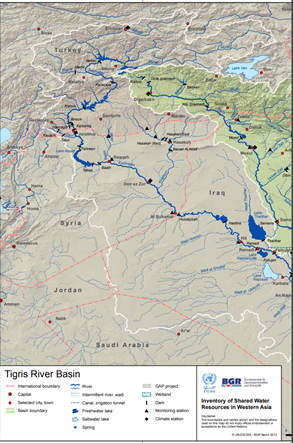
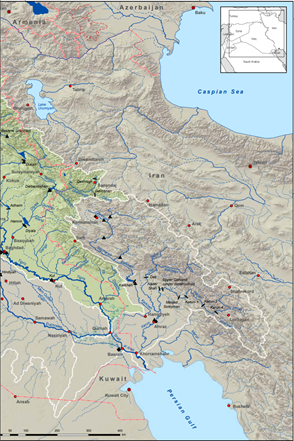
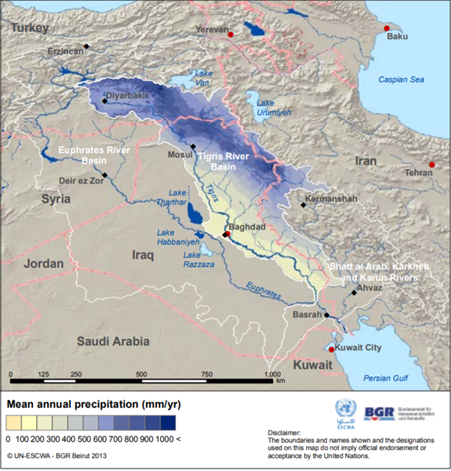
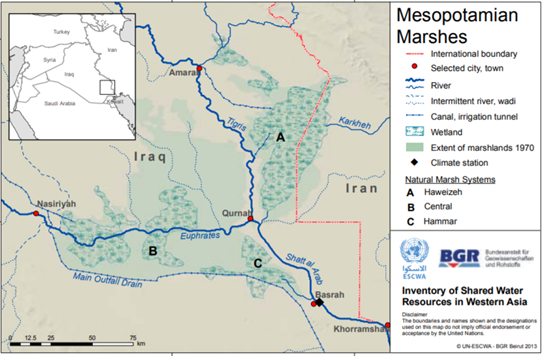
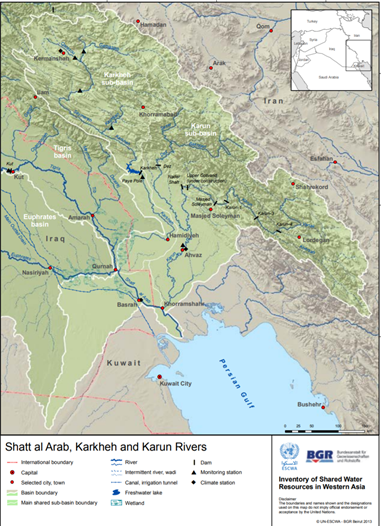
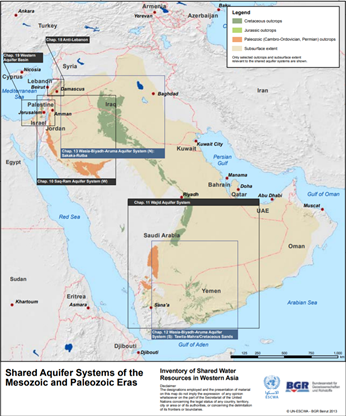
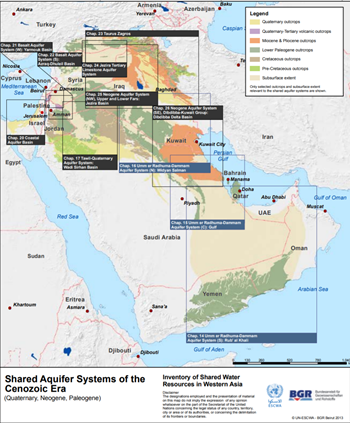
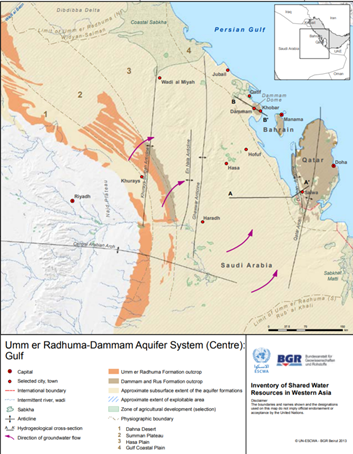
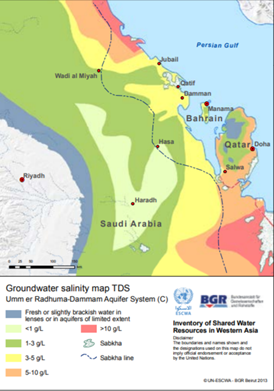
The maps of this article were borrowed from a 2013 report INVENTORY OF SHARED WATER RESOURCES IN WESTERN ASIA Which in its more than 600 pages gives an outline of all river and aquifer issues with regard to geography, hydrogeological conditions, and the politics of each are just mentioned. It is the only publication available on the subject that covers the region in any detail.

One of the most telling notes within the text of this report is the statement in nearly every catchment that countries are not functioning cooperatively in their management of most aquifers. Rivers are similarly managed uncooperatively. The desire to hold water back for the greater benefit of each nation’s people being a natural desire if not astute in a rapidly changing world. Historically water was a local issue with each community providing for its needs. Seldom did this give rise to conflicts or even disagreement on the most part. This though was only where populations were fixed or stable. There were groups though those who were more likely to remonstrate between very singular groups, shepherds, Bedouin, and pastoralists. These mobile or nomadic groups all considered their scant water resources their own territories as they followed their routes across deserts and mountains many on their cyclical migrations following grazing and seasonal rains. These groups were constantly ready to defend their place at any watering place against allcomers.
Much of this vast region has been arid for millennia, the populations have not needed to be concerned particularly for water supply beyond their local areas but with now rapidly increasing populations concentrating in rapidly developing urban centres the concerns relating to water scarcity are increasing. This is seen across the region and in every country. The civil wars and transboundary disputes are not just the recriminations of the ‘Arab Spring’ or the rise in religious fundamentalism, it is more basic and less philosophical.
It needs to be stated that the majority of the population of the region are Muslim and the teachings of the faith lay down the tenets of stewardship of water. The protection of water from over exploitation, from pollution and ownership to the detriment to others are haram, a sin and not countenanced by believers.
This is though not the case in the reality of the realpolitik of the region the national and local authorities, store and protect their resources away from their neighbour. The removal of sweet water by forms of siege unknown in the middle ages are now being witnessed. It is though not the use of armies surrounding your enemy’s citadel, rather growing water hungry crops at their borders. The aquifer can blead a neighbour’s potable supply away from them leaving in its wake a brackish, near useless groundwater.
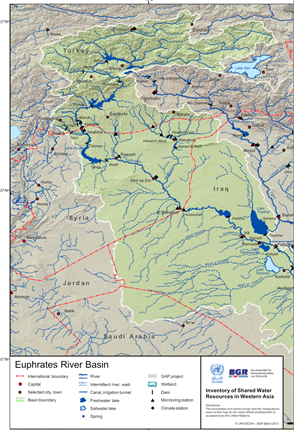
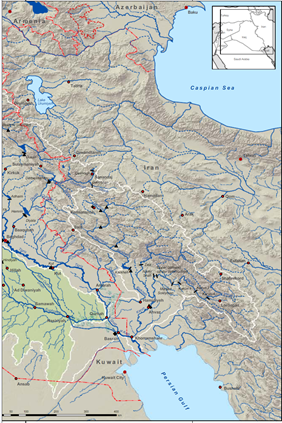

Equally the use of land close to countries that are not of the same view, political or philosophic, for large scale humanitarian hosting of refugees, pastoralists or other migratory populations can be damaging or destabilising to neighbours using the same or linked aquifers.
Alongside water for agriculture and populations has been the need to develop greater supplies of power. The great rivers of the region especially the Euphrates and Tigris and their tributaries. The use of hydroelectricity generation being a popular option which has ensured continuing heated dialogue between the upstream counties and those downstream.

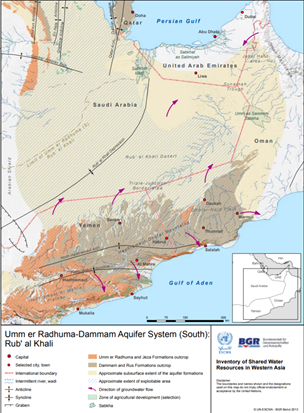
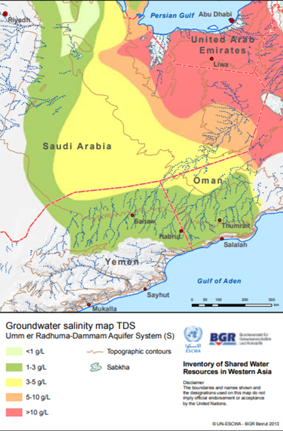
Yemen has a cruel place in the world, a nation of learning and strong, often dividing opinions that has from time imamorial been short of water and wealth. One of the most moral and distrusted nations. It has good neighbours and those who historically use it as their state perogative ‘sin bin’.
The nation’s waters are taken from the lips of the population to water qat and much else is taken from beneath the ground beyond its borders. The current civil war is fueled by the lack of water and propeled by tribal and other factionalisms.
Water is though the key to peace in much of the country where local rulers have expelled destructive factional elements. They quasi independent rulers are unpopular as is nearly always the case with semi autonomous areas within a nation state. History though demonstrates that strong but beign leadership can bring fair shares of water and peace.
Conclusion.
The issues of water are complex, protection of both quality and availability are fundamental human need and are considered the right of every human on the planet. Similarly, each nation considerers its citizens first before its neighbours. This conundrum requires not just a national protection policy for each individual state but a regional agreement across the international boundaries where rivers flow and groundwater rests.
At present the nations across the region visit each other, glad handing but not talking. The need to bring the tenets of Islam to bear within the region has never been more necessary. The requirement to protect water and ensure that your neighbour can quench their thirst has never been more apposite.