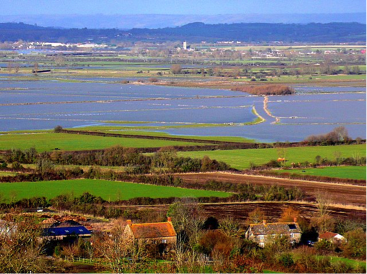
The River Trent is being dredged for the first time in twenty years, many parts of the tidal river have developed sand bars and the depth has reduced s impeding summer navigation. The fact that navigation is at risk does hide the truth that there is considerable concern regarding the prospect of flooding along the river’s lower reaches. The lack of dredging elsewhere in England, particularly the Somerset Levels which have been inundated for weeks on end, have shown that foul weather in conjunction mud clogged rivers can cause problems: these have become the most recent issue to catch the media’s attention.
regarding the risk of worse events. The river’s management is now carried out by the Canal and Rivers Trust, a charity the government has created to replace British Waterways. The Canal and Rivers Trust has announced that it is spending £1 million to dredge the river to aid navigation; that is to provide a navigable channel from Nottingham to Gainsborough though even this channel will cost far more and a dredging scheme to help avoid major flooding and allow the floodplain to operate as it should will cost many more millions of pounds. The last full dredging scheme in the 1990s ‘proved an expense that could not again be justified’ was what Clean Rivers Trust was told by the National Rivers Authority and British Waterways (1994).
The cost justification then was a complex equation that accepted that rural flooding, both of farmland and rural housing was inevitable as long as the upstream urban area of Nottingham was protected. Today houses and farming have changed with huge investment in both. Clean Rivers Trust has a concern that the threat of future flooding will be far worse, not just that water will cover large areas of the Trent flood plain but the time it will be inundated will be far longer than it need be.
The maintenance of the River Trent and its channel is vital, for as time passes and the issues of global warming and climate chaos develop it is no longer acceptable for short term fiscal saving; in times of low rainfall to decide to cut back on maintenance as there is some surety in the notion that if river levels are low dredging is needed and when floods arrive the excess water has its exit assured.
The Environment Agency’s staff including its chairman have said that dredging is at best only part of the answer and that the Somerset Levels have suffered unusual meteorological events. The rivers cannot cope with removing the water out of the levels to the Severn Estuary between the tides with the tides backing up the waters twice daily. A good set of points.
The problems though are exacerbated by flood banks holding back the water that has overtopped but cannot flow back quickly into rivers as their levels drop. Where ever in the world flood banks are breached they hamper flood retreat and pumps are the fasted answer but in many parts of Britain they have long been taken out of commission or as it is known euphemistically as rationalised. This was due to the belief that after the major floods in the Fens and many other wash/low lying lands just after the Second World War the major flood embankments and land drainage exercises undertaken then would protect the land from inundation into the future. From that point on the structures worked, banks held back the water and the rivers took the drainage away as required. No further major flooding took place so why spend money on flood defence if there was no need?
It seems simplistic, but in a country that saw need for expenditure to prevent possible events in the future as the actions of the profligate; there were more pressing issues to spend tax payer’s money on, anyway farmers were no longer expected to feed the nation so they did not really matter as much: rivers were ecologically richer if they silted up a bit. If an environment is managed strictly it takes on a form that has to be managed into the future. If not nature will revert to what it was once.
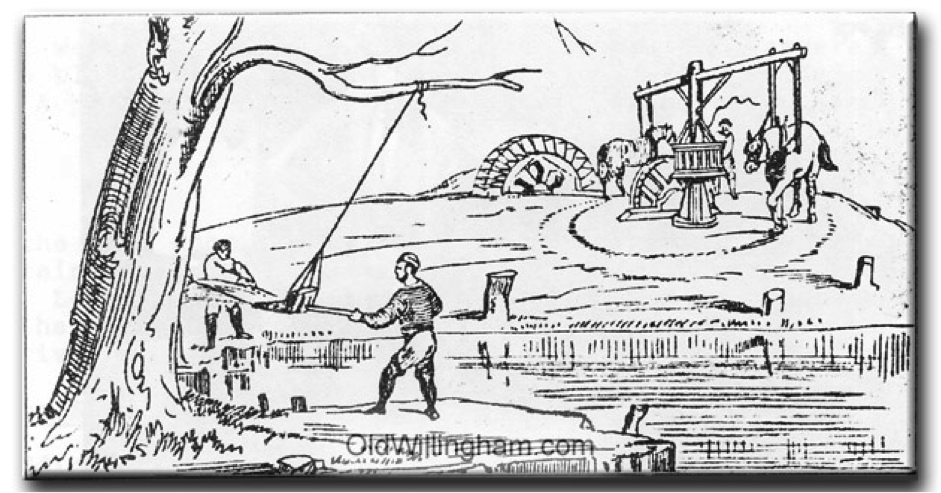
This picture of the late 1700s or early 1800s shows dredging of a fen drain at Old Willingham, other
water management features include a water wheel and horse gin to move water keeping it on the move to the sea.
Where ever water has been managed actively and such actions cease the repercussions can be catastrophic, if as the Environment Agency state management to protect the rural and urban communities cannot be achieved and only one is feasible the term managed retreat comes to mind. This is mainstream policy of both politicians and conservationists, but such plans are embarrassing when the population finds itself swamped by it and not considered. The idea of abandoning thousands of acres of quality farmland turning it over to low grade agricultural practices and return them to prehistoric mere and summer pasture.
Now the eyes of the media are focused on the people of North Wessex it is the time to consider the river of the middle of the country. At this time whilst there is no flood passing beyond the banks there needs to be discussion involving the stakeholders and experts and a set of actions outlined that might be put to the population for decision.