Introduction.
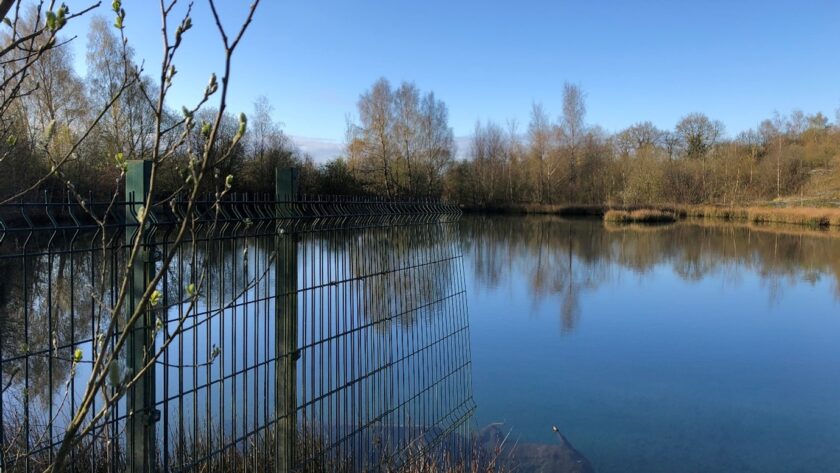
The Middle Lagoon at Cinderhill, Derbyshire is a flooded vestigial clay and coal quarry. The depth of most of the water in the void is shallow at around 1.25 metres but some areas are deeper. Between 2 and 4 metres. The water filling the lagoon is believed to be mainly surface water from the scarp slope to the west and some subsurface flow coming from the A38, also to the west of the site. It did not dry out during drought conditions as in the summer of 2018 whilst it was used as a source of irrigation water for the willow trial being carried out on Tar Pit 4. This constancy of water may suggest some groundwater input.

Observations.
The middle lagoon has been monitored off and on since the 1990s. The generally accepted view being that the water was acidic (pH3 to 4). Since 2018 the water has been monitored informally on a regular basis and the acidity has demonstrated an increase in quality and a rising pH (5.5 to 6). It has been observed that the water periodically has a sheen not unlike oil film on the surface, this has shown not to be oil but bacteria.
An investigation of oil creeping into the water on the eastern side of the lagoon took place with the Environment Agency in 2019, this demonstrated that the oil was not driven by pressure through the bank of the lagoon from tar pits on its eastern edge. Rather these proved to be remnant spills, though large in scale that had found channels cut into the bankside in an attempt to create a larger body of tar in the 1970s. Fortunately, the whole tar operation ceased in 1978 before further damage to the banks could be carried out and no more deposition of Acidic material could be placed on site.
The lagoon has been surveyed to look at depths across the whole water body, whilst undertaking this work using sonar some small shoals of fish were noticed. Fish topping has also been observed. Cormorants have been noticed on several occasions fishing the lagoon. Dragon flies of several species along with damsel flies are a regular site through late spring into early autumn, an investigation of the lagoon floor demonstrated a high number of dragonfly larvae present.
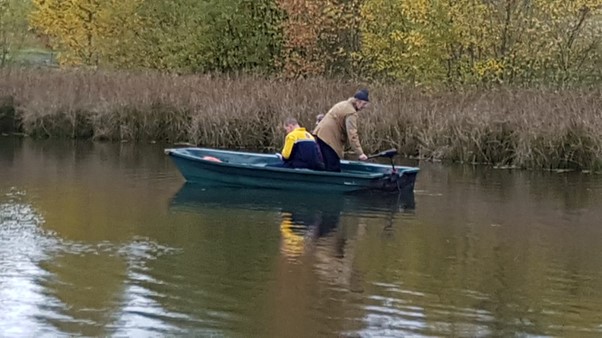
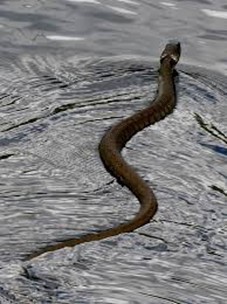
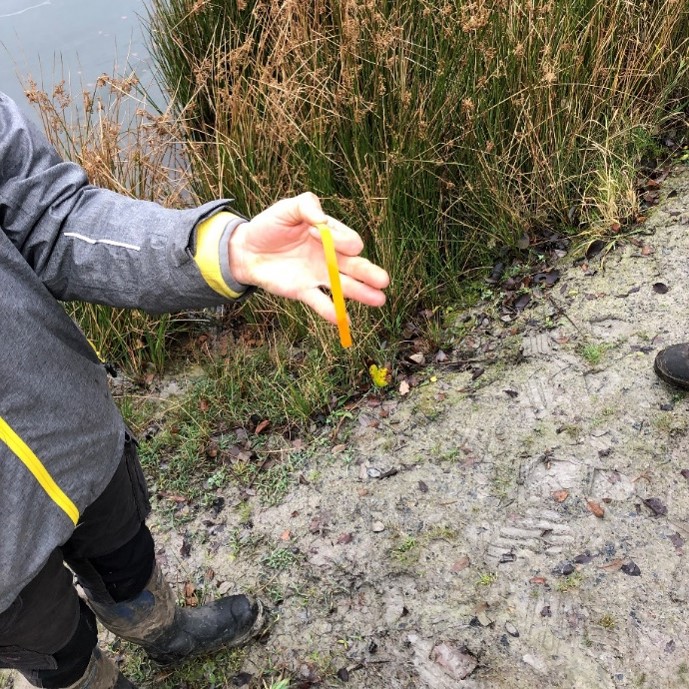
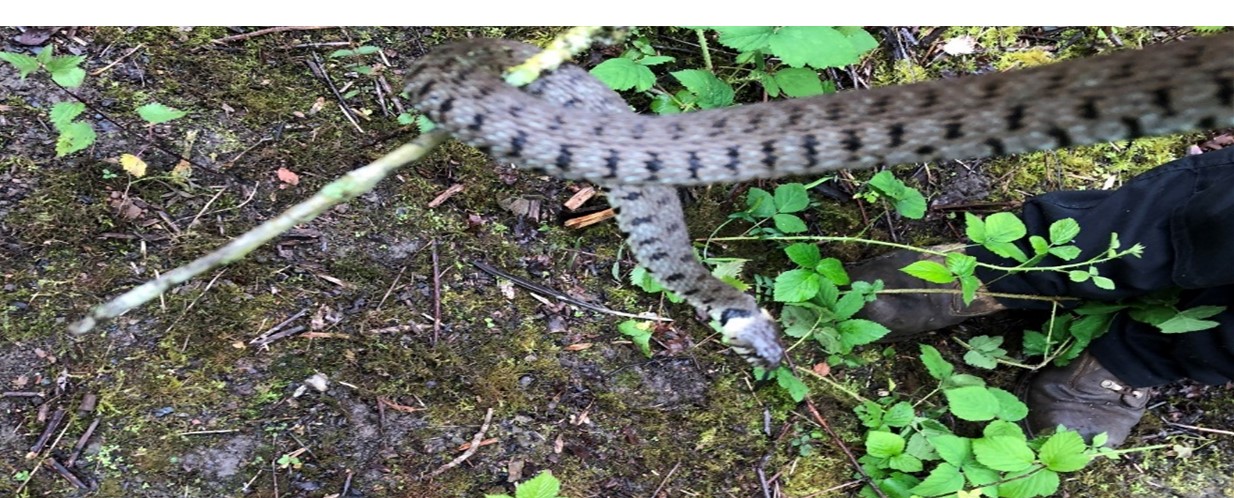
Grass snakes, frogs, newts, and toads have been found in the surrounding edges of the lagoon and some have been observed in the water.
Future.
The Trust are planning to permanently remove the two tar seeps that have been identified as soon as is possible. The tar will be cut back from the water and removed down to the level of the bankside soils. The excavation will be carried out so as not to damage the bankside integrity. The voids being blocked at the waters edge by limestone filled gabions. The voids then filled with limestone and the surface profiled with the earthen banks to either side of the old tar channels.


On a sunny Wednesday at the start of April 2021. It is as if the lake knows its future! We have put a lot of work in to finding solutions and the best ways forward. There is a lot of hard work to come but the results will be worthwhile.