
Introduction.
Recycling is a good thing for the planet, but the wastes from recycling need to be understood and treated with care. Often, with responsible recyclers, there are problems with what can be done with this waste at the end of a process.
We have been working for more than two years on a site in Derbyshire where waste from a local recycled oil manufacturer had been deposited as highly acidic tars in old clay pits in the 1970s. Most of this tar was still mobile, quaking when one walked on it and highly acidic with a pH1 rainwater runoff.
This first project on the site was a trial using spent mushroom compost and willows planted on/in the compost laid onto the surface of the tar. This theoretical concept had developed from research that the Trust had carried out over the previous 25 years, acid minewater and willow acidity tolerances in its remediation by carr systems. It also included research on oils sands and stabilisation of oil/sand mixtures. Other aspects of the background research included naturally occurring bacteria and their remediation of several water and land pollution scenarios.
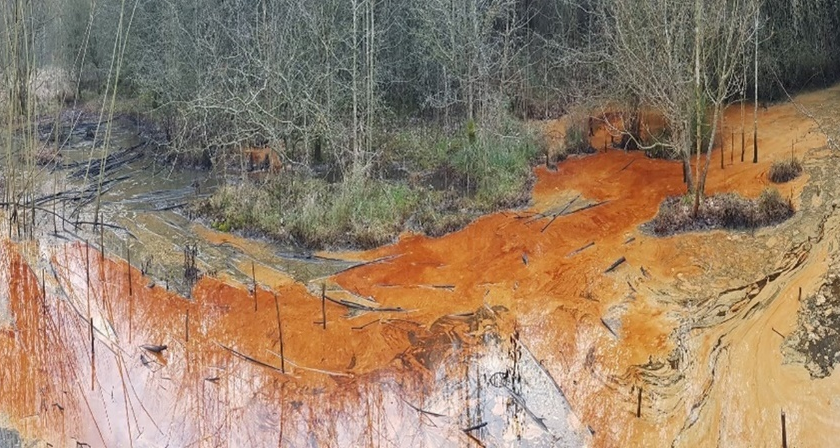
The tar pit that we have been working on is bordered by another, smaller one that is at least on its surface not acidic but is home to a varying bacterial that shows signs of natural amelioration of the tars. This self-cleansing being demonstrated by large volumes of oil emulsions, waste created by bacteria feeding on the oils. These emulsions being consumed by other bacteria. These flower periodically, turning the surface of the tar pit orange, red, or green.
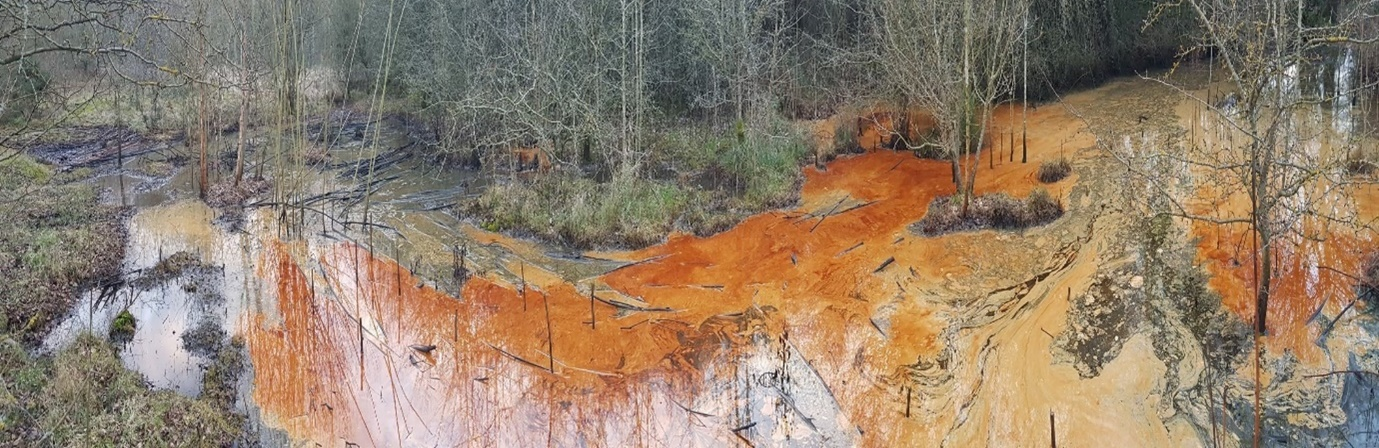
This tar pit is to be remediated using a different compost, the volumes of mushroom compost as used in the first trial has become overly costly due to the new popularity of the material, brought on by the media, particularly television programs such as Gardeners World. The rise in the amount of gardening over the last years lock down has also made spent mushroom compost extremely hard to find in the volumes needed.
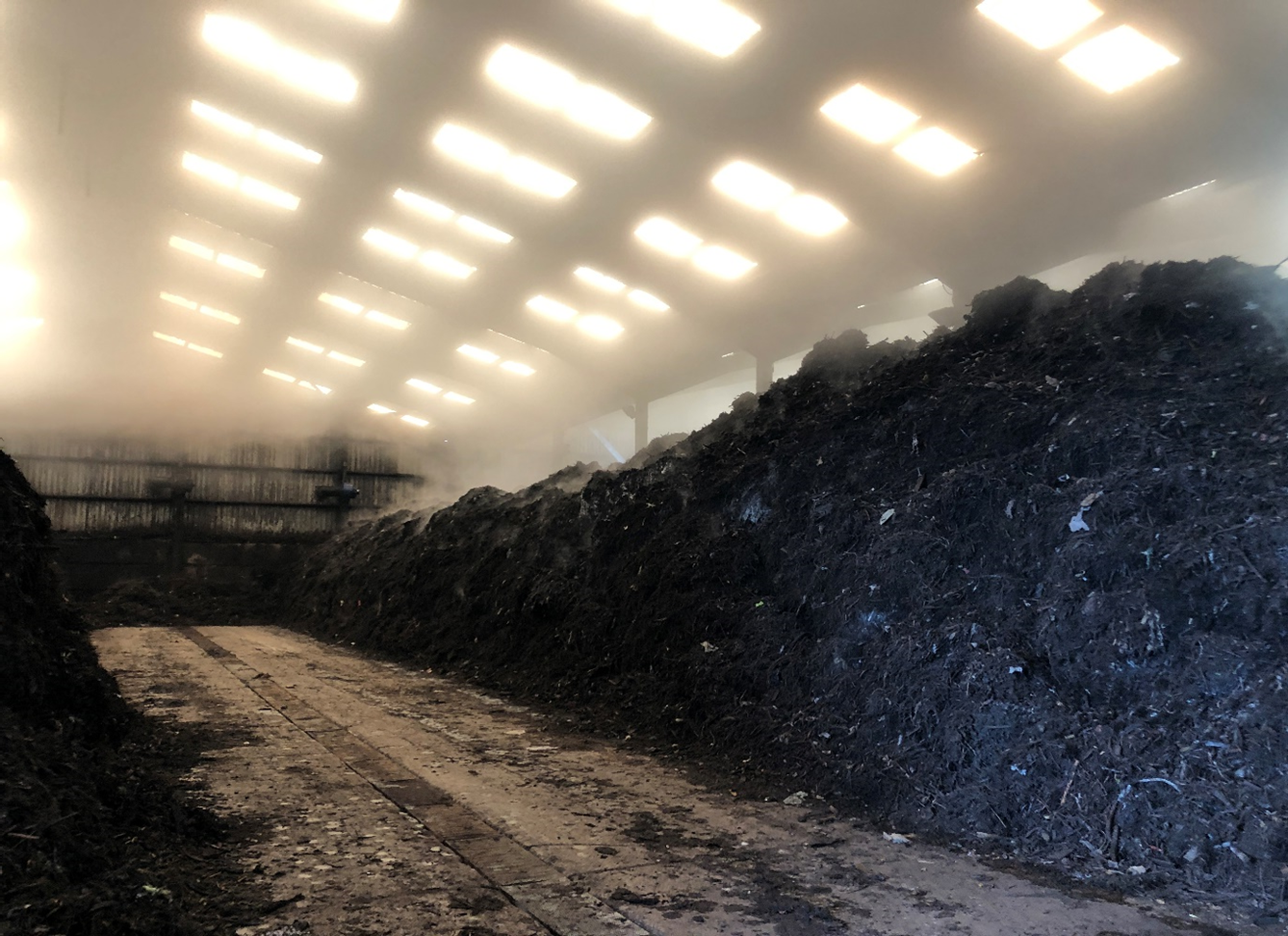
Windrows.
The new compost to be trialled is the mixed fraction of material that is at present unsalable. The manufacturers are major producers of recycled green waste composts. Green wastes are one of the sources of compost that hoped to replace peat in such products.
The Issues of Compost.
Such seemingly simple products as composts from green and food wastes on an industrial scale itself generated waste. Such wastes are a strange makeup of fertile components that have not fully broken down to a fine enough crumb quality plus overflow premium quality easily friable fractions. This waste has in the past been used to aid bacteria in the clean up of contaminated sites such as at the Coalite, at Bolsover in Derbyshire.
The desirable coarse compost is at present classified as a waste material by the Environment Agency though it has gained dispensation to be used as an ameliorant of contaminated land. The material needs championing, and a product name. Its problems really start in its raw materials form of collection from homes and businesses, the collected by waste collection lorries (dustcarts), and the taken to a licensed waste transfer station. It is then brought together for processing at a licensed treatment site that is regulated under waste handling rules. Compost leaves this site as product but anything else that cannot pass out through the grading holes in the trommel be sold and is deemed waste. This material described is really the equivalent of miss shapen or broken biscuits that have always had a market.
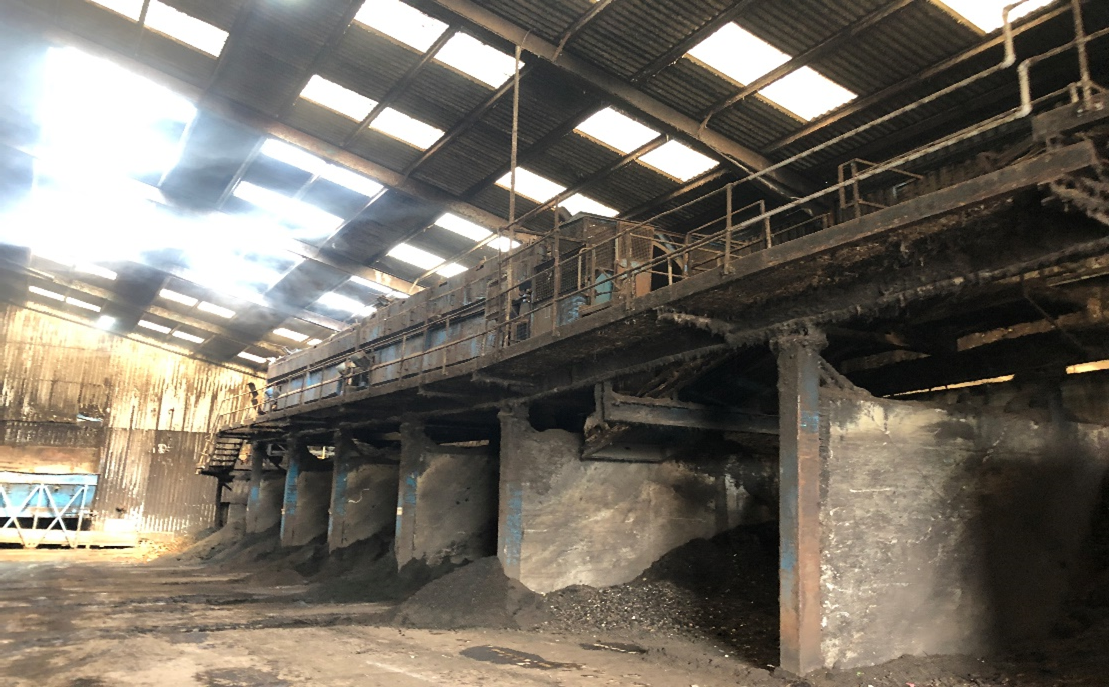
Trommel and size bays below.
The course compost is a long-term source of nutrient for plant growth and bacteria, it will also hold a high moisture level for times of water scarcity.
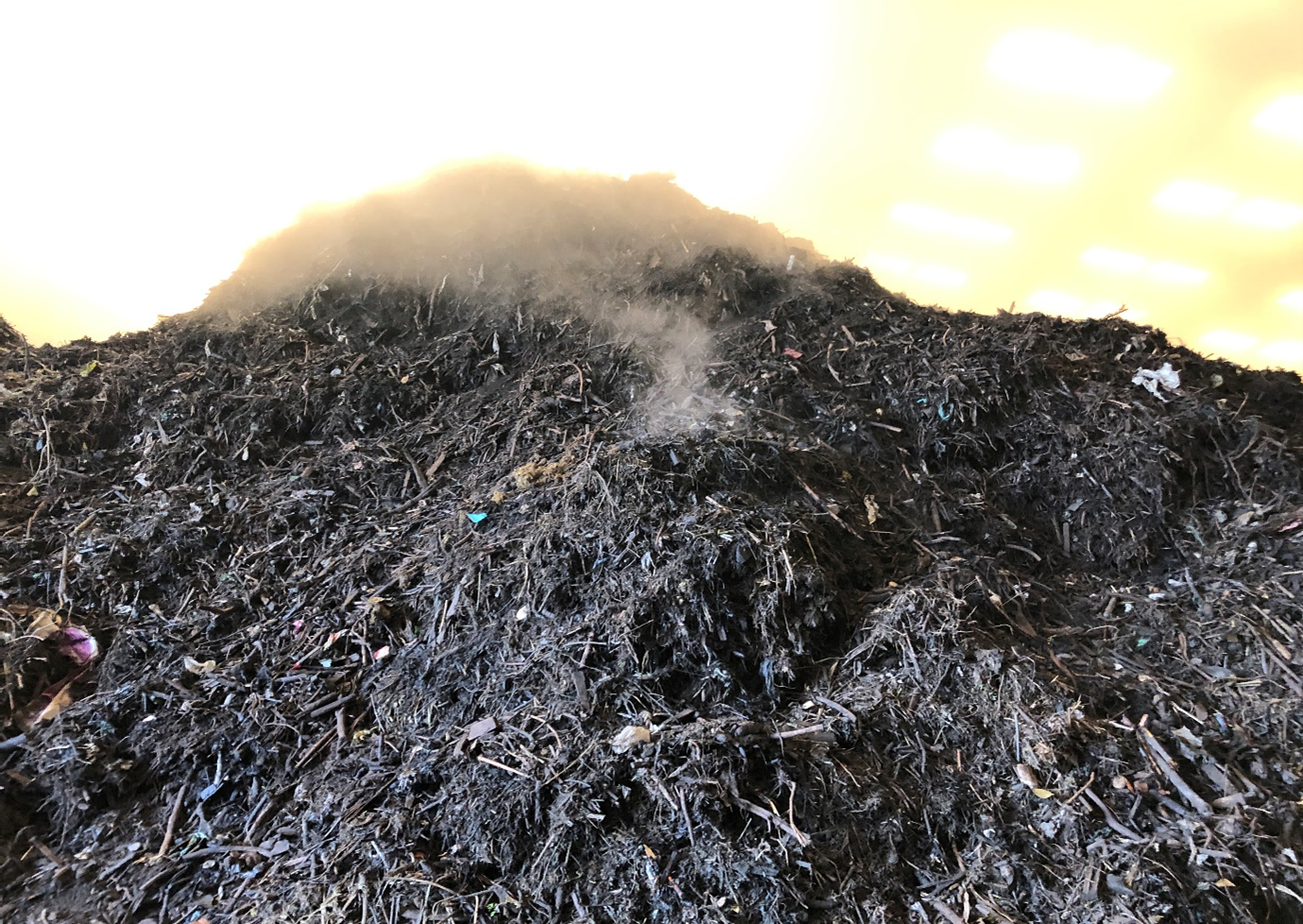
Coarse compost suitable for use on contaminated sites.
Engine oils have been recycled in the UK since the Second World War. The wastes of engine oils vary quite considerably, many being quite vicious whilst others are more liquid depending on additives to the original lubricant specifications. The wastes were historically extracted from the used oil by distillation with sulphuric acid that resulted in a highly acidic residue.
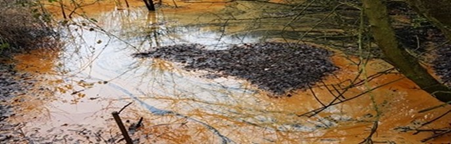
The sludges in most instances were taken to abandoned clay pits and deposited, with the sanction of county councils who saw this up to 1978 as an acceptable route. The sludges in many cases were mixed with additions of solid wastes, mainly solids such as builders’ rubble, clinkers, fullers earth and other materials. In many cases attempts were made to cap sites with clay, though this material sank down into the tar and displaced tars as overspill around the sites.
From the 1980s to the 1990s combined mixes of tars and lime were trialled with other waste in co disposal waste sites. The use of new methodologies of oil recycling were developed at the same period which left the material (Re-refined Engine Oil Bottoms) acid free, and suitable for recycling as part of asphalt composition to be used on some small roads.
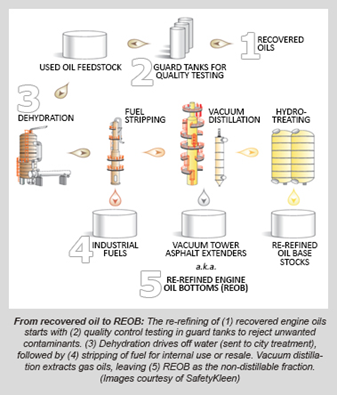
Today there is a different view to residual materials with the industry attempting to get the semi solid residues accepted as a constituent part of major road and footpath construction material and coatings, though many highway engineers and those that commission major infrastructure are questioning the longevity of such material.
Further trials and research are ongoing.
References.
https://wedocs.unep.org/bitstream/handle/20.500.11822/8601/IETC_Waste_Oils_Compendium.pdf
https://www.sciencedirect.com/science/article/abs/pii/0048969789900491sequence=3&isAllowed=
https://www.sciencedirect.com/science/article/abs/pii/0048969789900491
https://www.hindawi.com/journals/btri/2012/587041/
https://www.cleanriverstrust.co.uk
https://www.rhs.org.uk/advice/profile?pid=444
https://www.coalite-regeneration.com/
https://www.greenwasteclub.co.uk/newsdesk/46-woodhorn-composting