Methods available and cost benefits and revenue raising.
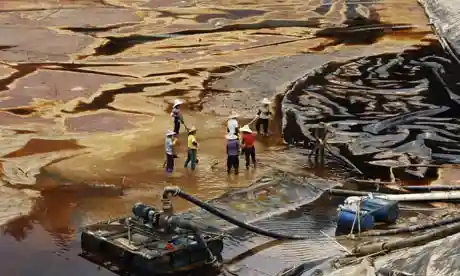
Fujian, China 2011.
Introduction.
Clean Rivers Trust is always looking for projects that can benefit from its over 30 years of experience dealing with the problems of active mines, mine closure and abandonment of mining areas, also regional pollution issues. These usually involve water pollutions coming direct from mine workings, opencast or deep mines, spoil heaps or areas where hazardous materials have been deposited into voids.
The Trust has carried out schemes and been involved in projects from the UK and Europe to Asia, the Middle East, East and North Africa. We have advised on schemes in the US, South America and West and South Africa.
The importance of environmental remediation is understanding those that might be commissioning your attention. What is it that is required beyond the obvious fact that removing the threats to the area of the toxic or damaging material is needed? Does it need to be cleaned up for some pressing future use or is the land to be turned over to public use, can the time scale for total remediation be carried through over extended periods of time, months, or years?
Soils.
Acid Tars.
If the site is to become a nature reserve, an industrial park or a housing scheme will influence your options to some degree but not the basic ethos and ethics of remedial design. Such schemes all deserve the minimum intrusive action, the movement or material about a site will protect the naturally occurring bacteria. These organisms must be safeguarded so that they can be developed along with any added material to encourage their rapid development and growth along with any planted material that may be used to transport the bacteria deep into the contaminated material.
Acid tar pit at Wrexham, North Wales awaiting remedial action.
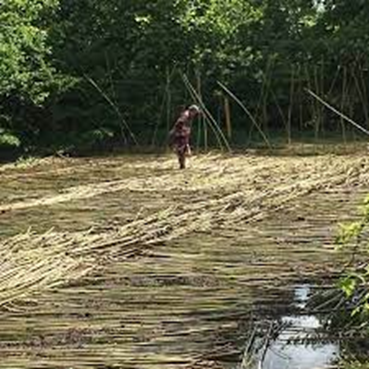
One of the acid tar pits at Cinderhill, Denby, Belper, Derbyshire offers a solution. One week after installation of willows. This site has never grown anything on its surface for more than 40 years. The tars were soft, if one stood still on the surface ones boots soon were sucked into the tar and soaked in sulphuric acid. The surface and below the surface ran acid with a pH below 1. The smell of hydrocarbons was heavy in the air. The surface was carcinogenic due to PaHs. The surrounds of the tar pit were covered in many hundreds of snail shells rotting in the acid.
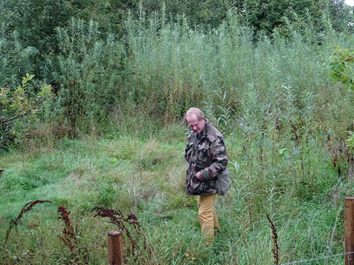
Cinderhill tar pit after 18 months. The willows placed on the tar have rooted into the tars, grass is growing across the site, amphibians have taken up residence, snails are found across the whole site. A rare white slug has recently (2021) been identified on the site. Carcinogens are depleted with none present at the surface or below the tare surface which is breaking down. The surface of the tar is now solid, and the smell of hydrocarbons has ceased to be noticeable on site. The pH across the site is 6.8.
Forest of Dean.
1/ The Trust carried out a great number of projects to remediate contamination in the Forest of Dean in the 1990s when it worked with the Deputy Gaveller and the Forestry Commission on wate at the Kings Chemical Works. The surrounding vegetation had a toxic poisoning of sheep in the area. Today after low impact interventions this no longer occurs.
2/ Contamination by agricultural waste placed over an extended period of 20 years down an old mineshaft was investigated and remedial works were designed and placed to remediate the discharge of concentrated residue entering a local stream that flows into the River Severn.
Water.
Minewater.
The closure of mining, both metalliferous and coal has seen the UK plagued by pollution from the overflowing mine workings, over 2000 miles of rivers and streams have been impacted by the pollution emanating from the depths of closed mines. Some water naturally coming to the surface, other mines are pumped bringing the water to a treatment site so managing coalfields and their damage to surface and groundwaters including important aquifers.
The methods that are needed to be put in place may be active, passive or a highbred set of methodologies. Wetland, lagoons cascades are often implemented in many instances. More mechanical methods may though be considered for other sites which are lacking space for passive methods, or the water chemistry is too complex. Each mine and each water need to be treated as an individual; the water is influenced by the individual geology of each working.
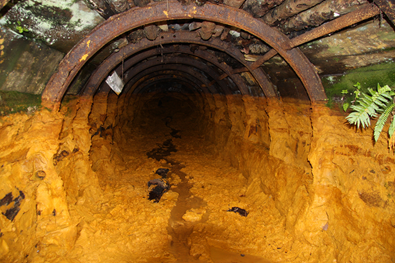
The Cwm Rheidol mines, Ceredigion, Wales. One of more than 70 metal mine discharges in Wales. Yet to be remediated.
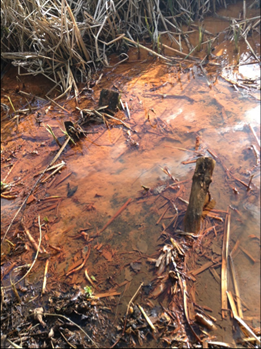
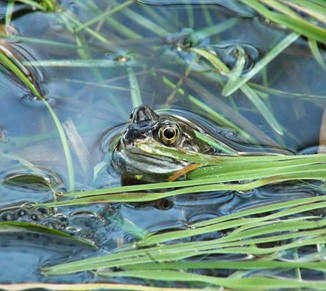
Water from a small minewater discharge, before and after treatment. There are several thousand minewater discharges across the UK that damage the water environment and are in need of remediation.
The Trust has been involved with more than 60 UK minewater treatment schemes. It has also been leading remedial projects in Europe, Asia, East Africa, South America, US, and South Africa.
Alternative View of Minewater.
The Trust has championed the alternative view that minewater can be treated as not just a concern for the environment. I might be considered as an asset that can generate income, or an asset.
The water from many abandoned deep mines is warm. This warmth may be used by passing it through heat engines to increase this low-grade heat to allow it to be used for district heating, industrial purposes, and aquatic agriculture. In some instances, the water might be of a quality to be used as process water or, with little work, even potable supply.
Other Issues.
The Trust has over the last 30 years been involved with many industries and organisations. It has been fortunate to develop a diverse expertise in many pollutions and water management issues. These include flood management, oil spillage, urban and rural drainage, sewage treatment in rural and urban settings, aquifer protection and agricultural water issues.
Pollutants that have been successfully dealt with in phosphorus, and acids, munitions, pharmaceuticals, food wastes, brewery, and other liquid wastes.
Companies and organisations that the Trust has worked with include, Harworth Estates, Anglo American, GlaxoSmithKline, Rhodia, Huntsman, Bass, Allied Lyons, Longcliffe Quarry, Midland Mining, RJB Mining, UK Coal, Coal Contractors, Scottish Coal, Best Foods, Albright and Wilson, HM Prison Service, Severn Trent, Northumbria Water, Yorkshire Water, Anglian Water, Home Office, Environment Agency, Scottish Environment Protection Agency, Natural Resources Wales, Scottish Parliament, Ministry of Defence, Houses of Parliament All Party Minerals Group, and many others.
We look forward to new partnerships and projects that will stretch us technically.
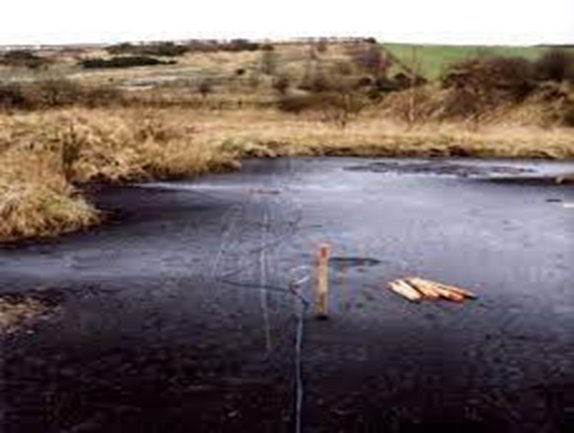
Cinderhill Tar Pit 1999.
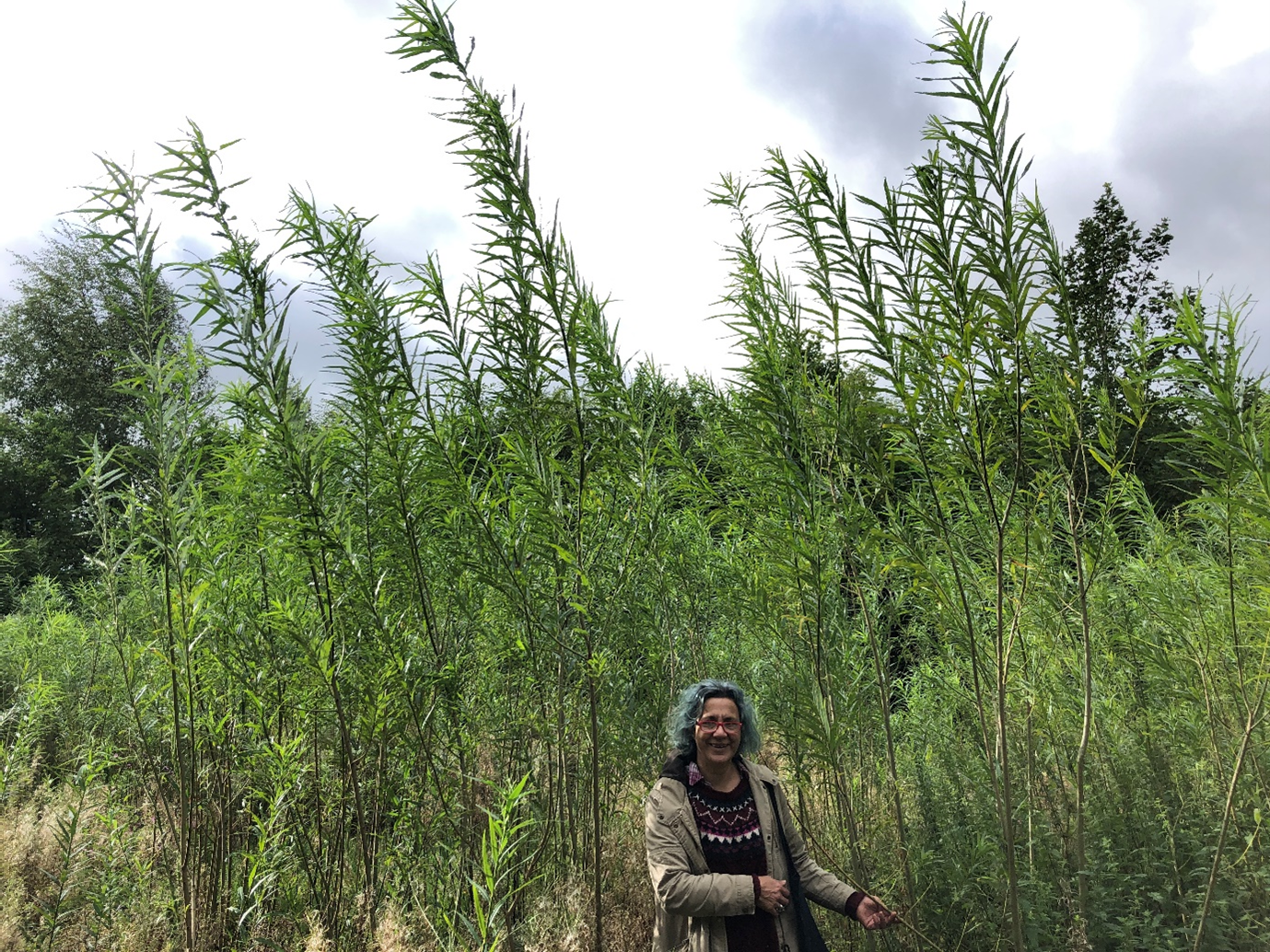
Cinderhill Tar Pit 2020 The same view as in 1999.