Introduction.
The Environment Agency has reviewed the state of the urban environment across England. A short publication that outlines in a brief manner that city environments need to be valued so that those areas of the urban whole that have an income generating element are better understood by the financial sector of UK plc whilst those sectoral parts that are non-fiscally quantifiable can more easily access funding from elsewhere. These include biodiversity, natural processes, and wildlife. The report states that there is a need for population access to green and blue spaces that do not just ring the cities but infiltrate them. One might hope to see rivers that are culverted resurrected and flowing more naturally alongside urban forestry and even wetlands. All would benefit both the natural and human populations and in so doing reduce aspects of the human urban existence such as stress and depression significantly and benefiting the health service by reducing a growing set of medical priorities.
Much is outlined regarding global warming and the UK’s preparation for the COP26 Summit in Glasgow later this year. The allied issue of air quality elevates them high on the list for environmental improvement. The Environment Agency though would have little hope of driving better air quality if it was not an important agenda item for most local authorities who are leading a charge to be seen to address the worst excesses of this ‘climate emergency’.
The report reminds us that around 80% of the population of England now lives within urban areas, though it does not say if that is because the urban fringe has engulfed the countryside, or the urban centres have redeveloped to re-welcome a larger city centre population. The apparent need for populations to be served by internet at speed being a growing necessity of life and for the majority this is only available in the main centres of population.
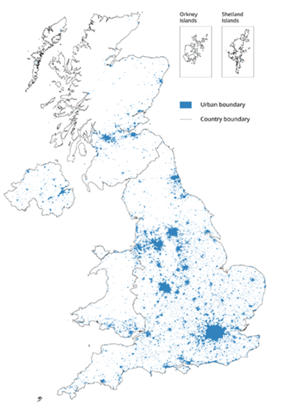
It is noticeable that the Environment Agency and the Government neglect the state of the rural environment as it must seem AOK stuck miles away from services and pollution and swarmed over at weekends by city folk wild camping, exercising the right to roam and wild urbanites defecating in the open air. Pollution of the urban areas is far greater than stormwater drains and CO2, and spreads much further.
The 80% of the population of England live in only 8% of the nation. The other 20% of the population is made up of the wealthy commuters, farmers, odd balls, country squires,huntsmen, and yokels, who live in the other 92% of the country. In Scotlandand Wales,the figures are even more dramatic.
Natural Capital.
In my view natural capital is a phrase often used by those who wish to greenwash their plans. Seldom does one see genuine betterment for a city today. The development of employment potential in one urban centre is more than likely removing similar numbers from others, who in turn will remove them in the same manner from others. The desire of people to congregate together in urban centres is natural and has been from the beginning of time for safety and fraternity. Those people who make up the diverse populations of cities tend to congregate in close proximity with others of similar cultural values and religion. This is not surprising as feudal lords 800 years ago were meant to protect their vassals as were the city fathers of the 18th and 19thcenturies too stated they would care for their citizens. Few did care for others and those that did are the ones who invested in parks and lakes, woodland and riverside walks which are now labelled by environmental accountants as ‘natural capita’; there is little natural about any of it. It is though wonderful that some forgotten philanthropists thought of the public need for rest, recreation, and open space.
The population of many urban areas have paved front gardens for their cars to rest up when not in use, the loss of thousands of thesefront gardens has been hugely detrimental to the urban aesthetic as well as to the natural environment. This city paving has removed one of the least thought of delights of suburbia, front gardens, trees, and shrubs, well-tended or overgrown flowered in profusion brightening the vision of monotonous roads leading to city centres. Now one counts the cars in each paved spot. Those paved areas also damage the environment as they drain water faster than a manicured lawn or shrubbery. The surface water now heads for the surface water drains, sewers and roads producing flash floods and overflowing pollution into nearby streams, rivers, and canals.
The Environment Agency states that natural capital values are ‘disproportionately’ large in relation to the urban area. This is then explained by the fact more people benefit from the city trees and open spaces due to population density. Not sure I like the terminology ‘benefits are received’though. The receivers are said to have received benefits from this high-quality urban woodland environment of £160 million in health care cost savings by ‘avoiding death, reduced life years lost, and fewer hospital admissions. Is this a benefit to the population of the urban areas or to the whole nation or just to the government funding the NHS?
Impacts of Urban Living.
The report outlines that cities pollute air and water, they use air and water and in the latter’s case its abstraction from whatever source effects the areas away from the urban areas. The carbon emitted from cities affects the planet. The planet is exploited by feeding its population and is losing biodiversity which threatens the ‘ecosystem services provided’ to the populations of urban areas.
The report notes that urban areas draw heavily on resources from outside their immediate area. This is an amazing truth, cities cannot feed themselves, the Athenians established this fact in1200 BCE as they established a Greek Empire to feed the citizens of Athens.Each major city engaged historically with its hinterland to procure the staples of life and traded further afield to gain luxuries.
The report outlines that diversity of urban birds has declined since 1995 due to loss of habitat in line with the need to live in houses and other habitations that do not leak. Buildings in decay are either demolisher or repaired. Property maintenance being more important than providing leaking roofs for nesting of sparrowsor for mammals such as bats. The report goes on to inform us those urban areas are less diverse than the countryside. The countryside being increasingly under threat of urbanisation.
Urban Water.
Most of England’s urban centres are set on waterways, someon rivers others on canals. The earliest being on rivers that supplied drinking water and allowed waste to drift away downstream. Thisreport reminds us of the 1970s when the Thames was little more than the capital’s drain: though it should have reminded us of the Victorian Thames prior to the sewering of London.
As the report says there have been great improvements in urban water quality across the country but ‘some challenges remain’. It goes on to state that hydrocarbon, metals, litter, nutrients, and pathogens still impact the rivers.Micro plastics are highlighted and of those 68,000 tonnes are generated by car tyreswear. The report does not specify if these enter the rivers via urban drains or outside the urban fringe as vehicles speed along motorways traveling between urban centres.
One notes that the Environment Agency state that urban rivers suffer from agricultural pollution, whilst the rivers through towns, cities and conurbations pollute with plastic, pharmaceutical products, storm water drainage, sewage from treatment works and combined storm water overflows. Mis connected domestic discharges are a growing concern. All these though are not new, though they are written down as if they were.The issues have been known for 50 years at least and the increase in population of the country and especially urban areas shows we are lacking in our actions to do the right thing, stop it, we also are aware of most of the answers, but it is not cool to remind ourselves of the fact.
Case Study of the River Medlock.
The Medlock is a small tributary of the River Irwell. The two rivers merge in the centre of Manchester. It was heavily engineered before the Environment Agency restored one section which was red brick lined, like the River Rey in Birmingham.The lining sped water through the city and out to the countryside and sea beyond. The Agency removed the remnant bricks from a section of the river and sculpted the banks for a moderately wider flow whichthe river was already in the process of achieving. It is improved with a footpath to increase wellbeing and increase the natural capital value of the scheme. How you prove a genuine profit is a sketchy subject still. The profit being £41 million for an expenditure of £12.5 million (real UK Pounds).The improvement in biodiversity is engineered now rather than the river itself.The river was notmade pollution free which might have done more for its biodiversity.
Resources and Waste.
The urban dweller needs to eat, and food is imported so they may.This is a major source of air pollution and greenhouse gases, it also generated large volumes of waste. In reality the UK produces only a small percentage of its food needs, and the country imports the vast majority from elsewhere.The fact that we buy nearly everything we consume from outside the UK not just food and drink, even bottled water, but cloths and communications equipment, vehicles, and fuel.The report states a more frightening aspect than global warming at this point, in fact two:
- Global soil resources are diminishing so our sources of staple supplies, even wheat for bread are reduced.
- The areas that grow food within the UK are becoming more disconnected from city dwellers.
This last fact is frightening, especially when one looks to what will need to be achieved to produce base crops to feed the UK population. The call for rewilding and more countryside access for leisure pursuits runs counter to the national interest of feeding its population.
The waste issue is covered primly with the notion that this country recycles waste by exporting much of the most difficult, such as plastic. This though is ending with many countries not accepting any materials other than those of high value. Plastic has for years been exported to the far east and Turkey but only those forms that attract highly subsidised kickbacks from exporters who use unorthodox methods appear able to continue this dubious trade.
The report notes that in 2019 over one third of pollution incidents came from the waste management companies, and more than a third of these were the result of illegal activities.
Heat Island Effect.
Heat islands are cities where the buildings absorb heat during daylight hours and retain part of this heat during the periods of night. In time this heat builds up significantly and can affect health through heat related impacts.It can influence weather pattens, bringing heavy rainfall and prospects of flashfloods, as were experienced recently in London and else ware.
The name for what brings about these events is new as is their severity due to increases in urban development, but the actions are noted as far back as the Victorian period.
The Thames and the TidewayTunnel.
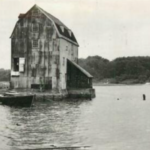
This case study discusses the major engineering project to relieve the London sewers of excess wastewater when it rains. The old sewage system put in place from the 1860s is unable to cope with both the populations waste and the rainfall that falls on to the built environment. Little water passes through the growing expanse of the capitals paving and the great majority is taken into the sewers. At present more than 39,000 tonnes of untreated sewage is deposited into the River Thames annually when it rains. This vast slick of ordure is better in the river than flowing through the underground railway system.
This new sewer system will cut pollution by about 95% but will not stop the need for the Thames Bubblers forcing oxygen into the river, especially outside the Terrace of the House of Commons when it rains. There will still be a need for the Skimmers to patrol the river picking up sewage related litter such as sanitary pads and condoms.
Cities and Settlements;Inclusive, Safe, Resilient and Sustainable.
The sectional heading is a government ideal that it has passed on to agencies to make work. The Environment Agency are supportive of the circular economy, the problems in the last section of the concept, recycling. As already said much recycling is not done in the UK so until this last part of the circle is squared nothing will work as it should. Financial institutions and many others are signed up, but the need is for a substantial upgrade in recycling investment.
The concept of safe, inclusive, resilient, and sustainable makes one think of old motivational posters, trite and worthless. Safe is a matter of opinion, inclusive depends where you are, resilient depends on your frame of mind and sustainable is developing a methodology to ration everything we eat and wish to do. Sustainability requires all a population to act for the common good, which is wishful thinking and might need enforcement, though the rights of all individuals would be impinged upon.
Living in Towns and Cities.
The urban environment with its greater opportunities for work, more amenities, cultural and social enrichment make the rural way of life appear positively bleak. Urban populations love their parks they also like the ability to visit the countryside around their conurbations, in fact to escape even for just a brief time. Urban environments may also, conversely cause stress, increase the risks of illness and infection. The social and economic variances in a city can make inequalities within the urban environment much more obvious than in rural locations. The Agency cites research that showed only 18% of city dwellers felt they had a better standard of life in their urban setting. Oddly people living within the inner cities visit rural areas less frequently that those who live toward the urban fringe or small towns. This is often because the inner-city dweller is on lower income and has less opportunity to travel as they wish.
The nearer to parks and green spaces or water people live within an urban settingthe more satisfied people feel they are. Research appears to hold firm the idea that people identify with their areas and part of their personal identity is this feeling of place. This has been known for many years and was the background to the creation of Pals Battalions in the British Army 1915 and 16 during the First World War.
Barcelona.
The Agency had to report on a Spanish location, Barcelona to describe a traffic free Utopia where poor and moderately paid families had been accommodated in super blocks where traffic was minimised, and each resident was only 200 metres from a green space. The roads were to be carless green pathsbut still residents park close to properties, though there are car parking areas to the rear of the scheme.
Inequality.
The Environment Agency outline the concerns for the issues of green deprivation. The lack of parks or river side walks within many cities, the lack of involvement within many ethnic groups with the natural world. The human damage of illness and depression that isolation from the natural world can lead to. Income inequality in urban areas is more noticeable than in the rural areas, though this is a major problem within the countryside as well.
Black and Asian minorities in many urban settings find it more difficult to access parks and green space. This may be due to racial conflict, poverty, education. It may also be that families keep to their own communities rather than risk contact with other groups in an informal setting.
In Conclusion.
The report is a god overview of the state of urban life within an environment that 80% of the population share. Some of us either through health or ethnicity, lack of employment or other societal problem finds the green infrastructure either not close enough or for other reasons inaccessible. Private green space is even less available for minority groups. This is reflected by the onward rise in need for GP and community clinic involvement across the urban communities.
There is certainly much that might be done to rectify this situation but the solutions to involve the deprived of the urban areas is a confusing and possibly conflicting path to travel. When one might be accused of green cultural imperialism on visits to Uganda or Kenya, suggesting involvement or use of green or blue spaces even just to sit and watch the world pass can be construed as ethic blindness or abuse, much research in this area needs to be undertaken.