The State of Water and Water Resources. Environment Agency Reports July 2021.
The Environment Agency recently published reports on the state of England’s rivers and water resources; this being part of its ongoing reporting of the state of the English environment. Conclusions of both these reports are concerning. The state of English rivers is on the cusp of going backwards. If that occurs with polluted waterways being the norm and water resources being of poor quality, water through the taps of the nation will be considered unfit to drink and rivers return to drains.
The State of Rivers, first thoughts.
In short, the English river is in decline again, rivers are receiving greater volumes of untreated or poorly treated sewage that they have had in years. These volumes are only mitigated by the lack of much industrial effluent. If it had not been for work carried out by many groups plus the Water Authorities and National Rivers Authority in the late 1980s and early 1990s the state that rivers are in today would be far worse than we find them. Rivers across England are accepted as having been the recipients of more than 110,000 discharges of untreated or only screened sewage that were vented to the aquatic environment by the water companies from sewage works or storm water overflows. A few of these water companies have been fined sizeable sums and have had to go some way to remediating these pollution events. The fact that sewage is the major contributor to pollution loadings and river quality is not totally beyond repair.
As mentioned above many industries have closed their doors permanently from the late 1980s with many thousands of people having lost employment but at the same time the water environment has benefited markedly. The most remarkable closures have been chemical works that once were recognised as major polluters by necessity, but as the water legislation of the 1990s came into force many of the greatest polluters were purchased by European and US companies who closed the plants and moved production elsewhere. Another industry that closed due more to political rather than fiscal reasons was the mining industry. The last deep metal (tin) mine closed at Wheel Jane in Cornwall in 1990/91 whilst the coal industry stumbled into history firstly by being denationalised and then by importation of cheaper coal from abroad with the last deep mine at Kellingley closing in 2015.
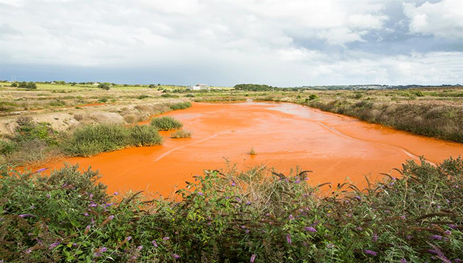
The coal and metalliferous mining industries left a legacy of pollution, ochre water, thousands of kilometres of pollution but their closing also allowed many other rivers a respite from particularly iron and chloride contamination. At the same time as the coal industry folded many of the coal fired power stations shut, another win in that they pumped cooling and production water through their plants returning it to the rivers at temperatures that were unnatural and did nothing for river quality. The River Trent though gained a huge following of anglers in the 1980s and early 90s as a winter fishery as the several power stations along its length warmed the river so making the fish in its lower reaches hungry and active year-round. Today it has returned to a more natural condition.
The Environment Agency Reports Overview.
These reports are short but not sweet. They outline huge problems which are hinted at rather than identified. One needs to read between the lines rather than take what is presented as the full story.
Water Resources as a heading outline that the nation is fast running out of sustainable resources though rainfall is still at a level of abundance that all thirst can be assuaged. This really states that new reservoirs need to be developed. This then (though not mentioned) is the real agenda. Water though is as is stated a key element of our natural capital. Water being valued by the Agency at at-least £1,304,000,000 to the nation (2015 figures). The rainfall that is precipitated over the nation is nearly all lost, not to the environment but to humans. The natural processes of evapotranspiration being the biggest curse, as the atmosphere gains the greatest share.
Interestingly the rainfall across the country has not altered in volume delivered since records began being kept in the 1760s. What has changed being when the rains fall. Winter rainfall has increased with a lesser percentage drop in rainfall in summer. This would further suggest slightly drier spring and autumn periods as well. The agency states succinctly and obviously that ‘droughts can develop during periods of unusually low rainfall’. The reports point out that drought and water scarcity have become a major concern over recent decades. This being from the unusually dry summer of 1976 when water authorities recommended people should ‘bath with a friend’.
Flood issues are really a consequence of increased winter rainfall, the country is now experiencing once in 100-year rain events every 2 or 3 years.
Abstraction.
The reports point out that abstraction from groundwater reduces base flows of rivers and fluvial abstraction reduces total river flow. Both are a bad thing! The abstraction carried out to supply the population of England is now unsustainable in much of the Midlands, South and East.
Land Drainage and the Woe of Wetlands.
The wetlands and fens of England, particularly in Kent and East Anglia were areas renowned to harbour ‘the ague’ for centuries, thankfully though no longer is malaria present. With global warming it may though return, the mosquitoes capable of carrying the problem are again to be found in the south of the country.
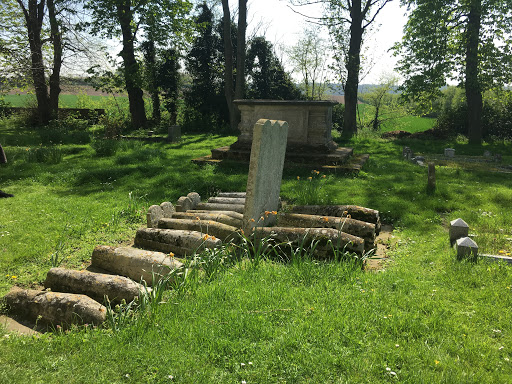
Wetlands have all but disappeared across England over the last few hundred years, the land was found to grow crops and once drained became the most productive in the country and the most valuable. Surviving wetland today are seen differently, they are a desirable addition if restored to local environments. They help control water flow, holding back what might be flood water and retaining base flows to help avoid drought at times of little rainfall. Alongside the fluvial engineering aspect their value as habit for flora and fauna has now been recognised. With the onset of global warming wetlands and coastal mudflats are now considered indispensable allies in carbon sequestration from the atmosphere.
Wetlands must not be built on, however tempting they may seem. They are flattish so easy to put houses on and as they are usually part of a flood plain easily inundated even if drained. If a building is set on a wetland it will move, subside into the mire beneath or heave up with water making the material beneath the building swell.
Ponds.
Ponds and lakes across the country appear to be a closed book to the Environment Agency. They are aware of their value to the environment but have little knowledge of their number or condition.
This is unsurprising for an agency that is relatively young. In the 1960s and 70s there was a concerted effort by the Ministry of Agriculture to increase farm yields and in so doing remove hedges and infill field ponds.
A case in point, a farm in West Norfolk had two ponds close to the farm, a remnant ecclesiastical building surviving from the closure of the monasteries. The ponds were fishponds to supply Friday fish and even after 400 years of neglect, including cattle and sheep watering, good carp were caught from both ponds. These ponds were filled with waste from a nearby town and ploughed. Similarly, another pond was filed by bulldozing three tumuli into it. The later event taking place in 1976.
Ponds and lakes are often hidden, private and unknown, though many were in public view such as Swaffham Town Pit at the head of Pit Lane also filled in to allow more parking spaces in the town centre. If one looks at old Ordnance Survey maps one can see how many pools and pits have been lost when compared with modern editions.
Pollution.
About sewage, there are several issues that need to be picked up upon regarding pollution. The makeup of the coverall name is misleading in its use. Apart from the fact that we all make sewage and from that angle we are all to some extent culpable, and we pay others to treat it for us or have tanks in our gardens that magically treat it. What makes up our sewage? The answer is anything we swallow or more worryingly, whatever else we put down the drain or flush down the lavatory bowl.
Unavoidable:
- Food waste, both what we have eaten and the washing up water, in normal concentrations not a problem.
- Pills and medicines pass through us to some extent even though our bodies use part of the product much is vented and does not get purified at the treatment works. ‘Trout hooked on anti-depressants’ has been a tabid headline.
- Soaps and lotions from baths and showers are no trouble but some scented varieties are not so good, the scents can pass beyond the treatment works. The same is true for shower gels that contain micro-plastics.
- Drugs of choice from caffeine via alcohol to crystal meth all pass through sewage treatment works and enter the natural environment. The river or stream proving the dilution.
- Illnesses and diseases can often be monitored via sewage treatment works outfalls. This is one of the government’s methods of quantifying COVID in the population.
- Cleaning materials, polishes, and surfactants, washing powders and liquids can add to the loadings of nutrients leaving sewage works.
- Hair and skin get removed at sewage treatment works
- Toilet paper is removed on the screens as waste arrives at sewage treatment works if it has not already broken down on the way.
- Cleaning products such as bleaches and Vim, Harpic and Flash all are pretty week when diluted in the sewer. The sewage treatment works can cope with these, though some nutrients may enter the receiving water.
Avoidable:
- Personal hygiene products and contraceptives of one sort or another should not be flushed away, they are unattractive if vented from storm drains hanging on twigs and branches along rivers and streams. They also appear in fat bergs and then need to be dug out sometimes by hand.
- Vegetable oil, fats and grease are a main constituent of blocked drains and sewers, they are unpleasant to remove. Think if it was you digging through a blocked sewer of fats, condoms and turds, sanitary towels and tampax?
- Sump oil and other hydrocarbons are not good down drains, they kill wildlife and add to dangers to sewer workers. They stop sewage works working as they should.
- Waste medicines are wasted when they can be recycled.
- Anything that should not go down, plastics and metal, bank notes and false teeth are all found at sewage works, even bullets.
Note. These points are not full, there could be many further additions.
Other sources of sewage waste entering waterways are surface water drains. Across the country many housing and industrial estates have drains purely for rainwater. These are often seen discharging raw sewage and are not meant to. The most notable reasons for this being poor tradespersons or do it yourself skills. Dishwashers, clothes washing machines, baths, and showers, even macerating lavatories are misconnected to surface water drains. Just one household misconnection can turn a surface water drain into a pollution source. There are estimated to be tens of thousands of homes across the country with these badly thought-out drainage linkages. They are in most cases almost impossible to trace. Often these polluted surface water drains are claimed to be sewer overflows when they are not, they might well be more polluting than genuine sewer overflows and work more often and even continuously.
Constituents of Pollution.
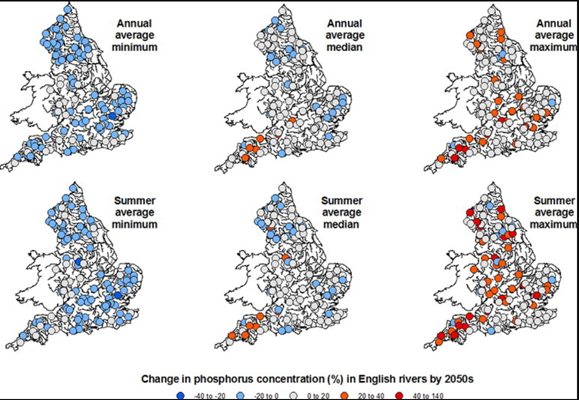
The huge number of chemicals, pharmaceuticals, and other wastes that are sent to sewer by each household annually and are added to the better-known pollutants that do not stay at sewage treatment works such as micro fibres and plastics mirror modern life.
In the 1950s each person in Britain used on average about 27 gallons of water a day to wash in, wash their cloths, flush their wastes away and drink, today the average is about 87 gallons a day for the same set of actions. We wash cloths more regularly, we shower or bathe more often, we use machines so we are physically less aware of the volumes we use, all this water goes to sewer, or it should.
Clean Rivers Trust has worked with Warwickshire Wildlife Trust at one site outside Coleshill where two surface water drains from a large housing estate discharge to the River Cole, these drains never stop running, even at times of no rainfall. There are the tell-tale signs of sewage. The local authority and the Wildlife Trust are putting in place wetlands to treat the flow and protect the River Cole.
Environment Agency and Water Quality.
The Agency has a hard job, it monitors the self-monitoring of wastewater discharges, they act as policeman when large pollutions take place, identifying and prosecuting perpetrators if they trace the source. They monitor water quality, river flow and groundwater levels and much else on what is an ever-shrinking budget. The Agency has many pressing agendas that are more focused towards public safety, flood monitoring, flood protection and responding to expected inundations as well as flash flood. Thy monitor waste companies and police fly tipping, finding evidence of those that despoil streets or country lanes. The Agency works on air quality issues with local authorities.
The Environment Agency, a multi-disciplinary service to protect the environment and bring down retribution on those that that breach the laws regarding the protection of the environment. Changes in regulation brought about by the European Water Framework Directive have made UK rivers look poorer in quality than they were, particularly with regard to river ecological status. The old methodology judged rivers by the volume and variety of life beneath and within the river water. Today the state of historic alteration of river channel is also taken into consideration, weirs, watermills, and barriers are all points held as negatives. This is most noticeable when put alongside the steady though sometimes erratic increase in biological and chemical quality of rivers.
The Environment Agency demonstrate quite plainly a corporate and organisational will to better the water environment. They are hampered by politicians who either wish greater involvement of the agency in one or another direction. They are hampered by lack of staff due to lack of funding. Their management has for the first time been of a calibre and frankness to benefit the environment, how long can the government allow that state of affairs to last is uncertain but their Chair leaves shortly and is likely to be replaced with a more political appointment with little knowledge. I hope I am wrong.
The Pressures on Water beyond the Water Companies.
- Agriculture.
- Construction.
- Roads.
- Veterinary products.
- Minewater from abandoned mines.
- Tailings and mine spoil leachates. Some quarries run off.
- Sport, lead shot and weights from historic fishing.
- Plastic let into the river systems, windblown and deposited.
- Heat from power stations and other sources.
- Industrial discharges, food manufacturing, tanning, dairy products.
- Contaminated land.
- Humans generally.
The Future.
The future of rivers is as rosy as people wish them to be. Some are excellent at pointing out problems, others find solutions, other people can twist arms to see that solutions are put in place. The government, the courts and the population might one day work in concert to protect the most vital of the elements, water makes life, and nothing is able to survive without it.
There is nothing like a river which changes its moods with both location and season. There is never a dull river. A river lives and gives life as it passes from its source to the sea.