Production

The chart above demonstrates the volume of coal mined across three major European countries. Whilst France and Germany both started late with coal winning into the 19th Century England, or better Britain was mining considerable volumes of coal from early times and deep mined coal was being exported to other European countries by the 16th Century. At its peek of production Britain was producing 287 million tonnes in 1913. Several millions of this mined production were transported around the world to supply the Royal Navy and the mercantile fleet with steam coal. Coaling stations were at every British controlled location from Gibraltar, via Aden to India.
Coal powered energy allowed for the development of industry across Europe, initially using steam, but by the second quarter of the 20th Century electricity was showing its efficiencies for manufacturing. This led to a boom in mining across the continent during the rebuilding of the shattered economies of the region after the Second World War.
The UK showed its desire to cut back on mining coal in the 1980s and early 1990s using environmental issues for this change in mining policy, but it was more a political move to pay back the mining union for some of the chaos brought about by the strikes in the 1970s and early 80s. the country also finding it cheaper to import coal whilst reprivatizing the rump of the industry.
The following plan charts the growth of coal production across the world in the last 25 years. All regions of the world now show a gradual decline in production and dominance of this fuel.

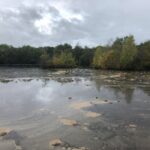
The move away from coal mining though gradual in Europe was delayed somewhat by Germany’s cutting back of nuclear energy production and elongating the life expectancy of its lignite power generation capacity. This has led to large new open pit mining projects in both the east and west of the country. The lakes or inland seas that are formed by these vast opencast mines are apt to be acidic (pH3) and can be rich in iron. At times each year the temperature and oxygen levels allow bloom of algae occur.
France has a small problem of minewater pollution from the coal industry that is now closed in the north-eastern area of the country. The French have taken to reed bed technology successfully for treating the minewater where it has rebounded at the surface or is pumped to protect aquifers. The local authorities rather than a national body are held liable for the remediation. There are bigger problems in the south, around Limoges where uranium mining took place in the mid-1950s through to the 1970s. the discharges are a major concern.
The areas of Eastern Europe, Poland, through to Bulgaria all rely on coal to a greater or lesser extent for power generation and for metals production. Many new mines are still being developed, particularly opencast to wring brown coal and lignite from the still large reserves of the region.

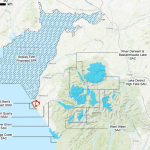
The map above was published by the European Commission in 2018 and is their most recent outline of coal production. The UK element is now out of date, but the rest is essentially accurate. There are no deep mines operational apart from one or two ‘hobby pits in the Forest of Dean. Opencast mining has nearly finished. There is a planning application which is ongoing for a deep mine at Whitehaven in Cumbria, the outcome of which is uncertain at this time (August 2021).

This European Commission map shows sites of mining for other named commodities and was published in 2018. It is accurate still (2021).
Metal minewater issues are common across the northern parts of Europe and sadly little is reported with regard to some of the worst minewater pollution incidents due to the lack of population witnessing such events, those that do are beholden on the mining industry to keep their livelihoods so do nothing to report the events.
Across the eat of the continent the remarkable mixes of metals, copper, gold and much besides. Many of the metal mines have closed across much of the region, but the closed pits and workings are having an increasing influence on river quality throughout the region. Similarly in the Iberian Sulphide Bely of southern Portugal and southwest Spain the historic pollution of rivers such as the Rio Tinto are famous for their dire state.

Politics and the European Environment.
The miners across Europe have a strong lobbying ability, they have within the last thirty years held the fate of Eastern Europe in their gift. To stay under communist control or move towards a capitalist future. Capitalism held sway eventually. I did witness Romanian miners attack ecologists and green faction activists in a restaurant in northern Romania in 1990, then things were not so cut and dried.
Today the miners are largely acquiescent that their jobs are slowly going, the politicians in Brussels though have contracted to ensure new green jobs will mitigate these job losses. The storage of CO2 being very close to reverse mining and popular within the mine unions sector.
The use of minewater as a low-grade heat resource is also tremendously popular in that one energy resource might be replaced by another.
The use of solar farms and arrays across old mine sites has gained a following with many investor companies. These alongside wind generation has already developed in many areas.

German lignite mines have been turned into lakes or inland seas whilst at these locations solar farms have replaced the mine sites.

This poor example of plan to demonstrate minewater as a resource has yet to be replaced by the Commission but it does give some idea as to the possibilities of utilising mine water sourced low grade heat which is both sustainable and at worst carbon neutral.
Concluding.
Mining made most of modern life possible, from farming to industry. We rely on mined material for our televisions, our homes our phones. Without mining in one form or another we will freeze in winter and scorch in summer. We need to reassess the extractive industries sooner rather than later and come to decisions as to the way forward. The environment and particularly water being the main part to suffer most.
References.
https://link.springer.com/article/10.1007/s10887-021-09187-w