Introduction.
The Environment Agency has just published a report on the presence of Poly- and perfluoroalkyl substances (PFAS) in the environment and especially their presence in water. These materials are ubiquitous within the water environment, and little has, up to now, been published about them. Their uses have for around 50 years been common, fire fighting foams, surfactants, non-stick coatings of pots and pans, fire proofing of furniture, and stain resistant fabrics, from clothes to carpets.
The report is a valuable guide to their present levels and may in some cases demonstrate a reduction of their presence but the Environment Agency in their first paragraph state that: ‘Poly- and perfluoroalkyl substances (PFAS) are a large group of synthetic organofluorine chemicals that have been widely used since the 1940s. By definition, all PFAS have at least one fully fluorinated methyl (–CF3) or methylene (–CF2–) group. The carbon-fluorine bond (C–F) is very strong. Consequently PFAS can resist chemical attack and withstand high temperatures and are sometimes referred to as ‘forever chemicals’’.
Forever chemicals ring alarm bells, they do not break down within the environment and are here for the long run. Their presence can be found in the livers of fish, predatory animals and one might surmise humans.
US View.
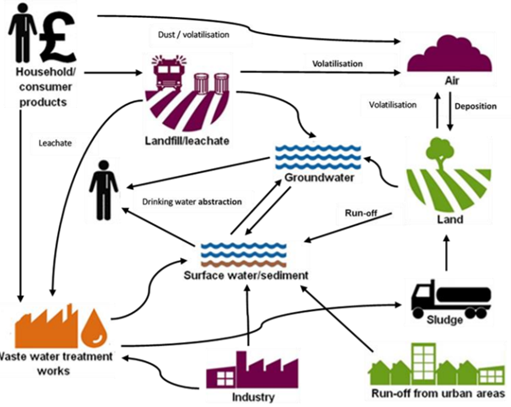
The US EPA states that PFAS can be found in:
- Food packaged in PFAS-containing materials, processed with equipment that used PFAS, or grown in PFAS-contaminated soil or water.
- Commercial household products, including stain- and water-repellent fabrics, non-stick products (e.g., Teflon), polishes, waxes, paints, cleaning products, and fire-fighting foams (a major source of groundwater contamination at airports and military bases where firefighting training occurs).
- Workplace, including production facilities or industries (e.g., chrome plating, electronics manufacturing, or oil recovery) that use PFAS.
- Drinking water, typically localised, and associated with a specific facility (e.g., manufacturer, landfill, wastewater treatment plant, firefighter training facility).
- Living organisms, including fish, animals, and humans, where PFAS have the ability to build up and persist over time.
Health Issues.
There is growing concern and evidence that exposure to PFAS can lead to adverse health outcomes in humans. If humans, or animals, ingest PFAS (by eating or drinking food or water than contain PFAS), the PFAS are absorbed, and can accumulate in the body. PFAS stay in the human body for long periods of time. As a result, as people are exposed to PFAS from different sources over time, the level of PFAS in their bodies may increase to the point where they suffer from adverse health effects.
Studies indicate that PFOA can cause reproductive and developmental, liver and kidney, and immunological effects in laboratory animals. Both chemicals have caused tumours in animal studies. The most consistent findings from human epidemiology studies are increased cholesterol levels among exposed populations, with more limited findings related to infant birth weights, effects on the immune system, cancer (for PFOA), and thyroid hormone disruption (for PFOS).
Oral exposure studies of PFAS in animals have shown effects on thyroid hormone disruption, reproductive organs, and tissues, developing foetus, and kidney. Based on dose-response information across different sexes, life stages, and durations of exposure, the thyroid appears to be particularly sensitive to oral PFBS exposure. The data are inadequate to evaluate cancer effects associated with PFBS exposure.
Regulations.
PFAS is turning into a health crisis; decades in the making, more than 4,800 known PFAS have been created for commercial use. Regulatory guidance and restrictions vary across regions globally. As new PFAS are identified in the environment, and more toxicological information becomes available, further regulations are certain. Agilent provides start-to-finish solutions that address a growing list of PFAS. These solutions include sample containment, sample preparation, extraction, and liquid chromatography/mass spectrometry (LC/MS) analysis.


Testing for Contamination.
Most research into PFAS related substances are costly to identify as protocols of analysis have required individual determinants being looked for. As each substance has had to be identified individually there have been unexpected materials missed by analysis. q
Because most targeted analytical methods focus on a small number of PFAS, non-targeted methods using Q-TOF are needed for comprehensive PFAS determination. This is costly but more efficient.
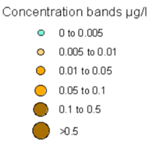
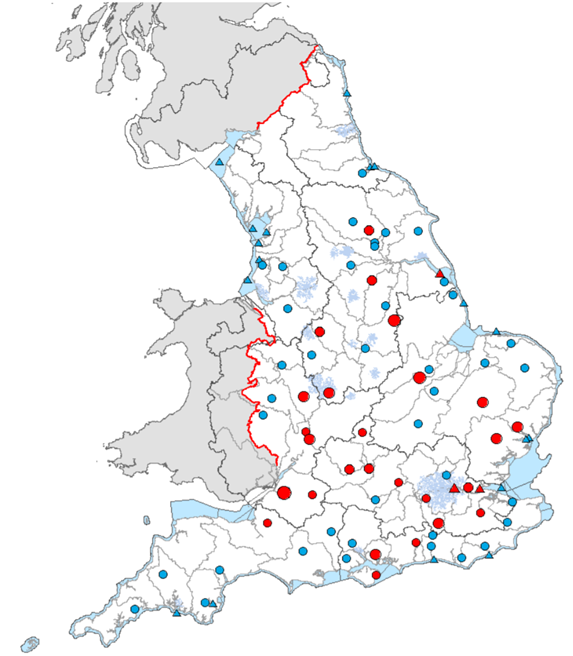
Samples from fish taken from rivers, canals, estuaries and out at sea have all shown evidence of contamination. Similarly, mammals and avian species known as fish predators such as otters and herons have demonstrated contamination as have Harbour dolphins.
Conclusion.
The need for many chemicals over the past years to protect or enable our modern way of life have now started to be re-evaluated. Many compounds that have saved countless lives are now being identified as threatening the lives of many more. There is much research needed into these compounds and specifically methods of control and remedial measures to lessen their prevalence in society and the environment.
References.
https://www.agilent.com/en/solutions/environmental/water-analysis/pfas-in-water
https://www.epa.gov/pfas/basic-information-pfas
Appendix.
AAAS 31st August 2021
Maine’s ban on ‘forever chemicals’ marks a big win for some scientists
Last month, a group of scientists scored an unexpected win in chemical regulation: The state of Maine became the world’s first jurisdiction to ban the sale of products containing per- and polyfluoroalkyl substances (PFASs). The controversial chemicals are common in consumer goods such as non-stick cookware. By 2030, Maine will forbid selling products that use PFASs unless regulators determine their use is “currently unavoidable.”
The law, adopted 15 July, targets a family of chemicals that includes some 5000 compounds, including several banned under the international Stockholm Convention because they threaten human health. Because PFASs have a similar basic structure that can persist in the environment for long periods, some researchers have argued governments should drop the traditional approach of regulating them one by one. Instead, they want regulators to restrict the entire class, requiring manufacturers who want to use a PFAS in a product to prove the chemical’s use is “essential” for health, safety, or the functioning of society, and that there are no alternatives.
The essential-use approach “is really about trying to find more efficient regulatory means to control something that has been identified as hazardous,” says Kathleen Garnett, an environmental law scholar at Wageningen University & Research’s Law Group and a proponent of the idea.
Top of Form
Bottom of Form
Industry groups, however, have pushed back, saying the approach is not rooted in science and could put useful chemicals off limits. “A one-size-fits-all approach to chemical regulation is neither scientifically accurate, nor appropriate,” said the American Chemistry Council in a recent statement on the Maine law.
For decades, manufacturers used PFASs to create materials that repel water and stains and make fire-fighting products. The compounds’ basic structure—a string of carbon atoms swathed in fluorine—resists degradation, earning them the nickname “forever chemicals.” After two PFASs were linked to health problems in the 1990s, major manufacturers—including 3M and DuPont—voluntarily replaced them with related compounds they said were safer. Since then, many communities in the United States and elsewhere have discovered PFASs in their water supplies, sparking extensive legal and political battles over clean-ups.
In the meantime, regulators and researchers have struggled to determine the risks posed by PFASs that are now in use. One challenge has been that companies are often unwilling to share information with outside scientists, notes analytical chemist Xenia Trier of the European Environment Agency, who says she could not properly measure PFASs in food packaging in Denmark because companies did not cooperate. Another challenge has been that manufacturers change the specific PFASs they use, making it difficult for scientists and regulators conducting risk assessments to keep up.
In 2013, PFAS researchers discussed such frustrations at a meeting that Trier and environmental scientist Ian Cousins of Stockholm University organized in Helsingør, Denmark. “There was a clear bubbling [of] a certain sense of urgency and concern,” recalls Martin Scheringer, an environmental chemist at ETH Zurich. The discussions resulted in a document, known as the Helsingør Statement, that summarized key concerns about PFASs and research needs. It also urged that PFASs “only be used in applications where they are truly needed and proven indispensable.”
That idea wasn’t new. In the late 1970s, the U.S. government pioneered the essential-use approach in restricting chemicals that harm Earth’s protective ozone layer. It allowed the use of ozone-destroying chemicals that were important for health and safety—such as propellants in asthma inhalers—but banned uses in products such as hairsprays. Several international pacts to control pollutants adopted similar ideas.
After the Helsingør meeting, Trier, Cousins, and their collaborators fine-tuned their ideas about how to apply the essential-use concept to PFASs and, in 2017, founded the Global PFAS Science Panel to focus on the issue. “We kind of had this mission that we wanted to phase [PFASs] out of society,” Cousins says. In May 2019, Cousins and other scientists provided examples of how the policy might work in Environmental Science: Processes & Impacts. They noted, for example, that using PFASs to make highly water- and oil-repellant surgical gowns and firefighting gear could be considered an essential use, but using the compounds in rain jackets or surfing gear would not.
The idea has made some headway. In October 2020, the European Union announced a Chemicals Strategy for Sustainability, which includes a proposal to ban PFASs except for essential uses. In China, a January update to a key chemical law asks manufacturers to explain why use of a hazardous substance is necessary.
The new Maine law, however, is one of the strongest embraces yet of essential use. In 2019, officials discovered PFAS pollution is widespread in the state, even though the chemicals are not manufactured there. Legislators wanted “an approach to PFASs that gets to the root of the problem,” says Patrick MacRoy of the nonprofit Defend Our Health, which helped shape the law. “That was a very deliberate decision.”
Maine and other governments that adopt essential-use policies are likely to face fierce disputes over which chemicals should be included in the PFAS family—and which uses will be defined as essential. PFAS manufacturers, for example, want large molecules known as fluoropolymers excluded, arguing they should not affect health because the molecules are too big to be absorbed by humans and other animals. (Some scientists, however, point out that manufacturing fluoropolymers often involves smaller PFASs, and historically PFAS pollution originated at facilities that made fluoropolymers.)
Even as these debates heat up, some companies are removing PFASs from their products. An Oregon-based company, KEEN Footwear, recently eliminated PFASs from shoes. Large cosmetics brands, such as Sephora, have pledged to follow suit.
In the meantime, researchers pushing the essential-use concept are thrilled by the recent policy developments. Cousins, for example, is “superexcited” about the Maine law. “I just hope it holds.”