Introduction.
Blue Carbon is a new market structure for carbon sequestration in marshes on the marine/ freshwater margins. The financial recognition of both the ecological and fiscal values of such habitat has led to a growing cross sectoral alliance between conservationists and the carbon trading market. The largest economic area for such trading has been developing in the US and to some extent Canada due to the declared aims of the US President to come to terms with limiting future carbon releases to the atmosphere and bring the US and North America to the Paris Summit on climate change in a stronger position than at any time post Kyoto.
The financial encouragement of the Federal Government alongside other inducements by individual state legislatures ensures the interest of both the money markets and major carbon venting industries.
At the same time it is allowing the conservation lobby to find benefit for endangered wetland habitats. The main area of interest being the coastal marginal and brackish wetlands of the Mississippi Delta and the other northern areas of the coastal fringe of the Gulf of Mexico.
The US Government have encouraged the leaders in the carbon economy to operate in ‘flagship’ ventures using not for profit corporations as an apparently more ethical way forward in altering local populations to the development of such schemes as until recently grants and other inducements have been in place to drain marshland and mango swamp for economic agrarian production or other more valuable ventures.
The US government schemes are headed by such operations as Tierra Resources who have launched successfully the first North American Carbon Registry a financial product that appears to have gained federal approvals to offset carbon emissions by regenerating degraded Mississippi marshlands.
The whole concept is remarkably ’right on’ that its credibility is worth consideration; the glossy nature of the information that is coming out of the US and even the fiscal support that apparently is being given to UN secretariats to publish their reports allied documentation on need in areas across the globe in similar veins is remarkable.
The fiscal aspect of this whole conundrum is of huge interest and is undergoing examination; the ecological aspect is likewise up for consideration.
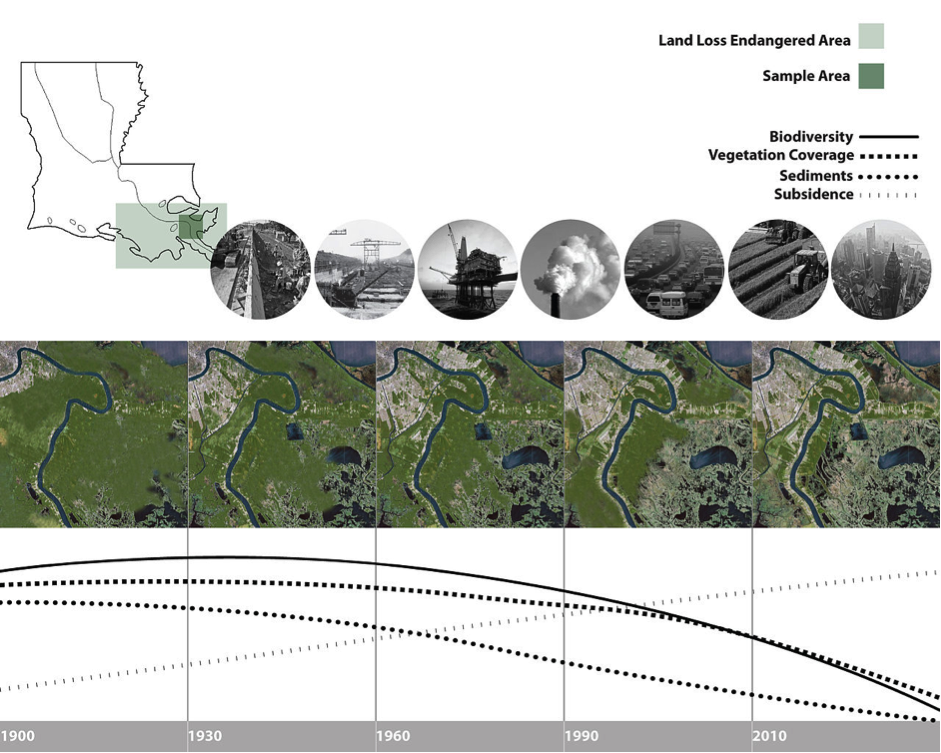
The above illustration demonstrates the degradation of a wetland habitat on the Gulf of Mexico adjacent to the Mississippi Delta and the timeframe of the changes that have lessened its range and diversity over the last 110 years. The reasons for such degradation are multi-faceted; farming/agricultural being a major influence alongside the perception that the swamp lands were unhealthy and needed to be drained. The value of real-estate and the ever-growing desire of large numbers of the US population to retire and live on the seaboard of the Deep South is an increasing driver to further depletion of the habitat.
The recognition that swamp or wetland habitat is of value not just as real-estate but as a soft storage facility that has the potential to lock away carbon and might even go some way to lesson or mitigate climate change has been put forward since the US seaboard has been damaged extensively by tidal surges allied to climactic events.
US/Canada Major non Coastal Sites.
The coastal fringe and brackish water wetlands of the Gulf of Mexico are receiving attention at present though the initial interest in carbon capture in wetland sediments was generated by research in the mid-1990s in central North America.
The Prairie Wetlands and Carbon Sequestration Project published in 1999 its assessment of Sinks under the Kyoto Protocol. The organisation leading the project was West Hawk Associates of Ontario a public relations company working for Wetlands International, Duck Unlimited Canada and IISD (International Institute for Sustainable Development). This alliance propounded the value of wetlands in Canada and the US as a mitigation method for offsetting carbon emissions.
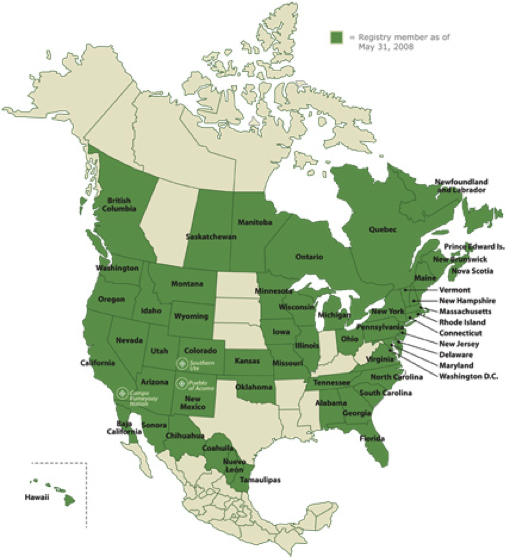
The grey areas of the map above are the states and provinces of both the US and Canada that have endorsed the Wetland Climate Change Initiative.
Political Considerations.
The inclusion of wetlands into the Kyoto Protocol is the development of a sound model for measuring and verifying wetland carbon cycles. This needs methodologies to determine methods of measurement and verification setting a benchmark from 1990 carbon level sinks; the sources and subsequent human induced changes may then be reliably quantified.
If wetlands gain acceptance public, private and NGO interests would then need to undertake management activities to produce verifiable development of wetland carbon holdings. In short the translation of science into strategic options.
These activities would enhance the international wetland restoration project which otherwise has a hard press to contend with. However desirable wetland might be many individuals and corporations find them wasteful of land space and a malign threat to progress.
The Wetland as a Carbon Sink.
Various wetland and marsh ecosystems naturally act as carbon stores; they are of huge value to climate archaeologists who are able to read the deposition of carbon and other deposits from the air more easily than other sources other than ice core samples. . Beyond the deposits of the recent past the evidence is found in the petrified and altered forms of similar ecosystems found through the geological record.
Their value as carbon stores into the future have been propounded for more than 20 years by conservation bodies but have not been given official government recognition either side of the Atlantic till now.
Wetlands play an important role in regulating exchanges of greenhouse gases to and from the atmosphere, including water vapour, carbon dioxide, methane, nitrous oxide and sulphur dioxide. They tend to be sinks for carbon and nitrogen and sources for methane and sulphur compounds, but situations vary widely from place to place, time to time and between wetland types.
All wetlands are capable of sequestering and storing carbon through photosynthesis and accumulation of organic matter the substrates, sediments and plant biomass. While recognising the complex processes that occur in wetlands, in general wetland plants grow at a faster rate than they decompose, contributing to a net carbon sink.
Waterlogging of wetland soils limits oxygen diffusion into sediment profiles creating anaerobic conditions. These conditions also slow decomposition rates, leading to the build-up and storage of large amounts of organic carbon in wetland sediments.
However anaerobic conditions are conducive to the production of greenhouse gases such as methane and nitrous oxide. In periodically inundated systems such as those on floodplains, methane emissions can be highly variable. When these wetlands are inundated and anaerobic conditions exist, methane may be produced. When these wetlands are dry they may not act as methane sinks. Salinity also inhibits production of methane, so coastal wetlands may have lower methane emission rates than freshwater wetlands. Production of nitrous oxide in undisturbed wetlands is generally low compared with terrestrial soil environments.
Wetlands are also involved in horizontal transport of carbon between ecosystems. Wetlands can trap carbon-rich sediments from catchments, but may also disperse carbon through water flow into floodplains. In the US around the delta of the Mississippi carbon can be transposed and accumulate on the floodplains. This movement allows for redistribution and concentration adjacent to river channels and wetlands as flood conditions subside. This water action promotes productivity of plant biomas growth in these same areas. This acceleration binding the carbon to the soil root systems in these parts as well.
The hydrological connections between watercourses and their associated floodplains are important for their exchange of carbon and nutrients. The connections are considered essential for the functioning and integrity of floodplain-river systems.
Drainage and subsequent oxidation of wetland soils can both decrease methane production and lead to large net losses of sediment organic carbon. However while decreases in methane production may occur from drained wetland sediments, drainage channels may be net emitters of methane.
Wetlands may therefore be either sources or sinks of carbon, depending on their type, and can switch between sinks to net sources. This switching can be a natural process due to seasonal or other factors or can be affected by human management. Negative issues need to be considered with regard to global warming with natural threats including wildfires and draught.
Mississippi Conclusion.
The wetland flood plain of the Mississippi Delta and its marsh and floodplain are not a totally natural set of marshland, much having been drained for urban development, roads and farming. The floodplains are still vital to both the natural world and that of man and the river flows through prescribed channels guided by levies
The redevelopment of greater flood holding areas within the old flood plain will protect areas of New Orleans and the surrounding urban centres from similar events as Catrina. The development of such wetlands is an expensive option that may become more justifiable under the Blue Carbon initiatives.
UK Note.
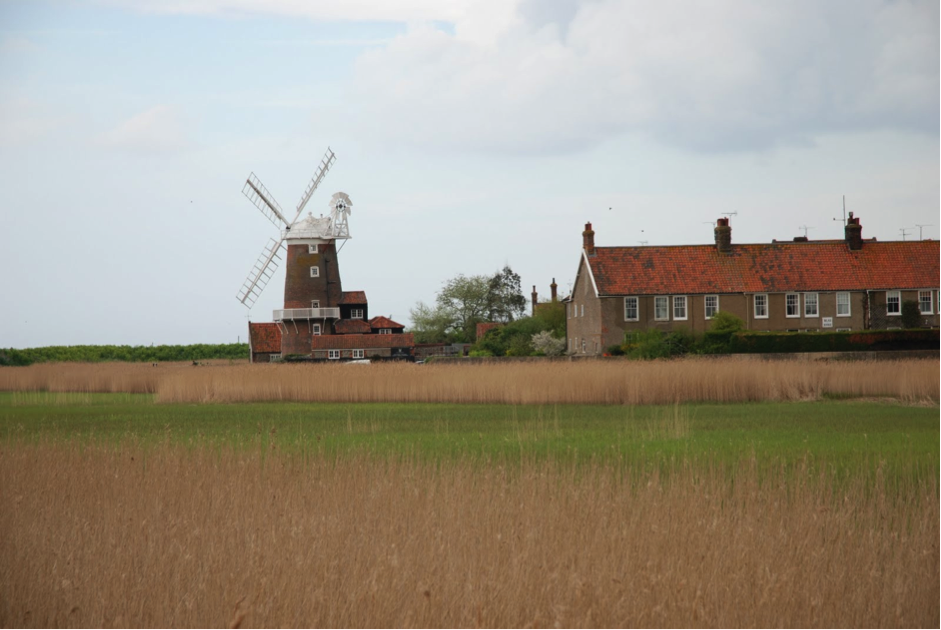
The major environment that the UK has to offer to this area of climate / fiscal interaction are the nations tens of thousands of acres of tidal marshlands and brackish fen. These environments hold more carbon within their makeup than any other wetland system.
The Mississippi and Northern Gulf of Mexico Wetlands.
Degeneration of habitat.
Ever since Mark Twain wrote of the romance of the Mississippi River and its unpredictable nature; the race has been on to control its flows, tides and floods. The catastrophic nature of hurricanes such as Catrina have engendered the flexing of Federal muscular environmentalism; this allowing for a sweet offer of profit which is a recognised inducement to US industry if not to pull in their carbon horns but for a price continue on their present deposition rate. This price involves off-setting their carbon generation with methods of ‘banking’ their emissions by trading carbon emissions in the accepted global market, deposition in custom made depositories or by habitat storage. In this latter form it is possible for the carbon trading to demonstrate a double environmental benefit that keeps environment lobby groups off the Presidents back.