Black Gold by Jeremy Paxman, published by William Collins, London 2021.
This is a splendid book. It is not a book of mining geology, but it covers much informally. It is a history of its social place in British history, social, political, and military. Everything that is slowly fading from the nation’s memory is covered in some detail and puts the miner at the forefront.
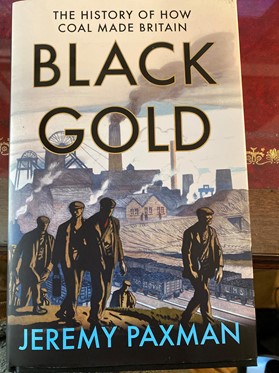
The author is very sure of his style and the use of colloquialisms that are reminiscent of Mr Paxman’s nights presenting Newsnight and his language demonstrates his disdain of politicians from history as well as those in living memory. He raises a smile as well as pathos with his descriptions of the disasters and horrors of a miner’s existence. The knobs who owned the mine, people such as the Bute family make one wish nationalisation had happened under Gladstone.
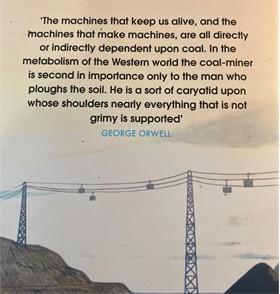
The realisation that the nation’s control of the world’s seaways relied on coal, on the whole, dug from under Britain is a salutary realisation, the Empire stood on and by this mineral. Now though the mines have gone, and economics of the country are being led by the desire for a near carbonless world, the future is not that bleak and with the future looking to mend the scars that the industry inflicted on the populations and landscapes of the coalfields.
Will anyone in twenty years mourne the demise of this once all-powerful industry?
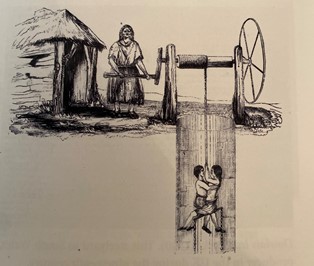
Note. The illustration below was on the front cover of a mining report on labour conditions of the Cumbria Coalfield in the 19th Century. Females were banned from working below ground shortly after its publication: not because of the squalid conditions of the mines. Rather, the report showed the girl child was not wearing a top. The reason was that girls, half naked could encourage licentious thoughts in the men toiling in the dark.