Daring Do in the Scottish Sea.
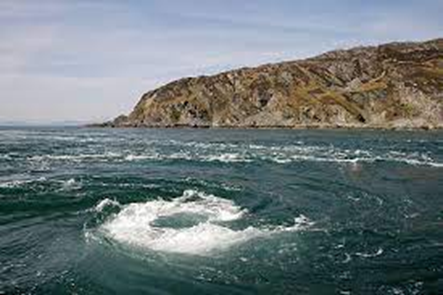
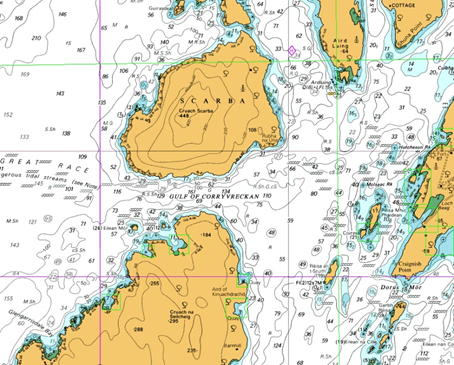
I had a telephone call from a gentleman saying that he wanted to raise funds for the Trust, that is rare and exciting enough; but he carried on saying that he was going to raise funds by swimming around the third largest whirlpool in the world, Corryvreckan, set between the islands of Jura and Scarba.
Weirder news followed; the intrepid fellow was going to carry out this feat in winter. One hears tails of going over Niagra falls in a barrel, which never turned out well. This though is a new sport, wild swimming and now I get worried as he tells me he is not a strong swimmer, and he will accomplish this swim without a wetsuit. He says that he likes expeditions and sounded sane.
Maelstrom Swimming.
Since the ‘phone conversation I have discovered that it is a growing sport and part of the increasingly popular wild swimming phenomenon. In calmer seasons there are boats taking the intrepid out to do what is proposed for next winter. I am concerned but the world of personal challenges has to be admired.
Wikipedia says:
‘Strong Atlantic currents and unusual underwater topography together produce a particularly intense tidal race in the Corryvreckan channel. As the flood tide enters the narrow area between the two islands it speeds up to 8.5 knots (16 km/h) and meets a variety of seabed features, including a deep hole and a rising pinnacle. These features combine to create whirlpools, standing waves and a variety of other surface effects.
The Corryvreckan is the third largest whirlpool in the world, and is on the northern side of the gulf, surrounding a pyramid-shaped basalt pinnacle that rises from depths of 70 to 29 m (230 to 95 ft) at its rounded top. Flood tides and inflow from the Firth of Lorne to the west can drive the waters of Corryvreckan to waves of more than 30 ft (9 m), and the roar of the resulting maelstrom can be heard 10 mi (16 km) away.
Although not, as is sometimes believed, formally classified by the Royal Navy as unnavigable, the nearby Grey Dogs, or Little Corryvreckan, are classified as such.[1] The Admiralty’s West Coast of Scotland Pilot guide to inshore waters calls it “very violent and dangerous” and says “no vessel should then attempt this passage without local knowledge”. Experienced scuba divers who have explored the waters have described it as “potentially the most dangerous dive in Britain”.
Mythology
In Scottish mythology the hag goddess of winter, Cailleach Bheur, uses the gulf to wash her great plaid, and this ushers in the turn of the seasons from autumn to winter. As winter approaches, she uses the gulf as her washtub, and it is said the roar of the coming tempest can be heard from as far away as twenty miles (thirty kilometres), lasting for a period of three days. When she is finished with the washing, the cloth is pure white, and becomes the blanket of snow that covers the land.’

More news regarding this fundraising adventure will be published shortly.