(© Inzamam Rashid 2021)
‘At Hoole Bank, a clay pit excavated in Pleistocene till was utilised for hazardous waste disposal prior to 1967. At least 62 000 t of liquid acid tar was poured directly into the pit together with spent bentonite containing absorbed oil. Numerous chemical drums were also dumped in the sludge. The unlined acid tar lagoon occupies 1.1 ha, ranges up to 9 m deep and is underlain by mixed glacial deposits over red sandstone bedrock of Permo-Triassic Chester Pebble Beds Formation. The heterogeneous tar waste has developed semi-solid tar layers, but most remains in a viscous and mobile condition. A surface layer of rainwater less than 0.9 m deep covers much of the waste. Hydrogeological studies of the area surrounding the acid tar lagoon failed to disclose any significant contamination of aquifers, however monitoring of water conditions is performed as a safeguarding measure. Various remediation strategies have been assessed. They fall into two main categories; those involving encapsulation and on-site treatment of the acid tar and those aimed at removal of the material to facilities elsewhere in the country. Investigations and deliberations continue in order to determine the optimum way forward.’ Environment Agency.
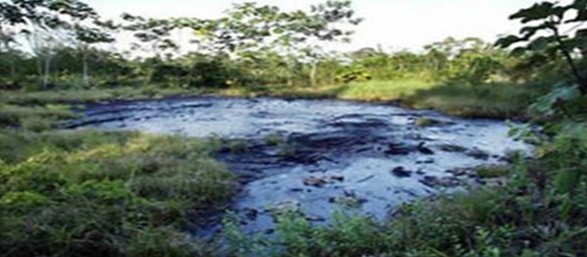
This acid tar pit has no apparent owner, Cheshire West & Chester Council would not wish to take on the ownership of what can be considered a poisoned chalice. The Environment Agency are happy that as long as it is fenced off from the general public that is the best that might be expected. The remedial costs outline over the last 50 years have suggested costs for remedial works totalling sums of £12 to £50 million and as each year passes the price inevitably rises.
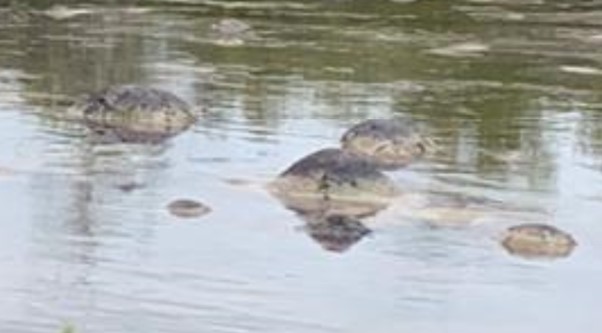
An expanded view of opening photograph showing floating domes of bacteria. This would suggest that these forms are captured pockets of gas. This hypothesis needs to be checked. The bacteria would slowly loose its ability to produce chlorophyll when drying out with gases at the underside and air-dried top surface. The capture of such gases would demonstrate the highly variable nature of the makeup of the acid tars.
Detail.
The local authority responsible for the designation of the site as a Part 2 (A) contaminated site have not published any details of the site on their web site, in fact, there is little published on the site chemistry, though we have talked to interested parties and stakeholders who have provided much valuable information that makes up a similar set of pollutants to those we have had experience of at Cinderhill in Derbyshire.
Proposal.
The Trust would like to work with the Environment Agency, and Cheshire West & Chester Council in looking to remediate the lagoon site and its attendant tar creeps before the problem becomes more of an issue. Especially before politics get involved.
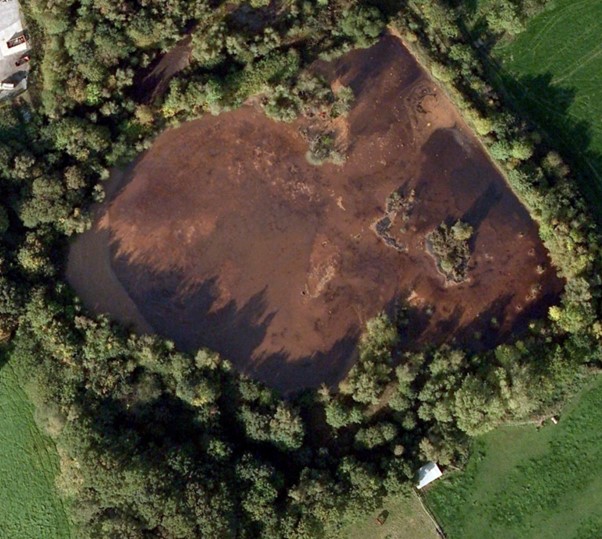
Hoole Bank 2019. Google Earth Image.
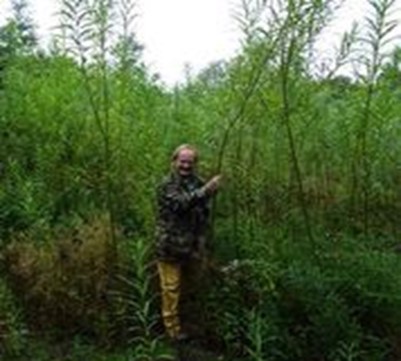
Cinderhill, Derbyshire after 2nd Year.
References.
file:///C:/Users/harve/Downloads/SUBRIMBulletin07%20(4).pdf
https://etheses.whiterose.ac.uk/12852/1/444882.pdf
https://bernhan.wordpress.com/2008/10/11/who-should-take-the-responsibility/