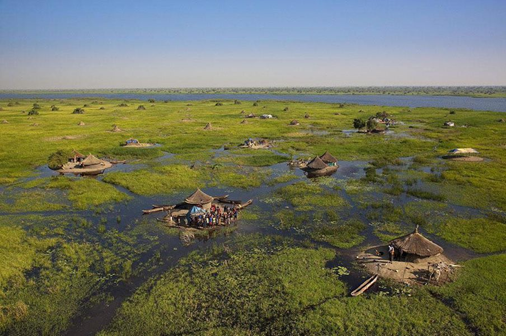
The Sudd Wetland region of Bor in South Sudan is the home of the Dinka pastoralist community. The area has been in the regional spotlight regarding various concerns for its future for the last thirty years, if not more.

The White Nile feeds the wetlands of the Sudd which are under threat from main river dredging by Egyptian engineers to increase the flow through the region to allow greater flow along the river into Egypt for irrigation of the farming community and safeguard the cash crops the government need to supply Europe. The increased flow would threaten the marshlands, draining the farther reaches of the reed/papyrus beds. Egypt has been attempting to gain increased flow into the Nile River system for45 years when canals were driven into the northern and southern Sudd.
Sudd Drainage Canals.


Conflict during the Sudan Civil War which gained South Sudan self-determination saw the war enter the swamplands in both the Northwest and more violently in the south. The damage to parts of the swamp will take many years to repair, and as the rapid plant revegetation of these areas will hide unexploded ordnance such as landmines.

The wetlands are shrinking as the plan below demonstrates. More recent (2020) mapping shows increasing desiccation across the area.

The Sudd has many other issues that will have catastrophic effects alongside those issues already briefly outlined. Oil drilling, increasing population, agriculture, and mining.
Oil has begun to be extracted from the edges of the marshlands; other areas are in the process of leasing to the oil companies. The main problems that oil extraction along side gas is spills, waste, and pipeline waste and leak disposal.
Increasing populations across the region sees the Sudd lands bordering the Nile, prime settlement locations, ease of access to transport for both crops, and cattle, also for human movement and the importation of machinery to drain the marsh further to enable crops and cattle numbers to be increased. Agriculture is developing, less nomadic activity and settled farming practices are developing.
Mining, probably the most destructive land development practise if poorly executed. Gold and many other minerals are already known commodities present in the Sudd with much held in the surface alluvium of the region. Chinese mining interests are presently working with the South Sudanese government to extract what they can.
Note.
The Sudd is a vital area of wetland on the very edge of the Sahara Desert. It is the first feeding and watering point on bird migration from Europe and the last refuelling point before heading northward on the return journey. The area is home to a wide variety of wildlife including many iconic bird species including the Shoebill.