Why Not Be Wye Friendly?
‘The Wye is dying’ has been the headline over the last year. Coffins taken down river, citizen science put before House of Commons committees, media coverage in the Times, Telegraph, Guardian, Financial Times, and tabloids. The problems of nutrients in discharges from farming and wastewater treatment plants making up 90 to 95% of the problem (a 60 to 65 / 30 split in sources respectively). Farming, particularly chicken farmers being the villains of the piece.
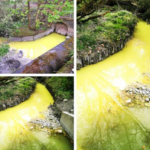
Phosphorus in its soluble form is turning the river into an algal soup. Stripping stretches of this river of oxygen and making the water a no go stream for fish of any sort. The river was one of the great salmon rivers of the UK, not so wonderful for the past number of years with the general decline in catches not just here but across all UK rivers. The algae do not help the situation and is seeing the demise of other sporting fish such as the grayling and trout. The Wye is/was one major refuge for the Native crayfish which are being wiped away from many rivers and streams by the ubiquitous Signal crayfish and the loss of its pristine habitat is seeing major declines in the native breeds numbers.
This decline in fisheries stock is affecting other wildlife which are deserting what may appear to be a sinking ship. Otter, heron, and much else are now declining in numbers, a mix of mortalities and moving on and away from most effected parts of the catchment. Further issues brought to the fore by the lack of rainfall are the concentrations of other pollutants such as acid tar run off alongside PCBs into the River Lugg from historic waste sites including Sutton Walls. It is remarkable how little is known of this tributary’s chemical makeup and with the drought no one admits to being that interested. Even Natural Resources Wales and its English sibling appear unmoved by curiosity.

Farming and Farmers.
The poultry industry is blamed for much of what is perceived to be wrong with the River Wye, the subject of much ire from the lovers of clean water but is this really true. Farmers are reacting to consumer need. They do not force the majority of the population to wish to eat chicken, turkey, and duck. If anything, the consumer is driven by a wish for low fat flesh that is deemed healthy by the media, healthier for you than beef or lamb. The main retailers also want to supply this commodity as inexpensively as possible. The supermarkets are also responding to the consumer as well as the economics of supply and demand. Chicken is cheap and consumers want the chickens to be ‘happy’ before arriving on our plate, the same goes for the hens producing our eggs. Free range is a key market were humans want a freedom to range the marketplace for cheap food. The cost-of-living index demonstrates this. Chicken keeps the weekly shopping basket costs down.
The Wye and Usk Foundation in February 2022, stated on Wikipedia ‘Along with many other rivers the Wye is being heavily polluted by manure from the 10 million free range chickens for eggs and meat in intensive poultry units (IPUs) in Powys and Herefordshire, contaminating the Wye’s tributaries.[16][17][19] As of April 2020, there were over 110 registered IPUs in Powys, each with over 40,000 birds (smaller IPUs need not be registered).
In addition, runoff from dairy farms, farm slurry and silage liquor are entering the Wye. A study by the Welsh Government found that only 1% of farm slurry stores in Wales met regulations and that farms were purposely spreading slurry on fields before high rainfall, leading to increased run off into waterways. An investigation by Greenpeace found that Environment Agency staff cuts from austerity had reduced pollution inspections by up to one third. An internal report by the Environment Agency showed that the use of a “voluntary approach” by government was leading to increased levels of river pollution across the UK. Powys County Council approved the construction of 20 new free-range chicken sheds in 2019 and as of February 2022 continues to license new chicken farms. In addition to problems with the riverine environment, this is causing air quality issues. Pollution from the chicken factory farms is estimated to have killed 90% to 97% of the river’s water crowfoot beds, and 3,000 tonnes more phosphate than plants can absorb is released in the River Wye’s catchment every year.’
Such a damming outline of issues, and that prior to the record heat wave of 2022and the long drought that went along with it. The agricultural sector is taken to task by an environmental organisation that has collaborated with farmers on several issues that required little fiscal input or planned remedial work. The Foundation conduct invaluable work in the region to benefit the water environment.
The other issues that the Wye and Usk Foundation outline relate to cattle and dairy production. The problems again are similar to those of poultry, but the scales are again different as is the management. The fear that farmers tie in their slurry spreading in anticipation of high rain fall does not corelate to the known attitude of the wider agricultural community.
As is stated the Environment Agency are finding their role difficult with the government cutting back on their grant of funding. Natural Resources Wales may feel themselves similarly hampered and at the same time coordinating responses or monitoring of the river catchment with the other agencies, such as local authorities. We have experienced two regions of the National Rivers Authority (pre-1996) failed to monitor their joint borders area causing issues of pollution that neither were aware of until shown.
Farmers are responsible citizens who are trying to satisfy a need that is driven by consumers. The resultant turnround of free range and barn raised foul demonstrates the consumers care for animal welfare during their short existence. This though is not reflected in the prices the farmers receive to any meaningful extent.
In the world of chicken production, the speed of transforming a day-old chick to a bird for the table is fast, 6 weeks on average in a closed environment and not much more if it has access to the outside. Between each cycle of chicks, the sheds have to be cleaned and disinfected and all the facies need to be rapidly removed and then washed down. All this material is then spread over the land by one means or another. The material is high in nutrients, including the main problem, phosphates (phosphorus being one of the building blocks of life) but it is not easily handleable it is not attractive to many farmers not in the industry. Many chicken producers spread the solid and water fractions together as a ‘fertiliser’ or soil improver across their own and neighbouring farms. The volumes of this material have risen substantially over recent years, as has the problems of the River Wye’s pollution. This though is not an easy option any more as the volume of liquid waste involved from just one shed is high and the growing local chicken industry is growing along with the demand.
The farmers must do something, the supermarket should do likewise.
A question I hear increasingly is ‘can we afford to care for the environment?’ The environment appears to be an add on to our lives, whilst in reality it is not. It affects us all, but most are more concerned by the cost of living rising inexorably.
Solutions.
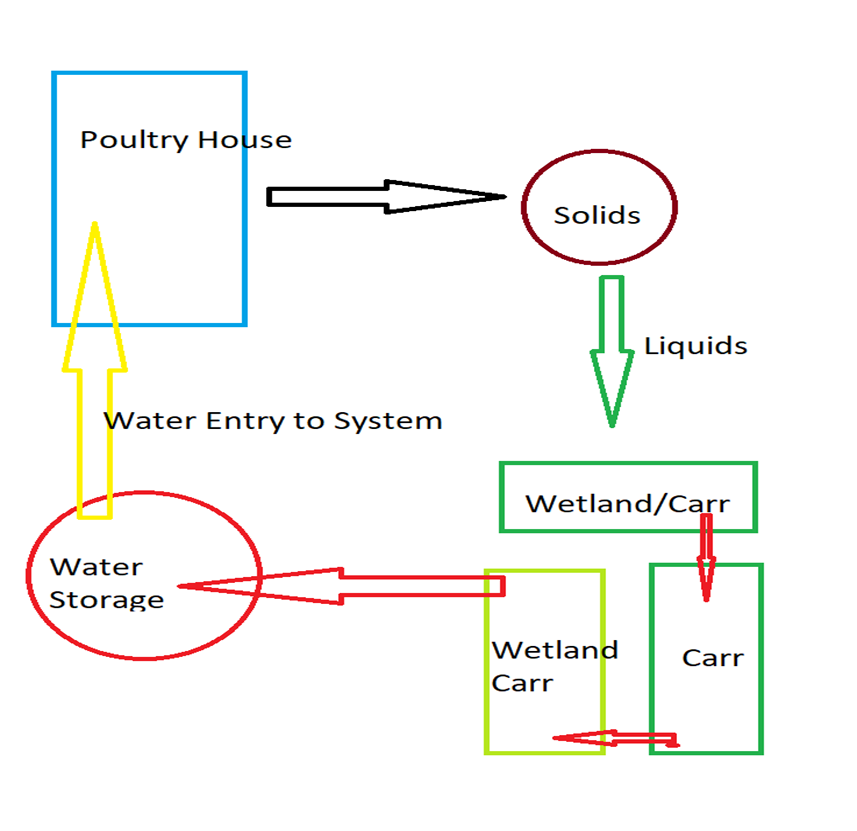
There are solutions to the set of problems outline, chicken farms need not pollute the Wye or any other river. The cost need not terrify the farmers nor the supermarket chains, and for that matter the consumer.
Solutions should save money as well as cost. Pay back in fiscal return needs to be fast and sustainable. It should be attractive, elegant to impress the press and surprising in its simplicities. It will need support to get the approval of the Environment Agency and Natural Resources Wales who will be sceptical and questioning, pollution solutions should be seen to cost. Low cost is apt to be equated with poor results.
Simplicity is all. The simple solution is to separate the wastes of solids and liquids: the use of low-cost filtration and solidification that can be passed about the catchment. Each 60day cycle can see one machine constantly active producing concentrated blocks of solids and the water passed through a carr wetland to remove phosphate and other nutrients. The water need not be discharged to the environment at all but recycled and used again.
The gain for the farmer is cutting costs of water, an added value to single farm payments from DEFRA, a reservoir of available water for emergency as well as an aesthetically attractive addition to the farm. A duck decoy for some. The water is there for wash down saving the cost of water time after time. The carr woodland can be controlled, and the wood used as biomass or aimed at the local market for wood burners or open fires.
Time Scales.
The technology is already available, there are options and ways to see value for money. The science is all there and not hidden. There is no secret compound. Most farms can install wetlands themselves.