It has been another busy few months.
Cinderhill.

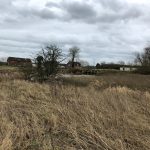
The site is now green and growing. Some new cuttings have been put in place to replace some that were killed by the infestation of Giant Willow Aphid last year. Large numbers of frogs and othe amphibians have been found on and round the site.
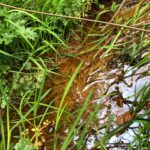
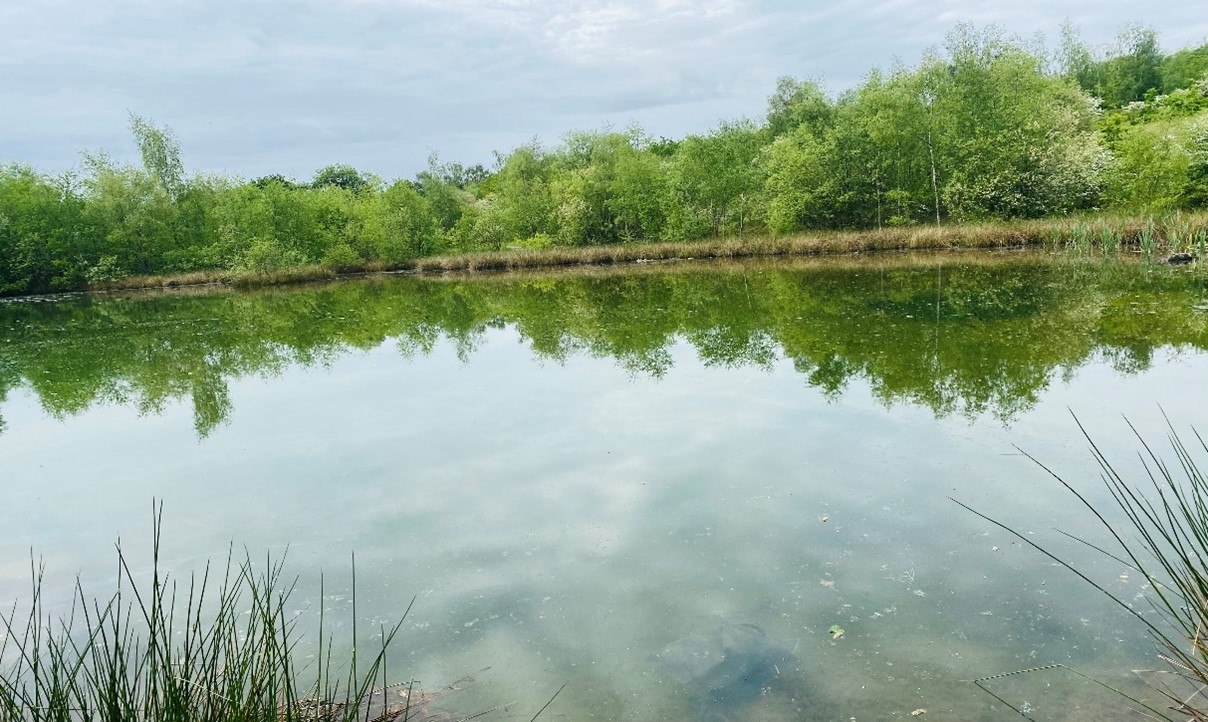
The acidic lake is showing improvement. The gabions of limestone have had a marked on the water quality.
Harworth visited the site with the planning inspector from Amber Valley Borough Council to demonstrate a commitment to future work on the tar pits site.
Hoole Bank
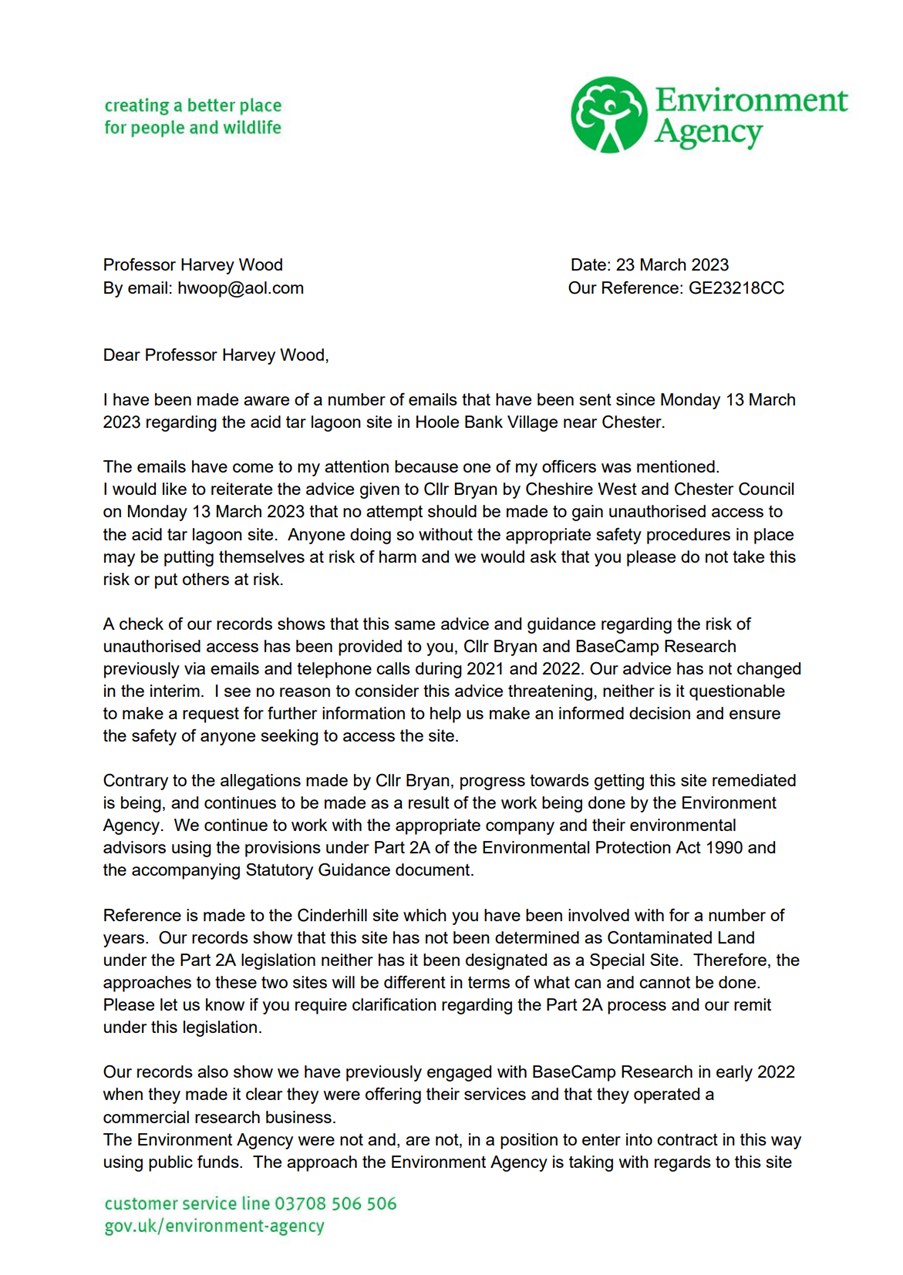
We were written to by Nigel Glasgow the Environment Agency’s Area Environment Officer for Cheshire about our interest in the solution to the Hoole Bank problem His letter warned us off. His letter and our response are appended to the end of this report.
There have been meetings at the University of Nottingham with Prof. Colin Snape, Will Meredith and others.
But the EA has started to act in a rather guarded way. We are not welcome and not allowed to visit the site.

Wild/Free Swimming.
Boudicca Fox-Leonard, Editor of the Sunday Telegraph Weekend Lifestyle supplement asked us to help with comments and contact. It read well and did mention us (just).
We have helped free swimmers on the River Deben who have just gained their first designated site. Anglian Water are also backing wild swimming on many rivers in their area now.
PCB Groups.
1/ Caerphilly;
a/ Ty Llwyd Quarry, Ynysddu. Community woodland used as soakaway for leachate from landfill site. Run off entering streams of the area.
b/ The Coal Products factory site is now being found too expensive to decontaminate by removal of waste to another site.
2/ Advised fishing group on the Tees Estuary. Those involved atclocal universities are being given protection by security guards. Several others are being threatened by unnamed groups. This is rather T Dan Smith(ish).
River Roding; citizen science project.
Helped a group of people start a citizen science water environment monitoring project. Initially contacted through the web site.
Report on the site of a Bowling Alley in Nottingham.
Eur Ing Victor Johnson commissioned the Trust to carry out a survey of a site in Nottingham regarding made ground and landfill potential problems. A very interesting piece of research. Finished in May.

Part of the site was covered in mine spoil from Clifton Colliery. Ropeway C.1938).
River Spey,
We have had discussions with the Highlands and Islands Environment Foundation. Main interest areas being the largest abstraction from the headwaters of the river and pumped to the aluminium smelter in Fort William, also the distilleries impact along the river.
River Trent
MJ and HW are working on a biography of the river. We have set a time period of four years.
Whitehaven Minewater.

We were contacted by concerned individuals regarding the harbour’s minewater pollution that took place before Christmas. We have talked with the Harbour Commission, Coal Authority, Environment Agency and Rail Track. We have looked at possible sources of pollution and put forward methods of initial methods for dealing with the issue till a permanent treatment method might be put in place. The final solution will be complicated and take several years to put in place.
The Harbour was visited in early May. Water quality was tested, and samples taken.
Little media interest in this problem from mainstream media as it is taking place ‘up north’. We are working on it.
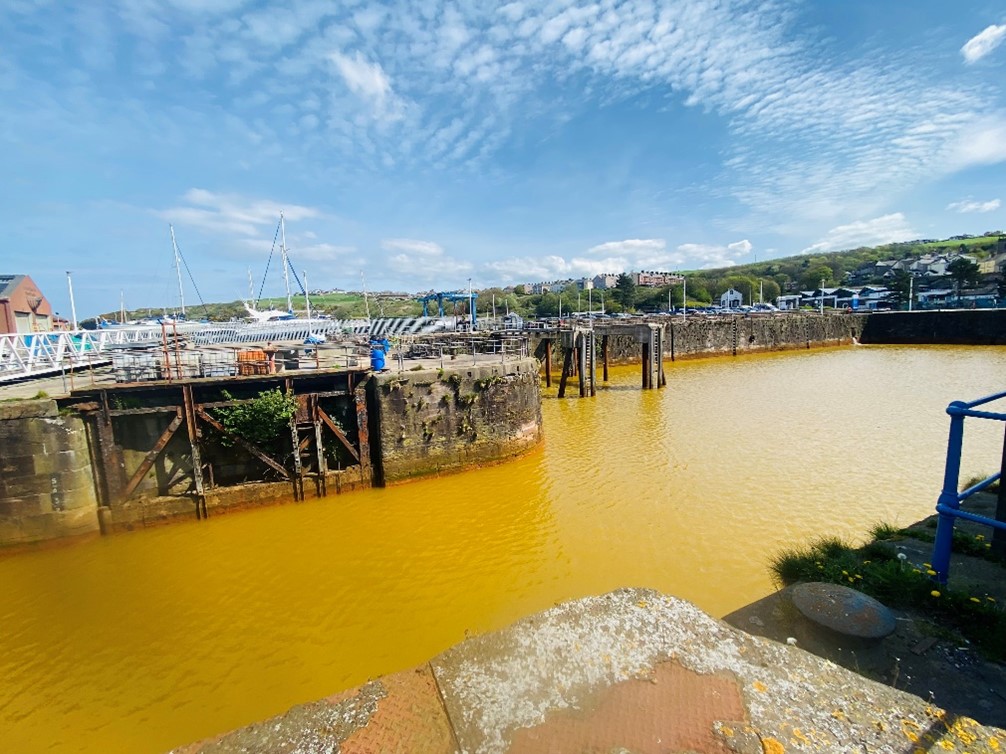
We have talked with the EA, Coal Authority, Rail Track and the Harbour Commission. It is concerning that such a pollution is just being allowed by the regulators to continue unchecked.
Enzymes company meeting.
The company, based in Solihull is looking to carry out a trial in Southampton, we will be visiting the site later this year.
They will meet with the University of Nottingham later this year.
The Wash.
The Trust is monitoring progress of the planning process and gaining an understanding of the other options that are already being offered by the Environment Agency and others.
In Situ Coal Burning.
Air Products & Chemicals have pulled out of a large in-situ coal gasification project in Indonesia. It appears that the trial we visited after a giant blowback in Spain 24 years ago was cited as a major concern. We reported alongside Midlands Mining on the event to the DTI.
Newark Archaeology.
Pleased to say that English Heritage is now talking with the archaeologists.
One of them has been hospitalised with sepsis, though masking a good recovery.
Other Contacts.
We have had several people asking who should be contacted regarding trees across rivers and other impediments to canoe and boat navigation. I have looked at several instances and none have anyone responsible. One blockage at Rugeley was reliant on the canoeist to do it themselves as the water was beyond the official navigation. If it was it would have been the Canal and Rivers Trust. The EA were not interested and said it might be dealt with during the regular inspections.
The increase and canoeing and paddle boarding will see an increase in these issues across the country. I note that there are only 4% of rivers that are accessible to canoes and paddleboards in England. More and more hazards such as barbed wire across rivers and streams are being put inplace to impede passage down rivers. Heaven knows what might be done to stop wild swimmers. Riparian rites can bring out the worst in people!
Consultations:
Strengthening Environmental Civil Sanctions. (DEFRA)
Accelerated Infrastructure Delivery Project (OFWAT)
Persistent Organic Pollutants (POPs) Regulations (DEFRA)
Web Site
We have had over 370,000 visitors to the web site in the last 12 months. We have been hacked more than a dozen times in the last few months and the site needs to be replaced as after 12 years or more it is vulnerable to such attacks. There are plans to replace it but the present content will not be lost.
Alpkit.
The outdoor adventure specialist shop are discussing our giving talks on pollution at their shops and festival. It is early days.
Media Coverage.
BBC Radio Sussex Comments on the water companies and Southern Water.
BBC Gloucester on mines and pollution in the Forest of Dean.
ITN News on Whitehaven Minewater.
Whitehaven News on Harbour. Front page.
Sunday Telegraph on Wild Swimming and health.
Press Association on Tees Free Port dredging and Caerphilly pollutions.
CBC talk on European water pollution. Plus UK water pollution. Discussion regarding River Seine Olympic clean up.
Books.
International Water Association Publishing have asked us to think about writing a book of Minewater Issues.
River Trent Biography information gathering underway.

Clean Rivers Trust charity no. 1037414 73 Sir Harrys Road
Edgbaston
Birmingham
B15 2UX
0121 440 8046/07885 422428
www.cleanriverstrust.co.uk
23rd March 2023.
Nigel Glasgow Esq.,
Area Environment Manager- Cheshire
By email: gmmc@environment-agency.gov.uk
Dear Mr Glasgow,
Thank you for your communication this morning. I am compelled to respond to correct several factual inaccuracies.
Cinderhill.
The site is a piece of contaminated land and a special site and recognised ii(a) site. Please see report attached. The link below takes you through to the full determination of 2007.
https://info.ambervalley.gov.uk/docarc/docviewer.aspx?docGuid=305a00eca8924587b87e8b4ef4b1b4a4
Cinderhill was first brought to our attention eight years ago when the Environment Agency asked us to look at ways of remediating the site. We first were able to consider moving forward in 2018 and since that time all has been done on site with the knowledge of the Environment Agency both in Nottingham and the National Contaminated Land Group in Sheffield.
Alongside the Agency we have been liaising with Amber Valley Borough Council, English Nature, Fuchs Lubricants, the landowner, and other interested parties.
The site won an award at the 2021/22 Brown Field Awards, one of the Judges being a senior Environment Agency contaminated land expert.
Hoole Bank.
Cllr Bryan and the officers of Cheshire West and Chester Council contacted us for support regarding a possible methodology for remediation of the site in summer 2021 and on visiting the council I was taken to see the site, gaining access though the fence as the council had no key. The site was notable for the signs (photographed) saying no one should dive into the water.
(The Trust has and continues be involved in many hazardous environments having worked on many hydrocarbon and chemical sites in the UK and elsewhere. We subscribe to strict safety procedure and would not allow any one to hazard themselves or the environment.
The lack of transparency on the part of the Agency does make locals and their representative confident of activity as the site has been under discussion with various entities with supposed or accepted liabilities for the pollution at Hoole Bank. I would agree with local concerns that the drains, ditches, and headwaters of the River Gowy are continuing to be polluted.
I would suggest that the Environment Agency has been somewhat dilatory with regard to exercising their influence and legal position to bring a solution to problem. Since its foundation in 1996 this issue has been on the agenda as it was for the National Rivers Authority and Her Majesty’s Inspectorate of Pollution from 1989.
I would point out that I was told that the local authority was warned by the Agency that liability may shift to them if anyone entered the site at their behest and any mishap took place. Neither the University nor the Trust would not enter the site without a key to enter the site through the gate. I cannot make any such undertaking for any individual or other organisation.
Phytoremediation of Acids and Hydrocarbons.
The Trust has been involved in the remediation of acidic environments since our foundation in 1990, Working with several entities including Huntsman Rhodia, Solvay, Severn Trent Water, Camborne School of Mines, Universities of Nottingham, and Newcastle. Over nearly thirty years working on minewater remediation, hydrocarbon issues and oil spillage clean up. We are working on phosphorus breakdown using carr systems that are being considered for use in France and Italy.
BaseCamp Research
BaseCamp Research is an unknow quantity as they have only asked our view of their risk assessment for Hoole Bank. We did give constructive advice which may or may not be made use of. The Trust will help anyone who needs advice on cleaning up the water environment. It makes no difference if they are a commercial entity or a private citizen or a East African government. We treat all enquiries in the same manner.
It would be good to meet In the near future so as to create a better understanding of our wishes and intentions.
Yours sincerely,
Harvey Wood
Professor Harvey Wood Dip. AD, MA, PhD, FRSA, FRGS, FGS, FLS

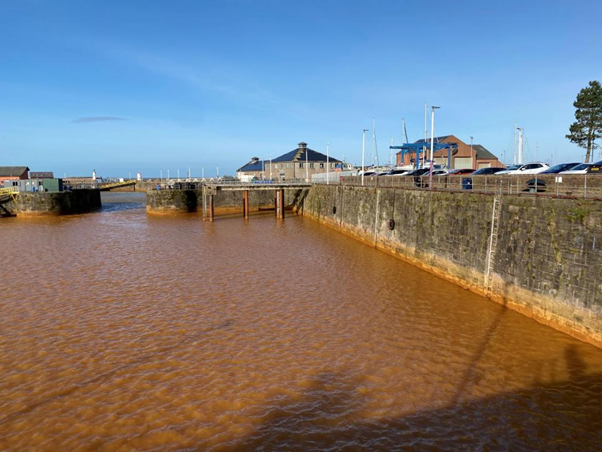
Fears for environmental impact of polluted water in Whitehaven harbour

By Lucy Jenkinson @LucyJenk News Senior Reporter
Network Rail, The Coal Authority and The Environment Agency, to resolve the issue.
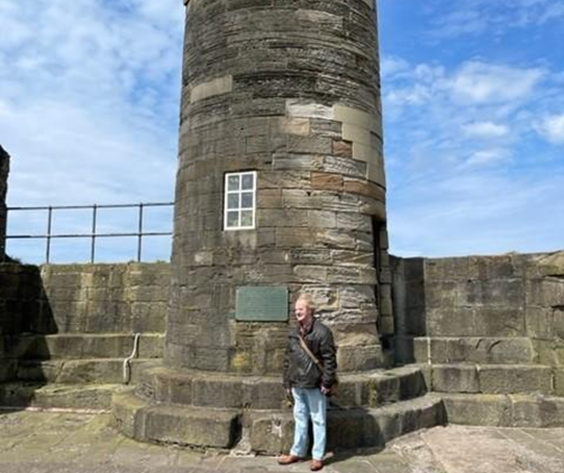
Professor Harvey Wood, director of the Clean Rivers Trust, who visited Whitehaven last week, fears it could take years to find a long term solution.
Prof Wood, who has previously studied mine water movement under Whitehaven, said: “I’m concerned for Whitehaven and the harbour itself. It’s the main attraction in the town now.
“My main concern is whatever happens, the actual problem has got to be dealt with to get the water out of the harbour.
“The long-term solution of mine water treatment will probably take several years to put in place.
“There are two options – either to put it to the sewage treatment works, which will probably be expensive, or to take it down by the old route of the beck which went out to the sea by the side of the harbour.”
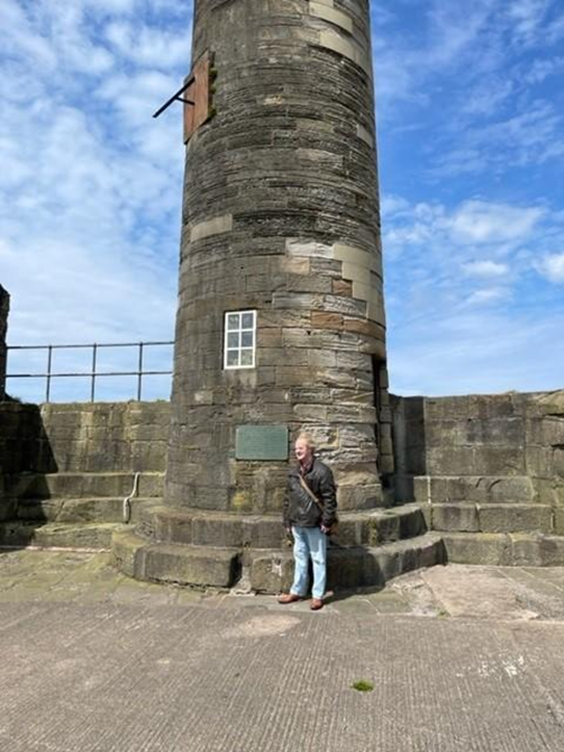
Professor Harvey Wood at Whitehaven Harbour (Image: Submitted)
Prof Wood said he was concerned about the long-term environmental impact.
“Anything that’s alive in the harbour, which is food for the swans and fish, will have died as well. Environmentally, it’s a horrible thing that’s happening. There’s an eco-system in the harbour that’s being killed.
“It’s one of the worst pollutions for the public to see. You don’t often get something so visible in the centre of the town.
“The hulls of the boats and yachts are staining which costs money to deal with. This is the problem with mine water – it coats everything.
“It really needs to be dealt with for Whitehaven’s sake. The local economy is likely to suffer. It needs action.”
John Baker, CEO of Whitehaven Harbour Commissioners said: “The marina team are keeping the berth holders informed of what’s going on.
“There’s no clear feedback from berth holders that there are major concerns, from our own personal dealings with the berth holders and seeing them taking the boats out and washing them down.
“However, longer term that may change so it’s in all of our best interests to get it fixed and stop it coming into the harbour.
“We are working closely with the Environment Agency and there’s nothing been raised by them to suggest any serious concern [for wildlife].
“It’s in everybody’s best interests to get it sorted and we’re desperately trying to get those organisations to come up with a solution.”
A Network Rail spokesperson said: “Our teams are continuing to help investigate the exact source of the water discolouration in Whitehaven harbour.
“This involves ongoing technical surveys of groundwater conditions in the land above a railway tunnel which takes the Cumbrian Coast line under the town.
“When these tests are complete, we will share the information with the council and other agencies to help get to the bottom of where the discoloured water is coming from.”