Since the last Trustee’s meeting in September there has been no let-up in activity. From floods and pollutions. Fish deaths and vandalism. All have taken up a lot of energy and has been a remarkable reminder how people who help the Trust can take on so much responsibility and lift the burden of basic research. It has been wonderful to receive such support over the last months.

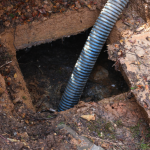
Mine drainage adit (1700s) under Whitehaven
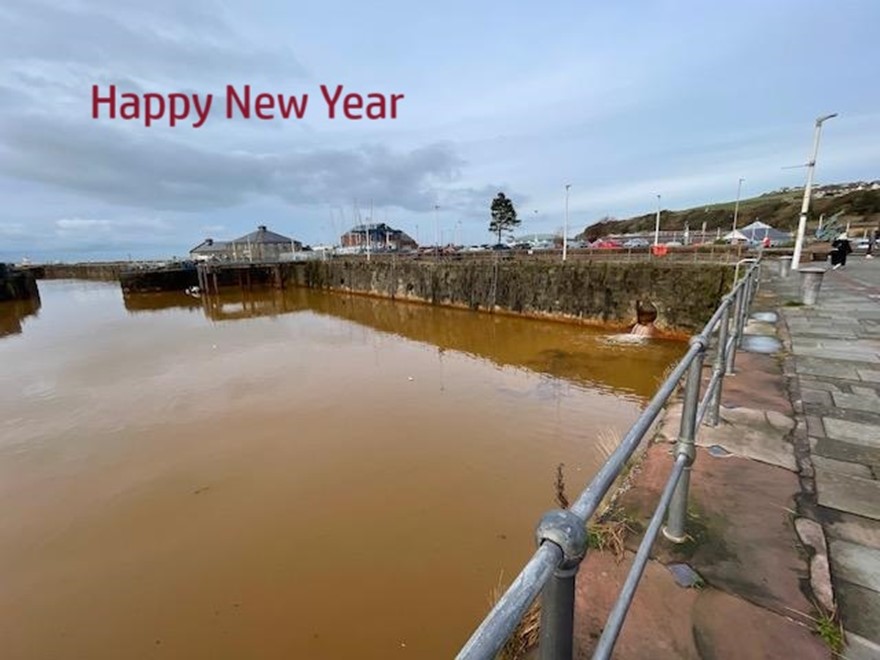
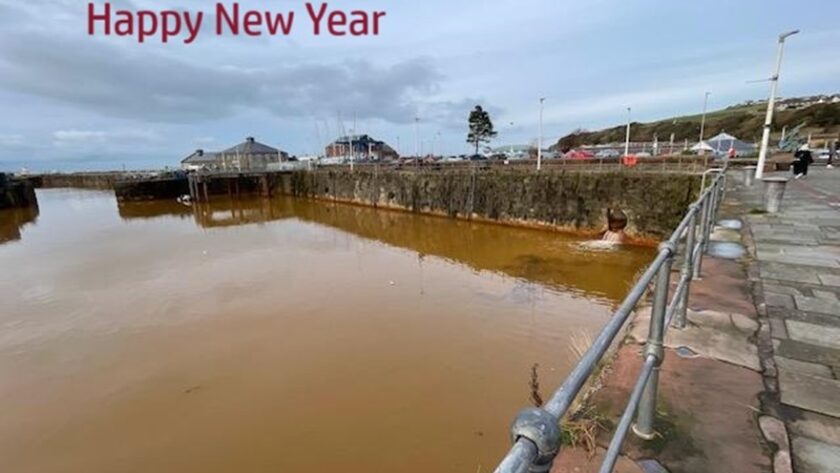
Whitehaven Minewater Pollution.

The Trust has been to Whitehaven again and has met with Whitehaven Harbour Commissioners and the Marina company that operates the over 400 berths in the harbour. We are being helped by Hugh Price who sails out of the harbour. Hugh has done a huge amount of leg work talking to as many parties as he can; he has also written a mountain of letters to find out what the Environment Agency, Rail Track, and the Coal Authority are doing to find a solution to the major pollution.
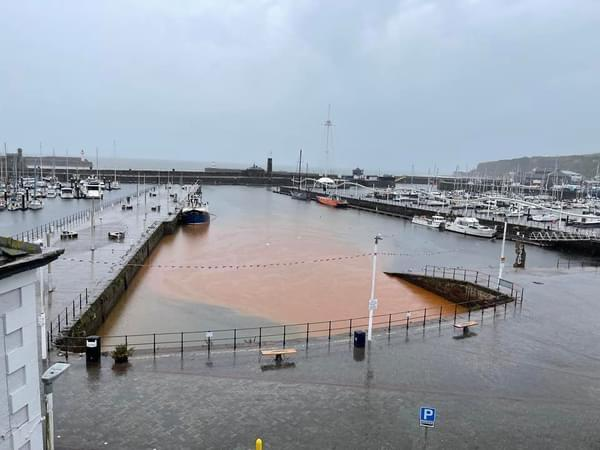
say they await the report they commissioned on their rail tunnel and drainage of minewater via an unofficial overflow into the Bransty Beck. The report is already nearly two months late and is now expected in the new year.
We are researching a temporary fix to remove the pollution from the harbour. Meeting on site with Severn Trent, Harbour Board, Local Authority, and hopefully others between the 12th and 14th December.
River Spey.
There have been several discussions over the issues that are having an impact on the River Spey and salmon and sea trout using the river. We have found that the major issue that is causing problems along the river is that there are two major abstractions from the river with the waters not being returned to the catchment. At the rivers headwaters a large volume of water is abstracted to run a hydroelectric scheme in Fort William to power the only UK aluminium smelter. The river runs dry at some times of year in parts that are important salmon spawning gravels. The other abstraction midway down its length is also used for power generation in another catchment.
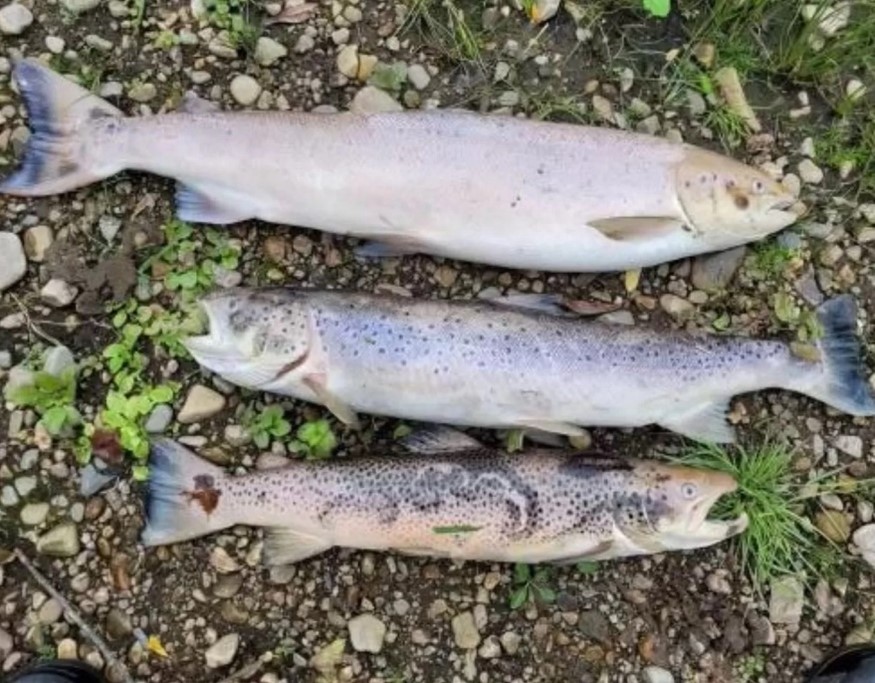
We have met the Spey River Fisheries Board and will collaborate with them and others to find solutions. The need to sort these issues out swiftly was emphasized in October when more than fifty salmon and several sea trout were found dead. The Scottish Environmental Protection Authority stated that these fish died due to low flows and an oxygen sag.
Cinderhill.
We have been visited by Amber Valley Borough Council Environment Officers who are concerned about the site and public accessibility to the acid tars and acidic water in the lake. We showed the round and explained the role of the Environment Agency and their agreement with Fuchs who keep the sites fenced already. We talked about our work and the remedial works we have so far conducted demonstrating our methodologies.
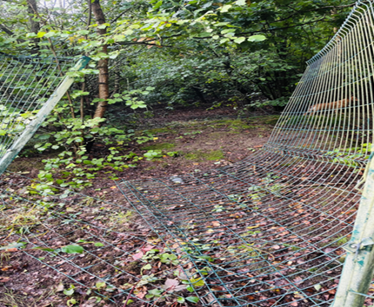
In October we had a visitation by vandals who drove a quad bike through the fences and broke down a large number of the willow trees. We will only understand the full extent of the damage next spring when the willows may regrow from the roots. The Police were informed. There is nothing that they can do except issue a crime number.
Yemen.

A good news story. The tanker loaden with Yemeni oil that was abandoned at anchor off the coast of Yemen and threatened the Red Sea ecosystems has now been emptied of oil after several years due to the ongoing civil war. Please see the short report on our web site. Much was achieved by our contacts in the country to enable this result. The UN used crowd funding to conduct the work.
Storm Babet.
It was of interest that the Wharf at Collingham was reported by the Environment Agency as being flooded with a short video of pumping flood water on X (Twitter). The remarkable amount of video and photographs of the River Trent spreading for miles at points across its broad valley demonstrated how valuable the river could be if allowed to return in great part to marsh and willow carr. The result would allow a vast carbon sink as well as allow for the river to not threaten the urban centres along its length. Government agricultural subsidy may well encourage this move.
There are already Trent Wetland projects on the Tame, Anchor and the Trent itself towards Burton on Trent but as we suggested in the 1990s to the West Midlands councils there is enormous potential for carbon sequestration. There is a problem though with various wildlife trusts and the Rivers Trust who are apparently territorial and do not want to talk/work together on large wetland development. This is likely funding source related.
During the storm and just after it had passed we had over fifty emails regarding what to do in floods during the storms plus unknown numbers of phone calls from panicking people who could not find help elsewhere. We gave our personal knowledge of bad flooding in one’s home and being cut off which went down well. The issues of mental health are not given enough thought with regard to flooding.
River Glaven.
Allied to Storm Babet, heavy rainfall has seen a severe discharge of silt into the North Norfolk river. The site that caused this event was an engineering project to connect the new windfarm off the coast to new connections to the National Grid. There has been much hyperbole regarding this event from London and Cambridge academics but no medium- or long-term damage is envisaged as the contracting company has conducted works to ensure it should not happen again. The Glaven is a chalk stream, these rivers over recent years have been the focus of much investment from many trout and salmon conservation charities supported by companies such as Coca cola.
Floating Meadows.
These fascinating late medieval and early modern concepts of creating and managing water meadows are an exciting addition to the care of rivers. There is a likely linkage to wetlands in modern restorations but would allow the land and farmer to stay in production of livestock. The use of these meadows would also be a suitable environment for carbon sequestration. We are taking this further over the next few years. We are unaware of any other interest in their modern usages. There may also be other uses that these could be put to. We are grateful to our friends involved with Newark archaeology for bringing this concept to our attention.
Australian Tubeworm.
This alien tubeworm, which does not originate from Australia, is well established in harbours on the south coast of England and has over the last few years established itself in Whitehaven Harbour, Cumberland. They have now found their way to the Isle of Man in the last 12 months. Some academics have put forward chemical applications to apply to boat hulls, but these are also toxic to other organisms. The tube worms are removed at some harbours by jet washing hulls but the issues of destroying these worms is both messy and to some, cruel in that they dye in a skip before going to landfill.
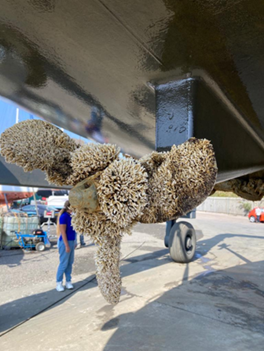
The propeller was coated in tube worm in two months in harbour, jamming it.
Gaywood River.
We were contacted by a Councillor for West Norfolk Borough Council, Charles Joice who we worked on a contaminated land site in Kings Lynn, West Norfolk Farmers Manure Works and the gas works for the town in 1994.
He has asked if we could work with the Borough Council to develop a scheme that will clean up and improve the Gaywood River. Oddly, research into that small river started a couple of years ago as an academic exercise looking at Norfolk chalk streams. There are several organisations putting forward ideas for the river’s future.
Note.
That is the end of another year, our 33rd and I am looking forward to the next! I hope that you all have a Happy Christmas and a productive New Year.