The Moray Council decide on the fate of the ‘green’ hydrogen planning application put to them by Storegga to be located in Ballindalloch at a Public Hearing of the Moray Council Planning and Regulatory Services Committee on Wednesday and Thursday the 8th and 9th October 2025. There has been a large number of representations by the public and other interested parties, including Clean Rivers Trust against the planning application whilst the governing party in Scotland favour the production of hydrogen as a source of green energy.
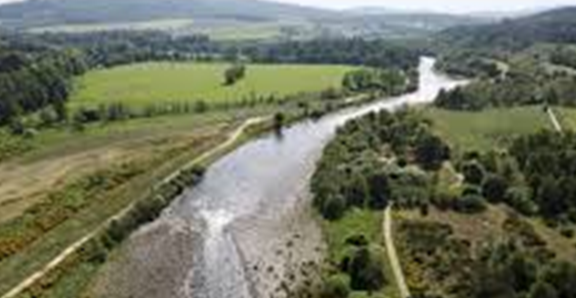
The plan would, if it goes ahead, require large volumes of water from the Spey gravels which are an integral part of the River Spey make up. The gravels feed water to the flow of the river, especially during times of little or no rainfall such as has been seen over the last spring and summer.
The Scottish Environment Protection Authority (SEPA) this week published its concerns including those for the River Spey and record low flows across much of Scottish rivers brought about by this year’s low rainfall and drop in river flows.
‘Scotland faces record water scarcity with 17 catchments at Significant
Date published: 11 September 2025
Scotland’s east coast is facing record pressure on its rivers, with 17 areas now at Significant Scarcity – the highest number since the current version of the National Water Scarcity Plan was introduced. More areas could reach this level in the coming days.
While it is difficult to compare directly with previous years because area boundaries have been refined over time, this year stands out for the scale and duration of low rivers flows. In the Lower Spey, for example, the 2025 season has seen the highest number of low-flow days in a 70-year record.
In response, SEPA have imposed temporary restrictions on licensed abstractions in affected areas. The total number of licence restrictions put in place so far this year is around 270, the highest number SEPA have ever issued.
Significant Scarcity is now affecting the Upper Tweed, Mid-Tweed and Lauderdale, Tyne (Lothian), Fife (East Neuk), Leven (Fife), Lunan Water, Lower Dee and Water of Feugh, South Ugie Water, River Findhorn, Findhorn (East), River Avon, Lower Spey, Deveron, Upper and Lower Don (Aberdeenshire), Ythan and North Fife areas.
All affected licences holders have been issued with letters explaining what they need to do, with the time and date the restrictions come into effect. SEPA officers are out in catchments daily, monitoring conditions and supporting abstractors.
The River Lossie will reach Significant Scarcity on Friday. Unless there is sustained rainfall over the coming days the Brodie, River Helmsdale, Cromarty Firth (North), Inverness (East), River Nairn, Kyle of Sutherland and River Carron areas are due to go to Significant Scarcity next week.
While some rain is forecast, it is not yet clear whether this will be enough to see rivers recover enough to lift restrictions. SEPA will monitor the situation closely.
Regional conditions
North-East
- Significant Scarcity: Deveron, Ythan, Upper and Lower Don, Lower Dee and Water of Feugh
- Moderate Scarcity: Rest of the Dee
Speyside
- Significant Scarcity: Lower Spey, River Findhorn, Findhorn East, River Avon, and from Friday the River Lossie
- Moderate Scarcity: Rest of the Findhorn (Brodie and River Nairn), Mid and Upper Spey.
- Rivers naturally cope with changes in flow as part of their annual cycle, but extended low flows increase pressure on river ecology and recovery takes longer. Repeated low-flow years increase the risk of long-term or even permanent changes.
- To better understand the impacts, SEPA has increased ecological monitoring. Additional assessments have been carried out over the summer to assess impacts on fish, in-stream ecology, and water quality. ‘
This low flow in the rivers is exacerbated further as the upper Spey catchment loses much of its flow to be taken away to power the hydroelectric plant that supplies the only UK smelting plant at Fort William. This water being ring fenced by the Scottish Government and the fact that the supply of Spey water was granted under war grants in 1942.
Best Answer to the Application.
The best answer to the planning application is to thank the applicant for raising the issues of hydrogen production in a rural area and allowing a better understanding of the issues involved. The concerns of the local community and most who care for the river within and outside of Scotland are many and most are valid. The winning of hydrogen from river water by electrolysis leaves little but sediments and pollutants which are likely not returned to the river but are a concern in a case such as this proposed plant as there is no route for such industrial waste.
The taking of water from the river gravels will impact the river, at times it will add to lower flow rates and impact the ecological value and that of its status as a SSSI.
There are other, much more suitable locations for such sites, especially those that can use recycled water such as that discharged after use in Fort William.