The fifth and last of the seminars put on by the Centre for London and Allied and Morrison was also the final one of these events. It will be hard not to miss them as they have been stimulating and of a breadth of vision that has been intellectually useful.
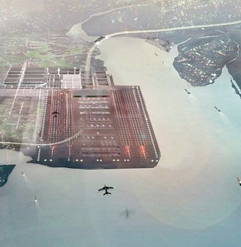
There were four speakers this week who had the least enviable task to outline or bring forward the issues of the Thames Estuary and the development of the proposed infrastructural centres that may allow the capital to continue to hold its ranking as a world transport hub and at the same time allow cargoes, both sea and air to be distributed without disruption to the city. The whole set of proposed initiatives are complex in their goals and all remarkably thorough in their processes of lessoning environmental risk. The whole set of objectives, transport, road, rail, sea and air are addressed as a package, and it appears to be a first for the United Kingdom in that the scheme takes all as one set of interrelated issues that are seen to coalesce.
First up to speak was Richard Everett, the CEO of the Port of London Authority with an appeal to protect the Thames as a marine highway, the three shipping channels that service the various port facilities that bring in 50 million tons of cargoes per year. This delivered 10,000 ship movements per annum; oddly this statement did not continue by stating the tonnage of exports that left these shores. It can not be that the many cargo ships landing the needs of the nation have nothing to take back. Though it might explain why the cost of living is rising.
He pointed out the complex nature of the estuary that he recognised as the area between Clacton and Margate, the many protected sites of environmental importance, the fisheries interests,: fish nurseries, shell fish fisheries, cockles, oysters (Whitstable), white weed harvest, he was unsure what white weed was but he said it had it’s importance to the area.
[White Weed; a growth that is not a plant, but is the external skeleton of the hydroid polyp Sertularia cupressina. The harvested material is used by florists and for aquaria decoration. In German waters it has suffered a severe decline, the reason for which is uncertain.]