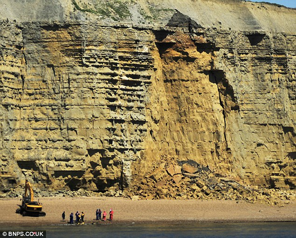
Yesterday a tragedy occurred on a Dorset beach when a cliff collapsed killing a person.
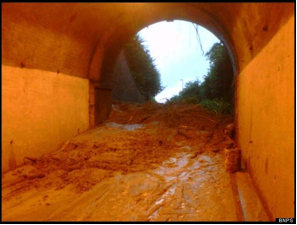
A few weeks ago two people perished in a land/mudslide that engulfed their car in the same county.
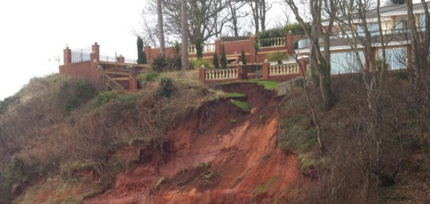
In the Sun newspaper recently reported from South Devon coast an expensive house loosing its garden to a cliff fall.
These events are dramatic and seldom recorded; before and after photographs can bear witness but actual ‘action shots’ are very revealing.
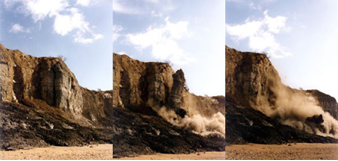
This fall took place earlier this year on the Dorset coast and demonstrates the area impacted by such a modest event.
The media have said the reason for these happenings is the wet weather, nearly every year it is said; rain or lack of it and that is correct: in part. The reasons are more complex, the structure of the local geology, rainfall and past human activity are all responsible. The land is constantly shifting as countless people know from experience of subsidence. This event is common in mining areas, where old workings below ground collapse and the ground surface drops with properties’’ foundations. It commonly occurs in clay areas where the underlying soils dry; this leading to the clay contracting or shrinking, so shifting foundations. Conversely in wet weather or flood clay can expand and either swells or shift sideways; even both and damaging structures embedded in them such as foundations.
Mining as mentioned earlier could course land instability issues such as in the picture of salt mine damage in Northwich.

Similarly with landslides they occur where strata of various makeup; clay, sand, rock may meet or join in their succession of layers. The water can act like oil between two sheets of glass and slide them apart. Some such events can be slow and only become noticeable over a span of years; other such as yesterdays can be catastrophic. In another instance the rocks at the top of a succession of strata may be permeable and rest on impermeable foundations; this is a feature of the Devon and Dorset Jurassic Coast; as the water builds up it slowly passes through the top strata and appears at the junction of the permeable and impermeable layers. This is evidenced often by a spring line at the base of cliffs. As this water builds up the weight of the cliff develops and any weak point is likely to break away. This is particularly true with shear or over hanging cliffs that have their bases weakened by the tide.
Similar land stability issues can also be coursed by water influenced or polluted by human activity and lack of management. The Trust is carrying out ongoing research in the South West of England on these issues.