Introduction.
Rivers over the last twenty five years have improved in quality, both biologically and aesthetically. It has been a task of gargantuan proportions that has had the input of large numbers of people; involving industry, user groups, conservationists, academics, personalities and politicians. It has been an exciting time to have been involved with the reawakening of a national consciousness regarding the care of major a indicator of the health and wellbeing of the nation.
I remember in 1991 walking to a meeting in Nottingham from the railway station to the offices of the National Rivers Authority at their Trent Side office, on the way I passed over a canal spur that was choked with a mass of traffic cones, bottles, paper, tyres, and other rubbish. This year (2013) I made the same journey to the offices of the Environment Agency’s Trent Side office and the canal spur was clean and in use, a swan and ducks were sitting on the surface dabbling in the water: it made me think how tiny that small spur is but at the same time how massive the change and how well it demonstrates the awareness that has developed over the times that have passed.
Every citizen of the country is more aware of the spaces around them and the issues that affect their environment; there is no better litmus indicator than the state of the country’s rivers and streams.
In 1990 a report was published by the National Rivers Authority that came to benchmark the nations poor river condition, rivers that had been considered in the 1960s as pristine were downgraded to that of moderate water quality and those that had been classified as of moderate quality had descended the scale to poor or even worse. The reported did note that some water qualities of rivers had increased; in several cases by the removal of polluting discharges to other water courses that were considered to be already beyond saving. The changes seen today have proved to be reasonably spectacular and go along way to prove that the populace are not happy with what was then the nation’s lot. Politicians had to take notice of a change in the national character after the 1989 European Parliamentary elections which placed the environment onto their agenda. It was not a green revolution but a persistent torture of repeated vocalisation that broke into their awareness. All the main stream politicians wanted to be seen to be ‘green’ and in many cases had little idea what that meant or how to achieve their goals.
In several instances the water industry, though not from the boardroom, led the way, the newly privatised water companies were managed by the staff of the old water authorities who had been nurtured in the days of the river boards and water supply and waste water treatment by the urban and rural district councils. These individuals has high hopes for rivers but had been hampered by the politicians of the 1970s and 80s. Dennis Healy whilst Chancellor of the Exchequer when asked about sewage pollution stated that nothing would be achieved at the time as there were ‘no votes in shit’. He became a strong advocate of water clean up once ennobled when he retired from the House of Commons and took his seat in the Upper House.
Both the water companies’ staff and those of the National Rivers Authority came from the same stable of wanting a good environment and were used to working as one; the old water authorities had been founded in 1974 at the time of local government reform and staff of that period were in many instances quite politically savvy. The water companies carried on the support of the wildlife trusts and other conservation bodies who had been of great assistance to the water authorities in their land management of their great estates made up of reservoirs and their water gathering grounds, the sewage farms and other land holdings.
At this time the most expensive water pollution event in the history of the British Isles started in the autumn of 1992 with the then President of the Board of Trade announcing the closure of more than 50% of Britain’s deep coal mines and the preparation for re-privatisation of the industry. In the water Acts of the years past including that of 1982 the pollution of surface waters from abandoned mines was not the liability of the mining companies; this covered the metal mining industry as well as that of coal. This industrial escape from unknown costs and liabilities was reinforced by a new Act which put a time limit to closure liability protection of the 1st January 2000.
The government stance with regard to mine closure was at variance to the known fiscal consequences, there had been The Flowers Commission Report recommendations of 1981 which had warned of liabilities of pollution then, with the shrinking deep coal mining industry and in 1990/91 the Wheal Jane minewater rebound in Cornwall that was taxing the regulator in managing the pollution incident at the time and assessing its long-term remedial options for treatment. The continuing costs of this incident still fall to the Environment Agency and, now the Coal Authority who has taken on the liabilities of all historic mining pollutions in the UK. Today the costs of minewater from closed deep coal and metal mines also the surface drainage of their closed waste heaps runs into millions of pounds annually and the future liability of remediating many sites is costed at over £500 million. Today the metal mines of the UK are closed, and only three deep coal mines are left in production. The UK tax payer is faced with having to address the liabilities of the dead industry over a protracted period of time.
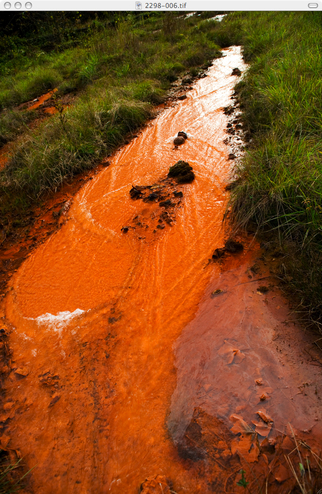
In the past the acknowledged notion that coal minewater from abandoned collieries would only further pollute rivers of already poor quality was somewhat farcical as a get out by several at the Department of Environment and at the Dti. The economically depressed years of the 1980s and early 1990s saw this idea change; coupled with the actions of many groups and individuals to clean up the rivers of the country. At this same time many industries closed down due to the economics of the day leading to several of the worst polluting factories shutting.
The Trust working closely with Camborne School of Mines to champion passive methods of abandoned minewater treatment from 1991 onwards at Wheel Jane and other sites in the country; developed networks of expertise across academic and consultancy groups that all continue today, they are developing increasingly diverse and cutting edge solutions to these issues. We have been involved with over one hundred remediation projects in the UK and abroad in the last twenty years.
One of the problems of polluting companies going out of business is that their sites are often contaminated and with worse than was discharged to the waterways of the country. These blighted sites continue the contamination of rivers and threaten in some instances aquifers. In several cases there was no company left after closure to pay for the cleanup of these sites and the contamination led to planning blight where large areas were found to be unusable without government intervention, grants, tax breaks and regional development corporation investment to bring about decontamination. Over the years many grossly polluted sites have taxed the ingenuity of both land owners and academics alike, new technologies have been and continue to be developed.
A most noticeable pollutions that has all but disappeared today was brought about by the large volumes of surfactants that used to enter rivers from sewage treatment works, and industrial discharges. These caused many rivers, where their waters passed over weirs, to foam, great banks of foam and foam bergs floating down stream were a common site. I remember the main road from Braintree in Essex to Halstead being blocked where the River Pant passed through the old sluice gates at Bocking Mill being closed by foam twenty feet tall and as thick drifting across the road. The cause of this was the waste water from a large fibre mill owned at the time by Courtauld; no one was shocked; such occurrences were treated as curiosities. Water does today still foam over weirs in many places but not through major surfactant contamination; rotting vegetation contains natural foaming agents that froth with the aeration of the weir; foam can appear on rivers in summer in the early mornings when the water surface tension is less and foaming declines rapidly as the day time temperature and the surface tension of the water increase.
In the 1970s and 80s there were large numbers of waste hauliers who were on the whole respectable and acted ethically; some though were not and certainly they acted in dubious ways, draining waste liquids into rivers mixing contaminated materials with clean, all to raise easy money and hoodwink the regulators. I once was threatened with dogs and another time with drowning whilst investigating sites of waste contractors in the Midlands in the early 1990s.
Today’s Rivers.
The rivers of the UK are certainly not pristine; few are natural, either in their routes to the sea or in their chemistry. All rivers around the world are naturally polluted to some extent but in Britain the natural forms of pollution are only a small proportion of the flow of most rivers. Natural pollution includes animals defecating in the water, dying close or in the water, rotting plants, minerals in solution, mud and sediment all flowing down from source to sea.
The nation’s rivers are its sewers: sewers are drains not just the wonderfully engineered drains that move waste under our city streets. The majority of the population are connected to the piped sewage systems that take our waste to treatment works, some need only to be small but some treat large volumes of sewage, hundreds of thousands of cubic metres of raw waste. This contains every human waste from lavatories, baths and showers kitchen sinks and washing machines. Many wastes join the flow from industry, rainwater from roofs and roads bringing rubber from tires, metals and other additives from car engines. This ever changing cocktail travels to the treatment plants that today give a good account of themselves. They treat most of what goes in so that no immediately noxious event occurs when the treated effluent is discharged into the nation’s rivers. Events do occur when a treatment works gets poisoned by an overload of one substance or some illegal waste is flushed away by a fly tipper or just someone who did not realise the consequences of their actions.
The rivers receive raw sewage in towns and cities when the drains are overloaded with water from a rainstorm or other flooding event and storm drains vent the waste direct to the natural environment to stop backflow of foul drainage into people’s homes or the streets. Such events can see the oxygen levels decline rapidly in river waters and is the reason for ‘bubbler’ craft on the River Thames which force oxygen into the water to counteract the sag in natural oxygen levels and limit the usual telltale fish mortality.
The sewage treatment works effluents can make up large volumes of river flow, in some summer months as much as 80% of some rivers, the River Trent can flow at as much as 65% at times of low rainfall. The Trust continues to work with the industry to increase further water discharge qualities.
The less obvious noxious constituents of sewage treatment works discharges include phosphates and nitrates which come from the majority of homes; the use of detergents is the main source. The water companies are using metal salts to remove the problem from larger sewage treatment works where there are constraints on P and N discharges; this though has to be weighed against the discharge of iron or aluminium chlorides in the discharge consents of each treatment works. There are hopes for the recycling of phosphates to agriculture or even back to detergent but as yet the fiscal and environmental stimuli or drivers are not in place.
The angling press are past masters of the scare story and estrogens in sewage is a seasonal favourite; the issues they raise are that the ingredient in the contraceptive pill is coursing male fish to develop female characteristics. The sources though are wider than the sewage treatment works not taking away the estrogens from the pill, estrogenic compounds are far more widely used; hormone replacement being a major source. Other items in human sewage also when being broken down by sewage treatment is thought to further add to loadings. The list is long and there are some that that are not normally supposed to be flushed to the sewer.
The decomposition of toilet paper is of interest as the rise in fish trans-gender issues in fish is mirrored by the development of total market share of tissue paper rather than the old, traditional sheets of semi smooth or ‘Izal’ style papers. The flushing of disposable nappies instead of going to landfill has the added source material of plastics in their makeup which are considered to be another source of estrogens.
At the present count at least one hundred British rivers have been surveyed to look at transgender modifications in fish, all have proved positive, but the actual work done on first order decay on two rivers, the Little Ouse and the Lea show the compounds half life is 2.5 and 0.5 days respectively. The variation in half lives being thought to be due to the oxygenation, absorption into sediments and plant structures; also the natural decomposition of the compounds. The fact that there was a marked presence of the chemicals at all times shows that there are constant volumes being vented from the small sewage treatment systems as well as discharges from the metropolises.
As many rivers have large volumes of their flow abstracted as drinking water resource there are concerns for the human health aspect of this issue; society at the present time is seeing decreasing sperm counts in men, increasing numbers of men are developing breast tissue and other female characteristics. It has been mentioned that obesity may be linked to estrogens in the water supply. The knowledge of the half life of these chemicals should detract from this supposition, but the build up of genetic modifiers can be a long term build-up within body metabolisms.
Diseases are another issue, it is known that contact with rats urine can course Weils disease in humans; it can also be brought about by contact with the urine of cats, foxes and rabbits. Common infections such as hepatitis A and B can be contracted from river water as can many intestinal complaints such as E-coli infections. Other issues again stemming from the treated sewage of many urban centres is the concern of infections from other continents as has been seen in North America.
The re-emergence of mosquitoes that have the capability to spread malaria or ague in England has grabbed a few scientific journal and newsletter headlines. It does though require a leap of faith in the doom mongerers that an English born specimen will meet one that is infected from abroad. Malaria was not uncommon in Britain till the early 20th century and is still contractible in some parts of the Iberian Peninsular.
Historic industrial legacies have been passed down from the 19th and 20th centuries; the issues of abandoned minewater pollution and that of contaminated land have been touched on previously, but the rivers themselves have been shaped as they are today in those and earlier centuries. Many rivers have been lost beneath towns and cities across the country. Some have been culverted or turned into portions of sewers. The River Fleet, once a major part of the London waterfront; redesigned by Sir Christopher Wren is now part of the great enterprise of the capitals sewers as designed by Sir Joseph Bazalgette. The loss of natural river forms is viewed by many as as bad as that of chemical and other pollutions that have befallen the British river systems over the years.
There are rivers that have been canalised to aid navigation, the meanders removed to increase the volumes of flow within the channel of the waterway to lesson the chances of flooding. There are now several projects completed and many more underway or planned where new river shapes are being put in place to naturalise these engineered rivers. Modifications to these waters that allow for new meanders, riffles and pools with marginal planting to go someway to mitigate past over engineering that took the natural character away.
Allied to the engineering of the river course has been the draining of many marsh and wetland areas such as the fens, with the acceptance that it is becoming impossible to protect much of the country from major flood events flood defences are starting to be realigned to allow the natural floodplains to play what was their original role. The estuaries of many rivers are now the location for managed retreat allowing the shore lines to reconfigure themselves into mudflats, creeks and tidal marsh.
The abundance of mineral workings along river corridors has now given planners and those interested in increasing the ecological value of the river corridors the opportunity to recreate marsh, reedbeds and standing water. In the past redundant quarries had been used to bury power station wastes such as ash: other sites were used to inter construction waste or even municipal refuse, due to the recycling culture of the nation alongside the better understanding of waste disposal in such river valley settings. The more naturalistic restoration of such sites has allowed for the recreation of long lost habitat on an enormous scale.
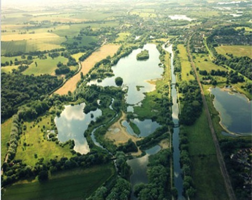
Some of these old mineral site lagoons have been linked into the river to allow fish stocks to use them as refuges to aid breading and protection of juvenile fish cadres to survive flood events which are difficult in main rivers due to the velocity of flow at such times. Twenty years ago the Trust put forward proposals for such schemes and it is gratifying to see them now in place and functioning satisfactorily.
A source of pollution that has for years affected rivers prominently has been agriculture, particularly the use of agro-chemicals such as DDT, one of the most notorious pesticides. Today the chemical formulations are environmentally of a lower impact, but chemicals are still an issue; programs such as ‘Spray Safe’ are of much help in training spray operators, but there are still many acts of thoughtless application, of container handling and disposal that course concerns annually.
Apart from chemicals the handling and storage of animal wastes such as slurry or the liquors that escape from silage storage are hugely polluting and a constant threat to the natural water environment. Naturally allied to these issues is thatof village and isolated home drainage, the use of septic tanks, cess pits and soakaways can lead to many forms of diffuse pollution that are insidious by their ability to cause major pollutions with little point of source being evident. All rural dwellings have to have their drainage systems certificated as suitable for purpose and that they are maintained as they should. This is an onerous task for the regulators who have not the time or staff to fully carry out such inspection as would properly be prudent.
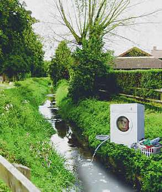
Even in urban areas such or similar issues arise with the ‘do it your self’ culture of the present; plumbing in macerating lavatories or washing machines to surface water drains is common and can lead to long term pollutions of streams and local water courses. Such sources of pollution are nearly impossible to locate without undertaking a vigorous investigation of plumbing in specific areas which in most instances is nearly impossible without intelligence.
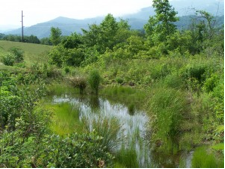
As noted earlier urban road drainage usually passes to combined sewers and is treated alongside household and commercial discharges at sewage treatment works. In rural locations, particularly major roads and motorways traditionally drained the rainwater runoff directly to local streams and ditches that could be accessed from the road margins. Over the years such practices proved inadvisable, the road runoff included metals oils rubber and other wastes that became noticeably toxic to such small drainage ditch and stream ecosystems. The Trust worked with road designers on intercepting the road drainage to allow oils to be trapped and introduced wetland features to hold up heavy rainfall drainage from entering such watercourses directly. The development of grassed or reed filled ponds or fully engineered reedbeds which allowed for the capture of unwanted pollutants entering the local drainage systems and at the same time allowed for the development of low maintenance highly diverse habitats to be created in places of little human intervention.
Regulation of the rivers in England and Wales is with the Environment Agency, soon to be separated into a Welsh autonomous organisation that will mirror the Welsh national concerns for the national environment agenda that will be overseen by the Welsh Government and the Assembly for Wales. As in Scotland where the Scottish Environmental Protection Agency took over from the old River Boards in 1996 they will develop a national identity and feel to their role.
In England the Environment Agency will remain in control under the watchful eye of Defra who would like to cut back spending on environmental research that it feels can be left to academics, charities and private companies, if needed at all. The agencies across the nation will have a continuing torrid time keeping control of the agendas as they wish them to be seen, central government sees their role appearing as policemen of the environment who will fund their work by permits, court action fines and costs. A similar model has been created by the charitisation of British Waterways into the Canals and Rivers Trust which now has to advertise on local and national radio appealing for funds to protect the work that government subsidised in the past.
The future for the rivers of Britain is bright but only because there are people who care enough to give time and money to ensure that the rivers do not slip back to what they were and Britain regain the title of Dirty Man of Europe. River protection will require vigilance by all who care for the improvement of our environment. There can be no resting on laurels as it can very easily happen that rivers slip backward to their old polluted conditions.
Harvey Wood. April 2013.