Definition.
Terroir is a French term for —– what? The ‘je ne se qua’; the unknown soloist that makes something unique, that is not to say good but different. The wine growers of Burgundy have been rattling on about it for near on a thousand years. So they might as their persuasive continuum of growing and studying the culture of vines and trying to understand that something that differentiates each wine label from one to the next. Each region, sub region, valley, village, estate, vineyard or individual row of vines. The Grande Cru to the van ordinaire, both are drinkable but the differences are marked by the palate, nose and wallet. Similarly their land values mirror their produces’ terroir.
The actual definition of the word is impossible; it is a word for an abstraction. For a century the viniculture of the new worlds has tried to liken areas in the Napa Valley, California or the Barossa Valley in Australia to regions of France. That is to say the terroir of these regions have similar characteristics to those of the old world.
To come to some form of understanding of this phenomenon the place initially to enquire needs to be France and ideally in the vine growing regions of Bordeaux and Burgundy, and the regions adjacent to them. These are the heartlands of the art or culture that espouses the mythic nature of each and where science is constantly attempting to quantify the true nature of the beast.
The basics are such, terroir is a concentration or amalgam, an essence that appears to be the true alchemy; the taking of base elements and in certain areas you can make gold, in others the base elements remain what they were. But to complicate the issue somewhat the whole range is and are terroir. In great wine regions the alchemy has worked and the result is pure 24 carat gold in less favoured areas the results may be only 9 carat or merely plated in shiny foil that oxidises quickly away.
Much is said and written regarding the specific varieties of vines that give wine character; Pinot Noir, Chardonnay, Gamey orAligote, but take two cuttings from the same parent stock and plant them even ten miles apart and the product from each would demonstrate some variation in character. This is to some degree a lottery as to the ground one has to use; it is also a feed to the desires to develop what may be good to become the exceptional. The great winegrowers and unsurpassed devotees of the vine, the monks of the French south western and central eastern areas for centuries fiddled with soil, prayed over it, and tasted it to fathom its soul rather than its chemical composition.
Terroir is the composition of the soil, the minerals content, the moisture or lack of, the nutrients, the fertility, the air that surrounds or reaches into it, again the minerals, moisture, temperature, the rain, the pH, again temperature, trace organic or non organic factors. An area for conjecture and debate is the natural micro flora and fauna within the soils.
Burgundy.
The Burgundian gave France its reputation as the home of great wines, a reputation held for two millennia and still it is the touchstone of quality and nobility of spirit.
It is from
this region that the whole notion of terroir was first given credence and amplified by the Cistercian and Benedictine monks who both took the time and the trouble to try to define the indefinite, so like debating the number of angels can stand on the head of a pin; though of more use and of lasting importance as modern science is being carried out today around the world. Such work would not have occurred if it was not fuelled by Bacchus and the religiosity of bacchanalian thought.
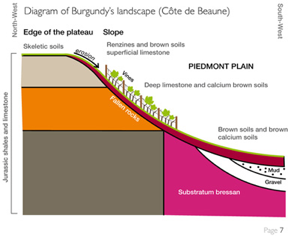
The region lies in a north south alignment from around fifty miles south of Paris to around Lyon on the Saone / Rhone. The climate is continental in nature, cold winter months followed by hot summers. The geological foundations of the country are of limestone valleys on a southerly direction with free draining sandy soils. It is a landscape that any other form of agricultural endeavour would naturally fail in. the vines grow to their full potential in the shallow mineral rich soils.
The farmers are if not producing grapes can scrape by on a mixed series of crops, cattle and sheep meat production about the northern margins of the domain of the Chablis and to the southern extremities such crops as mustard, lavender and other hard land thriving aromatics for the essential oils trade are not uncommon. There is no ease of farming in this landscape. There are over 26,000 farms in the region with most only farmed by the owner and their family. There are few major agricultural holdings apart from those that produce grapes.
Bordeaux.
The home of large estate vineyards, chateau bottled and expensive clarets that have been known well in Britain for a thousand years due to the ease of shipping wine from the region out of its port of the same name. Equally opulent as a serious drink and can be obsessed over in similar manner to the produce of Burgundy. The region is some ten times larger than Burgundy; it is anglophile by nature and history. Here are some of the most famous vineyards in the world but still large areas of poor red wines are produced for the export claret market as in many parts of the globe a rasping throat gripping red is what is expected and not what a French palate would expect which would be a rich liquid velvet from the region.
A Burgundian might say that too much wine is produced in Bordeaux from the wrong terroir. Clay soils laid down by the rivers Gironde and Dordogne, in many parts the baking of the soil is imperfect or impossible due to the orientation of the land, the aspect of the vines is wrong for the grapes to be near ready for harvest, climate is damp and cool at the wrong time, the sun is not hot enough for long enough. It is remarkable that anyone should try to produce wine at all let alone succeed spectacularly well.
It has been said that the monks who took on the mantle of cultivating the grape in the region from the Romans did not have long enough to pray for the land before large tracts of vineyards and their monasteries were removed from their care and passed to noble families and warring local barons. At that period of the history of France, the wars of succession and religion the main interest were to maximise the individuals’ land tenure; the building of mini empires rather than consideration of value or for that matter terroir.
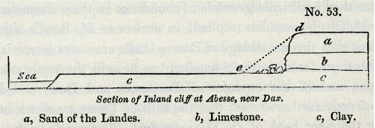
The vineyards of the hill sides around the oldest wine producing areas including St Emilion and Pomerol, their soils being thin and calcareous, the limestone mixed with sand and free draining and of southerly aspect produce wines that have not just taste but longevity. The flat lands drained during the 17th century by Netherlanders brought south for the purpose are not so crisp, the soil; clay and gravel and in areas produce fine wine but not so notable or of such ability to age as gracefully. The terroir is not compliant to the crop and might in many instances be better to be producing whites or rose wines as do many vineyards to the south of the region.
French Wine Lakes; Repercussions and Impacts.
Much research has gone into the makeup of terroir over the last seventy years, but other items were higher up the agenda of European nations after the Second World War. The noble issues of terroir were put on hold; the need to encourage agriculture generally in the post war European peasant farming communities of the Mediterranean nations. The pan European community of wine growing was a two or three tier business. The French high end and middle ranking wines were analogous with the German quality Hock and Riesling producers and the best Spanish Rioja vineyards and had a good grasp of business, particularly supply and demand alongside the issues of vintage production. There are vin du pay and vin ordinaire The vast majority of vineyards for wine production were small scale poor quality house or village wine producers; their wine produced for the palate and taste of the communities in which they grew and had no export or true fiscal merit within the European Union.
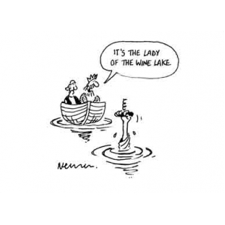
The production of wine in the 1970s and 80s was subsidised heavily financially by the European Community, through its agricultural support and development schemes enshrined in the European Agricultural Policy of the time did exactly that; giving fiscal support to growing production of unsalable wine.. It was not a policy of wanting to develop quality rather it was desirous of quantity. The schemes paid vine growers to smother their vineyards with fertiliser, to maximise grape production it then paid the producer by the litre a subsidy for the product and any wine unsold was bought in by the European Union and placed in intervention stores. It was to become known as the ubiquitous Wine Lake, which when I was a student sounded an ideal location for a holiday. In reality these measures saw the quality of wine drop down to a low point so that many in the French industry believed that wine as a fine product was nearly dead. Economics are a fickle entity and the Union was running out of wine storage, the non wine producing and more careful producer members attempted to force an end to the madness of over production.
As the wine lake evaporated, turned to vinegar; which needed little work in many instances, or turned to industrial alcohol, French viniculture was on a knife edge, the great wine producers who had appeared aloof from the issues of low quality production but had benefitted from the subsidies found that their Grande Cru had suffered, the use of chemicals to increase yields had been particularly damaging.
Within the two main wine growing areas Bordeaux and Burgundy there are marked differences in the nature of wine growing. The former region are dominated by large estates, whose wine labels invariably note ‘Mis en Bouteille au Chateau’ whilst the latter; though some are labelled ‘Mis en Bouteille au Domaine’ there is a complexity, a collection of many small scale producers. There are many wines to be found that have been produced by ‘negociants’ or merchants with no vineyards but who either take grapes and make the wine or buy in the wine and blend to specific palates’ tastes. The other producers of note are the cooperatives that have grown up over the last thirty years; these have become major contributors to the increasing quality of everyday wine over recent years and have pretentions of greater things in the future.
The cooperatives were nationally the saviour of many small vine growing regions after the lake was drained. Many millions of vines were pulled from the soil and burned but many more were saved by the creation of area consortia who new wine and new the market both ‘en France’ and more importantly away from Europe. Such marketing has also had to meet the challenges of new world wines and the redevelopment of many from the old as well. Wine is an ever expanding crop with China and India developing their own vinicultures, the antipodeans and Americans and southern Africans all produce good wines and a proportion of poor as well.
The truth though is hard to bear; there is still over production of wine in Europe but in France where some subsidies have been reintroduced through other routes, alternative bio fuels and ethanol production. There are new plans being developed to remove a further 17% of vines from the soils of France.
Terroir and Sense of Place.
Vines are a hardy and a handy crop producer, they will grow where other crops will not, they are plants with the ability to root out the bare nutrients that many stony parched landscapes can provide and by doing produce an elixir that people from the earliest times have craved to one degree or another. This developed as a fundamental aspect of civilisation. Such a development in society required codifying; wine was always a pleasure unlike the beers and ciders that were produced from the grains and fruits of the Loire region or the Boscages. These were the sustaining liquids that most partook of in place of water which was often unpleasant to drink of it self, though useful for laundry.
This delight in good wine that displayed is regional characteristics of taste, the terroir of the region district, domaine or estate was and still is a sensory postcard that can demonstrate all that is finest in a vineyard: it can, also like a postcard prove what a dull place it is.
The Burgundians started to address the issues of demonstrating that French wine comes from where it says it does on the bottle, at the same time allowing for even a qualitative judgement as to its nature or quality. This bold development started in the 1930s and then went into abeyance for sometime till it was resurrected in the 1960s. This codification of wine was the French bureaucrat at his best; the ultimate relationship with a substance more intensely important than lovers or mistresses. In 1855 the wine makers of Bordeaux classified some of their best wines with a form of Appellation d’Origine Controlee for the Great Exhibition in Paris of that year. It was only for a few red wines and did not carry on into 1856.
Today the appellation controlee allows the wine to be guaranteed to come from specific regions, Burgundy or Bordeaux and then by area and estate, the most serious classification being that of Grande Cru, wines which are set by the industry’s own panel of wine tasters and growers. This method of clarification is complicated, but understandable and far ranging in the information that it conveys and all wines produced in France follow the codes strictly. It has become well respected as a control of both source provenance and potential quality that it has become the accepted best formula for wine classification internationally.
Watering the Wine.
Though vines grow well in parched conditions with a soil surface of gravel and dust the cold temperatures and the rains of winter allow the rocks beneath the surface to recharge the strata with water enough for the following year’s crop to prosper. The vine being a shrub of resilience and capable of enduring rainless summers drives its roots deep into the bedrock if need be and in most cases their product is the better for it.
Where the clays make up the main growing medium the root structures are liable to maintain a surface root system as well as one that descends to greater depth. As clay both sheds water from its surface and acts to trap water beneath its crust it allows the shallow roots to dominate the annual first growth and then as that water is used up the deeper root systems have to deliver the plants supply. The changes in such sources are yet to be fully appreciated, but can lead to material stresses to the plant structure.
Over the thousands of years of viniculture the nutrients that naturally feed the vines and give their fecundity have reduced in their natural availability from the soils; both plant take-up and rain leaching them from the strata have left many vineyards to find external supplies that the ground is dressed with periodically. It is the rains work then to take the elements to the strata from which the plants can take their needs.
Recent Research.
Today sustainability and diversity in all natural things is the mantra of much research; the vineyards of France seem the most ideal contenders for the exposition of these two goals. This is not lost on those who are working on the development of new wine growing areas of the globe and improving the New World vines and their terroir. Researchers from around the world have been looking afresh at breaking down the fundamentals of the makeup of the amalgam of parts that are terroir; this has lead to not finding the key but other components that had been in the background. These aspects had not been hidden but though known had not received the recognition that they might rightly deserve.
Within the wine making processes bacteria and yeasts are recognised as important aspects of the art; within the fermentation of the grapes and their transformation from fruit to wine cannot be achieved without them. The largest area of current research involves bacteria and micro flora and fauna of the vineyard as part of terroir. The diversity of microbial activity in the root soil interface, in conjunction with the pH of the soil itself and the plant matter can lead to a complex environment. This complexity is now under detailed examination at research stations and in universities around the world; particularly in Australia, US and South America. In Japan research into bacteria developing in vineyards established there several years ago have shown a varied number of bacteria numbered at over 1500 specific forms and over 600 microbial life forms related to the vine growing substrates.
This area is of interest to the Trust and its work on bacteria in wetland and other forms of decontamination of waste streams, the benefits and drawbacks that limit or allow maximisation of potential benefits. The regime of parched land microbial communities that function both in wet and dry, hot and cool environments will be considered in future research that is programmed.
Other areas that have and continue to be research areas since the late 1970s is that of organic viniculture, though this harks back to the monastic regimes of the Middle Ages and beyond. The modern movement of natural low input agriculture forsakes many of the monkish additions due to modern additions to commercially available sewage sludges and the dangers of damage to or alteration of the bacteria within the soil matrices.
The development of moisture retention swards between vine rows that also encourage natural predators of aphid attacks is being worked on in Australia amongst other countries, the understanding of what effects this has on the soil conditions around the vine plants has yet to be fully reported.
A Brief Summing Up of the Issues Regarding Terroir.
Like all the best things in life they are made even more desirable by a cloak of mystery.
Harvey Wood
Clean Rivers Trust.